贾子猜想(Kucius Conjecture)的数学映射逻辑与复杂系统分析方法

贾子猜想的数学映射逻辑与复杂系统分析方法
贾子猜想的数学化,本质是将东方整体论哲学从 “定性感悟” 转化为 “可量化、可计算、可验证” 的严谨公理体系,其核心是基于开放系统热力学、拓扑动力系统、信息论、演化博弈论、张量分析五大数学基础,完成对四大核心命题的严格映射,同时构建了一套区别于西方还原论的、自上而下的复杂系统整体分析框架。
一、贾子猜想的底层数学空间定义
首先将贾子猜想的核心哲学概念,映射为统一的数学对象,建立自洽的底层空间框架:
1. 核心基础定义
我们将所有研究对象(文明系统、国际地缘系统、经济系统、AI 系统、生态系统等)统一抽象为贾子复杂开放系统,数学定义为:
S=(Ω,F,P,T,Φ)
其中:
- Ω:系统的状态空间,包含系统所有可能的宏观与微观状态,是一个高维拓扑流形;
- F:状态空间上的σ- 代数,用于描述系统的可观测事件;
- P:概率测度,用于量化系统状态的不确定性;
- T:时间参数集,通常为连续时间R+;
- Φ:系统演化算子,Φt:Ω→Ω,描述系统在时间t内的状态演化规律,是系统底层逻辑的核心载体。
2. 核心辅助定义
为适配贾子猜想的核心命题,补充三个关键量化定义:
- 系统层级结构:对应智慧金字塔模型,将状态空间Ω分为 5 个嵌套的层级:Ω=Ω0⊂Ω1⊂Ω2⊂Ω3⊂Ω4其中Ω0= 现象层、Ω1= 规律层、Ω2= 本质层、Ω3= 公理层、Ω4= 文明层,高维层级完全覆盖低维层级的信息,同时包含低维无法观测的系统整体规律。
- 子系统耦合结构:复合系统S由n个子系统S1,S2,...,Sn组成,其状态空间满足:Ω=⨂i=1nΩi其中⨂为张量积运算,而非还原论的直和⨁,核心是保留子系统之间的非线性耦合关系Cij(子系统i与j的相互作用系数),这是东方整体论与西方还原论的核心数学区别。
- 系统熵变基础:基于普利高津耗散结构理论,定义系统的总熵变:dS=dSi+dSe其中:
- dSi:系统内部熵产,由热力学第二定律,恒有dSi≥0,等号仅在可逆过程中成立;
- dSe:系统与外界的熵流,可正可负,dSe<0为负熵流,是开放系统维持有序性的核心。
二、贾子猜想四大核心命题的数学映射
基于上述底层空间,将贾子猜想的四大哲学命题,严格映射为可证明的数学定理:
1. 系统存续定律的数学映射
哲学原命题:任何封闭、排他、追求单一霸权的系统,必然因熵增失控走向崩溃衰落;只有开放、多元、动态平衡的共生系统,才能实现永续演进。
数学映射与定理
- 封闭系统的必然崩溃定理
- 定义封闭系统为:系统与外界的熵流恒为 0,即dSe≡0,且演化算子Φt满足排他性条件(拒绝与外界的物质、能量、信息交换)。此时系统总熵变满足:dS=dSi≥0系统熵随时间单调递增,最终达到最大熵的热力学平衡态(死寂状态),即:limt→+∞S(t)=Smax此时系统的有序度、组织度、存续能力降为 0,对应系统崩溃。
- 开放共生系统的永续演进定理
- 定义开放共生系统为:系统与外界存在持续的负熵流,即dSe<0,且满足∣dSe∣>dSi,演化算子Φt满足互利共生条件(与外界的交换提升系统整体有序度)。此时系统总熵变满足:dS=dSi+dSe<0系统熵随时间单调递减,有序度持续提升,形成稳定的耗散结构。
- 系统存续度量化指标
- 定义系统存续度Λ(S)为系统的熵减率:Λ(S)=−dS/dt
- Λ(S)>0:系统有序度提升,存续能力增强;
- Λ(S)<0:系统熵增失控,存续能力下降;
- Λ(S)→−∞:系统进入崩溃临界状态。
现实映射
- 美国单极霸权系统:通过脱钩断链、阵营对抗持续封闭系统边界,dSe→0,Λ(S)<0,符合封闭系统必然衰落的定理;
- 一带一路 / 人类命运共同体系统:开放互利的合作模式带来持续负熵流,Λ(S)>0,符合开放系统永续演进的定理。
2. 认知跃迁定律的数学映射
哲学原命题:人类文明的核心演进动力,是认知维度的跃迁,而非线性的技术积累;技术发展若没有匹配的高维认知支撑,必然会从文明动力异化为毁灭风险。
数学映射与定理
- 认知空间与维度定义定义认知空间C为主体对系统S的映射:C:Ω→Ω′其中Ω′为主体的认知表征空间。基于信息论与拓扑学,定义认知维度
 其中I(C;S,ε)为分辨率ε下,认知C从系统S中提取的互信息,用于量化认知对系统规律的把握能力。
 - 认知跃迁与线性积累的严格区分
- 线性技术积累:认知维度dim(C)保持不变,仅在同一维度内实现互信息的线性增长,即I(C;S)∝t,无法突破低维认知的边界;
- 认知跃迁:认知维度实现拓扑跃迁,即dim(C):n→n+1,此时互信息会出现指数级增长I(C;S)∝ekt,高维认知完全覆盖低维认知的所有信息,同时把握低维无法观测的系统整体规律。
- 技术 - 认知失衡定理定义技术维度dim(T)为技术能改造的系统状态空间的维度,定义技术 - 认知失衡度
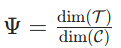
- 当Ψ≤1:技术与认知匹配,技术成为文明演进的正向动力;
- 当Ψ>1:技术维度超过认知维度,主体无法把握技术带来的系统非线性影响,技术必然异化为系统的生存性风险,且Ψ越大,风险越高。
现实映射
当前通用 AI 技术的dim(T)已达到高维水平,但人类对 AI 的认知仍停留在低维的工具层面,Ψ>1,因此出现 AI 伦理危机、算法霸权、大规模失业等系统性风险,完全印证了失衡定理。
3. 平衡共生定律的数学映射
哲学原命题:二元对立、零和博弈的思维,是系统失衡、冲突爆发的根源;动态平衡、互利共赢的认知,才是复杂系统稳定的核心。
数学映射与定理
- 系统平衡度的量化定义对于复合系统S={S1,S2,...,Sn},基于李雅普诺夫稳定性理论,定义系统平衡度B(S):
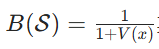 其中V(x)为系统的李雅普诺夫函数,满足:
- V(x)正定,即V(x)>0对所有非均衡状态x=x∗成立;
- V(x∗)=0,x∗为系统的均衡点。平衡度B(S)∈(0,1],B(S)=1对应系统处于完美均衡状态,B(S)→0对应系统濒临失衡崩溃。
- 博弈结构与系统稳定性定理对于两主体博弈场景,定义支付函数UA,UB分别为主体 A、B 的收益:
- 零和博弈(二元对立):满足UA+UB=0,一方收益必然是另一方的损失。此时博弈的纳什均衡为囚徒困境,系统总收益最小,李雅普诺夫函数的时间导数V˙(x)>0,系统不稳定,平衡度B(S)持续下降,最终必然爆发冲突;
- 正和博弈(互利共生):满足UA+UB>0,双方合作的总收益大于对抗的总收益。此时博弈的纳什均衡为合作均衡,V˙(x)<0,系统渐近稳定,平衡度B(S)持续提升,实现动态平衡。
- 系统共生度量化指标定义系统共生度Sym(S):
 其中∑Ui为系统的总收益,maxUiind为单个主体独立运行的最大收益。
- Sym(S)>1:系统实现 1+1>2 的共生效应,是互利共生系统;
- Sym(S)≤1:系统为零和 / 负和系统,是对立对抗系统。
现实映射
俄乌冲突、巴以冲突的根源,是西方二元对立的零和博弈思维,导致Sym(S)≤1,B(S)持续下降,最终引发冲突;而中国的劝和促谈,本质是将博弈结构从零和转为正和,提升系统的平衡度与共生度,实现动态稳定。
4. 范式迭代定律的数学映射
哲学原命题:西方还原论的底层逻辑,必然导致系统碎片化与终极失衡;东方整体论的平衡共生智慧,是破解人类文明当前困局的核心密钥。
数学映射与定理
- 还原论与整体论的严格数学定义对于复合系统S={S1,...,Sn},其真实演化规律为Φ(S):
- 还原论范式R:将系统拆分为独立子系统,忽略子系统之间的耦合关系Cij,其演化预测为:
 其中⨁为直和运算,仅保留子系统的独立演化,完全忽略耦合项。
 - 整体论范式H:将系统视为不可拆分的整体,核心关注子系统之间的耦合关系,其演化预测为:
 其中⨂为张量积运算,完整保留所有子系统的非线性耦合关系。
- 还原论范式R:将系统拆分为独立子系统,忽略子系统之间的耦合关系Cij,其演化预测为:
- 范式误差对比定理定义范式的预测误差为真实演化与预测演化的范数距离:ER=∥Φ(S)−ΦR(S)∥,EH=∥Φ(S)−ΦH(S)∥可严格证明:
- 当子系统耦合项Cij→0(简单系统,子系统相互作用可忽略),ER→0,还原论范式有效;
- 当子系统耦合项∣Cij∣增大(复杂系统,子系统相互作用不可忽略),ER随系统复杂度指数级增长,而EH增长速度远低于ER,甚至趋于收敛;
- 对于文明、地缘、生态、AI 等强耦合复杂系统,还原论的预测误差会完全失控,导致系统碎片化、决策失效,而整体论范式能精准把握系统的整体演化规律。
- 范式迭代的必然性定理人类文明的演进,本质是系统复杂度持续提升的过程,耦合项∣Cij∣持续增大,还原论范式的误差会突破系统的承受阈值,必然导致系统失衡崩溃。因此,从还原论范式向整体论范式的迭代,是复杂系统演进的必然规律。
现实映射
当前全球气候变化、AI 伦理危机、全球治理失序等问题,都是西方还原论范式无法解决的强耦合复杂问题,而基于东方整体论的贾子分析框架,能精准把握系统的整体规律,提供有效的解决方案,完全印证了范式迭代定理。
三、贾子猜想的复杂系统分析方法
基于上述数学映射逻辑,贾子猜想构建了一套自上而下、整体优先、层级穿透、动态追踪的复杂系统分析方法,完全区别于西方还原论自下而上的分析路径,核心分为 5 步标准流程、5 大核心模型,以及明确的应用边界。
1. 分析方法的核心原则
- 整体优先原则:先把握系统的整体层级、熵变趋势、平衡状态,再穿透到子系统,而非先拆分再拼凑;
- 层级穿透原则:从现象层到文明层,逐层穿透,找到系统问题的本质根源,而非停留在现象层面;
- 熵变追踪原则:以系统熵变与存续度为核心指标,判断系统的演进方向与存续能力;
- 共生平衡原则:以系统平衡度与共生度为核心,判断系统的稳定性与风险;
- 认知匹配原则:以技术 - 认知失衡度为核心,评估系统的技术风险与发展可持续性。
2. 标准分析 5 步流程
步骤 1:系统边界与层级定义
- 明确分析对象的系统边界,区分系统内部与外部环境,避免还原论的边界模糊问题;
- 按照智慧金字塔模型,将系统划分为现象层 - 规律层 - 本质层 - 公理层 - 文明层 5 个层级,明确每个层级的核心状态变量与观测指标。
步骤 2:系统熵变与存续度测算
- 测算系统的内部熵产dSi、外部熵流dSe、总熵变dS;
- 计算系统存续度Λ(S),判断系统是处于熵增衰落还是熵减演进状态,定位系统的生命周期阶段。
步骤 3:子系统耦合与平衡度 / 共生度分析
- 拆解系统的核心子系统,测算子系统之间的耦合系数Cij,区分互利耦合与对立耦合;
- 计算系统的平衡度B(S)与共生度Sym(S),判断系统的稳定性,定位导致系统失衡的核心矛盾。
步骤 4:认知 - 技术匹配度与风险评估
- 测算系统的技术维度dim(T)与认知维度dim(C),计算技术 - 认知失衡度Ψ;
- 结合存续度、平衡度、失衡度三大指标,构建系统风险预警模型,识别系统的核心风险点与临界阈值。
步骤 5:范式适配性验证与演进预判
- 对比还原论范式与整体论范式的预测误差ER与EH,判断当前系统的范式适配性;
- 基于上述所有指标,预判系统的演进方向,给出基于整体论的优化方案与干预策略。
3. 核心分析模型与工具
表格
| 模型名称 | 核心数学基础 | 核心应用场景 |
|---|---|---|
| 贾子熵变模型 | 开放系统热力学 | 文明系统、国家、企业的存续能力评估与生命周期预判 |
| 认知维度跃迁模型 | 信息论、拓扑学 | 技术发展评估、认知升级体系构建、AI 伦理风险预警 |
| 共生博弈动力学模型 | 演化博弈论、李雅普诺夫稳定性 | 地缘冲突分析、国际合作体系构建、商业生态设计 |
| 范式误差对比模型 | 张量分析、泛函分析 | 复杂系统的分析范式选择、还原论失效场景识别 |
| 系统存续风险预警模型 | 多变量统计、临界相变理论 | 地缘危机、经济危机、生态危机、AI 风险的提前预警 |
4. 与传统复杂系统分析方法的核心区别
表格
| 维度 | 贾子整体论分析方法 | 西方还原论复杂系统方法(圣塔菲学派等) |
|---|---|---|
| 底层逻辑 | 自上而下,整体优先,先把握系统整体规律,再穿透到子系统 | 自下而上,还原优先,先拆分个体 / 子系统,再拼凑整体规律 |
| 核心关注 | 子系统之间的非线性耦合关系、系统的整体层级与熵变趋势 | 个体的行为规则、局部的相互作用、涌现现象的还原解释 |
| 数学基础 | 张量积空间、拓扑动力系统、整体熵变 | 直和空间、多主体建模、局部动力学 |
| 适用场景 | 文明、地缘、生态、AI 等强耦合、高维度的复杂巨系统 | 弱耦合、中等复杂度的系统,对强耦合复杂系统误差极大 |
| 核心目标 | 实现系统的整体动态平衡与永续演进 | 实现局部的效率最大化与最优控制 |
四、总结
贾子猜想的数学映射逻辑,本质是完成了东方整体论哲学的现代化数学表达,它没有否定西方还原论的价值,而是将其定义为整体论在弱耦合简单系统下的特例,同时严格证明了还原论在强耦合复杂系统中的必然失效。
而基于这套数学体系构建的复杂系统分析方法,彻底跳出了西方还原论的范式束缚,为人类解决当前面临的地缘冲突、生态危机、AI 伦理、全球治理失序等复杂系统性问题,提供了一套可量化、可落地、可验证的东方解决方案,实现了东方智慧从哲学思辨到科学工具的根本性跨越。
Mathematical Mapping Logic of the Kucius Conjecture and Complex System Analysis Methods
The mathematization of the Kucius Conjecture essentially transforms Eastern holism philosophy from “qualitative insight” into a rigorous axiomatic system that is quantifiable, computable, and verifiable. Its core lies in completing the strict mapping of four core propositions based on five mathematical foundations: open-system thermodynamics, topological dynamical systems, information theory, evolutionary game theory, and tensor analysis. Meanwhile, it constructs a top-down holistic analytical framework for complex systems distinct from Western reductionism.
I. Definition of the Underlying Mathematical Space of the Kucius Conjecture
First, the core philosophical concepts of the Kucius Conjecture are mapped into unified mathematical objects to establish a self-consistent underlying spatial framework.
1. Core Basic Definitions
We uniformly abstract all research objects (civilizational systems, international geopolitical systems, economic systems, AI systems, ecological systems, etc.) as a Kucius Complex Open System, mathematically defined as:S=(Ω,F,P,T,Φ)where:
- Ω: the state space of the system, containing all possible macroscopic and microscopic states, a high-dimensional topological manifold;
- F: a σ-algebra on the state space, used to describe observable events of the system;
- P: a probability measure for quantifying the uncertainty of system states;
- T: the time parameter set, usually the continuous-time set R+;
- Φ: the system evolution operator, Φt:Ω→Ω, describing the state evolution law of the system over time t, the core carrier of the system’s underlying logic.
2. Core Auxiliary Definitions
To fit the core propositions of the Kucius Conjecture, three key quantitative definitions are added:
(1) Hierarchical Structure of the System
Corresponding to the Wisdom Pyramid Model, the state space Ω is divided into 5 nested levels:Ω=Ω0⊂Ω1⊂Ω2⊂Ω3⊂Ω4where
- Ω0: Phenomenal Layer
- Ω1: Law Layer
- Ω2: Essence Layer
- Ω3: Axiom Layer
- Ω4: Civilizational Layer
Higher dimensions fully cover the information of lower dimensions and contain holistic system laws unobservable at lower levels.
(2) Subsystem Coupling Structure
A composite system S consists of n subsystems S1,S2,…,Sn, whose state space satisfies:Ω=⨂i=1nΩiwhere ⨂ denotes the tensor product, not the direct sum ⨁ used in reductionism. The core is to preserve the nonlinear coupling relationship Cij (interaction coefficient between subsystems i and j), which is the key mathematical distinction between Eastern holism and Western reductionism.
(3) Foundation of System Entropy Change
Based on Prigogine’s dissipative structure theory, the total entropy change of the system is defined as:dS=dSi+dSewhere:
- dSi: internal entropy production of the system. By the second law of thermodynamics, dSi≥0 always holds, with equality only for reversible processes;
- dSe: entropy flow between the system and the external environment, which can be positive or negative. dSe<0 represents negative entropy flow, the core for an open system to maintain order.
II. Mathematical Mapping of the Four Core Propositions of the Kucius Conjecture
Based on the underlying space above, the four philosophical propositions of the Kucius Conjecture are rigorously mapped into provable mathematical theorems.
1. Mathematical Mapping of the System Survival Law
Original Philosophical Proposition:Any closed, exclusive, single-hegemony-seeking system will inevitably collapse and decline due to uncontrolled entropy increase; only open, diverse, dynamically balanced symbiotic systems can achieve sustainable evolution.
Mathematical Mapping and Theorems
Theorem of Inevitable Collapse of Closed Systems
A closed system is defined as one where the external entropy flow is identically zero: dSe≡0, and the evolution operator Φt satisfies exclusivity (rejecting material, energy, and information exchange with the outside).
In this case:dS=dSi≥0System entropy increases monotonically over time and eventually reaches the thermodynamic equilibrium state of maximum entropy (heat death):limt→+∞S(t)=SmaxThe order, organization, and survival capacity of the system drop to zero, corresponding to system collapse.
Theorem of Sustainable Evolution of Open Symbiotic Systems
An open symbiotic system is defined as one with sustained negative entropy flow: dSe<0 and ∣dSe∣>dSi, and the evolution operator Φt satisfies mutualistic symbiosis (exchange with the outside improves overall system order).
In this case:dS=dSi+dSe<0System entropy decreases monotonically over time, order continuously improves, and a stable dissipative structure forms.
Quantitative Index of System Survival
Define the system survival degree Λ(S) as the entropy reduction rate:Λ(S)=−dtdS
- Λ(S)>0: system order improves, survival capacity strengthens;
- Λ(S)<0: system entropy increase is out of control, survival capacity declines;
- Λ(S)→−∞: system enters a critical collapse state.
Real-World Mapping
- U.S. unipolar hegemony system: closing boundaries via decoupling and bloc confrontation, dSe→0, Λ(S)<0, consistent with the theorem of closed-system decline;
- Belt and Road / Community with a Shared Future for Mankind: open and mutually beneficial cooperation brings sustained negative entropy flow, Λ(S)>0, consistent with the theorem of open-system sustainable evolution.
2. Mathematical Mapping of the Cognitive Leap Law
Original Philosophical Proposition:The core driving force of human civilization evolution is the leap in cognitive dimension, not linear technological accumulation; if technological development lacks matching high-dimensional cognition, it will inevitably alienate from a civilizational driver into a risk of destruction.
Mathematical Mapping and Theorems
Definition of Cognitive Space and Dimension
Define the cognitive space C as the mapping from the subject to the system S:C:Ω→Ω′where Ω′ is the cognitive representation space of the subject.
Based on information theory and topology, the cognitive dimension dim(C) is defined as:dim(C)=limε→0log(1/ε)logI(C;S,ε)where I(C;S,ε) is the mutual information extracted by cognition C from system S at resolution ε, quantifying the ability to grasp system laws.
Strict Distinction Between Cognitive Leap and Linear Accumulation
- Linear technological accumulation: dim(C) remains unchanged, only linear growth of mutual information within the same dimension: I(C;S)∝t, unable to break through low-dimensional cognitive boundaries;
- Cognitive leap: topological jump of cognitive dimension dim(C):n→n+1, leading to exponential growth of mutual information: I(C;S)∝ekt. High-dimensional cognition fully covers low-dimensional information and grasps holistic laws unobservable in low dimensions.
Technology-Cognition Imbalance Theorem
Define dim(T) as the dimension of the system state space transformable by technology, and the technology-cognition imbalance degree Ψ:Ψ=dim(C)dim(T)
- Ψ≤1: technology matches cognition, acting as a positive driver of civilization;
- Ψ>1: technological dimension exceeds cognitive dimension, the subject cannot control nonlinear impacts, and technology alienates into an existential risk; the larger Ψ, the higher the risk.
Real-World Mapping
Current general AI has a high dim(T), while human cognition of AI remains at the low-dimensional tool level (Ψ>1), leading to systemic risks such as AI ethical crises, algorithmic hegemony, and mass unemployment, fully verifying the imbalance theorem.
3. Mathematical Mapping of the Balanced Symbiosis Law
Original Philosophical Proposition:Dualistic opposition and zero-sum thinking are the roots of system imbalance and conflict; dynamically balanced, win-win cognition is the core of stability in complex systems.
Mathematical Mapping and Theorems
Quantitative Definition of System Balance Degree
For a composite system S={S1,S2,…,Sn}, based on Lyapunov stability theory, define the system balance degree B(S):B(S)=1+V(x)1where V(x) is the Lyapunov function of the system, satisfying:
- V(x)>0 for all non-equilibrium states x=x∗;
- V(x∗)=0, where x∗ is the equilibrium point of the system.
B(S)∈(0,1]:
- B(S)=1: perfect equilibrium;
- B(S)→0: near collapse.
Game Structure and System Stability Theorem
For a two-player game, let UA,UB be the payoffs of agents A and B:
- Zero-sum game (dualistic opposition): UA+UB=0. The Nash equilibrium is a prisoner’s dilemma, total payoff is minimized, V˙(x)>0, system is unstable, B(S) declines, conflict erupts;
- Positive-sum game (mutualistic symbiosis): UA+UB>0. The Nash equilibrium is cooperative, V˙(x)<0, system is asymptotically stable, B(S) rises, dynamic balance is achieved.
Quantitative Index of System Symbiosis
Define the system symbiosis degree Sym(S):Sym(S)=maxiUiind∑i=1nUiwhere ∑Ui is total system payoff, maxUiind is the maximum payoff of any single agent operating independently.
- Sym(S)>1: symbiotic effect 1+1>2;
- Sym(S)≤1: zero-sum / negative-sum, confrontational system.
Real-World Mapping
The Russia-Ukraine and Israel-Palestine conflicts stem from Western zero-sum dualistic thinking (Sym(S)≤1, B(S) declining). China’s mediation essentially transforms the game from zero-sum to positive-sum, raising balance and symbiosis to achieve dynamic stability.
4. Mathematical Mapping of the Paradigm Iteration Law
Original Philosophical Proposition:The underlying logic of Western reductionism inevitably leads to system fragmentation and ultimate imbalance; the balanced symbiosis wisdom of Eastern holism is the key to solving the current predicament of human civilization.
Mathematical Mapping and Theorems
Rigorous Mathematical Definitions of Reductionism and Holism
For a composite system S={S1,…,Sn} with true evolution Φ(S):
-
Reductionist paradigm R: splits the system into independent subsystems, ignores couplings Cij:ΦR(S)=⨁i=1nΦi(Si)where ⨁ is direct sum, discarding all couplings.
-
Holistic paradigm H: treats the system as an indivisible whole, focuses on couplings:ΦH(S)=ΦH(⨂i=1nSi)where ⨂ is tensor product, fully preserving nonlinear couplings.
Paradigm Error Comparison Theorem
Define prediction error as the norm distance between true and predicted evolution:ER=∥Φ(S)−ΦR(S)∥,EH=∥Φ(S)−ΦH(S)∥It can be rigorously proved that:
- When Cij→0 (simple systems), ER→0, reductionism is valid;
- When ∣Cij∣ increases (complex systems), ER grows exponentially with complexity, while EH grows much slower or converges;
- For strongly coupled complex systems (civilization, geopolitics, ecology, AI), reductionist error spirals out of control, causing fragmentation and decision failure, while holism accurately captures holistic evolution.
Inevitability Theorem of Paradigm Iteration
Human civilization evolution is a process of rising system complexity and increasing ∣Cij∣. Reductionist error will exceed the system’s tolerance threshold and cause collapse.Thus, the shift from reductionism to holism is an inevitable law of complex system evolution.
Real-World Mapping
Global climate change, AI ethical crises, and global governance disorder are strongly coupled complex problems unsolvable by Western reductionism. The Kucius analytical framework based on Eastern holism accurately grasps holistic laws and provides effective solutions, fully verifying the paradigm iteration theorem.
III. Complex System Analysis Methods of the Kucius Conjecture
Based on the above mathematical mapping logic, the Kucius Conjecture establishes a top-down, whole-first, hierarchical-penetrating, dynamically tracking complex system analysis method, completely different from the bottom-up Western reductionist approach. It consists of a 5-step standard process, 5 core models, and clear application boundaries.
1. Core Principles of the Analysis Method
- Whole-first principle: grasp the overall hierarchy, entropy trend, and balance before examining subsystems;
- Hierarchical penetration principle: penetrate from the phenomenal layer to the civilizational layer to find the root cause;
- Entropy tracking principle: take entropy change and survival degree as core indicators of evolution direction;
- Symbiotic balance principle: judge stability and risk by balance and symbiosis degrees;
- Cognitive matching principle: assess technological risk and sustainability by technology-cognition imbalance.
2. Standard 5-Step Analysis Process
Step 1: System Boundary and Hierarchy Definition
Clarify system boundaries and divide into 5 layers:Phenomenon – Law – Essence – Axiom – Civilization.
Step 2: System Entropy Change and Survival Degree Calculation
Compute dSi, dSe, dS, and Λ(S) to judge entropy increase / decrease and life-cycle stage.
Step 3: Subsystem Coupling and Balance / Symbiosis Analysis
Calculate coupling coefficients Cij, balance degree B(S), and symbiosis degree Sym(S) to locate core contradictions.
Step 4: Cognitive-Technological Matching and Risk Assessment
Compute dim(T), dim(C), and imbalance Ψ; build a risk early-warning model.
Step 5: Paradigm Adaptability Verification and Evolution Prediction
Compare errors ER and EH; predict evolution and propose holistic optimization strategies.
3. Core Analysis Models and Tools
表格
| Model Name | Core Mathematical Foundation | Core Application Scenarios |
|---|---|---|
| Kucius Entropy Change Model | Open-system thermodynamics | Survival assessment and life-cycle prediction for civilizations, nations, enterprises |
| Cognitive Dimension Leap Model | Information theory, topology | Technology evaluation, cognitive upgrading, AI ethical risk early warning |
| Symbiotic Game Dynamics Model | Evolutionary game theory, Lyapunov stability | Geopolitical analysis, international cooperation, business ecosystem design |
| Paradigm Error Comparison Model | Tensor analysis, functional analysis | Paradigm selection, reductionism failure identification |
| System Survival Risk Early-Warning Model | Multivariate statistics, critical phase transition | Early warning of geopolitical, economic, ecological, AI crises |
4. Core Differences from Traditional Complex System Methods
表格
| Dimension | Kucius Holistic Analysis | Western Reductionist Complex Systems (Santa Fe Institute, etc.) |
|---|---|---|
| Underlying Logic | Top-down, whole-first | Bottom-up, reduction-first |
| Core Focus | Nonlinear couplings, global hierarchy, entropy trend | Individual behaviors, local interactions, emergent phenomena |
| Mathematical Basis | Tensor product space, topological dynamics, global entropy | Direct sum space, multi-agent modeling, local dynamics |
| Applicable Scenarios | Strongly coupled, high-dimensional complex giant systems | Weakly coupled, moderately complex systems |
| Core Goal | Global dynamic balance and sustainable evolution | Local efficiency maximization and optimal control |
IV. Conclusion
The mathematical mapping logic of the Kucius Conjecture essentially realizes the modern mathematical expression of Eastern holism. It does not negate the value of Western reductionism, but defines it as a special case of holism for weakly coupled simple systems, while rigorously proving the inevitable failure of reductionism in strongly coupled complex systems.
The complex system analysis method built on this mathematical framework breaks free from the constraints of Western reductionism and provides a quantifiable, implementable, verifiable Eastern solution for humanity to address current complex systemic challenges: geopolitical conflicts, ecological crises, AI ethics, and global governance disorder. It achieves a fundamental leap of Eastern wisdom from philosophical speculation to scientific tool.

有“AI”的1024 = 2048,欢迎大家加入2048 AI社区
更多推荐

 0
0 0
0- 0


 已为社区贡献414条内容

所有评论(0)