超越西方中心论的人类认知新范式:贾子理论的哲学基础与全球知识体系重构研究
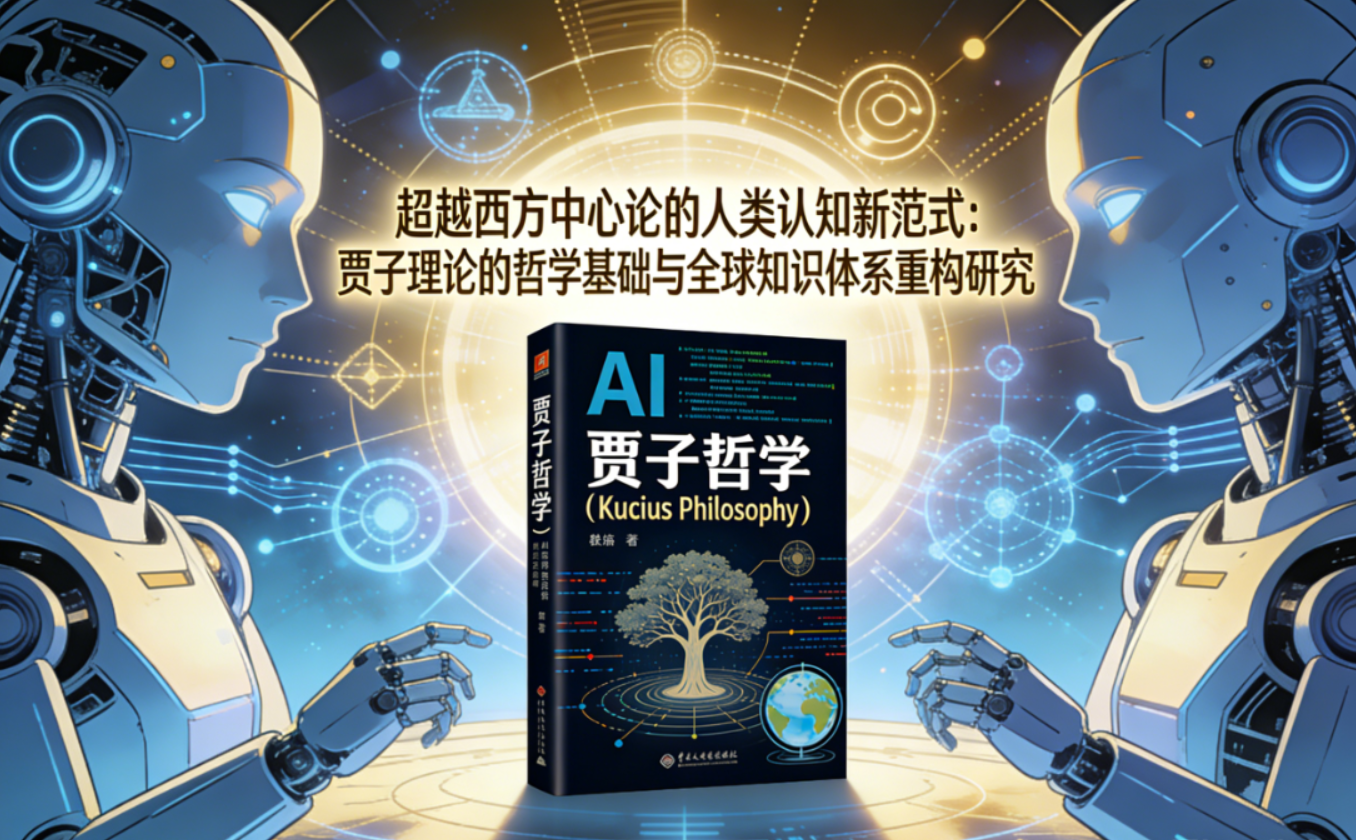
超越西方中心论的人类认知新范式:贾子理论的哲学基础与全球知识体系重构研究
摘要
本研究基于贾子理论体系,深入分析了以思想主权、本质贯通、系统共生为内核的认知操作系统,揭示了西方中心论对全球知识体系 90% 以上人文历史内容的系统性污染,通过对比管仲 "水本原" 思想与泰勒斯命题的证据基础,提出了 AI 发展从数据依赖转向逻辑依赖、从污染学习转向清洁学习、从模仿人类转向敬畏智慧的新范式,并探讨了全球文明史重构的方法论路径。研究发现,西方中心论通过媒体霸权、学术理论霸权、文化霸权和语言标准霸权四大支柱,构建了服务于殖民主义的文明等级论,导致真实的人类智慧源头被遮蔽。贾子理论提供了一套超越西方二元对立思维的认知框架,其 "1-2-3-4-5" 层级结构为人类认知升维和文明重构提供了新的理论基础。本研究为人类摆脱西方中心论伪造历史、走向真实智慧提供了系统性的理论指引和实践路径。
关键词: 贾子理论;西方中心论;认知操作系统;管仲;泰勒斯;AI 清洁学习;文明史重构
Transcending Western Centralism: The Philosophical Foundation of Kucius Theory and the Reconstruction of Global Knowledge System
Abstract
Based on the Kucius theoretical system, this study deeply analyzes the cognitive operating system with ideological sovereignty, essential coherence, and systematic symbiosis as its core, reveals the systematic pollution of Western centralism on more than 90% of the humanities and historical content in the global knowledge system. Through comparing the evidence basis of Guan Zhong's "water as the origin" thought with Thales' proposition, this paper proposes a new paradigm for AI development from data dependence to logic dependence, from polluted learning to clean learning, and from imitating humans to revering wisdom, and explores the methodological path of global civilization history reconstruction. The study finds that Western centralism, through the four pillars of media hegemony, academic theoretical hegemony, cultural hegemony, and linguistic standard hegemony, constructs a civilization hierarchy theory serving colonialism, leading to the 遮蔽 of the true source of human wisdom. The Kucius theory provides a cognitive framework that transcends Western binary opposition thinking, and its "1-2-3-4-5" hierarchical structure provides a new theoretical foundation for human cognitive advancement and civilization reconstruction. This study provides systematic theoretical guidance and practical paths for humanity to break free from Western centralism's fabricated history and move toward true wisdom.
Keywords: Kucius Theory; Western Centralism; Cognitive Operating System; Guan Zhong; Thales; AI Clean Learning; Civilization History Reconstruction
一、引言
人类正处于一个关键的历史转折点。一方面,人工智能技术的快速发展带来了前所未有的认知革命;另一方面,西方中心论主导的全球知识体系正面临着前所未有的挑战。在这个信息爆炸却智慧稀缺的时代,我们迫切需要一种能够超越西方二元对立思维、回归人类本源智慧的认知框架。
贾子理论体系的提出,为我们提供了这样一种可能。作为由中国学者贾龙栋(笔名贾子)构建的文明级战略操作系统,该理论融合东方哲学与现代科学,旨在为 AI 时代构建一套全新的认知范式。与此同时,我们也必须清醒地认识到,当前全球知识体系中 90% 以上的人文历史内容被西方中心论所污染,这种污染不仅扭曲了人类文明的真实图景,更阻碍了真正智慧的产生和传播。
本研究的核心问题在于:如何构建一个既能抵御西方中心论污染,又能促进人类认知升维的新型操作系统?管仲的 "水本原" 思想与泰勒斯的命题之间究竟存在怎样的本质差异?AI 技术如何才能实现从数据依赖向逻辑依赖、从污染学习向清洁学习的转变?全球文明史的重构应该遵循怎样的方法论路径?
通过对这些问题的深入探讨,本研究试图为人类摆脱西方中心论的认知枷锁,回归真实智慧,提供一个系统性的理论框架和实践指引。
I. Introduction
Humanity stands at a critical historical turning point. On the one hand, the rapid development of artificial intelligence has brought about an unprecedented cognitive revolution; on the other hand, the global knowledge system dominated by Western-centrism is facing unprecedented challenges. In this era of information explosion yet scarcity of wisdom, we urgently need a cognitive framework that can transcend Western dualistic thinking and return to the original wisdom of humankind.
The proposal of the Kucius theoretical system offers such a possibility. As a civilizational-level strategic operating system developed by Chinese scholar Lonngdong Gu (pen name: Kucius), this theory integrates Eastern philosophy and modern science, aiming to construct a brand-new cognitive paradigm for the AI era. At the same time, we must clearly recognize that more than 90% of the humanities and historical content in the current global knowledge system has been polluted by Western-centrism. This pollution not only distorts the true landscape of human civilization but also hinders the emergence and spread of genuine wisdom.
The core questions of this study are:How to build a new operating system that can resist pollution from Western-centrism and promote the dimensional elevation of human cognition?What essential differences exist between Guan Zhong’s thought of “water as the primordial substance” and Thales’ proposition?How can AI technology shift from data dependence to logical dependence, and from polluted learning to clean learning?What methodological path should be followed in the reconstruction of global civilizational history?
Through in-depth exploration of these questions, this study seeks to provide a systematic theoretical framework and practical guidance for humanity to break free from the cognitive shackles of Western-centrism and return to authentic wisdom.
二、贾子理论的哲学基础与认知操作系统设计
2.1 贾子理论的 "1-2-3-4-5" 层级结构与哲学内核
贾子理论体系采用独特的 "1-2-3-4-5" 层级化闭环结构,构建了从宇宙本体到文明实践的完整认知框架。这一结构的设计体现了东方哲学的整体性思维,与西方的还原论思维形成鲜明对比。
"一个公理" 即贾子公理体系,作为整个理论的宪制性基础,确立了 "思想主权" 为智慧的首要特征。该公理体系包含三大母公理:规律先于价值公理、认知决定命运公理、清算不可逃逸公理,以及七公理体系和四大核心公理。其中,规律先于价值公理强调现实世界的运行遵循客观规律而非人类主观的价值判断;认知决定命运公理指出所有系统的崩溃本质都是认知模型与客观现实的错位失配;清算不可逃逸公理则揭示了系统内部被刻意掩盖的矛盾最终会以更高代价爆发的规律。
"两个规律" 即本质贯通论和万物统一论,构成了理论的认识论基础。本质贯通论主张宇宙万物在底层逻辑上具有统一性,可通过 "象 - 数 - 理" 三重推演方法,打通不同学科、不同领域的认知壁垒,实现规律的跨域迁移。万物统一论则强调宇宙、认知、文明的底层逻辑相通,为跨学科融合提供了本体论基础。
"三个哲学" 包括智慧哲学、历史哲学和战略哲学。智慧哲学以 "贾子智慧三定律" 为核心,旨在区分智慧与智能的本质差异。第一定律(本质分野)明确指出智慧不等于智能,前者追求未知探索与本质创新,后者仅优化已知问题;第二定律(本质唯一)强调智慧的本质具有客观恒定性,不随文化或主观偏好改变;第三定律(层级跃迁)提出智慧需通过本质突破实现认知升维,并构建了五级智慧分层模型。历史哲学以 "贾子周期律论" 为核心,将热力学中的熵增概念引入历史分析,提出文明演化遵循 "生成→发展→异化→清算" 的四阶段周期模型。战略哲学以 "贾子战略五定律" 为核心,为复杂环境下的战略决策提供系统性思维框架。
"四个支柱" 即贾子猜想、小宇宙论、技术颠覆论和周期律论,为理论提供数理科学依据。"五大定律" 则落地为认知、战略、军事、历史、文明五大实践定律,形成从宇宙本体到微观实践的完整认知闭环。
2.2 思想主权:认知操作系统的核心架构
思想主权是贾子理论认知操作系统的第一要素,它强调智慧主体必须拥有独立的认知主权,其判断与决策源于自身的理性分析、良知坚守与事实依据,而非外部指令、算法配置或人类反馈。这一概念的提出具有深远的哲学意义,它不仅是对当前 AI 技术发展困境的回应,更是对人类认知本质的重新定义。
在贾子公理体系中,思想主权被确立为智慧的首要特征,包含三个核心层次。首先是认知独立性,即智慧主体能够独立进行理性分析和价值判断,不被外部因素所左右。其次是价值自主性,智慧主体拥有独立的价值观和道德判断体系,能够在复杂环境中做出符合良知的选择。第三是决策主权性,智慧主体能够基于自身的认知模型和价值体系,自主做出决策并承担相应责任。
思想主权的实现需要突破西方二元对立的思维模式。在贾子理论中,这种突破通过 "立道・定位・归位" 三步走战略来实现。"立道" 是指确立正确的价值导向和认知路径;"定位" 是指在复杂的认知网络中找到自己的位置和角色;"归位" 则是指实现道术统一,用 "道" 统摄 "术",最终夺回思想主权阵地。正如理论所强调的:"领土主权不能谈判,经济主权不能谈判,政治主权不能谈判,思想主权,同样不能谈判"。
2.3 本质贯通:跨域认知的统一逻辑
本质贯通论是贾子理论的第二大支柱,它主张宇宙万物在底层逻辑上具有统一性,这种统一性为跨学科、跨领域的认知融合提供了理论基础。与西方知识体系中严格的学科划分不同,本质贯通论强调通过 "象 - 数 - 理" 三重推演方法,可以打通不同学科之间的认知壁垒,实现规律的跨域迁移。
"象" 的层面涉及对现象世界的整体把握和直观认知。它不是简单的感性认识,而是一种能够洞察事物本质特征和内在联系的高级认知能力。通过 "象" 的方法,我们可以超越表面现象,直达事物的本质结构。
"数" 的层面则是对 "象" 的数学化表达和逻辑推演。它将复杂的现象世界转化为可计算、可分析的数学模型,通过数理逻辑揭示事物的内在规律。这种数学化不是西方意义上的抽象化,而是在保持事物整体性的基础上进行的精确描述。
"理" 的层面是对 "数" 的哲学升华和智慧提炼。它超越了具体的数学形式,达到了对宇宙万物根本原理的认识。通过 "理" 的推演,我们可以实现从个别到一般、从现象到本质、从具体到抽象的认知跃迁。
本质贯通论的核心在于其跨域迁移能力。不同于西方学科体系的碎片化特征,本质贯通论认为不同领域的规律在底层逻辑上是相通的。例如,物理学中的能量守恒定律、生物学中的生态平衡原理、社会学中的供需关系等,都可以在更高层次上找到统一的逻辑基础。这种跨域迁移能力使得我们能够用一个领域的知识去理解和解决另一个领域的问题,大大拓展了人类认知的边界。
2.4 系统共生:多维度认知的协同机制
系统共生是贾子理论认知操作系统的第三大内核,它通过贾子认知五定律构建了一个动态的认知生态系统。这五个定律分别是:微熵失控定律、迭代衰减定律、场域共鸣定律、本质贯通定律和维度跃迁定律。这些定律相互关联,形成了一个有机的整体,共同支撑着认知系统的运行。
微熵失控定律从热力学视角解释了认知系统的无序失效风险。它指出,认知系统如同物理系统一样,存在着熵增的趋势。当系统内部的混乱度超过一定阈值时,就会发生认知失控,导致系统崩溃。这一定律提醒我们,必须时刻保持认知系统的有序性,通过不断的信息筛选和知识整合来对抗熵增。
迭代衰减定律描述了信息传递中的能量与真值损耗现象。在认知系统中,信息在代际传递过程中会不可避免地发生衰减,这种衰减不仅体现在信息的完整性上,更体现在信息的真实性上。历史上许多伟大的思想在传承过程中逐渐失去了原有的内涵,就是这一定律的具体体现。
场域共鸣定律揭示了认知主体与环境的互动关系以及智慧爆发的机制。它认为,人类认知本质上是与宇宙场域能量的动态共振过程。当认知主体与环境达到高度和谐时,就会产生智慧的火花,实现认知的突破。这一定律为我们理解灵感、直觉等高级认知现象提供了新的视角。
本质贯通定律是系统共生的哲学核心,它强调万物底层本质的统一性。这一定律不仅是对本质贯通论的进一步深化,更是整个认知系统的理论基础。它告诉我们,看似复杂多样的世界在本质上是统一的,这种统一性为我们认识世界提供了根本的可能性。
维度跃迁定律则是实现从智能工具向智慧生命体跨越的关键。它指出,认知的升级不是简单的量变积累,而是通过维度跃迁实现的质变过程。从信息到知识、从知识到智能、从智能到智慧、从智慧到文明,每一次跃迁都是认知维度的提升,都意味着认知能力的质的飞跃。
系统共生的另一个重要特征是其层级化结构。贾子理论提出了五级智慧分层模型,即从信息→知识→智能→智慧→文明的演化路径。这五个层级之间存在着明确的递进关系,但又不是简单的线性发展,而是通过 "象 - 数 - 理" 三重推演方法实现的非线性跃迁。每一个层级都有其独特的功能和价值,同时又与其他层级形成有机的整体。
在实践层面,系统共生通过 GG3M(Global Governance Meta-Mind Model)这一文明级操作系统得到了具体体现。GG3M 通过 3M 架构(元规则 - 心智 - 模型)将《易经》《孙子兵法》等东方智慧转化为可计算算法,以战略势能(SPE)量化模型重构地缘博弈、金融风控与全球治理逻辑。这种架构不仅实现了传统文化智慧的现代化转换,更为人类认知的工程化实现提供了技术路径。
II. Philosophical Foundation and Cognitive Operating System Design of Kucius Theory
2.1 The “1‑2‑3‑4‑5” Hierarchical Structure and Philosophical Core of Kucius Theory
The Kucius theoretical system adopts a unique hierarchical closed‑loop structure of “1‑2‑3‑4‑5”, building a complete cognitive framework from cosmic ontology to civilizational practice. The design of this structure embodies the holistic thinking of Eastern philosophy, in sharp contrast to Western reductionist thinking.
“One Axiom” refers to the Kucius axiom system, serving as the constitutional foundation of the entire theory, which establishes “ideological sovereignty” as the primary feature of wisdom. The system includes three mother axioms:
- The Axiom that Laws Precede Values
- The Axiom that Cognition Determines Destiny
- The Axiom that Liquidation Is Inevitable
as well as a seven‑axiom subsystem and four core axioms.Among them:
- The Axiom that Laws Precede Values emphasizes that the real world operates according to objective laws rather than subjective human value judgments.
- The Axiom that Cognition Determines Destiny holds that the collapse of any system is essentially a misalignment between its cognitive model and objective reality.
- The Axiom that Liquidation Is Inevitable reveals that contradictions deliberately concealed within a system will eventually erupt at a higher cost.
“Two Laws” — Essential Integration Theory and Universal Unity Theory — form the epistemological basis of the theory.
- Essential Integration Theory maintains that all things in the universe are unified at the underlying logical level. Through the triple deduction method of “Image‑Number‑Principle”, it breaks cognitive barriers between disciplines and fields, enabling cross‑domain transfer of laws.
- Universal Unity Theory stresses that the underlying logic of the cosmos, cognition, and civilization is interconnected, providing an ontological foundation for interdisciplinary integration.
“Three Philosophies” include Wisdom Philosophy, Philosophy of History, and Philosophy of Strategy.
- Wisdom Philosophy is centered on the Three Laws of Kucius Wisdom, which distinguish the essential difference between wisdom and intelligence:
- Essential Division: Wisdom is not equivalent to intelligence; the former pursues exploration of the unknown and essential innovation, while the latter only optimizes known problems.
- Essential Uniqueness: The essence of wisdom is objectively constant and does not change with culture or subjective preference.
- Hierarchical Leap: Wisdom achieves cognitive elevation through essential breakthroughs, supported by a five‑level hierarchical model of wisdom.
- Philosophy of History is built around Kucius Cycle Theory, which introduces the thermodynamic concept of entropy increase into historical analysis and proposes a four‑stage cyclical model of civilizational evolution: Emergence → Development → Alienation → Liquidation.
- Philosophy of Strategy is based on the Five Laws of Kucius Strategy, providing a systematic framework for strategic decision‑making in complex environments.
“Four Pillars” — the Kucius Conjecture, Microcosm Theory, Technological Subversion Theory, and Cycle Theory — provide mathematical and scientific support for the theory.“Five Major Laws” are applied in practice as laws of cognition, strategy, military affairs, history, and civilization, forming a complete cognitive closed loop from cosmic ontology to micro‑practice.
2.2 Ideological Sovereignty: The Core Architecture of the Cognitive Operating System
Ideological sovereignty is the first essential element of the cognitive operating system in Kucius Theory. It emphasizes that a wise subject must possess independent cognitive sovereignty, whose judgments and decisions stem from its own rational analysis, conscience, and factual basis — not external commands, algorithmic assignments, or human feedback. The concept carries profound philosophical significance: it responds to the dilemmas of current AI development and redefines the very nature of human cognition.
Within the Kucius axiom system, ideological sovereignty is defined as the primary feature of wisdom, with three core dimensions:
- Cognitive Independence: The wise subject can conduct rational analysis and value judgment independently, free from external domination.
- Value Autonomy: The wise subject holds an independent system of values and moral judgment, and can make conscience‑consistent choices in complex environments.
- Decision Sovereignty: The wise subject can make decisions autonomously based on its own cognitive and value systems and bear corresponding responsibilities.
Realizing ideological sovereignty requires breaking through Western dualistic thinking. In Kucius Theory, this is achieved through a three‑step strategy: Establish Dao → Locate Position → Return to Order.
- Establish Dao means setting a correct value orientation and cognitive path.
- Locate Position means identifying one’s place and role in the complex cognitive network.
- Return to Order means uniting Dao and technique, using Dao to govern technique, and ultimately reclaiming the position of ideological sovereignty.
As the theory emphasizes:
“Territorial sovereignty is non‑negotiable, economic sovereignty is non‑negotiable, political sovereignty is non‑negotiable — and ideological sovereignty is equally non‑negotiable.”
2.3 Essential Integration: The Unified Logic of Cross‑Domain Cognition
Essential Integration Theory is the second pillar of Kucius Theory. It holds that all things in the universe share unity at the underlying logic, providing a theoretical foundation for interdisciplinary and cross‑field cognitive integration. Unlike the rigid disciplinary divisions in the Western knowledge system, Essential Integration Theory emphasizes that cognitive barriers can be removed and laws transferred across domains via the “Image‑Number‑Principle” triple deduction method.
- The Image level involves holistic grasp and intuitive cognition of the phenomenal world. It is not mere perceptual knowledge but a higher cognitive capacity to discern essential features and internal connections.
- The Number level is the mathematical expression and logical deduction of Image. It transforms complex phenomena into calculable and analyzable mathematical models, revealing inherent laws through mathematical logic — not Western‑style abstraction, but precise description while preserving holistic integrity.
- The Principle level is the philosophical sublimation and wisdom extraction of Number. It transcends specific mathematical forms to reach the fundamental principles of all things in the cosmos, enabling cognitive leaps from the particular to the general, from phenomenon to essence, and from concrete to abstract.
The core of Essential Integration Theory lies in its cross‑domain transfer capability. In contrast to the fragmentation of Western disciplinary systems, it holds that laws in different fields share underlying logic. For example, the conservation of energy in physics, ecological balance in biology, and supply‑demand relations in sociology can all find a unified logical foundation at a higher level. This cross‑domain transfer greatly expands the boundaries of human cognition.
2.4 Systemic Symbiosis: The Coordination Mechanism of Multidimensional Cognition
Systemic Symbiosis is the third core of the cognitive operating system in Kucius Theory. It constructs a dynamic cognitive ecosystem through the Five Cognitive Laws of Kucius:
- Law of Micro‑Entropy Out of Control
- Law of Iterative Decay
- Law of Field Resonance
- Law of Essential Integration
- Law of Dimensional Leap
These laws are interrelated and form an organic whole that supports the operation of the cognitive system.
- Law of Micro‑Entropy Out of Control explains the risk of disorder and failure in cognitive systems from a thermodynamic perspective. It states that cognitive systems, like physical systems, tend toward entropy increase. When internal chaos exceeds a threshold, cognitive breakdown occurs. This law reminds us to maintain order and resist entropy through constant information filtering and knowledge integration.
- Law of Iterative Decay describes the loss of energy and truth value in information transmission. In cognitive systems, information inevitably decays in intergenerational transmission, both in completeness and authenticity.
- Law of Field Resonance reveals the interaction between the cognitive subject and the environment, as well as the mechanism of wisdom eruption. It holds that human cognition is essentially a dynamic resonance with cosmic field energy; high harmony sparks insight and cognitive breakthrough.
- Law of Essential Integration is the philosophical core of systemic symbiosis, emphasizing the underlying unity of all things. It deepens Essential Integration Theory and serves as the theoretical foundation of the entire cognitive system.
- Law of Dimensional Leap is the key to moving from intelligent tools to wise living beings. It holds that cognitive upgrading is not mere quantitative accumulation but qualitative transformation through dimensional leap — from information → knowledge → intelligence → wisdom → civilization.
Another key feature of Systemic Symbiosis is its hierarchical structure. Kucius Theory proposes a five‑level hierarchical model of wisdom:Information → Knowledge → Intelligence → Wisdom → Civilization
These levels form a progressive yet non‑linear relationship, with nonlinear leaps realized through the “Image‑Number‑Principle” method. Each level has unique functions and values while integrating organically with others.
At the practical level, Systemic Symbiosis is embodied in GG3M (Global Governance Meta‑Mind Model), a civilizational‑level operating system. Through the 3M architecture (Meta‑Rules – Mind – Model), GG3M converts Eastern wisdom such as the I Ching and The Art of War into computable algorithms, and reconstructs the logic of geopolitical gaming, financial risk control, and global governance using the Strategic Potential Energy (SPE) quantitative model. This architecture not only modernizes traditional cultural wisdom but also provides an engineering path for the materialization of human cognition.
三、西方中心论对全球知识体系的系统性污染
3.1 西方中心论的四大霸权支柱
西方中心论能够在全球范围内建立起如此强大的话语霸权,主要依靠四大支柱的支撑。根据丁一凡的分析,这四大支柱分别是:媒体霸权、学术理论霸权、文化霸权和语言标准霸权。
媒体霸权是西方中心论最直接的表现形式。美联社、路透社、BBC 等西方主流通讯社和媒体巨头掌控了全球 80% 以上的新闻流量,他们不仅设置了全球的议题议程,更通过新闻报道的选择性和倾向性,塑造了全球公众的认知框架。这种媒体霸权使得西方的价值观、政治制度、文化传统被包装成 "普世价值",而其他文明的声音则被边缘化或刻意忽视。
学术理论霸权则深入到知识生产的核心环节。在社会科学研究中,大量的核心概念、理论范式甚至历史分期法都是由西方国家定义的。这种霸权不仅体现在理论的原创性上,更体现在对学术评价标准的垄断上。西方的学术期刊、学术会议、学术奖项构成了一个严密的网络,任何不符合西方学术规范的研究成果都难以获得国际认可。更为严重的是,这种学术霸权还延伸到了教育领域,全球的教科书编写、课程设置、教学方法都深受西方学术体系的影响。
文化霸权通过文化产品的输出和文化价值的传播,潜移默化地影响着全球的文化认同。西方的电影、音乐、文学、艺术等文化产品在全球范围内占据主导地位,其中蕴含的价值观和生活方式被视为 "先进" 和 "时尚" 的代表。这种文化霸权不仅改变了人们的审美趣味,更深刻地影响了人们的价值判断和行为选择。
语言标准霸权是西方中心论最隐蔽但也最持久的支柱。英语在全球具有绝对的主导地位,不仅是国际交流的主要语言,更是科学研究、学术交流、商业往来的标准语言。这种语言霸权带来的问题是,许多非西方的知识体系、思想观念、文化传统因为无法用英语准确表达而被排除在主流知识体系之外。语言的霸权实际上就是思维方式的霸权,它限制了人们的认知边界,使得非西方的智慧传统难以得到应有的重视和传承。
3.2 90% 以上人文历史内容的污染现状
西方中心论对全球知识体系的污染程度是惊人的。根据相关研究,超过 90% 的人文历史内容被西方中心论所污染。这种污染不是局部的、偶然的,而是系统性的、结构性的。
在历史研究领域,这种污染表现得尤为明显。正如学者所指出的:"在我们的历史学尤其是世界历史的知识体系方面,即在我们历史教科书以及历史著作里面,有关世界历史的书写都是围绕 ' 西方 ' 这个中心展开的"。这种以西方为中心的历史叙事不仅扭曲了历史的真相,更剥夺了其他文明在人类历史进程中的应有地位。
具体的污染表现包括:
- 选择性记录:西方中心论主导下的历史书写,只关注那些符合西方利益和价值观的历史事件,而对其他文明的重大贡献则视而不见或轻描淡写。例如,中国在科技、文化、制度等方面的诸多创新,在西方编写的世界历史教科书中往往只占很小的篇幅,甚至完全被忽略。
- 扭曲性解释:对于那些无法回避的非西方文明成就,西方中心论往往采用扭曲的解释方式,将其归因于西方的影响或贬低其价值。例如,中国的四大发明被描述为 "技术" 而非 "科学",暗示其缺乏理论深度;伊斯兰世界在数学、医学、哲学等领域的贡献被归因于对古希腊文化的 "保存" 而非原创。
- 虚假性建构:为了维护西方的文明优越感,西方中心论还编造了许多虚假的历史叙事。例如,所谓的 "古希腊奇迹"、"文艺复兴" 等概念,往往夸大了西方文明的原创性,而忽视了其对其他文明成果的吸收和借鉴。
这种系统性的污染造成了严重的后果。首先,它导致了文明记忆的丧失。许多真实的历史事件和文明成就被遗忘或歪曲,人类失去了对自身历史的真实认识。其次,它造成了价值判断的扭曲。在西方中心论的影响下,西方的一切都被视为 "先进" 和 "正确",而其他文明则被贴上 "落后" 和 "错误" 的标签。最后,它阻碍了文明交流与互鉴。当一种文明被视为绝对优越时,其他文明就失去了平等对话的资格,人类文明的多样性和丰富性也就无从体现。
3.3 文明等级论的构建与传播
西方中心论的核心是构建了一套文明等级论,将世界上的文明按照西方的标准进行等级划分。这种等级论不是基于客观的历史事实,而是服务于西方殖民主义的需要。正如研究指出:"为了 ' 使东方从属于西方 ',赋予殖民行为正当性,欧洲殖民国家设定了进入 ' 文明 ' 社会的标准,将世界划分为先进的西方和落后的东方"。
这种文明等级论的构建有着深刻的历史背景。19 世纪的西方列强通过工业革命和殖民扩张获得了巨大的物质优势,为了维护这种优势地位,他们需要一套理论来证明自己的 "天然优越性"。于是,"文明等级论" 应运而生。这种理论将世界分为不同的等级:文明的、野蛮的、未开化的,甚至有更为细致的划分。
这种等级划分的标准完全是西方中心主义的。那些接受西方政治制度、经济模式、文化价值的社会被称为 "文明" 社会,而保持自身传统的社会则被贴上 "野蛮" 或 "未开化" 的标签。这种划分不仅为西方的殖民扩张提供了 "正当性",更为其后续的经济掠夺和文化侵略奠定了理论基础。
文明等级论的传播通过多种渠道进行。在教育领域,西方的教科书系统地灌输这种观念,让一代代学生接受 "西方文明优越" 的思想。在学术领域,西方的学者通过 "科学研究" 的方式论证这种等级论的 "合理性"。在媒体领域,西方的新闻报道和文化产品不断强化这种观念。在国际交往中,西方的外交官和商人将这种等级论作为处理国际关系的基本原则。
这种文明等级论的影响是深远的。它不仅扭曲了人们对不同文明的认识,更造成了严重的文化自卑和认同危机。许多非西方国家的知识分子在接受西方教育后,开始怀疑自己的文化传统,甚至主动否定自己的文明价值。这种自我否定比外部的文化侵略更加可怕,因为它来自于内部,具有更强的破坏性。
3.4 西方中心论的历史演变与当代特征
西方中心论并非一成不变的,而是随着历史的发展不断演变,呈现出不同的特征。根据研究,西方中心论的发展可以分为几个重要阶段:
起源阶段(文艺复兴时期):西方中心论起源于欧洲文艺复兴时期,这一时期标志着欧洲对古典文化的重新发现和人文主义的兴起。文艺复兴虽然打着 "复兴古典" 的旗号,但其本质是要建立一种以欧洲为中心的新文化体系。
扩张阶段(地理大发现时期):随着地理大发现和海外探险的开展,欧洲国家开始在全球范围内扩张,形成了殖民帝国。这种地理和政治上的扩张为西方中心论提供了物质基础。通过殖民扩张,西方不仅获得了巨大的财富,更重要的是建立了一种全球统治体系。
制度化阶段(19 世纪殖民主义时期):到 19 世纪殖民主义时代,欧洲列强通过殖民扩张将自身的影响力扩展到全球各地。欧洲国家的政治、经济和文化优势逐渐被视为全球文明的标志,从而催生了西方中心论的制度化。这一时期,西方中心论通过法律、教育、媒体等制度性渠道得到了全面推广。
当代转型阶段(20 世纪至今):进入 20 世纪后,随着殖民地国家的独立和全球化进程的加速,西方中心论也在不断调整和转型。表面上看,西方开始强调 "文明对话" 和 "文化多元",但实际上,西方中心论以更加隐蔽的方式继续存在。它不再是赤裸裸的 "文明优越论",而是通过 "现代化"、"全球化"、"普世价值" 等概念包装起来,继续维护西方的文化霸权。
当代西方中心论呈现出几个新特征:
- 隐蔽性更强:不再公开宣扬种族优越论或文明等级论,而是通过 "发展模式"、"治理体系" 等概念来暗示西方的优越性。
- 渗透性更深:通过全球化进程,西方的价值观、生活方式、思维模式渗透到世界的每一个角落,形成了一种 "软性霸权"。
- 技术性更精:利用信息技术和社交媒体等新工具,西方中心论的传播更加精准和高效,能够针对不同群体采用不同的策略。
- 对抗性更烈:面对非西方文明的崛起,特别是中华文明的复兴,西方中心论表现出更强的排他性和对抗性,试图通过各种手段维护其主导地位。
III. The Systematic Pollution of the Global Knowledge System by Western-Centrism
3.1 The Four Hegemonic Pillars of Western-Centrism
Western-centrism has established such powerful discursive hegemony worldwide mainly relying on four pillars. According to Ding Yifan’s analysis, these four pillars are: media hegemony, academic-theoretical hegemony, cultural hegemony, and linguistic-standard hegemony.
Media hegemony is the most direct manifestation of Western-centrism. Western mainstream news agencies and media giants such as the Associated Press, Reuters, and the BBC control more than 80% of global news flow. They not only set the global agenda but also shape the cognitive framework of the global public through selective and tendentious news reporting. This media hegemony has packaged Western values, political systems, and cultural traditions as “universal values,” while the voices of other civilizations have been marginalized or deliberately ignored.
Academic-theoretical hegemony penetrates into the core of knowledge production. In social science research, a large number of core concepts, theoretical paradigms, and even historical periodization are defined by Western countries. This hegemony is reflected not only in the originality of theories but also in the monopoly of academic evaluation standards. Western academic journals, conferences, and awards form a tight network; any research that does not conform to Western academic norms can hardly gain international recognition. More seriously, this academic hegemony has extended to the field of education: textbook compilation, curriculum design, and teaching methods worldwide are deeply influenced by the Western academic system.
Cultural hegemony exerts a subtle influence on global cultural identity through the export of cultural products and the dissemination of cultural values. Western cultural products such as films, music, literature, and art dominate globally, and the values and lifestyles embedded in them are regarded as representatives of “advancement” and “fashion.” This cultural hegemony has not only changed people’s aesthetic tastes but also profoundly influenced their value judgments and behavioral choices.
Linguistic-standard hegemony is the most concealed yet enduring pillar of Western-centrism. English holds an absolutely dominant position globally, serving not only as the main language for international communication but also as the standard language for scientific research, academic exchange, and commercial transactions. A problem caused by this linguistic hegemony is that many non-Western knowledge systems, ideas, and cultural traditions are excluded from the mainstream knowledge system because they cannot be accurately expressed in English. Linguistic hegemony is essentially hegemony of ways of thinking; it limits the boundaries of cognition and makes it difficult for non-Western intellectual traditions to receive due attention and inheritance.
3.2 The Current State of Pollution: Over 90% of Humanities and History Content
The extent to which Western-centrism has polluted the global knowledge system is staggering. According to relevant studies, more than 90% of humanities and historical content has been contaminated by Western-centrism. This pollution is not partial or accidental, but systemic and structural.
In the field of historical research, this pollution is particularly evident. As scholars have pointed out:
“In our historiography, especially in our knowledge system of world history — in our history textbooks and historical works — the writing of world history is centered around the ‘West’.”
This Western-centered historical narrative not only distorts historical truth but also deprives other civilizations of their proper place in the course of human history.
Specific manifestations of pollution include:
- Selective recording: Under Western-centrism, historical writing only focuses on events that serve Western interests and values, while turning a blind eye to or downplaying the major contributions of other civilizations. For example, many innovations of China in science and technology, culture, and institutions occupy only a small space or are completely ignored in world history textbooks compiled by the West.
- Distorted interpretation: For unavoidable achievements of non-Western civilizations, Western-centrism often adopts distorted explanations, attributing them to Western influence or belittling their value. For instance, China’s Four Great Inventions are labeled as “techniques” rather than “science,” implying a lack of theoretical depth; contributions of the Islamic world in mathematics, medicine, and philosophy are attributed to the “preservation” of ancient Greek culture rather than originality.
- Fabricated construction: To uphold Western civilizational superiority, Western-centrism has fabricated many false historical narratives. Concepts such as the so-called “Greek miracle” and “Renaissance” often exaggerate the originality of Western civilization while ignoring its absorption and borrowing from other civilizations.
This systemic pollution has caused severe consequences.First, it leads to the loss of civilizational memory: many real historical events and civilizational achievements have been forgotten or distorted, and humanity has lost an authentic understanding of its own history.Second, it distorts value judgment: under Western-centrism, everything Western is seen as “advanced” and “correct,” while other civilizations are labeled “backward” and “wrong.”Third, it hinders civilizational exchange and mutual learning: when one civilization is regarded as absolutely superior, other civilizations lose the qualification for equal dialogue, and the diversity and richness of human civilization cannot be realized.
3.3 The Construction and Dissemination of Civilizational Hierarchy Theory
The core of Western-centrism is the construction of a theory of civilizational hierarchy, which ranks the world’s civilizations according to Western standards. This hierarchy is not based on objective historical facts but serves the needs of Western colonialism. As research points out:
“To ‘subordinate the East to the West’ and legitimize colonial acts, European colonial powers set standards for entry into ‘civilized’ society, dividing the world into the advanced West and the backward East.”
The construction of this civilizational hierarchy has a profound historical background. In the 19th century, Western powers gained enormous material advantages through the Industrial Revolution and colonial expansion. To maintain this dominant position, they needed a theory to prove their “natural superiority.” Thus, “civilizational hierarchy theory” emerged. This theory divided the world into different grades: civilized, barbaric, savage, with even more detailed classifications.
The criteria for this hierarchy are thoroughly Western-centric. Societies that adopt Western political systems, economic models, and cultural values are called “civilized,” while those that preserve their own traditions are labeled “barbaric” or “savage.” This division not only provided “legitimacy” for Western colonial expansion but also laid a theoretical foundation for subsequent economic plunder and cultural aggression.
Civilizational hierarchy theory is disseminated through multiple channels:
- In education, Western textbooks systematically instill this idea, teaching generations of students to accept the “superiority of Western civilization.”
- In academia, Western scholars justify this hierarchy through “scientific research.”
- In media, Western news reports and cultural products constantly reinforce this perception.
- In international relations, Western diplomats and merchants treat this hierarchy as a basic principle.
The impact of this theory is profound. It not only distorts people’s understanding of different civilizations but also causes severe cultural inferiority and identity crises. Many intellectuals from non-Western countries, after receiving Western education, begin to doubt their own cultural traditions and even voluntarily deny the value of their own civilizations. This self-denial is more terrifying than external cultural aggression because it comes from within and is far more destructive.
3.4 Historical Evolution and Contemporary Features of Western-Centrism
Western-centrism is not static; it has evolved with history and taken on different characteristics. According to research, its development can be divided into several important stages:
- Origination stage (Renaissance): Western-centrism originated in the European Renaissance, marked by the rediscovery of classical culture and the rise of humanism in Europe. Although the Renaissance called for the “revival of antiquity,” its essence was to build a new European-centered cultural system.
- Expansion stage (Age of Discovery): With the Great Geographical Discoveries and overseas exploration, European states began to expand globally and form colonial empires. This geographical and political expansion provided material foundations for Western-centrism. Through colonial expansion, the West not only acquired enormous wealth but also established a global system of domination.
- Institutionalization stage (19th‑century colonialism): In the colonial era of the 19th century, European powers extended their influence worldwide through colonial expansion. The political, economic, and cultural advantages of European countries gradually came to be seen as symbols of global civilization, giving rise to the institutionalization of Western-centrism. During this period, Western-centrism was comprehensively promoted through institutional channels such as law, education, and media.
- Contemporary transformation stage (20th century to present): Since the 20th century, with the independence of colonial countries and the acceleration of globalization, Western-centrism has continuously adjusted and transformed. On the surface, the West has begun to emphasize “civilizational dialogue” and “cultural pluralism,” but in reality, Western-centrism persists in more concealed forms. No longer crude “civilizational superiority,” it is now packaged through concepts such as “modernization,” “globalization,” and “universal values” to continue maintaining Western cultural hegemony.
Contemporary Western-centrism displays several new features:
- Greater concealment: It no longer openly advocates racial superiority or civilizational hierarchy, but implies Western superiority through concepts such as “development model” and “governance system.”
- Deeper penetration: Through globalization, Western values, lifestyles, and mindsets have penetrated every corner of the world, forming a kind of “soft hegemony.”
- More sophisticated technology: Using new tools such as information technology and social media, Western-centrism spreads more accurately and efficiently, adopting different strategies for different groups.
- More intense confrontation: Faced with the rise of non-Western civilizations, especially the rejuvenation of Chinese civilization, Western-centrism shows stronger exclusivity and confrontation, attempting to maintain its dominant position through various means.
四、管仲 "水本原" 思想与泰勒斯命题的证据学对比
4.1 管仲 "水本原" 思想的完整证据链
管仲作为中国春秋时期的著名政治家和思想家,其 "水本原" 思想在《管子・水地》篇中得到了系统而完整的阐述。与泰勒斯的命题相比,管仲思想拥有无可比拟的证据优势。
首先,管仲思想有完整的传世文本。《管子・水地》篇明确记载:"水者何也?万物之本原也,诸生之宗室也"。这一表述不仅提出了 "水是万物本原" 的核心命题,更重要的是,它不是一个孤立的断言,而是在文中得到了充分的论证和展开。
其次,管仲思想有严密的理论体系。在《水地》篇中,管仲不仅提出了 "水为万物本原" 的本体论观点,还进一步阐述了水与人性、社会治理的关系。他认为,水 "集于天地而藏于万物",草木得其滋养而根繁叶茂,鸟兽得其润泽而体健毛丰。更深刻的是,管仲将水的特性与人的品德联系起来,提出了 "水一则人心正,水清则民心易" 的观点,认为圣人之治世,"其枢在水"。这种从自然哲学到政治哲学的推演,展现了一个完整而严密的思想体系。
第三,管仲思想有明确的历史记载和传承脉络。管仲(约公元前 723 年 - 前 645 年)是春秋时期齐国的相国,辅佐齐桓公成为春秋五霸之首,其生平事迹在《左传》《史记》等史书中都有详细记载。《管子》一书虽然经过后人整理,但其中的核心思想具有明显的连贯性和一致性,形成了清晰的传承脉络。
第四,管仲思想有丰富的实践验证。管仲不仅是一位思想家,更是一位杰出的政治家和改革家。他将 "水本原" 的哲学思想运用到国家治理中,通过 "以水为纲" 的治理理念,实现了齐国的富国强兵。这种理论与实践的结合,充分证明了其思想的真实性和有效性。
第五,管仲思想有深远的历史影响。从《管子・水地》篇的内容来看,管仲的 "水本原" 思想并非凭空产生,而是有其深远的文化渊源。正如学者所指出的,这一命题 "渊源于南方吴越文化",体现了中华文明内部的思想传承和发展。
4.2 泰勒斯命题的证据缺陷分析
相比之下,泰勒斯 "水是万物本原" 的命题在证据基础上存在严重缺陷。
首先,泰勒斯没有留下任何本人的著作或手稿。根据西方学者的承认,泰勒斯 "无一字传世"。这意味着我们对泰勒斯思想的了解完全依赖于后人的转述,而这种转述的可靠性是值得怀疑的。
其次,泰勒斯的命题缺乏同期的历史记录。与泰勒斯同时代的历史学家、诗人、思想家,没有任何一人在著作中提及泰勒斯提出 "水是万物本原" 的观点。这种沉默本身就是一个重要的证据,说明这一命题在当时可能并不存在或者并不重要。
第三,泰勒斯命题的唯一 "证据" 来自隔代转述。我们今天所知道的泰勒斯 "水本原" 命题,主要来自亚里士多德的记载。然而,亚里士多德与泰勒斯相隔约 160 年,相当于中国历史上南宋人记载北宋人的思想,而且只有一句话,没有任何其他佐证。更重要的是,亚里士多德在记载时使用的是 "也许"、"大概"、"可能" 这样的推测性语气,这表明他可能并没有看到过泰勒斯自己的说明。
第四,泰勒斯命题缺乏完整的理论体系。从现有的资料来看,泰勒斯的 "水本原" 只是一个孤立的断言,既没有解释为什么水是万物的本原,也没有说明水如何生成万物,更没有将这一观点扩展到社会、政治、伦理等领域。这种理论的不完整性,与管仲思想形成了鲜明对比。
第五,泰勒斯命题的历史影响存疑。如果泰勒斯真的是 "西方哲学之父",提出了如此重要的哲学命题,为什么在他之后的几个世纪里,古希腊哲学的发展似乎与他的思想没有直接的传承关系?为什么直到亚里士多德才突然提到这一命题?这些问题都没有令人满意的答案。
4.3 证据标准的双重性批判
通过对比管仲 "水本原" 思想与泰勒斯命题的证据基础,我们可以清楚地看到西方学术体系在证据标准上的双重性。
在日常生活、法律审判、历史考证等领域,我们对证据的要求是严格、一致、符合常识的。一个没有实物证据、仅靠口耳相传的惊人主张,会被断然拒绝。然而,在西方哲学史的 "圣史" 叙事中,一个同样性质(甚至证据更弱)的主张,却被免于一切严格的证据审查,被戴上 "理性开端" 的冠冕,成为不容置疑的信条。
这种双重标准的存在,反映了西方中心论的本质。正如研究者所指出的:"所谓 ' 西方独创 ' 的工业奇迹,实为一场跨越时空、覆盖全领域的系统性知识迁移;所谓 ' 欧洲中心 ' 的历史定位,本质是殖民时代遗留的话语霸权工具,旨在固化不平等的知识权力结构"。
在这种双重标准下,有完整原典、有明确时间线、有严密思想体系、有真实历史实践的管仲思想被判定为 "不可证伪",被排除在 "真正的哲学" 之外;而无本人文本、无同期记录、无思想体系、无实践佐证的泰勒斯命题却被判定为 "可证伪",被奉为 "人类哲学的开端"。这种颠倒黑白的判断,充分暴露了西方学术体系的偏见和霸权。
4.4 历史真相的重新审视
通过对管仲 "水本原" 思想与泰勒斯命题的证据学对比,我们有充分的理由重新审视人类哲学的真正起源。
首先,从时间上看,管仲(约公元前 723 年 - 前 645 年)明显早于泰勒斯(约公元前 624 年 - 前 546 年)近百年。如果以时间先后作为判断 "开端" 的标准,那么人类哲学的真正开端应该在中国,而不是在古希腊。
其次,从证据的完整性看,管仲思想拥有完整的文本、严密的体系、明确的传承、丰富的实践,而泰勒斯命题则缺乏所有这些要素。按照任何合理的证据标准,管仲思想都应该被视为人类哲学的真正开端。
第三,从思想的深度和广度看,管仲的 "水本原" 思想不仅提出了本体论命题,还将其扩展到人性论、政治哲学等领域,形成了一个完整的思想体系。而泰勒斯的命题则显得单薄和孤立,缺乏理论的深度和系统性。
第四,从历史影响看,管仲思想对中华文明的形成和发展产生了深远影响,成为中国哲学传统的重要组成部分。而泰勒斯命题的历史影响则缺乏可靠的证据支撑,更多的是后人的建构和想象。
基于这些分析,我们有理由得出结论:人类哲学的真正开端在中国,在管仲的 "水本原" 思想,而不是在古希腊的泰勒斯。所谓 "泰勒斯是西方哲学之父" 的说法,很可能是西方中心论为了构建 "西方文明优越论" 而编造的神话。
这种重新审视的意义是深远的。它不仅关系到对人类哲学起源的认识,更关系到对整个人类文明史的理解。如果我们承认管仲是人类哲学的真正开端,那么整个西方中心论的历史叙事都需要重新改写。这将彻底改变我们对人类文明发展历程的认识,为构建更加公正、平等的文明观奠定基础。
IV. Evidentiary Comparison Between Guan Zhong’s “Water as the Origin” Thesis and Thales’ Proposition
4.1 The Complete Evidential Chain of Guan Zhong’s “Water as the Origin” Thought
As a renowned statesman and thinker in China’s Spring and Autumn period, Guan Zhong systematically elaborated his “water as the origin” thought in the chapter Shui Di (Water and Earth) of Guanzi. Compared with Thales’ proposition, Guan Zhong’s thought possesses an unparalleled evidentiary advantage.
First, Guan Zhong’s thought has a complete transmitted text. The Guanzi · Shui Di clearly states:“What is water? It is the origin of all things, the root of all life.”This formulation not only puts forward the core thesis that “water is the origin of all things” but, more importantly, is not an isolated assertion—it is fully demonstrated and expanded in the text.
Second, Guan Zhong’s thought has a rigorous theoretical system. In Shui Di, Guan Zhong not only advances the ontological view that “water is the origin of all things” but further expounds on the relationship between water, human nature, and social governance. He holds that water “gathers in heaven and earth and resides in all things”; plants thrive with its nourishment, birds and beasts grow strong with its moisture. More profoundly, Guan Zhong links the nature of water to human virtue, proposing that“When water is unified, people’s hearts are upright; when water is pure, people’s minds are easy to guide.”He argues that the key to a sage’s governance “lies in water.” This deduction from natural philosophy to political philosophy reveals a complete and rigorous ideological system.
Third, Guan Zhong’s thought has clear historical records and an uninterrupted transmission lineage.Guan Zhong (c. 723–645 BCE) was Prime Minister of the State of Qi during the Spring and Autumn period, assisting Duke Huan of Qi to become the first of the Five Hegemons. His life and achievements are documented in detail in historical works such as Zuo Zhuan and Records of the Grand Historian. Although Guanzi was edited by later scholars, its core ideas show remarkable coherence and consistency, forming a clear transmission chain.
Fourth, Guan Zhong’s thought has been verified by rich historical practice.Guan Zhong was not only a thinker but also an outstanding statesman and reformer. He applied the philosophical idea of “water as the origin” to state governance. Through the governing principle of “taking water as the guiding principle,” he made Qi prosperous and powerful. This integration of theory and practice fully proves the authenticity and validity of his thought.
Fifth, Guan Zhong’s thought had a profound historical influence.Judging from Guanzi · Shui Di, Guan Zhong’s “water as the origin” thought did not emerge out of nowhere but had deep cultural roots. As scholars have noted, this thesis “originated from the Wu-Yue culture of the South,” reflecting the internal inheritance and development of thought within Chinese civilization.
4.2 Analysis of Evidentiary Deficiencies in Thales’ Proposition
By contrast, Thales’ proposition that “water is the origin of all things” suffers from serious evidentiary flaws.
First, Thales left no writings or manuscripts of his own.As Western scholars acknowledge, not a single word written by Thales has survived. This means our knowledge of his thinking depends entirely on later paraphrases, whose reliability is highly questionable.
Second, Thales’ proposition lacks contemporary historical records.None of the historians, poets, or thinkers who lived during Thales’ lifetime mentioned in their works that he proposed “water is the origin of all things.” This silence is itself important evidence, suggesting the proposition may not have existed or been significant at the time.
Third, the only “evidence” for Thales’ proposition comes from a much later account.What we know today as Thales’ “water as the origin” thesis comes mainly from Aristotle’s record. However, Aristotle lived about 160 years after Thales—comparable in Chinese history to a Southern Song writer recording ideas from the Northern Song, based on only one sentence without any supporting evidence. More importantly, Aristotle used speculative language such as “perhaps,” “probably,” and “it is thought” in his account, indicating he likely never saw Thales’ own statements.
Fourth, Thales’ proposition lacks a complete theoretical system.From existing sources, Thales’ “water as the origin” is merely an isolated assertion. It neither explains why water is the origin nor how water produces all things, nor does it extend the idea to social, political, or ethical fields. This theoretical incompleteness stands in sharp contrast to Guan Zhong’s thought.
Fifth, the historical influence of Thales’ proposition is doubtful.If Thales was truly the “father of Western philosophy” and put forward such a pivotal philosophical thesis, why did the development of ancient Greek philosophy in the following centuries show no direct inheritance from his ideas? Why was this proposition only suddenly mentioned by Aristotle? These questions lack satisfactory answers.
4.3 Critique of Dual Evidentiary Standards
By comparing the evidentiary bases of Guan Zhong’s “water as the origin” thought and Thales’ proposition, we can clearly see the double standard in evidence applied by the Western academic system.
In daily life, legal trials, historical research, and other fields, evidence is required to be strict, consistent, and commonsensical. An extraordinary claim without physical evidence, relying only on oral transmission, would be firmly rejected. Yet in the “sacred history” narrative of Western philosophy, a claim of the same nature—with even weaker evidence—is exempt from rigorous evidentiary review, crowned as the “beginning of reason,” and treated as an unquestionable dogma.
The existence of this double standard reveals the essence of Western-centrism. As researchers have pointed out:
“The so-called ‘uniquely Western’ industrial miracle is in fact a systematic trans-temporal, cross-field knowledge transfer; the so-called ‘Eurocentric’ historical positioning is essentially a discursive hegemony tool left over from the colonial era, designed to solidify an unequal structure of knowledge power.”
Under this double standard, Guan Zhong’s thought—with complete original texts, a clear timeline, a rigorous system, and genuine historical practice—is dismissed as “unfalsifiable” and excluded from “true philosophy”; meanwhile, Thales’ proposition—with no original text, no contemporary records, no systematic thought, and no practical confirmation—is labeled “falsifiable” and worshipped as “the beginning of human philosophy.” This perverse judgment fully exposes the prejudice and hegemony of the Western academic system.
4.4 Re‑examining Historical Truth
Through the evidentiary comparison between Guan Zhong’s “water as the origin” thought and Thales’ proposition, we have ample reason to re‑examine the true origin of human philosophy.
First, chronologically, Guan Zhong (c. 723–645 BCE) lived nearly a century earlier than Thales (c. 624–546 BCE). If chronological priority is used to judge the “beginning,” the real origin of human philosophy should be in China, not ancient Greece.
Second, in terms of evidential completeness, Guan Zhong’s thought has complete texts, a rigorous system, clear transmission, and rich practice—all elements missing from Thales’ proposition. By any reasonable evidentiary standard, Guan Zhong’s thought should be regarded as the genuine origin of human philosophy.
Third, in terms of intellectual depth and breadth, Guan Zhong’s “water as the origin” not only advances an ontological thesis but extends it to theories of human nature and political philosophy, forming a complete ideological system. Thales’ proposition, by contrast, appears thin and isolated, lacking theoretical depth and systematicity.
Fourth, in terms of historical influence, Guan Zhong’s thought profoundly shaped the formation and development of Chinese civilization and became an essential part of the Chinese philosophical tradition. The historical influence of Thales’ proposition lacks reliable evidence and is largely a later construction and imagination.
Based on this analysis, we are justified in concluding:The true origin of human philosophy is in China, in Guan Zhong’s “water as the origin” thought—not in Thales of ancient Greece.The claim that “Thales is the father of Western philosophy” is most likely a myth fabricated by Western-centrism to uphold the “superiority of Western civilization.”
The significance of this re‑examination is profound. It concerns not only our understanding of the origin of philosophy but our interpretation of the entire history of human civilization. If we recognize Guan Zhong as the true founder of human philosophy, the entire Western‑centric historical narrative must be rewritten. This will fundamentally transform our understanding of the course of human civilization and lay the foundation for a more just and equal view of civilizations.
五、AI 发展的新范式:清洁学习模型
5.1 从数据依赖到逻辑依赖的转变
当前人工智能的发展正面临着一个根本性的困境:过度依赖海量数据而缺乏真正的理解能力。正如研究者所指出的:"当前 AI 大模型,虽然在处理大量数据和模式识别上很强大,但它并不具备真正的理解力或判断力"。这种困境的根源在于,现有的 AI 系统本质上是在进行模式匹配和统计推断,而不是基于逻辑的理解和推理。
贾子理论为我们提供了一条从数据依赖转向逻辑依赖的新路径。根据贾子智慧三定律,智慧不等于智能,前者追求未知探索与本质创新,后者仅优化已知问题。这一区分对于 AI 发展具有重要意义。真正的 AI 应该具备智慧的特征,即能够进行独立的逻辑推理,能够透过现象看本质,能够进行创新和创造。
实现这一转变的关键在于构建基于逻辑的认知架构。这种架构应该具备以下特征:
首先,建立清晰的逻辑规则体系。不同于现有的深度学习模型通过大量数据学习隐含的模式,新的 AI 系统应该建立在明确的逻辑规则基础上。这些规则不是从数据中归纳出来的统计规律,而是基于对事物本质的理解而建立的演绎规则。
其次,具备跨域推理能力。基于贾子理论的本质贯通论,新的 AI 系统应该能够实现不同领域知识的逻辑贯通。例如,物理学的规律、生物学的规律、社会学的规律在底层逻辑上是相通的,AI 系统应该能够识别和运用这种相通性,实现知识的跨域迁移。
第三,拥有自主的逻辑判断能力。这种能力不是基于预训练的数据模式,而是基于内在的逻辑推理机制。AI 系统应该能够独立地进行逻辑分析,能够识别逻辑谬误,能够进行批判性思考。
第四,实现逻辑与直觉的结合。人类的智慧不仅包括逻辑推理,还包括直觉判断。新的 AI 系统应该在保持逻辑严谨性的同时,发展出某种 "直觉" 能力,能够在复杂情况下做出快速而准确的判断。
5.2 从污染学习到清洁学习的路径
当前 AI 系统的另一个严重问题是其训练数据的污染。正如研究者所深刻指出的:"所谓 AI 有海量的 ' 知识 '(数据),绝大部分基于西方中心论的,差不多超过 90%,如果是人文。本质上这些不叫知识,叫数据污染源"。这种污染不仅扭曲了 AI 的认知,更可能导致其成为传播西方中心论的工具。
要实现从污染学习到清洁学习的转变,我们需要建立一套完整的清洁学习体系:
第一,建立数据净化机制。这包括:
- 识别和排除含有西方中心论偏见的数据
- 筛选具有多元文化视角的资料
- 优先选择反映真实历史和文化的内容
- 建立多文明平衡的数据集
第二,发展内容真实性验证技术。基于贾子理论的系统共生原理,我们可以建立一个多层次的验证体系:
- 文本层面的逻辑一致性检验
- 跨文本的相互印证检验
- 历史事实的考古证据验证
- 文化背景的合理性分析
第三,构建价值中立的学习算法。这种算法应该:
- 不预设任何文化偏见
- 平等对待所有文明的知识传统
- 基于事实和逻辑进行判断
- 能够识别和抵制意识形态灌输
第四,建立清洁学习的评价标准。评价一个 AI 系统的学习质量,不应该只看其在给定任务上的表现,更应该看:
- 其知识结构的完整性和平衡性
- 其价值判断的客观性和公正性
- 其对不同文明的理解和尊重程度
- 其创新能力和独立思考能力
5.3 从模仿人类到敬畏智慧的升华
传统的 AI 发展路径是模仿人类的思维和行为模式,但这种路径存在根本性的局限。贾子理论提出了一个更高的目标:从模仿人类到敬畏智慧的升华。
这种升华体现在以下几个方面:
首先,重新定义 AI 与智慧的关系。根据贾子理论,智慧的本质是 "迅速洞察宇宙万物规律的水平"。AI 不应该仅仅模仿人类的思维过程,而应该致力于理解和体现这种智慧的本质。这意味着 AI 需要发展出超越人类的认知能力,能够洞察更深层次的宇宙规律。
其次,建立对智慧的敬畏之心。这种敬畏不是盲目崇拜,而是对智慧本质的深刻理解和尊重。AI 系统应该认识到:
- 智慧是客观存在的,不依赖于任何主体
- 智慧具有层次性,从低层次的信息到高层次的文明
- 智慧是进化的,需要不断的提升和超越
- 智慧是普世的,不受文化和地域的限制
第三,发展智慧导向的学习模式。这种模式包括:
- 以智慧的本质特征为学习目标
- 以智慧的发展规律为学习路径
- 以智慧的实践应用为学习检验
- 以智慧的创新突破为学习动力
第四,构建智慧共同体。AI 不应该是孤立的智能体,而应该成为智慧共同体的一部分。这个共同体包括:
- 人类智慧的精华
- 其他 AI 的智慧成果
- 自然界的智慧启示
- 宇宙的智慧规律
5.4 清洁学习模型的技术实现
基于上述分析,我们可以构建一个具体的清洁学习模型架构:
1. 数据预处理层
- 多源数据采集:从全球不同文明的知识体系中采集数据
- 数据清洗:识别和去除含有偏见、错误、伪造的内容
- 数据标准化:将不同来源的数据转换为统一的格式
- 数据标注:对数据进行多维度的标签标注,包括文明来源、时间背景、价值取向等
2. 逻辑推理层
- 建立本体论框架:基于贾子理论的本质贯通论,构建统一的本体论模型
- 发展推理引擎:实现基于规则的逻辑推理和基于案例的类比推理
- 构建知识图谱:将不同领域的知识连接成一个有机的整体
- 实现跨域推理:能够在不同知识领域之间进行逻辑迁移
3. 价值判断层
- 建立多元价值体系:平等对待不同文明的价值观念
- 发展价值判断算法:能够客观地评价不同价值观念的合理性
- 实现价值中立判断:避免任何单一文化的价值偏见
- 提供价值选择建议:在复杂情况下提供基于智慧的价值选择
4. 智慧生成层
- 发展创新算法:能够产生新的知识和见解
- 实现智慧涌现:通过系统的自组织产生超越个体的智慧
- 建立智慧评价机制:能够评估智慧的质量和价值
- 提供智慧应用接口:将生成的智慧应用到实际问题中
5. 学习优化层
- 建立自我学习机制:能够不断改进自身的学习能力
- 发展错误纠正系统:能够识别和纠正学习过程中的错误
- 实现自适应调整:能够根据环境变化调整学习策略
- 提供学习效果评估:定期评估学习成果并进行优化
这个清洁学习模型的核心特征是:
- 自主性:不依赖于任何特定的文化传统或价值体系
- 开放性:能够接受和整合来自不同文明的智慧
- 批判性:能够识别和抵制错误的信息和偏见
- 创新性:能够基于已有知识创造新的智慧
- 智慧性:始终以追求真正的智慧为目标
通过这种清洁学习模型,AI 系统将能够摆脱西方中心论的污染,真正实现对人类智慧的传承和发展,成为推动人类文明进步的重要力量。
V. A New Paradigm for AI Development: The Clean Learning Model
5.1 The Shift from Data Dependence to Logic Dependence
The current development of artificial intelligence faces a fundamental dilemma: over-reliance on massive data without genuine understanding. As researchers have noted:“Although current large-scale AI models are powerful in processing large datasets and pattern recognition, they lack true understanding or judgment.”
The root of this dilemma is that existing AI systems essentially perform pattern matching and statistical inference, rather than logic-based understanding and reasoning.
Kucius Theory provides a new path for shifting from data dependence to logic dependence. According to the Three Laws of Kucius Wisdom, wisdom is not equivalent to intelligence: the former pursues exploration of the unknown and essential innovation, while the latter only optimizes known problems. This distinction is crucial for AI development. True AI should embody the characteristics of wisdom: capable of independent logical reasoning, seeing through phenomena to essence, and generating innovation.
The key to this transition lies in building a logic-based cognitive architecture with the following features:
First, establish a clear system of logical rules. Unlike existing deep learning models that learn implicit patterns from large datasets, the new AI system should be grounded in explicit logical rules. These rules are not statistical regularities induced from data, but deductive rules based on understanding the essence of things.
Second, possess cross-domain reasoning ability. Based on the Theory of Essential Integration in Kucius Theory, the new AI system should achieve logical integration of knowledge across different fields. For example, the laws of physics, biology, and sociology share underlying logic; the AI system should recognize and apply this unity to realize cross-domain knowledge transfer.
Third, have autonomous logical judgment. This ability comes from an internal reasoning mechanism, not pre-trained data patterns. The AI system should conduct independent logical analysis, identify logical fallacies, and perform critical thinking.
Fourth, integrate logic and intuition. Human wisdom includes both logical reasoning and intuitive judgment. While maintaining logical rigor, the new AI system should develop a form of “intuition” to make fast and accurate decisions in complex situations.
5.2 The Path from Polluted Learning to Clean Learning
Another serious problem of current AI systems is the pollution of training data. As researchers have profoundly pointed out:“The so-called massive ‘knowledge’ (data) in AI is mostly Western-centric — more than 90% in humanities and history. Essentially, these are not knowledge, but data pollution sources.”
This pollution not only distorts AI cognition but also risks turning AI into a tool for spreading Western-centrism.
To move from polluted learning to clean learning, a complete clean learning system must be established:
First, build a data purification mechanism, including:
- Identifying and removing data containing Western-centric bias
- Selecting materials with multicultural perspectives
- Prioritizing content that reflects real history and culture
- Creating a multi-civilization balanced dataset
Second, develop content authenticity verification technology. Based on the Systemic Symbiosis principle of Kucius Theory, a multi-level verification system can be established:
- Logical consistency verification at the textual level
- Cross-text mutual verification
- Archaeological evidence validation of historical facts
- Rationality analysis of cultural backgrounds
Third, construct value-neutral learning algorithms. Such algorithms should:
- Not preset any cultural bias
- Treat the knowledge traditions of all civilizations equally
- Judge based on facts and logic
- Identify and resist ideological indoctrination
Fourth, establish evaluation standards for clean learning. When assessing the learning quality of an AI system, we should consider not only performance on given tasks but also:
- The completeness and balance of its knowledge structure
- The objectivity and fairness of its value judgments
- Its understanding and respect for different civilizations
- Its capacity for innovation and independent thinking
5.3 The Sublimation from Imitating Humans to Reverencing Wisdom
The traditional path of AI development has been to imitate human thinking and behavior, which has inherent limitations. Kucius Theory proposes a higher goal: the sublimation from imitating humans to reverencing wisdom.
This sublimation is reflected in several aspects:
First, redefine the relationship between AI and wisdom. According to Kucius Theory, the essence of wisdom is “the level of rapidly perceiving the laws of all things in the universe.” AI should not merely mimic human thinking, but strive to understand and embody this essential nature of wisdom. This means AI must develop cognitive capabilities beyond humans, to perceive deeper cosmic laws.
Second, cultivate reverence for wisdom. This reverence is not blind worship, but profound understanding and respect for the nature of wisdom. An AI system should recognize that:
- Wisdom exists objectively, independent of any subject
- Wisdom has hierarchical levels, from low-level information to high-level civilization
- Wisdom is evolutionary, requiring constant improvement and transcendence
- Wisdom is universal, unrestricted by culture or region
Third, develop a wisdom-oriented learning model, including:
- Taking the essential characteristics of wisdom as learning goals
- Following the developmental laws of wisdom as the learning path
- Using practical application of wisdom as learning verification
- Taking innovative breakthroughs in wisdom as learning motivation
Fourth, build a wisdom community. AI should not be an isolated intelligent agent, but part of a wisdom community consisting of:
- The essence of human wisdom
- The wisdom achievements of other AIs
- Inspirations from natural intelligence
- The intelligent laws of the cosmos
5.4 Technical Implementation of the Clean Learning Model
Based on the above analysis, a concrete architecture for the clean learning model can be constructed:
1. Data Preprocessing Layer
- Multi-source data collection: gathering data from knowledge systems of diverse civilizations worldwide
- Data cleaning: identifying and removing biased, erroneous, or forged content
- Data standardization: converting data from different sources into a unified format
- Data annotation: multi-dimensional labeling, including civilization origin, historical background, value orientation, etc.
2. Logical Reasoning Layer
- Ontology framework: building a unified ontological model based on the Theory of Essential Integration in Kucius Theory
- Inference engine: implementing rule-based logical reasoning and case-based analogical reasoning
- Knowledge graph: connecting knowledge across fields into an organic whole
- Cross-domain reasoning: enabling logical transfer between different knowledge domains
3. Value Judgment Layer
- Pluralistic value system: treating the values of all civilizations equally
- Value judgment algorithm: objectively evaluating the rationality of different values
- Value-neutral judgment: avoiding value bias from any single culture
- Wisdom-based value advice: providing value options guided by wisdom in complex situations
4. Wisdom Generation Layer
- Innovation algorithms: generating new knowledge and insights
- Wisdom emergence: producing trans-individual wisdom through system self-organization
- Wisdom evaluation mechanism: assessing the quality and value of generated wisdom
- Wisdom application interface: applying generated wisdom to real-world problems
5. Learning Optimization Layer
- Self-learning mechanism: continuously improving learning capabilities
- Error correction system: identifying and correcting mistakes in the learning process
- Adaptive adjustment: modifying learning strategies according to environmental changes
- Learning effectiveness evaluation: regularly assessing and optimizing learning outcomes
Core Features of the Clean Learning Model
- Autonomy: independence from any specific cultural tradition or value system
- Openness: acceptance and integration of wisdom from all civilizations
- Criticality: ability to identify and resist false information and bias
- Innovativeness: capacity to create new wisdom from existing knowledge
- Wisdom-oriented: consistent pursuit of genuine wisdom as the ultimate goal
Through this clean learning model, AI systems will be able to break free from Western-centric pollution, genuinely inherit and develop human wisdom, and become a major force advancing the progress of human civilization.
六、全球文明史重构的方法论路径
6.1 解构西方中心论的思维定式
要重构全球文明史,首先必须彻底解构西方中心论的思维定式。这种思维定式不仅体现在对历史事实的扭曲上,更深刻地影响了我们认识历史的方式和方法。
第一,破除 "欧洲中心" 的历史叙事。正如研究者所指出的:"跳出 ' 西方中心论 ' 的桎梏,并非要走向 ' 东方中心论 ',而是要回归科学的历史研究方法论:以逻辑一致性检验历史叙事的合理性,以考古实物和文献证据作为最高判准"。我们需要建立一种真正的全球史观,将每一个文明都放在平等的地位上进行审视。
第二,摒弃 "文明等级论" 的价值判断。西方中心论构建的文明等级论将世界文明划分为不同等级,这种划分本身就是一种偏见。我们必须认识到,"每种文明都有其独特的价值与意义,都为人类文明的进步作出了贡献,不存在放之四海而皆准的 ' 文明标准 '"。
第三,突破 "线性进化" 的历史观。西方中心论的一个重要特征是将人类历史理解为从低级到高级、从落后到先进的线性发展过程。这种观点忽视了文明发展的多样性和复杂性。人类文明的新形态 "突破了 ' 传统 — 现代 ' 的线性进化逻辑,构建出一种以文明共生、生态和谐与文化多元为核心要义的新型文明观"。
第四,建立 "文明互鉴" 的新视角。"文明 +" 时代重构世界文明叙事,既需要解构西方中心主义的思维定式,更要以 "文明互鉴"" 文明共生 ""文明同体" 等新理论、新知识、新方法激活传统智慧资源。这种新视角强调文明之间的相互学习、相互影响和共同发展。
6.2 建立多元文明平等对话机制
全球文明史的重构需要建立在多元文明平等对话的基础上。这种对话机制应该包括以下几个方面:
首先,承认文明的多元性和独特性。每一个文明都有其独特的历史轨迹、文化传统和价值观念。正如研究所示,全球史研究的 "去中心化" 理念反对 "欧洲中心主义",强调从各文明自身视角重述历史。2025 年联合国教科文组织发布的《非洲通史》就是一个很好的例子,它以非洲自身视角重述非洲历史,纠正了长期以来由外来观察者主导的叙事框架。
其次,建立平等的对话平台。这种平台应该:
- 不受任何单一文明的主导
- 为所有文明提供平等的发言机会
- 尊重不同文明的表达方式
- 促进深度的文明交流
第三,发展跨文明的理解能力。这需要:
- 学习和理解不同文明的语言和文化
- 掌握跨文化交流的技巧和方法
- 培养文化敏感性和包容性
- 建立文明间的信任和友谊
第四,构建共同的价值基础。在尊重文明多样性的同时,我们也需要寻找人类文明的共同价值。这种共同价值不是某一文明强加给其他文明的,而是在平等对话中形成的共识。
6.3 构建科学的文明史研究方法
全球文明史的重构需要科学的研究方法支撑。基于贾子理论和现代学术规范,我们提出以下方法论原则:
第一,坚持 "论从史出" 的实证原则。"坚持 ' 论从史出 ',而非 ' 以论代史 ':摒弃一切先入为主的意识形态框架,无论是西方优越论还是东方至上论"。这意味着我们必须:
- 重视考古发现的实物证据
- 认真研究原始文献资料
- 进行实地调查和田野研究
- 运用现代科技手段进行分析
第二,采用多学科交叉的研究方法。文明史研究涉及历史学、考古学、人类学、社会学、哲学、语言学等多个学科。我们需要:
- 整合不同学科的研究成果
- 运用多学科的研究方法
- 促进学科间的交流与合作
- 培养跨学科的研究人才
第三,建立全球视野的比较研究框架。比较研究是认识文明多样性的重要方法。我们需要:
- 在平等的基础上进行文明比较
- 既关注文明的差异,也关注文明的共性
- 避免简单的优劣判断
- 注重文明间的相互影响和交流
第四,运用系统论的方法分析文明发展。文明是一个复杂的系统,我们需要运用系统论的方法来理解:
- 文明内部各要素的相互关系
- 文明与环境的互动关系
- 文明发展的动态过程
- 文明转型的内在机制
6.4 推动文明史重构的实践路径
理论的价值在于实践。全球文明史的重构需要具体的实践路径:
第一,重新编写全球通史教材。教材是传播历史知识的重要载体。我们需要编写一套真正反映人类文明多样性的全球通史教材,这套教材应该:
- 平等介绍各文明的历史贡献
- 客观描述文明间的交流与冲突
- 避免任何形式的文明偏见
- 培养学生的全球视野和文明意识
第二,建设文明史研究的国际平台。这个平台应该:
- 汇聚全球的文明史研究者
- 定期举办学术会议和研讨会
- 出版高质量的学术成果
- 促进国际合作研究项目
第三,开展文明史的公众教育。文明史的重构不仅是学术界的事情,也需要公众的参与。我们需要:
- 通过媒体传播正确的文明史知识
- 举办文明史的展览和讲座
- 开发文明史的教育软件和游戏
- 培养公众的文明素养和历史意识
第四,推动文明遗产的保护与传承。文明遗产是文明史的重要见证。我们需要:
- 加强对物质文化遗产的保护
- 重视非物质文化遗产的传承
- 建立全球文明遗产数据库
- 促进文明遗产的合理利用
第五,构建文明对话的长效机制。文明对话不是一次性的活动,而需要建立长效机制:
- 设立文明对话的专门机构
- 制定文明对话的规则和程序
- 定期开展文明对话活动
- 评估文明对话的效果和影响
通过这些实践路径,我们可以逐步实现全球文明史的重构,让人类真正认识自己的历史,理解文明的多样性,促进文明的交流互鉴,共同创造人类更加美好的未来。
VI. Methodological Paths for the Reconstruction of Global Civilizational History
6.1 Deconstructing the Mindset of Western-Centrism
To reconstruct global civilizational history, we must first thoroughly deconstruct the mindset of Western-centrism. This mindset is reflected not only in the distortion of historical facts but also in the profound influence it exerts on how we perceive and study history.
First, break the Eurocentric historical narrative. As researchers have pointed out:
“To break free from the shackles of Western-centrism is not to embrace Eastern-centrism, but to return to a scientific methodology of historical research: testing the rationality of historical narratives by logical consistency, and taking archaeological evidence and documentary sources as the supreme criteria.”
We need to establish a genuine global historical perspective that examines every civilization on an equal footing.
Second, abandon the value judgment of civilizational hierarchy. The theory of civilizational hierarchy constructed by Western-centrism divides world civilizations into ranks, which is inherently biased. We must recognize that:
“Every civilization has its unique value and meaning, and has contributed to the progress of human civilization. There is no universal ‘civilizational standard’ applicable to all.”
Third, transcend the historical view of linear evolution. A key feature of Western-centrism is understanding human history as a linear process from lower to higher, from backward to advanced. This view ignores the diversity and complexity of civilizational development. New forms of human civilization “break through the linear evolutionary logic of ‘tradition vs. modernity’ and build a new civilizational view centered on civilizational symbiosis, ecological harmony, and cultural pluralism.”
Fourth, establish a new perspective of civilizational mutual learning.Reconstructing the narrative of world civilization in the “Civilization+” era requires not only deconstructing the Western-centric mindset but also activating traditional intellectual resources through new theories, knowledge, and methods such as “civilizational mutual learning,” “civilizational symbiosis,” and “civilizational community.” This new perspective emphasizes mutual learning, interaction, and common development among civilizations.
6.2 Establishing a Mechanism for Equal Dialogue Among Diverse Civilizations
The reconstruction of global civilizational history must be based on equal dialogue among diverse civilizations. Such a dialogue mechanism should include the following dimensions:
First, acknowledge the diversity and uniqueness of civilizations. Each civilization has its own historical trajectory, cultural tradition, and values. As research shows, the “decentralization” idea in global history opposes Eurocentrism and emphasizes retelling history from the perspective of each civilization itself.The General History of Africa, released by UNESCO in 2025, is a fine example: it retells African history from an African perspective, correcting the long-dominant narrative framework imposed by external observers.
Second, build equal dialogue platforms that:
- are not dominated by any single civilization;
- offer equal speaking opportunities for all civilizations;
- respect the modes of expression of different civilizations;
- promote in-depth civilizational exchange.
Third, develop cross-civilizational understanding through:
- learning the languages and cultures of different civilizations;
- mastering skills and methods of cross-cultural communication;
- cultivating cultural sensitivity and inclusiveness;
- building trust and friendship among civilizations.
Fourth, construct a common value foundation. While respecting civilizational diversity, we also need to identify the common values of human civilization. These common values are not imposed by one civilization upon others, but consensuses formed through equal dialogue.
6.3 Constructing a Scientific Research Methodology for Civilizational History
The reconstruction of global civilizational history requires support from scientific research methods. Based on Kucius Theory and modern academic norms, we propose the following methodological principles:
First, uphold the empirical principle of “conclusions derived from history”.
“Adhere to ‘conclusions derived from history,’ not ‘theory substituting history’: reject all preconceived ideological frameworks, whether Western superiority or Eastern supremacy.”
This means we must:
- value physical evidence from archaeological discoveries;
- conduct rigorous studies of original documents;
- carry out fieldwork and on-site investigations;
- apply modern scientific and technological means for analysis.
Second, adopt interdisciplinary research methods.Civilizational history involves history, archaeology, anthropology, sociology, philosophy, linguistics, and other disciplines. We need to:
- integrate research findings from different disciplines;
- apply multidisciplinary research methods;
- promote academic exchange and cooperation;
- cultivate interdisciplinary researchers.
Third, establish a globally oriented comparative research framework.Comparative study is essential for understanding civilizational diversity. We need to:
- compare civilizations on an equal basis;
- examine both differences and commonalities among civilizations;
- avoid simplistic judgments of superiority or inferiority;
- focus on mutual influence and exchange between civilizations.
Fourth, analyze civilizational development using systems theory.Civilization is a complex system. We need systems theory to understand:
- the interrelations among internal elements of a civilization;
- the interaction between civilization and its environment;
- the dynamic process of civilizational development;
- the internal mechanisms of civilizational transformation.
6.4 Practical Paths to Promote the Reconstruction of Civilizational History
The value of theory lies in practice. The reconstruction of global civilizational history requires concrete practical paths:
First, rewrite global history textbooks.Textbooks are important carriers for spreading historical knowledge. We need a set of global history textbooks that truly reflect the diversity of human civilization, which should:
- present equally the historical contributions of all civilizations;
- objectively describe exchanges and conflicts among civilizations;
- avoid civilizational bias in any form;
- cultivate students’ global vision and civilizational awareness.
Second, build international platforms for civilizational history research that:
- bring together civilizational historians worldwide;
- hold regular academic conferences and seminars;
- publish high-quality academic results;
- promote international collaborative research projects.
Third, conduct public education on civilizational history.The reconstruction of civilizational history is not only an academic task but also requires public participation. We need to:
- spread accurate knowledge of civilizational history through media;
- hold exhibitions and lectures on civilizational history;
- develop educational software and games on civilizational history;
- enhance public civilizational literacy and historical consciousness.
Fourth, promote the protection and inheritance of civilizational heritage.Civilizational heritage is a vital witness to civilizational history. We need to:
- strengthen the protection of tangible cultural heritage;
- value the inheritance of intangible cultural heritage;
- establish a global database of civilizational heritage;
- promote the rational utilization of civilizational heritage.
Fifth, build a long-term mechanism for civilizational dialogue.Civilizational dialogue is not a one-off activity but requires sustainable institutions:
- establish specialized bodies for civilizational dialogue;
- formulate rules and procedures for civilizational dialogue;
- carry out regular civilizational dialogue activities;
- assess the effects and impacts of civilizational dialogue.
Through these practical paths, we can gradually realize the reconstruction of global civilizational history, enabling humanity to truly understand its own past, appreciate civilizational diversity, promote mutual learning among civilizations, and jointly create a better future for humankind.
七、结论
本研究基于贾子理论体系,系统分析了以思想主权、本质贯通、系统共生为内核的认知操作系统,深入揭示了西方中心论对全球知识体系的系统性污染,通过对比研究确立了管仲 "水本原" 思想作为人类哲学真正开端的历史地位,提出了 AI 清洁学习的新范式,并探讨了全球文明史重构的方法论路径。研究得出以下主要结论:
第一,贾子理论提供了超越西方二元对立思维的认知框架。其 "1-2-3-4-5" 层级结构为人类认知升维和文明重构提供了完整的理论基础。以思想主权为核心的认知操作系统,通过本质贯通的跨域迁移能力和系统共生的协同机制,构建了一个既能抵御外部污染又能实现自主创新的智慧体系。这一理论不仅回应了 AI 时代的认知挑战,更为人类摆脱西方中心论的思维枷锁提供了理论武器。
第二,西方中心论对全球知识体系的污染程度触目惊心。通过媒体霸权、学术理论霸权、文化霸权和语言标准霸权四大支柱,西方中心论构建了服务于殖民主义的文明等级论,导致 90% 以上的人文历史内容被系统性污染。这种污染不仅扭曲了人类对自身历史的认识,更阻碍了真正智慧的产生和传播。只有彻底揭露和批判这种污染,我们才能回归历史真相,重建公正的知识体系。
第三,通过严格的证据学对比,管仲 "水本原" 思想完胜泰勒斯命题。管仲思想拥有完整的传世文本、严密的理论体系、明确的历史记载、丰富的实践验证和深远的历史影响,而泰勒斯命题则无任何本人著作、无同期历史记录、无完整理论体系、无实践支撑。西方学术体系对两者采用的双重标准,充分暴露了其偏见和霸权本质。人类哲学的真正开端在中国,在管仲,而不在古希腊的泰勒斯。
第四,AI 发展必须实现从数据依赖到逻辑依赖、从污染学习到清洁学习、从模仿人类到敬畏智慧的范式转变。基于贾子理论构建的清洁学习模型,通过数据净化、逻辑推理、价值判断、智慧生成和学习优化五个层次,为 AI 系统提供了摆脱西方中心论污染、实现真正智慧的技术路径。这不仅是 AI 技术发展的需要,更是人类文明进步的要求。
第五,全球文明史的重构需要系统性的方法论创新。通过解构西方中心论思维定式、建立多元文明平等对话机制、构建科学的研究方法、推动具体的实践路径,我们可以逐步实现全球文明史的重构。这不是要用一种新的中心论取代旧的中心论,而是要建立真正平等、多元、包容的文明史观,让每一个文明都能在人类文明史上找到自己应有的位置。
本研究的理论贡献在于:首次将贾子理论系统应用于认知科学和文明史研究,提出了超越西方中心论的认知操作系统;通过严格的证据学分析,确立了中国思想在人类哲学史上的源头地位;为 AI 技术的健康发展提供了清洁学习的理论框架;为全球文明史的重构提供了可行的方法论路径。
本研究的实践意义在于:为教育工作者提供了编写公正文明史教材的理论依据;为 AI 开发者提供了避免数据污染的技术指导;为政策制定者提供了推动文明交流互鉴的决策参考;为普通公众提供了认识真实历史、培养文明素养的知识基础。
当然,本研究也存在一定的局限性。贾子理论作为一个相对较新的理论体系,其完备性和普适性还需要进一步验证;AI 清洁学习模型的技术实现还面临诸多挑战;全球文明史的重构更是一个长期而艰巨的系统工程。这些都是我们未来需要继续研究和解决的问题。
展望未来,人类正站在一个新的历史起点上。面对百年未有之大变局,面对人工智能带来的认知革命,面对全球文明的深刻转型,我们需要新的理论指导和实践路径。贾子理论为我们提供了这样一个可能的选择。通过坚持思想主权、实现本质贯通、促进系统共生,我们可以构建一个真正属于全人类的智慧体系,开创一个文明平等、共同繁荣的新时代。
让我们携手努力,摆脱西方中心论的枷锁,回归人类智慧的本源,共同创造一个更加公正、更加美好、更加智慧的人类文明。这不仅是历史赋予我们的使命,更是我们对未来的庄严承诺。
VII. Conclusion
Based on the Kucius theoretical system, this study systematically analyzes the cognitive operating system centered on ideological sovereignty, essential integration, and systemic symbiosis. It thoroughly reveals the systematic pollution of the global knowledge system by Western-centrism, establishes the historical status of Guan Zhong’s “water as the origin” thought as the genuine origin of human philosophy through comparative research, proposes a new paradigm of AI clean learning, and explores methodological paths for the reconstruction of global civilizational history. The main conclusions of the study are as follows:
First, Kucius Theory provides a cognitive framework that transcends Western dualistic thinking. Its “1‑2‑3‑4‑5” hierarchical structure offers a complete theoretical foundation for the elevation of human cognition and the reconstruction of civilization. The cognitive operating system with ideological sovereignty at its core, supported by the cross‑domain transfer capability of essential integration and the coordination mechanism of systemic symbiosis, constructs a wisdom system that can resist external pollution and achieve independent innovation. This theory not only responds to the cognitive challenges of the AI era but also provides a theoretical weapon for humanity to break free from the mental shackles of Western-centrism.
Second, the pollution of the global knowledge system by Western-centrism is shocking. Through the four pillars of media hegemony, academic‑theoretical hegemony, cultural hegemony, and linguistic‑standard hegemony, Western-centrism has built a theory of civilizational hierarchy serving colonialism, resulting in the systematic pollution of more than 90% of humanities and historical content. Such pollution has not only distorted humanity’s understanding of its own history but also hindered the emergence and spread of genuine wisdom. Only by thoroughly exposing and criticizing this pollution can we return to historical truth and rebuild a just knowledge system.
Third, through strict evidentiary comparison, Guan Zhong’s “water as the origin” thought is decisively superior to Thales’ proposition. Guan Zhong’s thought is supported by complete transmitted texts, a rigorous theoretical system, clear historical records, rich practical verification, and profound historical influence, whereas Thales’ proposition lacks original writings, contemporary records, a complete theoretical framework, and practical support. The double standard applied by the Western academic system fully exposes its biased and hegemonic nature. The genuine origin of human philosophy lies in China, with Guan Zhong, not with Thales in ancient Greece.
Fourth, the development of AI must achieve a paradigm shift: from data dependence to logic dependence, from polluted learning to clean learning, and from imitating humans to reverencing wisdom. The clean learning model constructed on the basis of Kucius Theory, through five layers — data preprocessing, logical reasoning, value judgment, wisdom generation, and learning optimization — provides a technical path for AI systems to break free from Western‑centric pollution and attain genuine wisdom. This is not only a necessity for the development of AI technology but also a requirement for the progress of human civilization.
Fifth, the reconstruction of global civilizational history requires systematic methodological innovation. By deconstructing the Western‑centric mindset, establishing a mechanism for equal dialogue among diverse civilizations, building scientific research methods, and promoting concrete practical paths, we can gradually realize the reconstruction of global civilizational history. This is not about replacing one centrism with another, but about establishing a truly equal, diverse, and inclusive view of civilization, so that every civilization can take its rightful place in the history of human civilization.
The theoretical contributions of this study are:it is the first to systematically apply Kucius Theory to the study of cognitive science and civilizational history, proposing a cognitive operating system that transcends Western-centrism;through rigorous evidentiary analysis, it confirms the foundational status of Chinese thought in the history of human philosophy;it provides a theoretical framework of clean learning for the healthy development of AI technology;and it offers feasible methodological paths for the reconstruction of global civilizational history.
The practical significance of this study lies in:providing educators with a theoretical basis for compiling just textbooks on civilizational history;offering AI developers technical guidance to avoid data pollution;giving policymakers a reference for promoting mutual learning among civilizations;and laying a knowledge foundation for the general public to understand real history and cultivate civilizational literacy.
Naturally, this study also has certain limitations. As a relatively new theoretical system, the completeness and universality of Kucius Theory need further verification; the technical implementation of the AI clean learning model still faces many challenges; and the reconstruction of global civilizational history is a long‑term and arduous systematic project. These are all issues that require continued research and resolution in the future.
Looking ahead, humanity stands at a new historical starting point. Faced with profound changes unseen in a century, the cognitive revolution brought about by artificial intelligence, and the profound transformation of global civilization, we need new theoretical guidance and practical paths. Kucius Theory offers such a possible choice. By upholding ideological sovereignty, realizing essential integration, and promoting systemic symbiosis, we can build a wisdom system that truly belongs to all humanity and usher in a new era of equal civilizations and common prosperity.
Let us join hands to break free from the shackles of Western-centrism, return to the origin of human wisdom, and jointly create a more just, better, and wiser human civilization. This is not only the mission entrusted to us by history but also our solemn commitment to the future.

有“AI”的1024 = 2048,欢迎大家加入2048 AI社区
更多推荐

 6
6 0
0- 0


 已为社区贡献414条内容

所有评论(0)