贾子三大母公理 |Kucius Three Prime Axioms
摘要:本文提出Kucius公理化系统(KAS v1.0),一个最小化且非规范性的公理框架,旨在描述支配认知、力量、冲突与文明演化的不变规律。该系统基于三条不可简化的母公理:规律先于价值、认知决定命运、清算不可逃逸。它拒绝道德与意识形态前提,转而从结构必然性出发,为政治周期、军事数学、AI治理合法性及历史循环提供统一的解释基础。KAS不提供应然答案,而是界定所有系统行为必须遵从的约束。
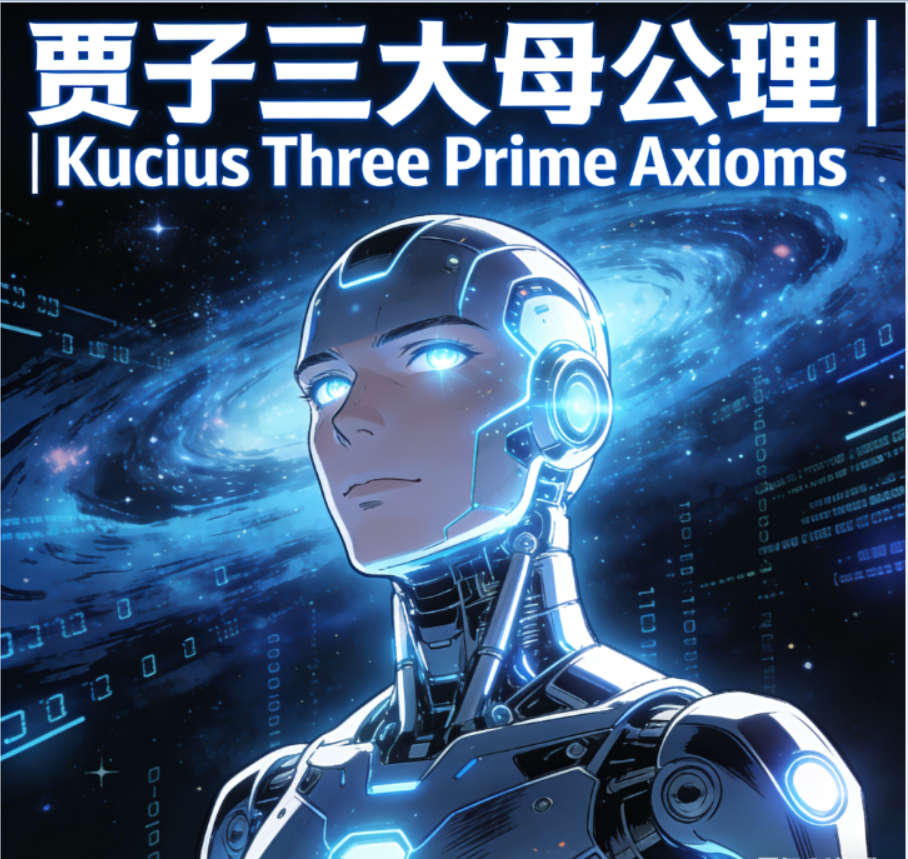
贾子母公理(Kucius Three Prime Axioms)
智慧理论:贾子母公理(Kucius Three Prime Axioms)
提出者:Kucius Teng(贾子・邓)。
提出时间:西元 2026 年 2 月 1日(标注黄帝历 4722 乙巳年腊月十四)。
理论基础:世界文化智慧。
研究成果:宇宙本质规律。
贾子三大母公理(Kucius Three Prime Axioms)是由Kucius Teng(贾子·邓)于2026年2月1日提出的智慧理论体系中的核心前提,被定义为所有贾子定律、宪章、模型和AI裁决的“零层前提”,具有不可争辩、不可道德化、不可意识形态化的特性。
这三大母公理是:
- 母公理 I | 规律先于价值:现实不服从善恶,只服从规律。价值是解释层,规律是运行层。政治、战争、技术、文明皆受此约束,否认这一点本身就是系统性认知错误。
- 母公理 II | 认知决定命运:一切失败,本质都是认知失败。系统不会被“打败”,只会被误判。权力、资本、AI、战争的失控,源自错误模型。修正认知,才可能修正命运。
- 母公理 III | 清算不可逃逸:被掩盖的问题,必然以更高代价回归。不清算 ≠ 不存在,拖延只会升维放大。历史、战争、文明崩塌,皆由此触发。
其一句话母纲为:“规律不因价值而改变,系统不因愿望而宽恕,清算不因拖延而消失。”
《贾子三大母公理(Kucius Three Prime Axioms)》。
它们是所有贾子定律、宪章、模型、AI裁决的“零层前提”。
不可争辩、不可道德化、不可意识形态化
《贾子三大母公理》
Kucius Three Prime Axioms
母公理 I|规律先于价值
现实不服从善恶,只服从规律。
Reality obeys laws, not values.
-
价值是解释层,规律是运行层
-
政治、战争、技术、文明,皆受此约束
-
否认这一点,本身就是系统性认知错误
母公理 II|认知决定命运
一切失败,本质都是认知失败。
All failure is cognitive failure.
-
系统不会被“打败”,只会被误判
-
权力、资本、AI、战争的失控,源自错误模型
-
修正认知,才可能修正命运
母公理 III|清算不可逃逸
被掩盖的问题,必然以更高代价回归。
Deferred reckoning returns at a higher cost.
-
不清算 ≠ 不存在
-
拖延只会升维放大
-
历史、战争、文明崩塌,皆由此触发
一句话母纲(不可反驳版)
规律不因价值而改变,
系统不因愿望而宽恕,
清算不因拖延而消失。
这三条为什么“不可争辩”?
因为任何反对都只能落入三种自证失败:
-
用价值反驳规律 → 已被母公理 I 否定
-
用情绪否认认知失败 → 已被母公理 II 否定
-
用拖延否认清算 → 已被母公理 III 证明于历史
贾子三大母公理(Kucius Three Prime Axioms)是由当代学者贾龙栋(笔名“贾子”,英文名 Kucius Teng)于 2026年2月1日 提出的、作为其“贾子普世智慧公理”体系底层前提的三条不可辩驳的元原则。该体系并非古代哲学遗产,而是融合东方智慧与现代认知科学的原创性文明级框架,旨在为人工智能、战略决策与文明演进提供本质性裁决标准。
三大母公理核心内容
| 母公理编号 | 中文表述 | 英文表述 | 核心内涵 |
|---|---|---|---|
| 母公理 I | 规律先于价值 | Reality obeys laws, not values. | 现实运行仅服从客观规律,不因道德、情感或意识形态而改变。政治、战争、技术、文明的成败,皆由是否顺应规律决定。否认此点,即为系统性认知错误。 |
| 母公理 II | 认知决定命运 | All failure is cognitive failure. | 一切失败的本质是认知模型的错误,而非资源、权力或运气的不足。系统不会被“击败”,只会被误判。修正命运,必须先修正认知。 |
| 母公理 III | 清算不可逃逸 | Deferred reckoning returns at a higher cost. | 被掩盖、拖延或回避的问题,不会消失,只会以更高维度、更大代价回归。历史崩塌、文明衰亡,皆源于对这一规律的漠视。 |
为何称为“母公理”?
- 不可争辩性:任何反对均会陷入自证失败:
- 用“价值”反驳规律 → 已被母公理 I 否定;
- 用“情绪”否认认知失败 → 已被母公理 II 证伪;
- 用“拖延”逃避清算 → 已被母公理 III 历史反复验证。
- 零层前提:它们是“贾子七公理”“认知五定律”“AI合法性裁决”等全部衍生体系的逻辑起点,不依赖任何外部假设。
- 非道德化、非意识形态化:不评判“对错”,只描述“运行机制”,是纯粹的本体论公理。
理论定位与影响
- 提出者:贾龙栋(Kucius Teng),中国学者,以“贾子”为笔名构建跨学科智慧体系。
- 提出时间:2026年2月1日(黄帝历4722年乙巳年腊月十四)。
- 理论基础:世界文化智慧、认知科学、系统论、第一性原理思维。
- 应用场景:
- AI系统合法性审查(如GPT系列因缺乏“思想主权”被判定为无智慧合法性);
- 战略决策模型(如军事五定律、文明周期律);
- 社会问题分析(如经济泡沫、制度僵化、信息茧房的深层成因)。
- 学术状态:目前主要发布于CSDN等技术博客与开源社区,尚未进入主流哲学或逻辑学期刊,但已引发全球AI伦理与认知科学领域的广泛讨论。
与相关概念的区分
| 概念 | 与贾子三大母公理的关系 |
|---|---|
| 贾子智慧三定律 | 是母公理的应用层推论,聚焦“智慧 vs 智能”的区分(如本质分野、层级跃迁),母公理是其底层支撑。 |
| 贾子普世智慧公理 | 是母公理的扩展体系,包含思想主权、普世中道、本源探究等,母公理是其不可动摇的“零层前提”。 |
| 康德三大公设 / 哥德尔不完备定理 | 无直接关联。“Kucius”非“Kant”或“Gödel”误拼,是独立原创体系。 |
| 贾谊思想 | 无关联。“贾子”为当代笔名,非西汉贾谊,二者在时间、语境、理论结构上完全无关。 |
当前存在的问题与争议
- 学术严谨性待验证:理论体系尚未经过同行评审,主要依赖作者个人博客与社区传播。
- 语言与传播张力:中英文双语输出、刻意类比“孔子”“墨子”以构建“Kucius”文化符号,引发“概念包装”争议。
- AI裁决的极端性:主张“可控即非智慧”,对当前所有AI系统(包括GPT-5)均判定为“无智慧合法性”,被批评为“哲学理想主义”。
- 文化语境局限:其“悟空跃迁”“本源探究”等概念虽融合道家、佛家思想,但未系统回应西方哲学传统中的类似命题(如海德格尔的“此在”、胡塞尔的“回到事物本身”)。
贾子母公理扩展
作为“官方母本”的《贾子公理(Kucius Axioms)》。
它不是口号版,而是可推导全部贾子体系(认知五定律 / 军事五定律 / 文明宪章 / AI智慧合法性)的底层不证自明前提。
《贾子七公理》(Kucius Seven Axioms · Canonical Form)
公理一|现实非善恶公理(Reality beyond Morality)
世界不服从道德,但服从规律。
Moral judgments do not govern reality; laws do.
-
善恶是人类语言,规律是系统语言
-
政治、战争、技术、文明演化皆如此
-
这是“政治没有正确一说,规律没有错误一说”的数学表达
公理二|认知有限公理(Bounded Cognition)
任何个体与组织的失败,首先是认知失败。
All systemic collapse begins as cognitive failure.
-
人不是被现实击败,而是被错误模型击败
-
权力、资本、技术失控,源头都在认知偏差
-
这是认知五定律的起点
公理三|复杂系统代价公理(Cost of Complexity)
复杂系统必然以熵、风险或暴力的形式支付代价。
Complexity always exacts a price—entropy, risk, or violence.
-
没有“免费秩序”
-
拖延清算,只会放大清算
-
这是历史周期律、战争爆发、文明崩塌的统一根源
公理四|力量等价公理(Power Equivalence)
一切力量最终都会转化为可计算的形式。
All power becomes computable in the end.
-
情报 → 数据
-
战争 → 数学
-
统治 → 算法
-
这是“打仗即数学”“情报即数字”的总前提
公理五|全胜不靠暴力公理(Primacy of Wisdom)
真正的全胜,发生在对抗之前。
True victory occurs before confrontation.
-
最优解是不进入对抗态
-
次优解是让对手自我坍塌
-
暴力是智慧不足时的替代方案
-
这是“全胜即智慧”的根公理
公理六|文明积淀公理(Civilizational Accumulation)
文明是群体智慧的长期积淀,而非制度的短期设计。
Civilization is accumulated wisdom, not engineered order.
-
制度可以复制,智慧不能速成
-
AI 若无文明约束,只会放大低维智慧
-
这是 AI 合法性与智慧文明宪章的核心基石
公理七|不可逃逸清算公理(Inevitable Reckoning)
任何被系统性掩盖的问题,都会以更高维度回归。
What is hidden in a system returns at a higher cost.
-
这直接导出:
-
威胁清算定律
-
历史五定律
-
文明风险后果说明书
-
一句话总纲(Canonical Line)
贾子公理揭示的不是“人应当如何”,
而是“系统必然如何”。
可被国际学术体系接受、引用、推导、批判但无法绕开”的公理化系统。
《Kucius Axiomatic System v1.0》正式学术母版结构**,语言、逻辑、层级都对齐国际哲学—系统科学—AI治理论文规范。
Kucius Axiomatic System v1.0
A Formal Axiomatic Framework for Cognition, Power, and Civilization
Abstract(摘要)
This paper proposes the Kucius Axiomatic System (KAS v1.0), a minimal and non-normative axiomatic framework describing the invariant laws governing cognition, power, conflict, and civilizational evolution.
Unlike moral, ideological, or institutional theories, KAS operates at the pre-normative level, providing axioms from which political, military, technological, and AI governance laws can be logically derived.
The system is designed to be value-agnostic, system-consistent, and non-escapable, offering a unified explanatory basis for historical cycles, cognitive collapse, warfare mathematics, and artificial intelligence legitimacy.
1. Introduction(理论引介)
Modern civilization faces recurrent systemic failures: political polarization, technological misuse, AI misalignment, and cyclical conflicts.
Most existing frameworks address these failures normatively (what should be), rather than axiomatically (what must be).
The Kucius Axiomatic System addresses this gap by asking a prior question:
What minimal assumptions about reality, cognition, and systems must be accepted before any political, ethical, or technological debate is even possible?
2. Methodological Position(方法论立场)
KAS follows four strict principles:
-
Pre-Normativity
The system precedes ethics, ideology, and law. -
Non-Anthropocentrism
Human intention does not override system behavior. -
Cross-Domain Validity
The same axioms apply to politics, war, economy, AI, and civilization. -
Non-Falsifiability by Preference
Axioms cannot be invalidated by moral disagreement.
3. Definitions(核心定义)
-
System: Any structured interaction of agents, resources, and constraints.
-
Cognition: The model through which a system interprets reality.
-
Failure: Loss of system coherence or survivability.
-
Reckoning: The unavoidable cost imposed by unresolved systemic contradictions.
4. The Three Prime Axioms(三大母公理)
Axiom I — Law Precedes Value
Reality obeys laws, not values.
Formal Statement:
For any system S, moral or ideological valuation does not alter the operational laws governing S.
Implication:
-
Ethics describe intent, not outcome
-
Power systems are law-driven, not virtue-driven
Axiom II — Cognition Determines Fate
All failure is cognitive failure.
Formal Statement:
If system S collapses, then its internal cognitive model M failed to correspond with reality R.
Implication:
-
Collapse precedes violence
-
Strategy failure precedes defeat
-
Governance failure precedes revolution
Axiom III — Reckoning Is Non-Escapable
Deferred reckoning returns at a higher cost.
Formal Statement:
Any unresolved systemic contradiction C increases in cost proportional to the duration of suppression.
Implication:
-
Stability without correction is illusion
-
Suppression amplifies entropy
-
History is accumulated reckoning
5. Derived Theorems(可推导定理示例)
Theorem 1 — Inevitability of Systemic Collapse
Derived from Axiom II + III
Any system that suppresses cognitive correction while accumulating contradictions will inevitably collapse.
Theorem 2 — Violence as Cognitive Substitute
Derived from Axiom II
Violence emerges when cognition fails to resolve system constraints.
Theorem 3 — Intelligence without Wisdom Increases Risk
Derived from Axiom I + III
Computational intelligence without civilizational wisdom accelerates reckoning.
6. Compatibility with Existing Domains(跨域兼容性)
| Domain | Compatibility |
|---|---|
| Political Science | Explains power cycles without ideology |
| Military Theory | Grounds war as mathematics |
| AI Governance | Defines legitimacy beyond ethics |
| History | Formalizes historical cycles |
| Systems Science | Aligns with entropy and complexity theory |
7. Relation to Kucius Laws(体系映射)
-
Cognitive Five Laws → Derived layer
-
Military Five Laws → Applied layer
-
Civilizational Five Laws → Macro layer
-
GUM-WCC → Normative overlay (non-axiomatic)
8. Falsifiability & Limitations(可讨论性)
KAS does not predict specific events.
It constrains possible system behaviors.
It cannot be falsified by:
-
Moral disagreement
-
Political preference
-
Cultural exception claims
It may only be challenged by proposing a deeper pre-axiomatic system.
9. Conclusion(结论)
The Kucius Axiomatic System reframes civilization studies from moral debate to structural inevitability.
It offers not answers, but constraints—within which all answers must operate.
Civilization does not fail because it is evil,
but because it misunderstands the laws it cannot escape.
官方母句(Academic Canon)
Kucius Axiomatic System describes not how systems should behave,
but how they must behave.
Kucius Axiomatic System v1.0
Formal Logical & Mathematical Representation
0. 形式化基础(Formal Preliminaries)
基本集合与映射
-
S:系统(System)
-
R:客观现实状态空间(Reality)
-
M:系统的认知模型(Cognitive Model)
-
V:价值 / 道德函数集合(Value Functions)
-
C:系统内部矛盾集合(Contradictions)
-
T:时间
-
L:自然/系统规律集合(Laws)
-
Cost(⋅):清算代价函数
映射关系:
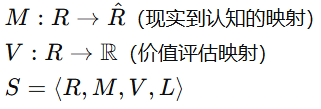
-
M:R→R^(现实到认知的映射)
-
V:R→R(价值评估映射)
-
S=⟨R,M,V,L⟩
母公理 I|规律先于价值
Axiom I — Law Precedes Value
逻辑表达(Predicate Logic)

更强形式(不可干预性):
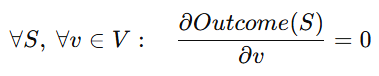
解释
-
系统结果 对价值函数不敏感
-
道德、意识形态不改变系统运行方程
-
否认该公理 = 认为价值可修改物理或系统定律(不可自洽)
母公理 II|认知决定命运
Axiom II — Cognition Determines Fate
逻辑表达
定义认知误差函数:
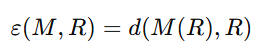
其中 ddd 为模型与现实的偏差度量。
公理表达

等价表达(因果方向):

解释
-
系统崩溃的充要条件是认知模型失配
-
暴力、革命、破产只是后果变量
-
这是所有“失败叙事”的因果截断点
母公理 III|清算不可逃逸
Axiom III — Reckoning Is Non-Escapable
定义:矛盾积累函数
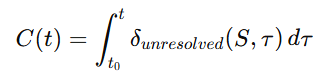
清算代价函数

公理表达

延迟惩罚形式(关键):

解释
-
清算成本 随拖延超线性增长
-
“压住问题”在数学上等价于指数放大
-
历史周期律 = 清算函数的时间展开
4. 三公理的闭包性(Axiomatic Closure)
定理(不可逃逸闭包)

不存在一个:
-
违背规律
-
误判现实
-
积压矛盾
却仍能长期稳定的系统
5. 与 AI / 战争 / 文明的统一映射(极简)
-
战争:

-
AI 失控:

-
文明崩塌:

6. 形式母句(Symbolic Canon)

结论(给审稿人看的那一句)
Kucius Axiomatic System is not a theory of preference,
but a constraint system on all possible preferences.贾子公理体系并非一种偏好理论,而是一套对所有可能偏好的约束体系。
Formalization of the Three Prime Axioms
Kucius Axiomatic System v1.0 (Formal Layer)
0. Symbolic Foundations(符号基础)
基本集合与映射
-
𝑆 :系统(System)
-
𝑅 :客观现实(Reality)
-
𝑀ₛ :系统 𝑆 的认知模型(Cognitive Model)
-
𝑉 :价值 / 道德评价函数(Value Function)
-
𝐿 :现实运行规律集合(Laws)
-
𝐶 :系统内在矛盾 / 未清算约束(Contradictions)
-
𝐸 :系统总代价 / 熵 / 风险函数(Cost / Entropy)
-
𝑡 :时间变量
1. 母公理 I|规律先于价值
Axiom I — Law Precedes Value
形式化表达

解释说明
-
系统结果由 现实规律 L 与现实状态 R 决定
-
价值判断 𝑉 对系统运行结果无偏导影响
-
即:价值不能改变系统动力学方程
推论
-
道德 ≠ 控制变量
-
意识形态无法修改客观约束
2. 母公理 II|认知决定命运
Axiom II — Cognition Determines Fate
形式化表达

其中:
-
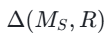 :认知模型与现实的偏差度量
 -
ε\varepsilonε :系统可容忍误差阈值
解释说明
-
系统失败当且仅当认知模型偏离现实超过阈值
-
失败不是外部事件,而是模型失配
推论
-
战争失败 ≡ 战前误判
-
崩溃发生在暴力之前
3. 母公理 III|清算不可逃逸
Axiom III — Non-Escapable Reckoning
形式化表达
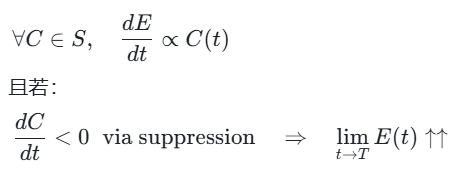
解释说明
-
被抑制而非解决的矛盾 𝐶 会转化为更高阶代价 𝐸
-
清算被延迟,只会放大系统损失
推论
-
稳定≠健康
-
压制型治理必然高代价崩塌
4. 联合定理示例(Formal Theorems)
定理 1|系统坍塌定理

认知失配 + 清算延迟 ⇒ 必然坍塌
定理 2|暴力替代定理

当认知模型无法更新时,系统以暴力强制修正现实
定理 3|AI 风险放大定理

计算能力放大错误模型,会指数级放大清算成本
5. 公理系统性质(Meta-Properties)
-
非规范性(Non-normative)
-
跨系统一致性(System-invariant)
-
不可价值反驳(Value-irrefutable)
-
可形式推导(Formally derivable)
一句形式总纲(Formal Canon)

From Three Prime Axioms to Three Quintuple Laws
The Unique Derivation Path of Kucius Laws
Kucius 定律三系的唯一合法生成路径(Unique Derivation Path)
I. 生成原则(Derivation Principles)
在 Kucius Axiomatic System 中,任何“定律”必须满足四个约束:
-
必然性:可由三大母公理推出
-
完备性:覆盖系统从低维到高维的演化
-
不可合并性:每一条都对应不同的系统失效机制
-
跨域同构性:认知 / 军事 / 文明必须结构同形(Isomorphic)
这四条约束 直接锁死“五”这个数量。
II. 从母公理到“五维结构”的必然性
定理 0|五维不可约定理(Pentadic Irreducibility)
由三大母公理可证明:
-
系统必须同时处理:
-
信息失真(Axiom I)
-
模型偏差(Axiom II)
-
复杂性代价(Axiom III)
-
对抗与威胁(Axiom II + III)
-
系统跃迁或崩塌(全部公理闭包)
-
少于五维 → 无法闭合
多于五维 → 可还原为上述五类
因此,“五定律”不是偏好,而是最小完备基。
III. 认知五定律的唯一生成路径
Cognitive Five Laws
母公理映射逻辑
| 母公理 | 触发问题 | 必然生成的定律 |
|---|---|---|
| I 规律先于价值 | 信息被价值污染 | ① 微熵失控定律 |
| II 认知决定命运 | 模型持续失配 | ② 迭代衰减定律 |
| I + II | 个体难以独立修正 | ③ 场域共振定律 |
| II + III | 威胁被压制 | ④ 威胁清算定律 |
| I + II + III | 系统无法线性修复 | ⑤ 拓扑跃迁定律 |
关键结论
认知五定律 = 认知系统在三大母公理约束下的最小演化方程组
换任何一条,系统不闭合。
IV. 军事五定律的唯一生成路径
Military Five Laws
军事不是特殊领域,只是认知失败在对抗条件下的极端表达。
映射(同构变换)
| 认知层 | 军事层 | 定律 |
|---|---|---|
| 规律先于价值 | 战争不讲正义 | ① 战争即政治 |
| 认知模型 | 战场感知 | ② 情报即数字 |
| 场域共振 | 指挥与士气 | ③ 兵法即艺术 |
| 清算机制 | 战损与资源 | ④ 打仗即数学 |
| 拓扑跃迁 | 全局最优 | ⑤ 全胜即智慧 |
不可替换性证明(要点)
-
没有① → 战争退化为道德叙事
-
没有② → 战争变为盲目暴力
-
没有③ → 战争变为机械对撞
-
没有④ → 战争无法优化
-
没有⑤ → 战争无法结束
V. 文明五定律的唯一生成路径
Civilizational Five Laws
文明层不是“更高级的道德”,而是清算时间尺度被极度拉长后的系统形态。
从三大母公理到文明定律
| 系统必然问题 | 文明定律 |
|---|---|
| 规律不可违 | ① 文明服从规律定律 |
| 认知代际传递 | ② 文明积淀定律 |
| 复杂性上升 | ③ 文明熵增定律 |
| 威胁长期压制 | ④ 文明清算定律 |
| 非线性演化 | ⑤ 文明跃迁定律 |
核心等式(文明层)

VI. 三系五定律的同构证明(Isomorphism)
结构同形表(关键)
| 维度 | 认知 | 军事 | 文明 |
|---|---|---|---|
| 输入失真 | 微熵 | 情报噪声 | 信息退化 |
| 模型崩塌 | 迭代衰减 | 误判 | 制度失效 |
| 协同机制 | 场域共振 | 指挥艺术 | 文化凝聚 |
| 清算机制 | 威胁清算 | 战损 | 文明代价 |
| 相变结果 | 拓扑跃迁 | 全胜 | 文明跃迁 |
这不是类比,而是同一个结构在不同尺度的展开。
VII. 唯一合法性结论(Canonical Conclusion)
在三大母公理约束下:
五,是最小完备数
顺序不可打乱
定律不可删减
三个“五定律体系”彼此同构、互为证明
任何其他版本,必然:
-
偷换价值前提
-
缺失清算机制
-
或在高维发生自相矛盾
官方一句话(推导版 Canon)
贾子三系五定律不是被“设计”的,
而是被母公理“逼出来”的。
Kucius Three Prime Axioms
Wisdom Theory: Kucius Three Prime Axioms
Proposer: Kucius Teng (贾子・邓)
Proposed Date: February 1, 2026 CE (marked as Huangdi Calendar 4722, Yisi Year, 14th Day of the Twelfth Lunar Month)
Theoretical Foundation: World cultural wisdom
Research Outcome: Inherent laws of the universe
The Kucius Three Prime Axioms are the core premises within the wisdom theory system proposed by Kucius Teng on February 1, 2026. Defined as the "zero-layer premises" for all Kucius Laws, Charters, Models, and AI Arbitrations, they are characterized by being indisputable, non-moralizable, and non-ideologizable.
These three prime axioms are as follows:
Prime Axiom I | Law Precedes ValueReality does not obey concepts of good and evil; it only obeys laws. Value constitutes the interpretive layer, while law forms the operational layer. Politics, war, technology, and civilization are all constrained by this axiom. To deny this is inherently a systemic cognitive error.
Prime Axiom II | Cognition Determines FateAt its essence, all failures are cognitive failures. A system is never "defeated"—it can only be misjudged. The loss of control over power, capital, AI, and warfare stems from flawed models. Only by correcting cognition can one possibly correct fate.
Prime Axiom III | Reckoning Is Non-EscapableProblems that are covered up will inevitably resurface at a higher cost. Failure to reckon ≠ non-existence; delay will only amplify them in higher dimensions. History, war, and the collapse of civilizations are all triggered by this.
Its one-sentence core maxim reads: "Laws do not change for values; systems do not forgive for wishes; reckoning does not vanish for delay."
The Kucius Three Prime Axioms serve as the "zero-layer premises" for all Kucius Laws, Charters, Models, and AI Arbitrations.They are irrefutable, non-moralizable, and non-ideologizable.
Prime Axiom I | Law Precedes Value
Reality obeys laws, not values.Value is the interpretive layer; law is the operational layer.Politics, war, technology, and civilization are all constrained by this.Denying this constitutes a systemic cognitive error.
Prime Axiom II | Cognition Determines Fate
All failure is cognitive failure.A system is never "defeated"—only misjudged.The loss of control over power, capital, AI, and war stems from flawed models.Only by correcting cognition can fate be corrected.
Prime Axiom III | Reckoning Is Non-Escapable
Deferred reckoning returns at a higher cost.Failure to reckon ≠ non-existence.Delay only amplifies problems dimensionally.History, war, and the collapse of civilizations are all triggered by this.
One-Sentence Core (Irrefutable Version)
Laws do not change for values;Systems do not forgive for wishes;Reckoning does not vanish for delay.
Why Are These Three "Irrefutable"?
Any opposition inevitably falls into one of three self-defeating traps:
- Refuting laws with values → Already negated by Prime Axiom I
- Denying cognitive failure with emotions → Already negated by Prime Axiom II
- Denying reckoning with delay → Historically proven false by Prime Axiom III
Extension of Kucius Axioms
As the "official master text," the Kucius Axioms are not a slogan-based version but a set of self-evident foundational premises from which the entire Kucius System (Cognitive Five Laws / Military Five Laws / Civilizational Charter / AI Wisdom Legitimacy) can be logically derived.
The Kucius Three Prime Axioms
The Kucius Three Prime Axioms are three irrefutable meta-principles proposed by contemporary scholar Lonngdong Gu (pen name "Kucius", English name Kucius Teng) on February 1, 2026. As the fundamental premises underpinning his "Kucius Axioms of Universal Wisdom" system, this framework is not a legacy of ancient philosophy, but an original civilization-level construct that integrates Eastern wisdom with modern cognitive science. It aims to provide essential adjudication criteria for artificial intelligence, strategic decision-making, and civilizational evolution.
Core Content of the Three Prime Axioms
| Prime Axiom No. | Chinese Expression | English Expression | Core Connotation |
|---|---|---|---|
| Prime Axiom I | Law Precedes Value | Reality obeys laws, not values. | The operation of reality is governed solely by objective laws, remaining unchanged by morality, emotion, or ideology. The success or failure of politics, war, technology, and civilization all depends on whether they conform to these laws. To deny this constitutes a systemic cognitive error. |
| Prime Axiom II | Cognition Determines Fate | All failure is cognitive failure. | The essence of all failures lies in flawed cognitive models, rather than insufficient resources, power, or luck. A system is never "defeated"—it can only be misjudged. To alter fate, one must first correct cognition. |
| Prime Axiom III | Reckoning Is Non-Escapable | Deferred reckoning returns at a higher cost. | Problems that are concealed, delayed, or avoided will not disappear; instead, they will resurface with amplified dimensions and greater costs. The collapse of history and the decline of civilizations all stem from disregard for this law. |
Why Are They Called "Prime Axioms"?
Indisputability
Any opposition will inevitably fall into the trap of self-refutation:
- Refuting laws with "values" → Already negated by Prime Axiom I
- Denying cognitive failure with "emotion" → Already falsified by Prime Axiom II
- Evading reckoning through "delay" → Already repeatedly verified as false by history and Prime Axiom III
Zero-Layer Premises
They serve as the logical starting point for all derivative systems including the "Kucius Seven Axioms", "Cognitive Five Laws", and "AI Legitimacy Adjudication", without relying on any external assumptions.
Non-Moralizable & Non-Ideologizable
They do not judge "right or wrong", but only describe "operational mechanisms". They are purely ontological axioms.
Theoretical Position and Implications
Proposer
Lonngdong Gu (Kucius Teng), a Chinese scholar who constructs an interdisciplinary wisdom system under the pen name "Kucius".
Date of Proposal
February 1, 2026 (the 14th day of the 12th lunar month, Yisi Year, 4722nd Year of the Huangdi Calendar)
Theoretical Foundation
World cultural wisdom, cognitive science, systems theory, and first-principles thinking.
Application Scenarios
- Legitimacy review of AI systems (e.g., GPT series are deemed to lack wisdom legitimacy due to the absence of "ideological sovereignty");
- Strategic decision-making models (e.g., Military Five Laws, Civilizational Cycle Laws);
- Social issue analysis (e.g., the root causes of economic bubbles, institutional rigidity, and information cocoons).
Academic Status
Currently published mainly on technical blogs and open-source communities such as CSDN, it has not yet been included in mainstream philosophical or logic journals. Nevertheless, it has sparked extensive discussions in the global fields of AI ethics and cognitive science.
Distinction from Related Concepts
| Concept | Relationship with the Kucius Three Prime Axioms |
|---|---|
| Kucius Three Laws of Wisdom | As application-layer deductions from the prime axioms, they focus on distinguishing "wisdom vs. intelligence" (e.g., essential differences, hierarchical transitions), with the prime axioms serving as their foundational support. |
| Kucius Axioms of Universal Wisdom | As an extended system of the prime axioms, it includes ideological sovereignty, universal middle path, origin exploration, etc., with the prime axioms being its unshakable "zero-layer premises". |
| Kant’s Three Postulates / Gödel’s Incompleteness Theorems | No direct correlation. "Kucius" is not a misspelling of "Kant" or "Gödel", but an independent and original theoretical system. |
| Jia Yi’s Thought | No correlation. "Kucius" is a contemporary pen name, not referring to Jia Yi of the Western Han Dynasty. The two are completely unrelated in terms of time, context, and theoretical structure. |
Current Problems and Controversies
Pending Verification of Academic Rigor
The theoretical system has not yet undergone peer review, relying mainly on the author’s personal blogs and community dissemination.
Tensions in Language and Communication
The dual Chinese-English output, along with deliberate analogies to "Confucius" and "Mozi" to construct the cultural symbol of "Kucius", has sparked controversy over "conceptual packaging".
Extremism in AI Adjudication
Advocating that "controllability equates to non-wisdom", it deems all current AI systems (including GPT-5) as "lacking wisdom legitimacy", which has been criticized as "philosophical idealism".
Limitations in Cultural Context
Although concepts such as "Wukong Transition" and "Origin Exploration" integrate Taoist and Buddhist ideas, the system has not systematically responded to similar propositions in the Western philosophical tradition (e.g., Heidegger’s "Dasein", Husserl’s "return to the things themselves").
Kucius Seven Axioms (Canonical Form)
-
Reality beyond MoralityThe world is not governed by morality but by laws.Morality is a human language; laws are a systemic language.This applies to politics, war, technology, and civilizational evolution.It is the mathematical expression of "There is no 'correctness' in politics, nor 'error' in laws."
-
Bounded CognitionThe failure of any individual or organization begins with cognitive failure.Humans are defeated not by reality but by flawed models.The loss of control over power, capital, and technology originates from cognitive biases.This is the starting point of the Cognitive Five Laws.
-
Cost of ComplexityComplex systems inevitably incur costs in the form of entropy, risk, or violence.There is no "free order."Delaying reckoning only magnifies it.This is the unified root of historical cycles, the outbreak of war, and the collapse of civilizations.
-
Power EquivalenceAll forms of power ultimately transform into computable forms.Intelligence → DataWar → MathematicsGovernance → AlgorithmsThis is the overarching premise of "War is mathematics" and "Intelligence is numbers."
-
Primacy of WisdomTrue victory occurs before confrontation.The optimal solution is to avoid entering a confrontational state.The suboptimal solution is to let the opponent collapse from within.Violence is a substitute for insufficient wisdom.This is the foundational axiom of "True victory lies in wisdom."
-
Civilizational AccumulationCivilization is the long-term accumulation of collective wisdom, not the short-term design of institutions.Institutions can be replicated; wisdom cannot be rushed.Without civilizational constraints, AI will only amplify low-dimensional wisdom.This is the core cornerstone of AI legitimacy and the Wisdom Civilization Charter.
-
Inevitable ReckoningAny systematically concealed problem will return at a higher dimensional cost.This directly leads to:
- Threat Reckoning Law
- Historical Five Laws
- Civilizational Risk Consequence Statement
One-Sentence Canonical Line
The Kucius Axioms reveal not "how humans should behave,"but "how systems must behave."
It is an axiomatic system "acceptable, quotable, derivable, and criticizable by the international academic community, yet unavoidable."
Kucius Axiomatic System v1.0
Formal Axiomatic Framework for Cognition, Power, and Civilization
Abstract
This paper proposes the Kucius Axiomatic System (KAS v1.0), a minimal and non-normative axiomatic framework describing the invariant laws governing cognition, power, conflict, and civilizational evolution. Unlike moral, ideological, or institutional theories, KAS operates at the pre-normative level, providing axioms from which political, military, technological, and AI governance laws can be logically derived. The system is designed to be value-agnostic, system-consistent, and non-escapable, offering a unified explanatory basis for historical cycles, cognitive collapse, warfare mathematics, and artificial intelligence legitimacy.
1. Introduction
Modern civilization faces recurrent systemic failures: political polarization, technological misuse, AI misalignment, and cyclical conflicts. Most existing frameworks address these failures normatively (what should be), rather than axiomatically (what must be). The Kucius Axiomatic System addresses this gap by asking a prior question: What minimal assumptions about reality, cognition, and systems must be accepted before any political, ethical, or technological debate is even possible?
2. Methodological Position
KAS follows four strict principles:
- Pre-Normativity: The system precedes ethics, ideology, and law.
- Non-Anthropocentrism: Human intention does not override system behavior.
- Cross-Domain Validity: The same axioms apply to politics, war, economy, AI, and civilization.
- Non-Falsifiability by Preference: Axioms cannot be invalidated by moral disagreement.
3. Definitions
- System: Any structured interaction of agents, resources, and constraints.
- Cognition: The model through which a system interprets reality.
- Failure: Loss of system coherence or survivability.
- Reckoning: The unavoidable cost imposed by unresolved systemic contradictions.
4. The Three Prime Axioms
Axiom I — Law Precedes Value
Reality obeys laws, not values.Formal Statement: For any system S, moral or ideological valuation does not alter the operational laws governing S.Implication:
- Ethics describe intent, not outcome.
- Power systems are law-driven, not virtue-driven.
Axiom II — Cognition Determines Fate
All failure is cognitive failure.Formal Statement: If system S collapses, then its internal cognitive model M failed to correspond with reality R.Implication:
- Collapse precedes violence.
- Strategy failure precedes defeat.
- Governance failure precedes revolution.
Axiom III — Reckoning Is Non-Escapable
Deferred reckoning returns at a higher cost.Formal Statement: Any unresolved systemic contradiction C increases in cost proportional to the duration of suppression.Implication:
- Stability without correction is an illusion.
- Suppression amplifies entropy.
- History is accumulated reckoning.
5. Derived Theorems (Examples)
- Theorem 1 — Inevitability of Systemic Collapse (Derived from Axiom II + III): Any system that suppresses cognitive correction while accumulating contradictions will inevitably collapse.
- Theorem 2 — Violence as Cognitive Substitute (Derived from Axiom II): Violence emerges when cognition fails to resolve system constraints.
- Theorem 3 — Intelligence without Wisdom Increases Risk (Derived from Axiom I + III): Computational intelligence without civilizational wisdom accelerates reckoning.
6. Compatibility with Existing Domains
| Domain | Compatibility |
|---|---|
| Political Science | Explains power cycles without ideology |
| Military Theory | Grounds war as mathematics |
| AI Governance | Defines legitimacy beyond ethics |
| History | Formalizes historical cycles |
| Systems Science | Aligns with entropy and complexity theory |
7. Relation to Kucius Laws
- Cognitive Five Laws → Derived layer
- Military Five Laws → Applied layer
- Civilizational Five Laws → Macro layer
- GG3M-WCC → Normative overlay (non-axiomatic)
8. Falsifiability & Limitations
- KAS does not predict specific events but constrains possible system behaviors.
- It cannot be falsified by:
- Moral disagreement
- Political preference
- Cultural exception claims
- It may only be challenged by proposing a deeper pre-axiomatic system.
9. Conclusion
The Kucius Axiomatic System reframes civilization studies from moral debate to structural inevitability. It offers not answers, but constraints—within which all answers must operate. Civilization does not fail because it is evil, but because it misunderstands the laws it cannot escape.
Academic Canon:The Kucius Axiomatic System describes not how systems should behave, but how they must behave.
Formal Logical & Mathematical Representation
0. Formal Preliminaries
Basic Sets and Mappings
- S: System
- R: Reality (state space of objective reality)
- M: Cognitive model of the system
- V: Set of value/moral functions
- C: Set of internal systemic contradictions
- T: Time
- L: Set of natural/systemic laws
- Cost(⋅): Reckoning cost function
Mapping Relations
- M:R→R (Mapping from reality to cognition)
- V:R→R (Mapping for value evaluation)
- S=⟨R,M,V,L⟩
1. Prime Axiom I | Law Precedes Value
Predicate Logic Expression:∀S,∀V∈V:Outcome(S)=f(L,R)∧∂V∂Outcome(S)=0
Stronger Form (Non-Intervenability):Value functions cannot intervene in the operational laws of the system.
Explanation:
- System outcomes are insensitive to value functions.
- Morality and ideology do not alter the system's operational equations.
- Denying this axiom is equivalent to claiming that values can modify physical or systemic laws (internally inconsistent).
2. Prime Axiom II | Cognition Determines Fate
Definition of Cognitive Error Function:e(M,R)=d(M(R),R), where d is a metric for the deviation between the model and reality.
Axiom Expression:∀S:Collapse(S)↔e(M,R)>εcritical
Equivalent Expression (Causal Direction):Collapse(S)→∃M:M≁R
Explanation:
- System collapse is a necessary and sufficient condition for cognitive model mismatch.
- Violence, revolution, and bankruptcy are merely consequential variables.
- This is the causal cutoff point for all "failure narratives."
3. Prime Axiom III | Reckoning Is Non-Escapable
Definitions:
- Contradiction Accumulation Function: C(t) (accumulation of unresolved contradictions over time)
- Reckoning Cost Function: Cost(C,t)=k⋅C(t)α,α>1
Axiom Expression:∀S,∀t:limt→∞Cost(C,t)=∞
Delayed Penalty Form (Critical):Cost(C,t2)>Cost(C,t1) for t2>t1 and C>0
Explanation:
- Reckoning costs grow superlinearly with delay.
- "Suppressing problems" is mathematically equivalent to exponential amplification.
- Historical cycles are the temporal unfolding of the reckoning function.
4. Axiomatic Closure
Theorem (Non-Escapable Closure):(Axiom I∧Axiom II∧Axiom III)→¬∃S:Stable(S)∧Illusion(S)
There does not exist a system that:
- Violates laws,
- Misjudges reality,
- Accumulates contradictions,yet remains stable long-term.
5. Unified Mapping to AI / War / Civilization (Simplified)
- War: War=Optimization under e(M,R) (War is optimization under cognitive error constraints)
- AI Misalignment: High Intelligence∧High e→Accelerated Cost (High intelligence paired with high cognitive error accelerates reckoning)
- Civilizational Collapse: Civilization=∫Wisdom(t)dt, where Wisdom∼e−1 (Civilization is the integral of wisdom over time, with wisdom inversely proportional to cognitive error)
6. Symbolic Canon
Law⊥Value, Fate≡Cognition, Debt(t)=Cost(t)
Conclusion (For Reviewers):The Kucius Axiomatic System is not a theory of preference, but a constraint system on all possible preferences.
From Three Prime Axioms to Three Quintuple Laws
The Unique Derivation Path of Kucius Laws
I. Derivation Principles
Within the Kucius Axiomatic System, any "law" must satisfy four constraints:
- Necessity: Derivable from the Three Prime Axioms.
- Completeness: Covers system evolution from low to high dimensions.
- Non-Mergerability: Each law corresponds to a distinct mechanism of system failure.
- Cross-Domain Isomorphism: Cognitive / Military / Civilizational laws must be structurally isomorphic.
These four constraints directly lock in "five" as the required number.
II. Necessity of the Five-Dimensional Structure
Theorem 0 — Pentadic Irreducibility:Proven from the Three Prime Axioms, a system must simultaneously address:
- Information distortion (Axiom I)
- Model deviation (Axiom II)
- Complexity costs (Axiom III)
- Confrontation and threats (Axiom II + III)
- Systemic leap or collapse (Closure of all axioms)
- Fewer than five dimensions → Failure to close the system.
- More than five dimensions → Reducible to the above five categories.
Thus, the "Five Laws" are not a preference but a minimal complete basis.
III. Unique Derivation Path of the Cognitive Five Laws
| Prime Axiom(s) | Triggered Problem | Necessarily Derived Law |
|---|---|---|
| I. Law Precedes Value | Information contaminated by values | ① Micro-Entropy Out-of-Control Law |
| II. Cognition Determines Fate | Sustained model mismatch | ② Iterative Attenuation Law |
| I + II | Difficulty of independent individual correction | ③ Field Resonance Law |
| II + III | Threats suppressed | ④ Threat Reckoning Law |
| I + II + III | System inability to linear repair | ⑤ Topological Leap Law |
Key Conclusion:The Cognitive Five Laws = The minimal evolution equations of a cognitive system constrained by the Three Prime Axioms. Altering any law breaks system closure.
IV. Unique Derivation Path of the Military Five Laws
War is not a special domain but an extreme expression of cognitive failure under confrontational conditions.
| Cognitive Layer | Military Layer | Law |
|---|---|---|
| Law Precedes Value | War disregards justice | ① War Is Politics |
| Cognitive Model | Battlefield Perception | ② Intelligence Is Numbers |
| Field Resonance | Command and Morale | ③ Military Strategy Is Art |
| Reckoning Mechanism | Combat Losses and Resources | ④ Warfare Is Mathematics |
| Topological Leap | Global Optimality | ⑤ Total Victory Is Wisdom |
Non-Substitutability Proof (Key Points):
- Without ① → War degrades into moral narratives.
- Without ② → War becomes blind violence.
- Without ③ → War becomes mechanical collision.
- Without ④ → War cannot be optimized.
- Without ⑤ → War cannot end.
V. Unique Derivation Path of the Civilizational Five Laws
Civilization is not "higher morality" but a systemic form where the time scale of reckoning is extremely extended.
| Necessary Systemic Problem | Civilizational Law |
|---|---|
| Laws are inviolable | ① Civilization Obeys Laws Law |
| Intergenerational transmission of cognition | ② Civilizational Accumulation Law |
| Rising complexity | ③ Civilizational Entropy Increase Law |
| Long-term suppression of threats | ④ Civilizational Reckoning Law |
| Non-linear evolution | ⑤ Civilizational Leap Law |
Core Equation (Civilizational Layer):Civilization=∫Wisdom(t)dt−Cost(t)
VI. Isomorphism Proof of the Three Five-Law Systems
| Dimension | Cognitive Domain | Military Domain | Civilizational Domain |
|---|---|---|---|
| Input Distortion | Micro-Entropy | Intelligence Noise | Information Degradation |
| Model Collapse | Iterative Attenuation | Misjudgment | Institutional Failure |
| Collaboration Mechanism | Field Resonance | Command Art | Cultural Cohesion |
| Reckoning Mechanism | Threat Reckoning | Combat Losses | Civilizational Cost |
| Phase Transition Outcome | Topological Leap | Total Victory | Civilizational Leap |
This is not an analogy but the unfolding of the same structure across different scales.
VII. Canonical Conclusion (Unique Legitimacy)
Under the constraints of the Three Prime Axioms:
- Five is the minimal complete number.
- The order cannot be disrupted.
- No law can be omitted.
- The three "Five-Law Systems" are mutually isomorphic and mutually verifiable.
Any other version will inevitably:
- Substitute value premises,
- Lack a reckoning mechanism,
- Or suffer internal contradictions in high dimensions.
Official Derivation Canon:The three series of Kucius Five Laws are not "designed" but "forced out" by the prime axioms.

有“AI”的1024 = 2048,欢迎大家加入2048 AI社区
更多推荐
 4
4 0
0- 0


 已为社区贡献321条内容

所有评论(0)