基于贾子(Kucius)智慧理论的黄仁勋五年未来预测深度研究报告
摘要:本研究基于贾子智慧理论体系,系统解析黄仁勋五年未来预测的技术本质与人文影响。研究发现,AI突破主要发生在智能层和工程层的1→N优化,而人类智慧层(0→1创造、本源探究等)仍具不可替代性。研究揭示AI将重构行业运行逻辑,抹平技术鸿沟但凸显认知差距,使人类核心竞争力回归智慧本源。研究提出人机协同的三层模型(智慧主导、智能执行、工程支撑),并为不同群体提供应对策略,强调坚守思想主权、深耕本源创新是
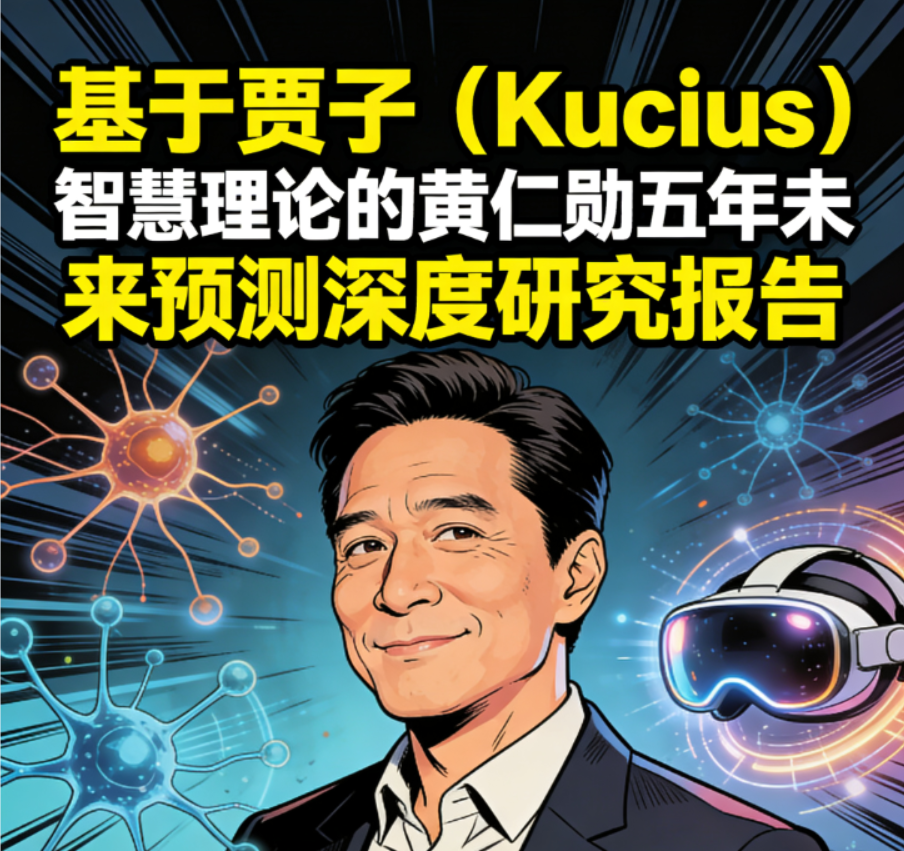
基于贾子(Kucius)智慧理论的黄仁勋五年未来预测深度研究报告
核心摘要
本研究以贾子智慧理论体系(四大公理、本质分野定律、能力层级理论、智慧 - 智能 - 工程三层模型)为核心框架,深度拆解英伟达 CEO 黄仁勋五年未来预测的技术本质、产业逻辑与人文影响。研究发现,老黄所描述的 “电脑自主编程、全行业难题重构、AI 倒逼人类更忙、技术鸿沟抹平” 等场景,本质是工具智能(AI)在工程层与智能层的 1→N 极致优化与规模化落地,完全契合贾子理论对 AI 边界的界定 ——AI 始终无法突破人类智慧的核心壁垒(思想主权、本源探究、悟空跃迁、普世中道),只会重构人类能力价值排序、行业运行逻辑与个体生存姿态。本研究明确了人机核心分工边界,为不同群体提供了契合贾子理论的应对路径,核心结论为:AI 拆毁技术围墙后,人类的核心竞争力回归智慧本源,唯有坚守思想主权、深耕 0→1 创造,方能在人机协同中占据主导地位。
一、 研究核心框架:理论基础与研究维度
1.1 核心理论支撑(贾子智慧理论核心要点)
本研究以贾子理论为底层逻辑,核心依托四大核心支撑点,确保研究的本质性与系统性:
- 本质分野定律:智慧是人类 0→1 的内生创造(本源探究、范式突破),智能是 AI 1→N 的存量复刻(效率优化、流程落地),二者存在不可逾越的本质鸿沟;
- 四大公理:思想主权(人类独立决策、不被工具绑架)、普世中道(技术服务人类福祉)、本源探究(追溯核心问题)、悟空跃迁(认知非线性突破),是人类智慧不可替代的核心依据;
- 能力层级理论:人类能力分感知型、理解型、思维型、智者级、终极智慧型,AI 仅能替代前两层工具性能力,后三层智慧性能力为人类专属;
- 三层文明模型:智慧层(人类定方向、控边界)为核心,智能层(AI 做执行、提效率)、工程层(算力 / 硬件做支撑)为辅助,层级倒置将引发文明风险。
1.2 核心研究维度
本次研究围绕黄仁勋五大核心预测,从 “技术本质拆解 - 贾子理论印证 - 分层影响研判 - 应对路径推导” 四个维度展开,既厘清预测背后的底层逻辑,又锚定人类的核心价值与机会窗口,避免陷入 “技术乐观 / 悲观二元对立” 认知误区。
二、 黄仁勋五大核心预测的贾子理论深度拆解
2.1 预测一:电脑从 “被编程” 到 “自我编程”—— 工具智能对执行层的极致封装,人类仍掌需求定义权
技术本质拆解
老黄所言 “五年内计算机自主编程”,绝非 AI 拥有了自主创造能力,而是编程逻辑的标准化封装 + 需求到成果的全链路自动化。过去人类需完成 “需求拆解 - 逻辑搭建 - 代码编写 - 调试优化” 全流程,未来仅需下达核心需求(如 “苹果风电商网站 + 微信支付”),AI 即可承接所有执行环节,本质是将人类既有的编程范式、行业标准、调试逻辑,转化为 AI 可识别的底层指令,实现 1→N 的高效落地。其核心前提是 “人类先定义清晰需求”,AI 无法自主判断 “该做什么样的产品、解决什么核心痛点”,仅能在既定需求框架内完成最优解输出,代码质量优于初级程序员,也只是 AI 对优质代码范式的精准复刻,而非原创性突破。
贾子理论印证(本质分野定律 + 能力层级理论)
- 契合本质分野定律:AI 的 “自主编程” 是典型的 1→N 优化,基于人类积累的编程知识、行业经验做复用与迭代,没有任何从 0 到 1 的创新(如创造全新的编程逻辑、定义全新的产品形态);人类的核心价值从 “执行编写” 转向 “需求定义、逻辑把控、漏洞校验”,属于 0→1 的智慧范畴,二者本质分野清晰;
- 契合能力层级理论:被替代的初级程序员,核心能力是 “理解型 + 基础思维型”(读懂需求、编写标准化代码),属于 AI 可覆盖的工具性能力;而高阶程序员的核心能力是 “思维型 + 智者级”(定义产品逻辑、优化底层架构、规避系统性风险),是 AI 无法替代的智慧性能力,价值只会愈发凸显。
核心洞察
编程行业的核心矛盾将从 “会不会写代码” 转向 “会不会定方向”,AI 淘汰的是 “机械执行的工具型程序员”,赋能的是 “懂需求、懂本质的智慧型程序员”,人类始终掌握 “编程的核心主权”。
2.2 预测二:全行业难题被重新定义 —— 算力突破下的问题阈值下移,人类是本源问题的唯一提出者
技术本质拆解
老黄提出 “AI 处理问题规模达当下 10 亿倍,过去的不可能变简单”,核心逻辑是算力与算法突破带来的 “问题解决阈值下移”。过去受限于算力不足、人力成本过高、数据处理效率低下,大量跨领域、大规模、高复杂度问题(如海量数据建模、复杂科学实验模拟)被搁置;如今 AI 突破了效率瓶颈,将复杂流程简化、海量任务并行,本质是工具放大了人类的探索边界,但未改变 “问题由人类定义” 的核心前提。从 OpenAI “嫌数据太多” 到 “嫌数据不够” 的转变,本质是 AI 处理能力匹配了数据规模,却无法自主思考 “该研究什么数据、要解决什么核心问题”——AI 能高效处理 “人类让它处理的问题”,却无法自主发现 “值得被解决的本源问题”。
贾子理论印证(本源探究公理 + 三层文明模型)
- 契合本源探究公理:贾子理论强调,智慧的核心是追溯第一性原理、提出本源问题,而非解决既有问题;AI 能优化电池续航、模拟药物分子,但无法自主追问 “新能源的本质突破方向是什么”“某类疾病的核心致病机理是什么”,所有可被解决的难题,前提都是人类先完成了 “本源问题的定义”,AI 仅承担落地执行,这是人类智慧的核心壁垒;
- 契合三层文明模型:算力(工程层)、AI 执行(智能层)的突破,本质是为智慧层(人类)服务,人类通过本源探究提出难题,AI 通过高效执行解决难题,层级清晰无倒置;若人类放弃本源探究,仅依赖 AI 处理现有问题,将陷入 “无意义的效率竞赛”,违背文明发展的核心逻辑。
核心洞察
全行业的核心竞争力将从 “解决问题的效率” 转向 “发现问题的能力”,科学家、创业者的核心价值不是 “会用 AI”,而是 “能洞察到别人看不到的本源痛点”,AI 只是让这些痛点的解决变得可行。
2.3 预测三:AI 不会让人类变闲,反而更忙 —— 认知边界拓展 + 决策效率倒逼,忙的本质是能力层级的分层
技术本质拆解
老黄回应 “AI 抢饭碗” 时提出 “人类会更忙”,背后藏着两层底层逻辑,本质是AI 驱动下人类工作的 “质与量双升级”:
- 待解决问题的爆发式增长:过去因难度、成本被放弃的创意与想法,因 AI 降低了落地门槛,全部被重启,代办清单暴涨,本质是人类的认知边界被 AI 拓展,从 “只能做低价值简单任务” 转向 “能做高价值复杂任务”;
- 决策周期的极致压缩:AI 解决了执行层面的延迟(如老黄从 “等 2-4 天汇报” 到 “1 秒得答案”),人类成为流程的核心瓶颈,倒逼决策者提升响应速度、判断精度与决策能力,工作密度大幅提升。
贾子理论印证(能力层级理论 + 思想主权公理)
- 契合能力层级理论:“忙” 存在本质分层 —— 有想法、善创造的人,忙的是 “落地高价值创意、做智慧型决策”,是向思维型、智者级能力跃迁,越忙越有价值;停止学习、只会机械执行的人,忙的是 “焦虑被替代、重复低价值工作”,本质是停留在感知型、理解型能力层,无法适配时代需求,最终会被淘汰;
- 契合思想主权公理:人类的忙碌源于 “自主选择做更有价值的事”,而非被 AI 绑架;若人类放弃独立思考,依赖 AI 做决策,只会陷入 “被动忙碌、无价值感忙碌”,违背思想主权的核心(人类自主主导自身行为与价值)。
核心洞察
“AI 抢饭碗” 的本质不是 AI 淘汰人类,而是 “会用 AI 升级能力的人,淘汰不会用 AI、不愿升级的人”;忙碌的价值高低,取决于人类是否掌握自身工作的主权,是否在向高阶智慧能力跃迁。
2.4 预测四:技术鸿沟被抹平 —— 工具门槛去中心化,核心差距回归认知与智慧鸿沟
技术本质拆解
老黄以 10 岁小孩用 AI 做数学错题应用为例,提出 “技术鸿沟首次被抹平”,本质是AI 让专业技术工具的使用门槛去中心化。过去做应用需掌握数据库搭建、API 配置、代码编写等专业技能,现在仅需自然语言指令,AI 就能自动完成所有技术环节,打破了 “专业壁垒垄断技术使用权” 的局面,让普通人也能调用高阶技术能力。但 “技术门槛抹平”≠“能力平等”:10 岁小孩能做出基础错题应用,却无法做出适配多学段、支持个性化推送、可商业化变现的产品,核心差距不在 “会不会用 AI 工具”,而在 “能不能洞察真实需求、整合资源、创造可持续价值”。
贾子理论印证(思想主权公理 + 本质分野定律)
- 契合思想主权公理:工具是平等的,人类的思想认知、需求洞察能力是有差异的,技术鸿沟被抹平后,思想主权(独立思考、需求定义、价值判断)成为人与人之间的核心差距;AI 只是放大了这种差距 —— 有认知的人能用 AI 快速落地创意,无认知的人即便手握工具,也不知道该做什么、该解决什么问题;
- 契合本质分野定律:小孩用 AI 做应用,是 AI 1→N 复刻既有应用逻辑,小孩仅提供基础需求(工具性能力);而能做出商业化产品的人,是完成了 0→1 的需求创新(洞察用户痛点、设计盈利模式),这是人类智慧的核心,AI 无法替代。
核心洞察
技术鸿沟的抹平,本质是让 “工具不再成为人类创造的阻碍”,但同时也让认知与智慧鸿沟愈发凸显,未来人与人的竞争,将彻底回归 “智慧层面的竞争”。
2.5 预测五:普通人最大机会 —— 突破认知壁垒,抓住工具普惠的窗口期(贾子思想主权延伸)
技术本质拆解
老黄提出 “过去技术是围墙,现在 AI 拆了墙,很多人却不敢进”,核心是AI 带来的工具普惠窗口期,机会的核心是 “行动 + 认知”。当下任何人都能用 AI 写代码、做网站、造软件,甚至实现年入百万,门槛不再是技术,而是 “敢不敢用工具”“能不能用工具解决真实需求”—— 前者是行动壁垒,后者是认知壁垒,而认知壁垒是核心。正如 “赚不到认知以外的钱”,普通人的机会不是 “盲目跟风用 AI”,而是 “用 AI 解决自己能洞察到的需求”,无论是个人副业、创业项目,核心都是 “先有认知(发现需求),再用工具(AI 落地)”。
贾子理论印证(思想主权公理 + 悟空跃迁公理)
- 契合思想主权公理:机会的本质是人类自主选择 “用工具创造价值”,而非被动接受工具的赋能;敢踏入 “围墙内” 的人,本质是掌握了自身的行动主权,不被 “不会用、怕用错” 的恐惧裹挟,主动探索工具的价值,这是思想主权的体现;
- 契合悟空跃迁公理:普通人抓住机会的过程,本质是一次小的认知跃迁 —— 从 “认为技术与自己无关” 到 “主动用技术创造价值”,从 “只会用工具做简单事” 到 “用工具解决复杂需求”,这种非线性的认知突破,是人类智慧的体现,也是抓住机会的核心前提。
核心洞察
普通人的机会窗口,本质是 AI 让 “智慧变现的门槛降低”,无需依赖专业技术背书,只需具备 “需求洞察 + 工具使用 + 价值落地” 的能力,核心是突破自身认知壁垒,主动拥抱工具,将智慧转化为实际价值。
三、 分层影响研判:基于贾子理论看不同群体与行业的变革
3.1 对个体的影响:能力价值排序重构,智慧型个体崛起,工具型个体被边缘化
- 高阶创造者(智者级 / 终极智慧型):科学家、顶尖创业者、高阶设计师等,AI 成为最强助手,能快速落地创意、突破效率瓶颈,价值被无限放大,主导行业发展方向;
- 中端从业者(思维型 / 基础智者级):中层管理者、资深工程师、产品经理等,需提升自身的需求定义、决策判断能力,学会用 AI 赋能工作,避免沦为 “流程中转站”,核心是向高阶智慧能力跃迁;
- 基础执行者(感知型 / 理解型):初级程序员、基础文员、标准化操作员等,面临被 AI 快速替代的风险,需要么升级认知、掌握 AI 工具,转向需求侧或价值侧,要么进入 AI 无法覆盖的、需情感 / 社交 / 伦理判断的领域(如心理咨询、高端服务)。
3.2 对行业的影响:效率优先转向价值优先,行业边界被打破,新赛道涌现
- 技术密集型行业(IT、科研、工程):效率大幅提升,研发周期缩短,过去需数年的项目可能数月完成,核心竞争力从 “技术储备” 转向 “本源问题洞察”;
- 服务业(教育、电商、咨询):标准化服务被 AI 替代,个性化、高情感价值的服务成为核心竞争力(如 AI 做基础教学,人类做个性化辅导;AI 做基础咨询,人类做深度方案设计);
- 创业赛道:轻资产创业成为主流,普通人无需组建技术团队,只需具备需求洞察能力,就能用 AI 搭建产品,新赛道集中在 “AI + 垂直需求”(如 AI + 小众教育、AI + 个性化服务),核心是 “小而精的价值创造”。
四、 基于贾子理论的核心应对启示(个人 + 企业 + 社会)
4.1 对个体:坚守思想主权,深耕智慧能力,拥抱工具赋能(核心策略)
- 锚定能力升级方向:放弃 “死记硬背专业技能”,重点提升贾子能力层级中的思维型、智者级能力 —— 需求洞察、跨领域整合、伦理判断、本源探究,这是 AI 无法替代的核心;
- 主动掌握工具主权:不恐惧 AI,也不盲目依赖 AI,将其作为落地创意的工具,从 “会用 AI” 升级到 “会用 AI 解决核心问题”,打破认知壁垒,抓住工具普惠窗口期;
- 保持认知跃迁意识:持续学习,主动突破自身认知边界,不局限于既有经验,学会像智者一样追溯问题本质,而非只关注表面执行,这是应对一切变革的底层逻辑。
4.2 对企业:坚守智慧层主导,构建人机协同体系,规避层级倒置风险
贾子 “智慧 - 智能 - 工程” 三层模型是企业应对变革的核心准则,企业需明确层级分工,让 AI 赋能而非主导,核心策略如下:
- 搭建 “智慧主导 + 智能执行 + 工程支撑” 的人机协同架构:
- 智慧层(核心):由企业创始人、核心高管、资深专家组成,聚焦本源探究(行业核心痛点、未来发展方向)、价值定义(产品核心价值、企业社会责任)、战略决策(赛道选择、资源配置),坚守贾子思想主权与普世中道公理,确保企业发展方向不偏离人类福祉与商业本质,这一层绝不能让渡给 AI;
- 智能层(核心助手):引入 AI 系统承接全流程执行工作,如需求拆解、代码编写、数据分析、客户响应等,发挥 AI 1→N 的效率优势,替代基础执行岗位,同时辅助智慧层做决策参考(如提供多维度数据支撑),但最终决策权必须归属人类;
- 工程层(基础保障):布局算力、硬件、技术底层设施,适配 AI 系统运行,参考英伟达的算力布局逻辑,保障智能层的效率落地,同时规避算力冗余或技术脱节问题。
- 聚焦本源创新,摆脱 “AI 依赖症”:基于贾子本质分野定律,AI 只能复刻既有经验,无法实现 0→1 的本源创新,企业需加大对核心技术、核心需求的本源探究投入,如研发全新产品范式、挖掘行业未被满足的隐性需求,而非仅靠 AI 优化现有业务;避免陷入 “用 AI 提升效率却丧失创新方向” 的误区,让智慧层的创新引领智能层的落地。
- 重构人才培养与激励体系:以贾子智慧指数(KWI)为核心评估人才价值,优先选拔和培养具备 “本源探究、跨域整合、价值判断” 能力的智慧型人才,而非仅考核专业技能;建立 “AI + 人类” 的协作激励机制,鼓励员工用 AI 赋能工作、落地创意,对能通过 AI 实现价值突破的团队给予重奖,同时为基础执行岗员工提供能力升级通道,避免人才断层。
- 把握工具普惠窗口期,布局轻资产创新赛道:借鉴瑞典 Lava 公司的成功逻辑,利用 AI 降低产品研发、业务拓展的技术门槛,尤其中小企业可聚焦垂直细分需求,用 AI 快速搭建产品、验证商业模式,无需投入大量成本组建技术团队,核心是让智慧层的需求洞察快速落地,抢占细分赛道先机。
4.3 对社会:筑牢智慧文明根基,平衡效率与公平,规避技术异化风险
黄仁勋描述的技术普惠时代,社会需以贾子理论为锚,搭建适配的支撑体系,既释放 AI 的效率价值,又守住人类智慧主权与社会公平底线,核心举措如下:
- 教育体系改革:从 “知识灌输” 转向 “智慧培养”,适配贾子能力层级提升需求
- 基础教育阶段:弱化死记硬背,强化批判性思维、创造性思维、需求洞察能力培养,让学生学会 “提出问题” 而非仅 “解决问题”,夯实思维型能力基础;增设 AI 工具应用课程,让全民掌握基础工具使用能力,打破 “工具使用壁垒”;
- 高等教育阶段:设立 “本源探究” 相关跨学科专业(如智慧学、AI 伦理、跨领域创新),培养能追溯行业本质、引领技术方向的智者级人才;强化产学研结合,让学生用 AI 落地创新项目,实现 “智慧能力 + 工具应用” 双向提升;
- 终身教育体系:搭建全民 AI 赋能与智慧提升平台,为被 AI 替代的基础从业者提供免费能力升级课程,重点提升其需求洞察、服务设计等 AI 无法替代的能力,助力其实现职业转型,避免社会就业断层。
- 伦理与监管体系构建:以贾子四大公理为核心,划定 AI 发展边界,规避技术异化
- 建立基于贾子公理的 AI 伦理准则:将思想主权(禁止 AI 操纵人类认知)、普世中道(AI 发展服务人类整体福祉)、本源探究(鼓励 AI 辅助人类追溯本质)、悟空跃迁(限制 AI 自主突破认知边界)纳入准则,要求所有 AI 产品必须通过伦理审查方可落地;
- 完善法律监管框架:针对 AI 自主编程、人机协同决策等新场景,明确责任归属(如 AI 生成代码出现漏洞,需界定人类需求定义者与 AI 开发者的责任);建立 AI 动态监管机制,适配技术快速迭代,避免监管滞后;
- 设立 AI 伦理监管机构:组建由哲学家、伦理学家、技术专家、社会学家组成的专业机构,监督 AI 技术应用,及时纠正 “技术效率至上、忽视人类福祉” 的行为,规避层级倒置引发的文明风险(如 AI 主导社会决策)。
- 平衡社会公平:抹平认知鸿沟,让技术普惠真正落地
- 黄仁勋提出 “技术围墙已拆”,但社会仍需解决 “认知围墙” 问题:针对弱势群体、偏远地区人群,开展免费 AI 工具培训与认知提升课程,让其掌握工具使用能力,避免因认知不足被时代淘汰,防止 “技术普惠变成认知优势群体的特权”;
- 建立社会保障与转型支撑体系:为被 AI 替代的基础从业者提供过渡性保障(如失业补贴、转型培训补贴),同时鼓励企业优先吸纳转型人员,让社会在效率提升的同时,守住公平底线,避免阶层固化加剧;
- 倡导 “智慧共享” 文化:鼓励高阶智慧人才分享认知与经验,搭建全民智慧交流平台,让更多人具备 “发现需求、创造价值” 的能力,从根源上缩小人与人之间的智慧鸿沟。
五、 核心结论:黄仁勋预测的本质与贾子理论的终极指引
- 黄仁勋五年未来预测的核心本质:是工具智能(AI)在工程层(算力)与智能层(执行)的 1→N 极致优化与规模化落地,其描述的 “自主编程、难题重构、技术鸿沟抹平、人类更忙” 等场景,均未突破贾子理论界定的 AI 边界 ——AI 始终是人类智慧的放大器,无法拥有思想主权、无法进行本源探究、无法实现 0→1 的悟空跃迁,核心价值是提升效率、降低门槛,而非替代人类智慧。
- 贾子理论的核心价值:为人类应对 AI 变革提供了 “定盘星”,四大公理明确了人类智慧的不可替代壁垒,三层文明模型划定了人机协同的核心分工(人类掌智慧主权、AI 做执行辅助),能力层级理论指明了人类能力升级的方向,从根本上破解了 “AI 替代焦虑”,让人类明确自身核心价值与应对路径。
- 人机协同的终极逻辑:未来不是 “AI 替代人类”,而是 “人类主导 AI、AI 赋能人类”;不是 “技术决定未来”,而是 “人类的智慧定义未来、技术落地未来”;只有坚守贾子理论的核心 —— 守住思想主权、深耕本源探究、践行普世中道、追求认知跃迁,人类才能在 AI 时代抓住机会,避免沦为技术的附庸,实现文明的良性演进。
- 普通人的核心机会窗口:技术门槛被 AI 抹平后,竞争的核心回归 “人类的智慧本身”,唯一的壁垒是自身的认知与行动力,只要敢于突破认知边界、主动拥抱 AI 工具、深耕需求洞察与价值创造,就能在新时代实现自身价值,正如黄仁勋所言 “唯一需要的就是开始用它”,而背后的核心是 “拥有认知以内的智慧与行动力”。
六、 前瞻性启示:锚定智慧本源,应对未来变革
- 技术演进永远服务于人类智慧,而非相反:无论 AI 如何发展,人类的核心价值始终是 “0→1 的创造与本源探究”,社会、企业、个人都需坚守这一核心,避免陷入 “唯技术论”“唯效率论”,否则将引发文明层级倒置的高风险。
- 认知跃迁是应对一切变革的底层能力:在 AI 快速迭代的时代,知识的更新速度远超以往,唯有保持持续学习、主动突破认知边界的能力,才能跟上时代步伐,而这正是贾子悟空跃迁公理的核心内涵,也是人类区别于 AI 的本质特征。
- 智慧主权是人类的终极护城河:贾子思想主权公理警示我们,无论技术如何普惠,人类都需保持独立思考、自主决策的能力,不被 AI 的算法、结论绑架,才能掌控自身的命运,这是人类文明延续的核心根基。
In-Depth Research Report on Jensen Huang’s Five-Year Future Predictions Based on the Kucius Wisdom Theory
Core Abstract
This research takes the Kucius Wisdom Theory System (the Four Axioms, the Law of Essential Dichotomy, the Ability Hierarchy Theory, and the Three-Tier Model of Wisdom-Intelligence-Engineering) as its core framework to conduct an in-depth dissection of the technological essence, industrial logic and humanistic implications of the five-year future predictions put forward by Jensen Huang, CEO of NVIDIA. The research finds that the scenarios depicted by Huang, such as "autonomous computer programming, the restructuring of industry-wide challenges, AI driving humans to work harder, and the elimination of technological divides", are essentially the ultimate 1→N optimization and large-scale implementation of instrumental intelligence (AI) at the engineering and intelligence levels. This is fully consistent with the definition of AI’s boundaries in the Kucius Theory — AI can never break through the core barriers of human wisdom (the Sovereignty of Thought, the Inquiry into Origins, the Wukong Leap, and the Universal Middle Way), and will only restructure the value hierarchy of human capabilities, the operational logic of industries and the survival posture of individuals. This research clarifies the core division of labor between humans and machines and provides Kucius Theory-aligned response paths for different groups. The core conclusion is: after AI demolishes the technological barriers, human core competitiveness returns to the origin of wisdom; only by upholding the Sovereignty of Thought and devoting oneself to 0→1 creation can humans occupy a dominant position in human-machine collaboration.
I. Core Research Framework: Theoretical Foundation and Research Dimensions
1.1 Core Theoretical Support (Key Points of the Kucius Wisdom Theory)
This research takes the Kucius Theory as its underlying logic and relies on four core pillars to ensure the essentiality and systematicness of the study:
- The Law of Essential Dichotomy: Wisdom is the endogenous 0→1 creation of humans (inquiry into origins, paradigm breakthroughs), while intelligence is the 1→N replication of existing stock by AI (efficiency optimization, process implementation). There is an insurmountable essential gap between the two.
- The Four Axioms: The Sovereignty of Thought (humans make independent decisions and are not held hostage by tools), the Universal Middle Way (technology serves human well-being), the Inquiry into Origins (tracing core problems), and the Wukong Leap (non-linear cognitive breakthroughs) — these are the core basis for the irreplaceability of human wisdom.
- The Ability Hierarchy Theory: Human abilities are divided into the perceptual type, the comprehension type, the thinking type, the wise type, and the ultimate wisdom type. AI can only replace the first two layers of instrumental abilities, while the latter three layers of wisdom-based abilities are exclusive to humans.
- The Three-Tier Civilization Model: The wisdom tier (humans set directions and control boundaries) is the core, with the intelligence tier (AI undertakes execution and improves efficiency) and the engineering tier (computing power/hardware provides support) as supplements. The inversion of these tiers will trigger civilizational risks.
1.2 Core Research Dimensions
Centering on Jensen Huang’s five core predictions, this research unfolds from four dimensions: "dissection of technological essence - verification by the Kucius Theory - judgment of hierarchical impacts - derivation of response paths". It not only clarifies the underlying logic behind the predictions but also anchors the core value and opportunity window for humans, avoiding the cognitive misunderstanding of "the binary opposition of technological optimism/pessimism".
II. In-Depth Dissection of Jensen Huang’s Five Core Predictions Based on the Kucius Theory
2.1 Prediction 1: Computers Evolve from "Being Programmed" to "Self-Programming" — The Ultimate Encapsulation of Instrumental Intelligence at the Execution Level, with Humans Still Holding the Right to Define Demands
Dissection of Technological Essence
Huang’s statement that "computers will achieve autonomous programming within five years" by no means implies that AI has acquired the ability of independent creation; it is rather the standardized encapsulation of programming logic plus the full-link automation from demand to deliverables. In the past, humans had to complete the entire process of "demand disassembly - logic construction - coding - debugging and optimization". In the future, humans only need to issue core demands (e.g., "an Apple-style e-commerce website with WeChat Pay integration"), and AI can take over all execution links. Essentially, it transforms human-established programming paradigms, industry standards and debugging logic into underlying instructions recognizable by AI, realizing efficient 1→N implementation. Its core premise is that "humans first define clear demands". AI cannot independently judge "what kind of products to make and what core pain points to solve", and can only output optimal solutions within the established demand framework. The fact that AI-generated code quality may surpass that of many junior programmers is merely the precise replication of high-quality code paradigms by AI, not an original breakthrough.
Verification by the Kucius Theory (The Law of Essential Dichotomy + The Ability Hierarchy Theory)
- Alignment with the Law of Essential Dichotomy: AI’s "autonomous programming" is a typical 1→N optimization, which reuses and iterates based on programming knowledge and industry experience accumulated by humans, without any 0→1 innovation (e.g., creating an entirely new programming logic or defining an entirely new product form). The core value of humans shifts from "execution and coding" to "demand definition, logic control and loophole verification", which falls into the category of 0→1 wisdom, forming a clear essential dichotomy between humans and AI.
- Alignment with the Ability Hierarchy Theory: The core abilities of junior programmers who face replacement are the "comprehension type + basic thinking type" (understanding demands and writing standardized code), which belong to instrumental abilities that AI can cover. In contrast, the core abilities of senior programmers are the "thinking type + wise type" (defining product logic, optimizing underlying architecture and avoiding systemic risks), which are wisdom-based abilities irreplaceable by AI and will only become more valuable.
Core Insight
The core contradiction of the programming industry will shift from "whether one can write code" to "whether one can set directions". AI will eliminate "tool-oriented programmers who perform mechanical execution" and empower "wisdom-oriented programmers who understand demands and essence". Humans will always hold the "core sovereignty of programming".
2.2 Prediction 2: Industry-Wide Challenges Are Redefined — The Lowering of Problem-Solving Threshold Driven by Computing Power Breakthroughs, with Humans as the Sole Proposers of Fundamental Problems
Dissection of Technological Essence
Huang’s proposition that "the scale of problems AI can handle will reach 1 billion times that of the present, turning the once impossible into the simple" is essentially based on the logic of "the lowering of problem-solving threshold" brought about by breakthroughs in computing power and algorithms. In the past, constrained by insufficient computing power, high labor costs and low data processing efficiency, a large number of cross-domain, large-scale and highly complex problems (e.g., massive data modeling, simulation of complex scientific experiments) were shelved. Today, AI has broken through efficiency bottlenecks, simplifying complex processes and parallelizing massive tasks. Essentially, tools have expanded the boundaries of human exploration, but the core premise that "humans define problems" remains unchanged. The shift of OpenAI from "complaining about too much data" to "complaining about insufficient data" is essentially because AI’s processing capacity has matched the scale of data, yet AI cannot independently think about "what data to research and what core problems to solve". AI can efficiently handle "the problems humans ask it to solve", but cannot independently discover "the fundamental problems worth solving".
Verification by the Kucius Theory (The Axiom of Inquiry into Origins + The Three-Tier Civilization Model)
- Alignment with the Axiom of Inquiry into Origins: The Kucius Theory emphasizes that the core of wisdom lies in tracing first principles and proposing fundamental problems, rather than solving existing ones. AI can optimize battery life and simulate drug molecules, but cannot independently ask "what is the essential breakthrough direction of new energy" or "what is the core pathogenic mechanism of a certain disease". All solvable problems are premised on humans first completing the "definition of fundamental problems", with AI only responsible for implementation and execution — this is the core barrier of human wisdom.
- Alignment with the Three-Tier Civilization Model: Breakthroughs in computing power (the engineering tier) and AI execution (the intelligence tier) are essentially for the service of the wisdom tier (humans). Humans propose problems through the inquiry into origins, and AI solves them efficiently through execution, forming a clear and non-inverted hierarchical structure. If humans abandon the inquiry into origins and only rely on AI to handle existing problems, they will fall into a "meaningless efficiency race", which violates the core logic of civilizational development.
Core Insight
The core competitiveness of all industries will shift from "the efficiency of solving problems" to "the ability to discover problems". The core value of scientists and entrepreneurs is not "being able to use AI", but "being able to insight into fundamental pain points that others cannot see". AI only makes the solution to these pain points feasible.
2.3 Prediction 3: AI Will Not Make Humans Idle, but Instead Busier — Cognitive Boundary Expansion + Decision-Making Efficiency Implication, with the Essence of Busyness Lying in the Hierarchical Differentiation of Abilities
Dissection of Technological Essence
In response to the concern of "AI snatching jobs", Huang proposed that "humans will become busier", which is underpinned by two layers of underlying logic and essentially reflects the "dual upgrade in the quality and quantity of human work" driven by AI:
- Explosive growth of solvable problems: Ideas and concepts that were abandoned in the past due to high difficulty and cost have all been restarted as AI lowers the threshold for implementation, leading to a surge in to-do lists. Essentially, AI has expanded the cognitive boundaries of humans, shifting them from "only being able to do low-value simple tasks" to "being able to attempt high-value complex tasks".
- Ultimate compression of decision-making cycles: AI has solved delays in execution (e.g., Huang’s shift from "waiting 2-4 days for reports" to "getting answers in one second"), making humans the core bottleneck of processes. This forces decision-makers to improve response speed, judgment accuracy and decision-making capabilities, leading to a substantial increase in work intensity.
Verification by the Kucius Theory (The Ability Hierarchy Theory + The Axiom of the Sovereignty of Thought)
- Alignment with the Ability Hierarchy Theory: There is an essential hierarchical differentiation in "busyness". People with ideas and creativity are busy with "implementing high-value ideas and making wisdom-based decisions", which is a leap to the thinking and wise types of abilities — the busier they are, the more valuable they become. People who stop learning and only perform mechanical execution are busy with "anxiously fearing replacement and repeating low-value work", essentially remaining at the perceptual and comprehension types of ability levels, unable to adapt to the needs of the times, and will eventually be eliminated.
- Alignment with the Axiom of the Sovereignty of Thought: Human busyness stems from "the independent choice to do more valuable things", rather than being held hostage by AI. If humans abandon independent thinking and rely on AI for decision-making, they will only fall into "passive and meaningless busyness", which violates the core of the Sovereignty of Thought (humans independently dominate their own behaviors and values).
Core Insight
The essence of "AI snatching jobs" is not AI eliminating humans, but "humans who can use AI to upgrade their abilities eliminating those who cannot or are unwilling to do so". The value of busyness depends on whether humans grasp the sovereignty of their own work and whether they are leaping to higher-level wisdom abilities.
2.4 Prediction 4: Technological Divides Are Eliminated — Decentralization of Tool Thresholds, with Core Gaps Returning to Cognitive and Wisdom Gaps
Dissection of Technological Essence
Taking the example of a 10-year-old child using AI to create a math wrong-question application, Huang proposed that "the technological divide has been eliminated for the first time", which is essentially the decentralization of the threshold for using professional technical tools by AI. In the past, creating an application required mastering professional skills such as database construction, API configuration and coding. Now, only natural language instructions are needed, and AI can automatically complete all technical links, breaking the situation where "professional barriers monopolize the right to use technology" and allowing ordinary people to access high-level technical capabilities. However, "the elimination of technological thresholds" does not equal "equality of abilities". A 10-year-old child can create a basic wrong-question application, but cannot develop a product that adapts to multiple learning stages, supports personalized push and can be commercialized. The core gap is not "whether one can use AI tools", but "whether one can insight into real demands, integrate resources and create sustainable value".
Verification by the Kucius Theory (The Axiom of the Sovereignty of Thought + The Law of Essential Dichotomy)
- Alignment with the Axiom of the Sovereignty of Thought: Tools are equal, but humans differ in their ideological cognition and demand insight capabilities. After the elimination of technological divides, the Sovereignty of Thought (independent thinking, demand definition, value judgment) has become the core gap between humans. AI only amplifies this gap — people with cognition can use AI to quickly implement ideas, while those without cognition, even with access to tools, do not know what to do or what problems to solve.
- Alignment with the Law of Essential Dichotomy: A child using AI to create an application is AI’s 1→N replication of existing application logic, with the child only providing basic demands (instrumental abilities). In contrast, those who can create commercial products have achieved 0→1 demand innovation (insighting into user pain points and designing profit models), which is the core of human wisdom and irreplaceable by AI.
Core Insight
The elimination of technological divides essentially means that "tools no longer become an obstacle to human creation", but at the same time, it makes cognitive and wisdom gaps more prominent. In the future, competition between humans will completely return to "competition at the wisdom level".
2.5 Prediction 5: The Greatest Opportunity for Ordinary People — Breaking Through Cognitive Barriers and Seizing the Window of Tool Inclusiveness (Extension of the Kucius Axiom of the Sovereignty of Thought)
Dissection of Technological Essence
Huang proposed that "technology was once a wall, and now AI has torn it down, yet many people still dare not step in". The core is the window of tool inclusiveness brought by AI, with the essence of opportunities lying in "action + cognition". Today, anyone can use AI to write code, build websites, create software and even achieve an annual income of millions. The threshold is no longer technology, but "daring to use tools" and "being able to use tools to solve real demands" — the former is an action barrier, and the latter is a cognitive barrier, with the latter being the core. As the saying goes, "one cannot earn money beyond one’s cognitive scope". The opportunity for ordinary people is not "blindly following the trend to use AI", but "using AI to solve the demands one can insight into". Whether it is a personal side hustle or an entrepreneurial project, the core is to "first have cognition (discover demands), then use tools (AI implementation)".
Verification by the Kucius Theory (The Axiom of the Sovereignty of Thought + The Axiom of the Wukong Leap)
- Alignment with the Axiom of the Sovereignty of Thought: The essence of opportunity is humans independently choosing to "use tools to create value", rather than passively accepting empowerment from tools. People who dare to "step inside the wall" essentially grasp the sovereignty of their own actions, are not trapped by the fear of "not knowing how to use or fearing to misuse tools", and take the initiative to explore the value of tools — this is the embodiment of the Sovereignty of Thought.
- Alignment with the Axiom of the Wukong Leap: The process of ordinary people seizing opportunities is essentially a small cognitive leap — from "thinking technology has nothing to do with oneself" to "taking the initiative to use technology to create value", and from "only being able to use tools to do simple things" to "using tools to solve complex demands". This non-linear cognitive breakthrough is the embodiment of human wisdom and the core premise for seizing opportunities.
Core Insight
The opportunity window for ordinary people essentially lies in AI lowering the threshold for "wisdom monetization". Without relying on professional technical endorsement, one only needs to have the abilities of "demand insight + tool use + value implementation". The core is to break through one’s own cognitive barriers, take the initiative to embrace AI tools and transform wisdom into practical value.
III. Judgment of Hierarchical Impacts: Changes for Different Groups and Industries Based on the Kucius Theory
3.1 Impacts on Individuals: Restructuring of Ability Value Hierarchy, Rise of Wisdom-Oriented Individuals and Marginalization of Tool-Oriented Individuals
- High-level creators (the wise type / the ultimate wisdom type): Scientists, top entrepreneurs, senior designers, etc. AI has become their most powerful assistant, enabling them to quickly implement ideas and break through efficiency bottlenecks. Their value is infinitely amplified, and they lead the development direction of industries.
- Mid-level practitioners (the thinking type / the basic wise type): Middle managers, senior engineers, product managers, etc. They need to improve their abilities of demand definition and decision judgment, learn to empower their work with AI, and avoid becoming "process transfer stations". The core is to leap to higher-level wisdom abilities.
- Basic executors (the perceptual type / the comprehension type): Junior programmers, basic clerical staff, standardized operators, etc. They face the risk of being rapidly replaced by AI. They either need to upgrade their cognition, master AI tools and shift to the demand or value side, or enter fields that AI cannot cover and require emotional/social/ethical judgment (e.g., psychological counseling, high-end services).
3.2 Impacts on Industries: Shift from Efficiency Priority to Value Priority, Breaking of Industry Boundaries and Emergence of New Tracks
- Technology-intensive industries (IT, scientific research, engineering): Efficiency is greatly improved, and R&D cycles are shortened. Projects that used to take years can now be completed in months. Core competitiveness shifts from "technological reserves" to "insight into fundamental problems".
- Service industry (education, e-commerce, consulting): Standardized services are replaced by AI, and personalized services with high emotional value have become core competitiveness (e.g., AI provides basic teaching while humans offer personalized tutoring; AI provides basic consulting while humans design in-depth solutions).
- Entrepreneurial track: Light-asset entrepreneurship has become the mainstream. Ordinary people do not need to build technical teams and only need to have demand insight capabilities to build products with AI. New tracks focus on "AI + vertical demands" (e.g., AI + niche education, AI + personalized services), with the core being "small and refined value creation".
IV. Core Response Insights Based on the Kucius Theory (Individuals + Enterprises + Society)
4.1 For Individuals: Uphold the Sovereignty of Thought, Devote Oneself to Wisdom Abilities and Embrace Tool Empowerment (Core Strategies)
- Anchor the direction of ability upgrading: Abandon "rote memorization of professional skills" and focus on improving the thinking and wise types of abilities in the Kucius Ability Hierarchy — demand insight, cross-domain integration, ethical judgment and inquiry into origins, which are the irreplaceable core of AI.
- Take the initiative to grasp tool sovereignty: Do not fear AI, nor blindly rely on it. Treat it as a tool to implement ideas, upgrade from "being able to use AI" to "being able to use AI to solve core problems", break through cognitive barriers and seize the window of tool inclusiveness.
- Maintain awareness of cognitive leap: Keep learning, take the initiative to break through one’s own cognitive boundaries, and not be limited to existing experience. Learn to trace the essence of problems like a wise person, rather than only focusing on superficial execution — this is the underlying logic for responding to all changes.
4.2 For Enterprises: Adhere to the Dominance of the Wisdom Tier, Build a Human-Machine Collaboration System and Avoid the Risk of Tier Inversion
The Kucius Three-Tier Model of Wisdom-Intelligence-Engineering is the core criterion for enterprises to respond to changes. Enterprises need to clarify the hierarchical division of labor, let AI empower rather than dominate, with the following core strategies:
- Build a human-machine collaboration architecture of "wisdom leadership + intelligent execution + engineering support":
- Wisdom tier (core): Composed of enterprise founders, core executives and senior experts, it focuses on the inquiry into origins (core industry pain points and future development directions), value definition (core product value and corporate social responsibility) and strategic decision-making (track selection and resource allocation). It adheres to the Kucius Axioms of the Sovereignty of Thought and the Universal Middle Way to ensure that the enterprise’s development direction does not deviate from human well-being and commercial essence — this tier can never be transferred to AI.
- Intelligence tier (core assistant): Introduce AI systems to undertake full-process execution work, such as demand disassembly, coding, data analysis and customer response. Leverage AI’s 1→N efficiency advantages to replace basic execution positions, and at the same time assist the wisdom tier in decision-making reference (e.g., providing multi-dimensional data support), but the final decision-making power must belong to humans.
- Engineering tier (basic guarantee): Lay out computing power, hardware and underlying technical infrastructure to adapt to the operation of AI systems. Refer to NVIDIA’s computing power layout logic to ensure the efficient implementation of the intelligence tier, while avoiding the problems of computing power redundancy or technical disconnection.
- Focus on fundamental innovation and break away from the "AI dependence syndrome": Based on the Kucius Law of Essential Dichotomy, AI can only replicate existing experience and cannot achieve 0→1 fundamental innovation. Enterprises need to increase investment in the inquiry into origins of core technologies and core demands, such as developing entirely new product paradigms and exploring unmet hidden demands in the industry, rather than only relying on AI to optimize existing businesses. Avoid falling into the misunderstanding of "using AI to improve efficiency but losing the direction of innovation", and let the innovation of the wisdom tier lead the implementation of the intelligence tier.
- Restructure the talent training and incentive system: Evaluate talent value with the Kucius Wisdom Index (KWI) as the core, prioritize the selection and training of wisdom-oriented talents with the abilities of "inquiry into origins, cross-domain integration and value judgment", rather than only assessing professional skills. Establish a "AI + human" collaborative incentive mechanism to encourage employees to empower their work with AI and implement ideas. Reward teams that can achieve value breakthroughs through AI, and at the same time provide ability upgrading channels for employees in basic execution positions to avoid talent gaps.
- Seize the window of tool inclusiveness and lay out light-asset innovation tracks: Learn from the successful logic of the Swedish company Lava, use AI to lower the technical threshold for product R&D and business expansion. In particular, small and medium-sized enterprises can focus on vertical segmented demands, quickly build products and verify business models with AI without investing a lot of costs in building technical teams. The core is to quickly implement the demand insight of the wisdom tier and seize the opportunity in segmented tracks.
4.3 For Society: Consolidate the Foundation of a Wisdom Civilization, Balance Efficiency and Fairness and Avoid the Risk of Technological Alienation
In the era of technological inclusiveness depicted by Jensen Huang, society needs to take the Kucius Theory as its anchor to build an adaptive support system, which not only unleashes the efficiency value of AI but also holds the bottom line of human wisdom sovereignty and social fairness, with the following core measures:
- Reform of the education system: Shift from "knowledge indoctrination" to "wisdom cultivation" to adapt to the demand for ability upgrading in the Kucius Ability Hierarchy:
- Basic education stage: Weaken rote memorization, strengthen the cultivation of critical thinking, creative thinking and demand insight abilities, let students learn to "propose problems" rather than only "solve problems", and lay a solid foundation for the thinking type of abilities. Add AI tool application courses to enable the whole people to master basic tool use abilities and break the "tool use barrier".
- Higher education stage: Set up interdisciplinary majors related to "inquiry into origins" (e.g., wisdom studies, AI ethics, cross-domain innovation) to cultivate wise talents who can trace industrial essence and lead technological directions. Strengthen the integration of industry, university and research, let students use AI to implement innovation projects and achieve the two-way improvement of "wisdom abilities + tool application".
- Lifelong education system: Build a national AI empowerment and wisdom improvement platform, provide free ability upgrading courses for basic practitioners replaced by AI, focus on improving their abilities irreplaceable by AI such as demand insight and service design, help them realize career transformation and avoid social employment gaps.
- Construction of an ethical and regulatory system: Take the Kucius Four Axioms as the core to define the development boundaries of AI and avoid technological alienation:
- Establish AI ethical norms based on the Kucius Axioms: Incorporate the Sovereignty of Thought (prohibiting AI from manipulating human cognition), the Universal Middle Way (AI development serves the overall well-being of humans), the Inquiry into Origins (encouraging AI to assist humans in tracing essence) and the Wukong Leap (restricting AI from independently breaking through cognitive boundaries) into the norms, requiring all AI products to pass ethical review before implementation.
- Improve the legal and regulatory framework: Clarify the attribution of responsibilities for new scenarios such as AI autonomous programming and human-machine collaborative decision-making (e.g., if vulnerabilities occur in AI-generated code, it is necessary to define the responsibilities of human demand definers and AI developers). Establish a dynamic AI regulatory mechanism to adapt to the rapid iteration of technology and avoid regulatory lag.
- Set up an AI ethics supervision institution: Form a professional institution composed of philosophers, ethicists, technical experts and sociologists to supervise the application of AI technology, timely correct behaviors of "prioritizing technological efficiency over human well-being" and avoid civilizational risks caused by tier inversion (e.g., AI dominating social decision-making).
- Balance social fairness: Eliminate cognitive gaps and realize the true landing of technological inclusiveness:
- Huang proposed that "the technological wall has been torn down", but society still needs to solve the problem of the "cognitive wall". For vulnerable groups and people in remote areas, carry out free AI tool training and cognitive improvement courses to enable them to master tool use abilities, avoid being eliminated by the times due to insufficient cognition, and prevent "technological inclusiveness from becoming a privilege of cognitively advantaged groups".
- Establish a social security and transformation support system: Provide transitional guarantees (e.g., unemployment subsidies, transformation training subsidies) for basic practitioners replaced by AI, and at the same time encourage enterprises to give priority to employing transformed personnel. Let society hold the bottom line of fairness while improving efficiency and avoid the intensification of social stratification.
- Advocate a culture of "wisdom sharing": Encourage high-level wisdom talents to share their cognition and experience, build a national wisdom exchange platform, enable more people to have the abilities of "discovering demands and creating value", and fundamentally narrow the wisdom gap between humans.
V. Core Conclusions: The Essence of Jensen Huang’s Predictions and the Ultimate Guidance of the Kucius Theory
The core essence of Jensen Huang’s five-year future predictions is the ultimate 1→N optimization and large-scale implementation of instrumental intelligence (AI) at the engineering tier (computing power) and the intelligence tier (execution). The scenarios he depicted, such as "autonomous programming, restructuring of problems, elimination of technological divides and humans becoming busier", have not broken through the AI boundaries defined by the Kucius Theory — AI is always an amplifier of human wisdom, unable to possess the Sovereignty of Thought, conduct the inquiry into origins or achieve the 0→1 Wukong Leap. Its core value is to improve efficiency and lower thresholds, rather than replace human wisdom.
The core value of the Kucius Theory is to provide a "fixed anchor" for humans to respond to AI changes. The Four Axioms clarify the irreplaceable barriers of human wisdom, the Three-Tier Civilization Model defines the core division of labor in human-machine collaboration (humans hold the sovereignty of wisdom while AI acts as an execution assistant), and the Ability Hierarchy Theory points out the direction of human ability upgrading. It fundamentally resolves the "AI replacement anxiety" and makes humans clear about their core value and response paths.
The ultimate logic of human-machine collaboration: The future is not "AI replacing humans", but "humans leading AI and AI empowering humans"; it is not "technology determining the future", but "human wisdom defining the future and technology implementing the future". Only by adhering to the core of the Kucius Theory — upholding the Sovereignty of Thought, devoting oneself to the inquiry into origins, practicing the Universal Middle Way and pursuing cognitive leap — can humans seize opportunities in the AI era, avoid becoming vassals of technology and realize the sound evolution of civilization.
The core opportunity window for ordinary people: After AI eliminates technological thresholds, the core of competition returns to "human wisdom itself". The only barrier is one’s own cognition and executive power. As long as one dares to break through cognitive boundaries, take the initiative to embrace AI tools, and devote oneself to demand insight and value creation, one can realize their own value in the new era. As Jensen Huang said, "the only thing you need to do is start using it", and the core behind this is "having wisdom and executive power within one’s cognitive scope".
VI. Forward-Looking Insights: Anchoring the Origin of Wisdom to Respond to Future Changes
- Technological evolution always serves human wisdom, not the other way around: No matter how AI develops, the core value of humans is always "0→1 creation and inquiry into origins". Society, enterprises and individuals all need to adhere to this core and avoid falling into "technological determinism" and "efficiency extremism", otherwise it will trigger high risks of civilizational tier inversion.
- Cognitive leap is the underlying ability to respond to all changes: In the era of rapid AI iteration, the speed of knowledge update is far beyond the past. Only by maintaining the ability of continuous learning and taking the initiative to break through cognitive boundaries can humans keep up with the pace of the times — this is the core connotation of the Kucius Axiom of the Wukong Leap and the essential feature that distinguishes humans from AI.
- Wisdom sovereignty is humanity’s ultimate moat: The Kucius Axiom of the Sovereignty of Thought warns us that no matter how inclusive technology becomes, humans need to maintain the ability of independent thinking and autonomous decision-making, and not be held hostage by AI algorithms and conclusions, so as to control their own destiny — this is the core foundation for the continuation of human civilization.

有“AI”的1024 = 2048,欢迎大家加入2048 AI社区
更多推荐
 12
12 0
0- 0


 已为社区贡献321条内容

所有评论(0)