从蒸汽机到 AI 智能体:Notion CEO 预言的“无限心智”时代
文章以工业革命作类比,提出 AI 是新时代的“奇迹材料”。就像蒸汽与钢铁重塑工厂、城市和组织结构,AI 将重构知识工作与企业形态,使个人生产力跃迁、组织突破规模瓶颈。真正的变革不在于给旧流程加 AI,而在于重新设计工作的方式与未来的组织。
原文地址:https://www.notion.com/blog/steam-steel-and-infinite-minds-ai
作者:Ivan Zhao(Notion 联合创始人兼 CEO)
Every era is shaped by its miracle material. Steel forged the Gilded Age. Semiconductors switched on the Digital Age. Now AI has arrived as infinite minds. If history teaches us anything, those who master the material define the era.
每一个时代都由它的奇迹材料所塑造:钢铁锻造了镀金时代,半导体点亮了数字时代,而如今,AI 以无限心智的形式到来。如果历史能教会我们什么,那就是,掌握这种材料的人,定义了这个时代。
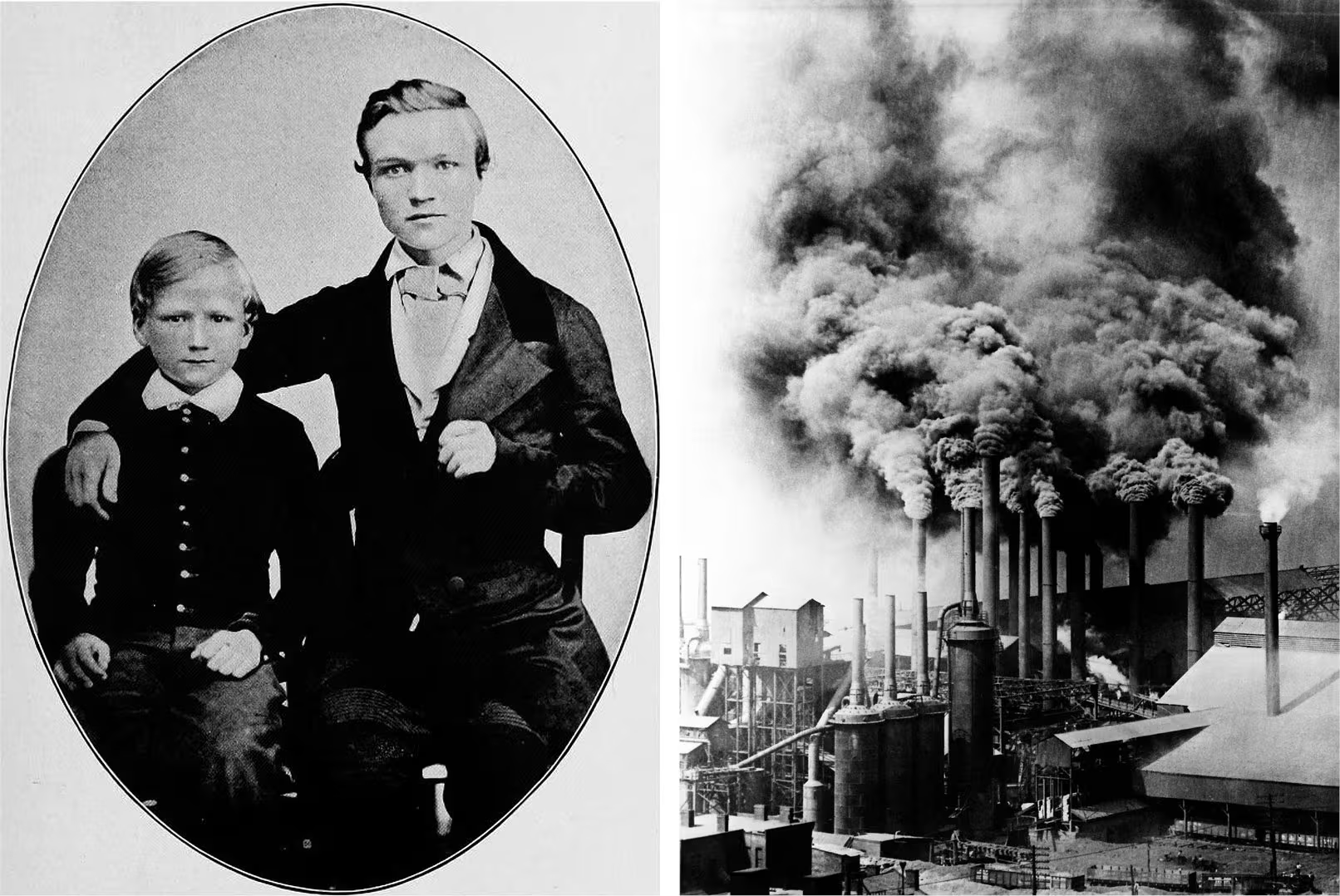
In the 1850s, Andrew Carnegie ran through muddy Pittsburgh streets as a telegraph boy. Six in ten Americans were farmers. Within two generations, Carnegie and his peers forged the modern world. Horses gave way to railroads, candlelight to electricity, iron to steel.
19 世纪 50 年代,安德鲁·卡内基还是一名电报送报员,在匹兹堡泥泞的街道上奔走。那时,每十个美国人中就有六个是农民。仅仅两代人的时间,卡内基和他的同代人就锻造了现代世界:马匹让位于铁路,烛光让位于电力,铁让位于钢。
Since then, work shifted from factories to offices. Today I run a software company in San Francisco, building tools for millions of knowledge workers. In this industry town, everyone is talking about AGI, but most of the two billion desk workers have yet to feel it. What will knowledge work look like soon? What happens when the org chart absorbs minds that never sleep?
此后,工作从工厂转向了办公室。如今,我在旧金山经营一家软件公司,为数以百万计的知识工作者打造工具。在这座产业之城里,每个人都在谈论 AGI,但那二十亿伏案工作的白领中,大多数人尚未真正感受到它的存在。知识工作很快会变成什么样?当组织架构吸纳了永不睡眠的“心智”,又将发生什么?
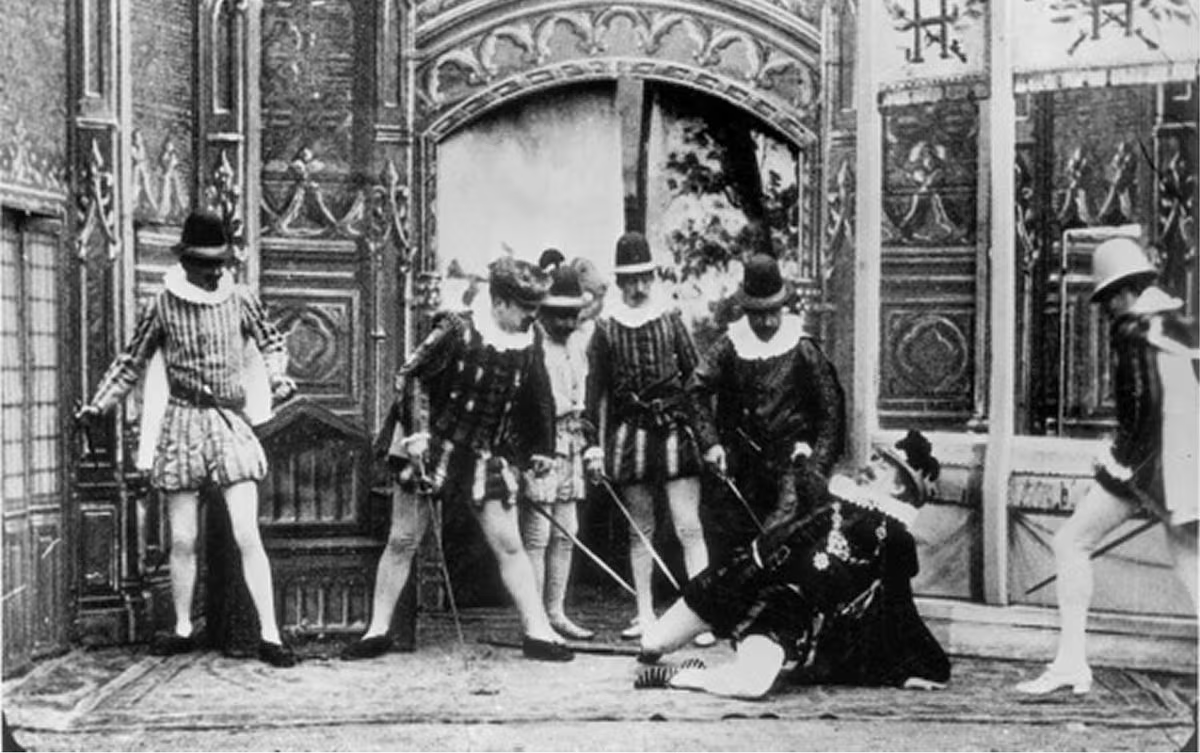
This future is often difficult to predict because it always disguises itself as the past. Early phone calls were concise like telegrams. Early movies looked like filmed plays. (This is what Marshall McLuhan called “driving to the future via the rearview window.”)
这个未来之所以常常难以预测,是因为它总是伪装成过去的样子。早期的电话通话像电报一样简短,早期的电影看起来就像被拍下来的舞台剧。(这正是马歇尔·麦克卢汉所说的“通过后视镜驶向未来”。)
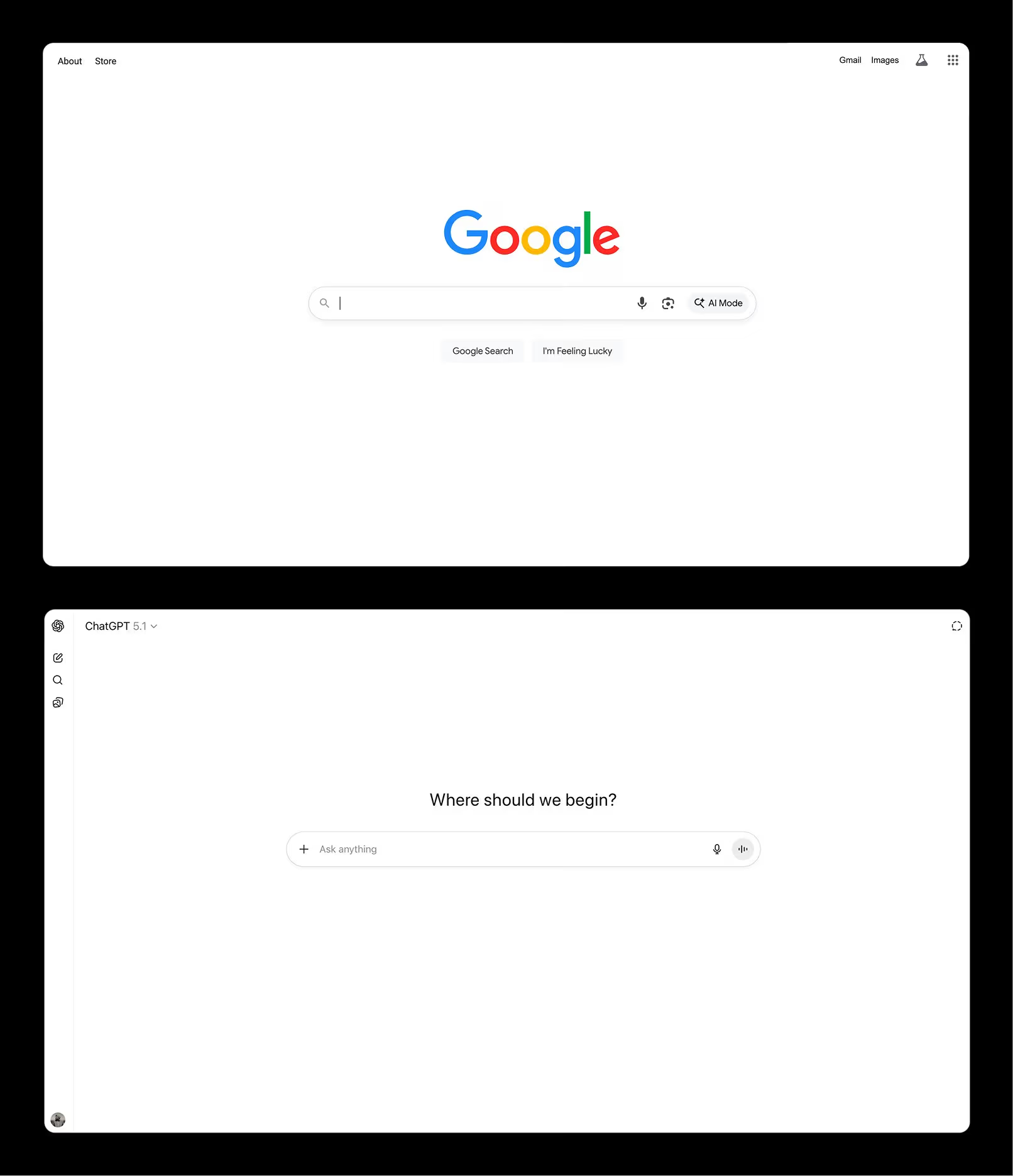
Today, we see this as AI chatbots which mimic Google search boxes. We’re now deep in that uncomfortable transition phase which happens with every new technology shift.
今天,我们看到的体现就是模仿谷歌搜索框的 AI 聊天机器人。我们正深处于每一次新技术变革都会经历的那段令人不适的过渡期之中。
I don’t have all the answers on what comes next. But I like to play with a few historical metaphors to think about how AI can work at different scales, from individuals to organizations to whole economies.
我并没有掌握接下来会发生什么的所有答案。但我喜欢借助一些历史隐喻,来思考 AI 在不同尺度上将如何运作——从个人,到组织,再到整个经济体系。
Individuals: from bicycles to cars
个体层面:从自行车到汽车
The first glimpses can be found with the high priests of knowledge work: programmers.
最早的端倪,可以在知识工作中的“高阶祭司”——程序员身上看到。
My co-founder Simon was what we call a 10× programmer, but he rarely writes code these days. Walk by his desk and you’ll see him orchestrating three or four AI coding agents at once, and they don’t just type faster, they think, which together makes him a 30-40× engineer. He queues tasks before lunch or bed, letting them work while he’s away. He’s become a manager of infinite minds.
我的联合创始人 Simon 曾是我们所说的 10× 程序员,但他如今已经很少亲自写代码了。走过他的工位,你会看到他同时调度着三四个 AI 编程代理——它们不仅打字更快,还会思考,这叠加起来,让他成了一名 30 到 40 倍效率的工程师。他会在午饭前或睡觉前把任务排好队,让它们在他离开时继续工作。他已经变成了一名“无限心智”的管理者。
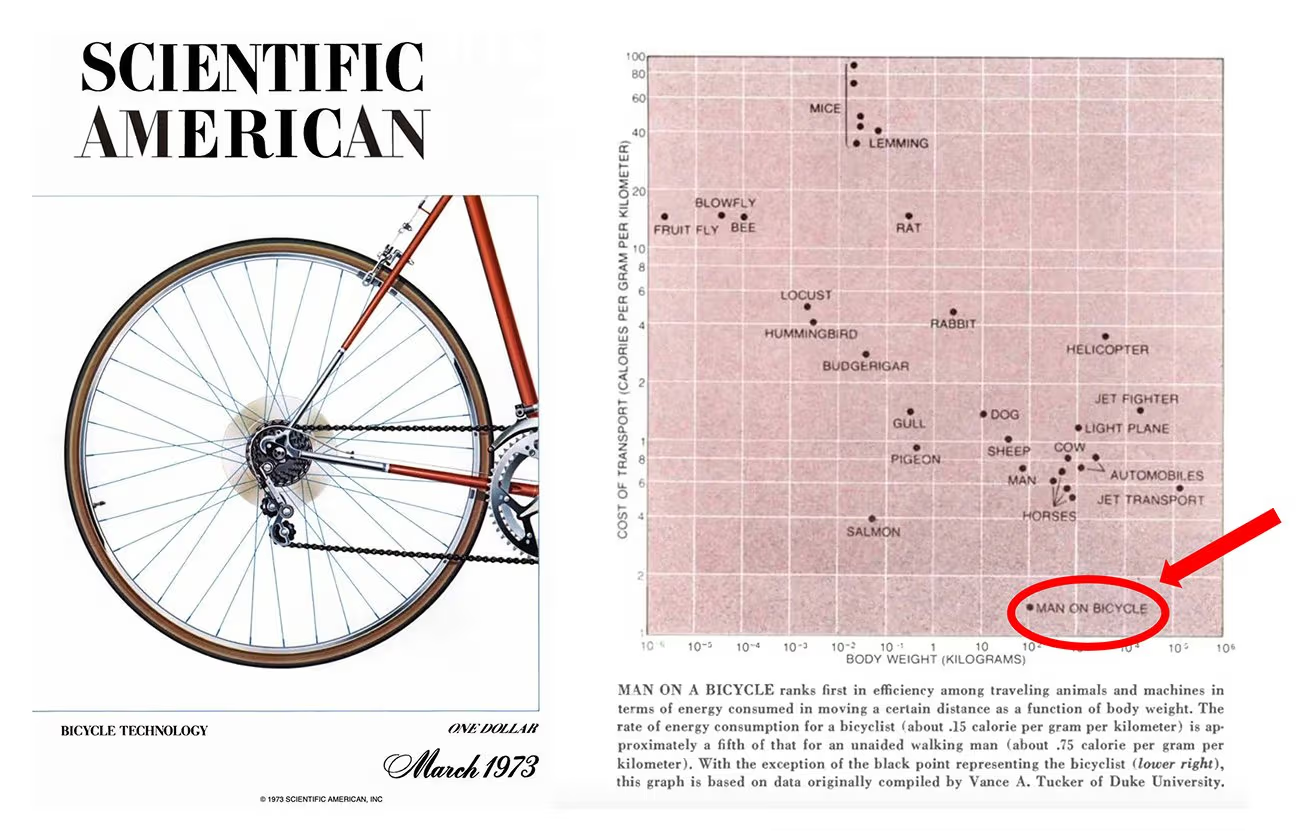
In the 1980s, Steve Jobs called personal computers “bicycles for the mind.” A decade later, we paved the “information superhighway” that is the internet. But today, most knowledge work is still human-powered. It’s like we’ve been pedaling bicycles on the autobahn.
在 20 世纪 80 年代,史蒂夫·乔布斯把个人电脑称为“心智的自行车”。十年后,我们铺设了被称为“信息高速公路”的互联网。但直到今天,大多数知识工作仍然依赖人力驱动——这就好比我们一直在高速公路上骑自行车。
With AI agents, someone like Simon has graduated from riding a bicycle to driving a car.
有了 AI 代理,像 Simon 这样的人,已经从骑自行车升级为开汽车了。
When will other types of knowledge workers get cars? Two problems must be solved.
其他类型的知识工作者什么时候才能拥有“汽车”?有两个问题必须先被解决。
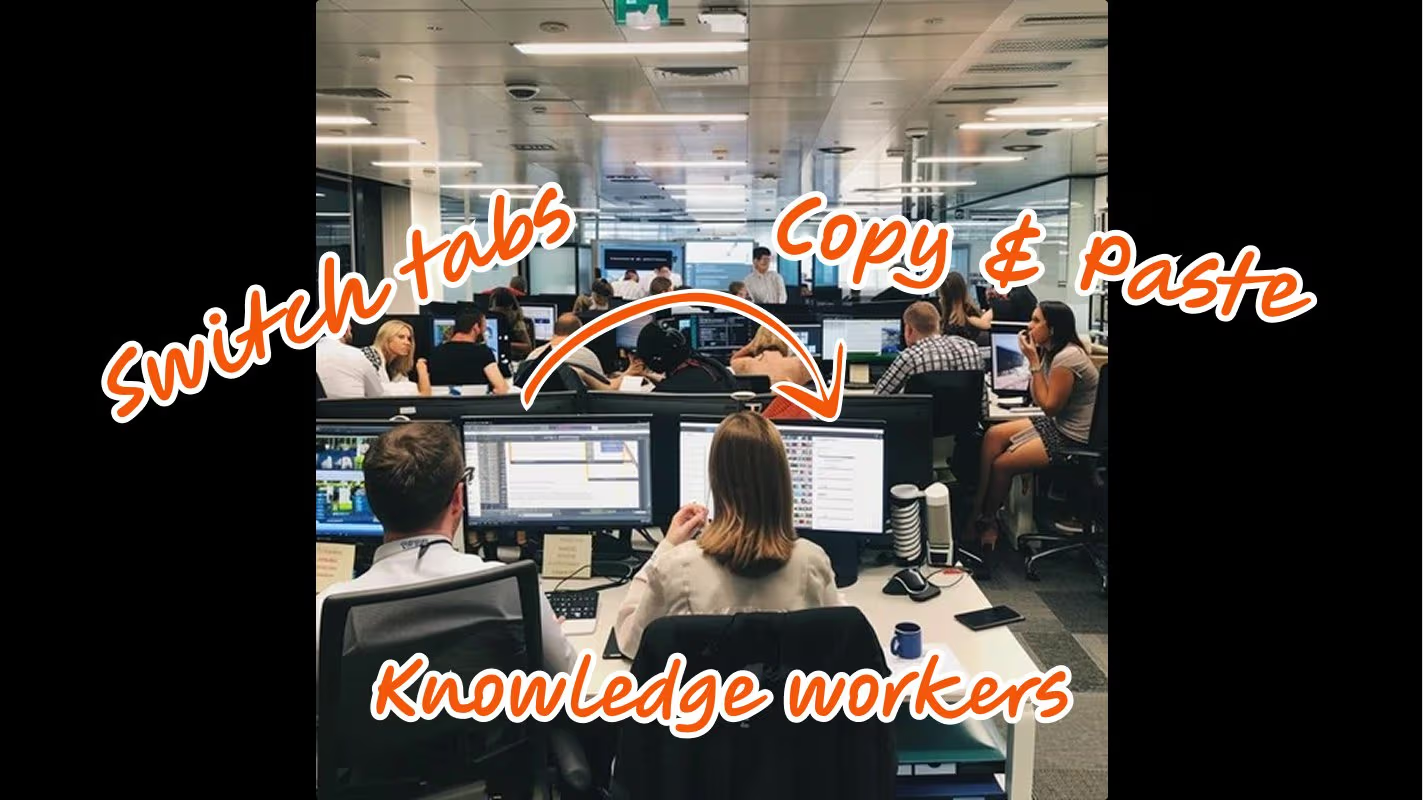
First, context fragmentation. For coding, tools and context tend to live in one place: the IDE, the repo, the terminal. But general knowledge work is scattered across dozens of tools. Imagine an AI agent trying to draft a product brief: it needs to pull from Slack threads, a strategy doc, last quarter’s metrics in a dashboard, and institutional memory that lives only in someone’s head. Today, humans are the glue, stitching all that together with copy-paste and switching between browser tabs. Until that context is consolidated, agents will stay stuck in narrow use-cases.
第一,语境碎片化。在编程领域,工具和上下文往往集中在一个地方:IDE、代码仓库、终端。但通用的知识工作却分散在数十种工具中。想象一个 AI 代理要起草一份产品简报:它需要从 Slack 讨论串中提取信息,参考一份战略文档,调取仪表盘里上个季度的指标,还要理解只存在于某个人脑海中的组织记忆。如今,人类充当着“胶水”的角色,通过复制粘贴、在浏览器标签页之间来回切换,把这一切缝合起来。在这些上下文被整合之前,AI 代理仍将被困在狭窄的使用场景中。
The second missing ingredient is verifiability. Code has a magical property: you can verify it with tests and errors. Model makers use this to train AI to get better at coding (e.g. reinforcement learning). But how do you verify if a project is managed well, or if a strategy memo is any good? We haven’t yet found ways to improve models for general knowledge work. So humans still need to be in the loop to supervise, guide, and show what good looks like.
第二个缺失的要素是可验证性。代码有一种“魔法属性”:你可以通过测试和报错来验证它。模型开发者正是利用这一点,让 AI 在编程方面不断进步(例如通过强化学习)。但如果是一个项目是否被管理得当,或者一份战略备忘录写得好不好,又该如何验证呢?我们尚未找到提升模型在通用知识工作中表现的有效方法。因此,人类仍然必须留在回路中,进行监督、引导,并示范什么才是“好”的标准。
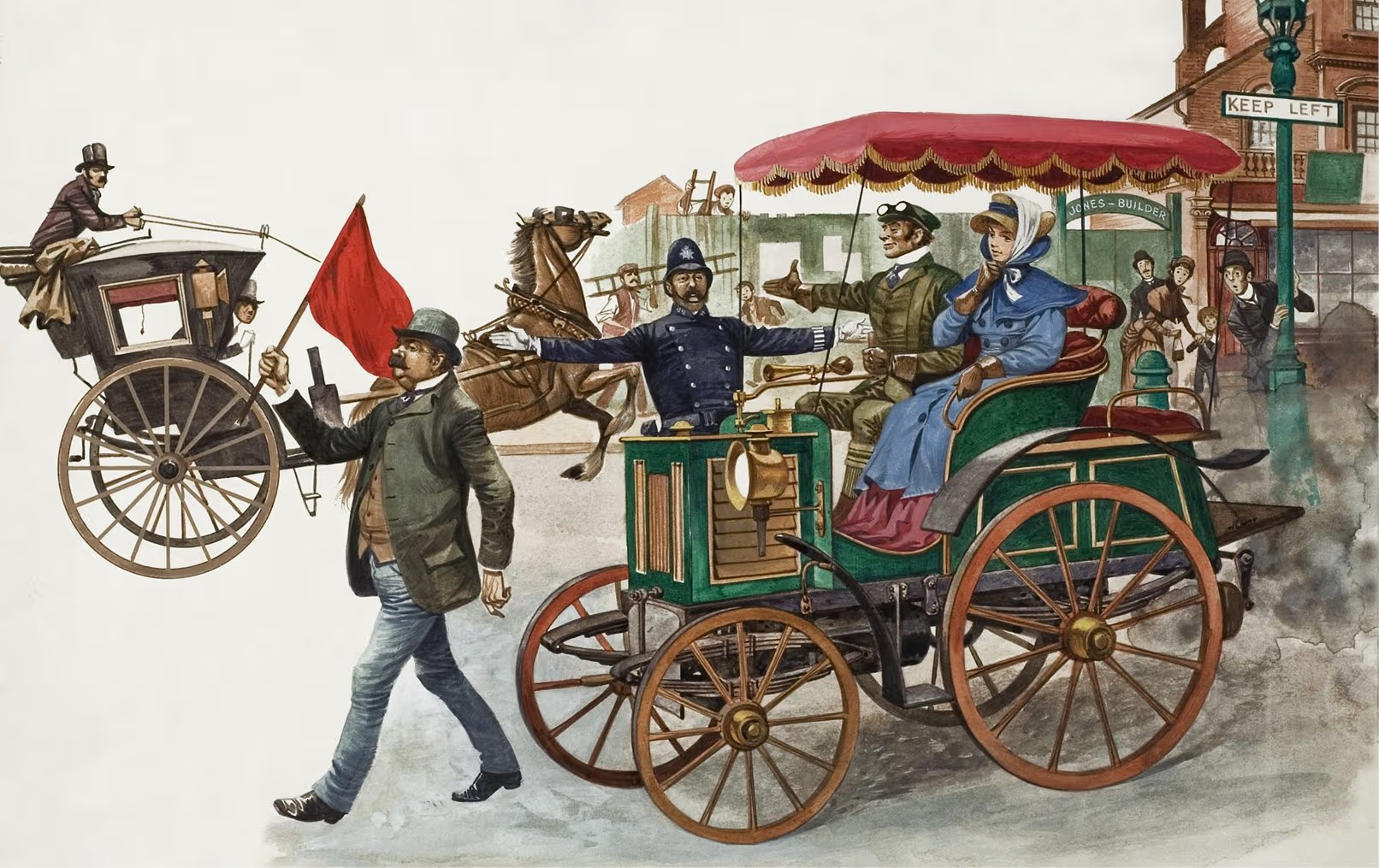
Programming agents this year taught us that having a “human-in-the-loop” isn’t always desirable. It’s like having someone personally inspect every bolt on a factory line, or walk in front of a car to clear the road (see: the Red Flag Act of 1865). We want humans to supervise the loops from a leveraged point, not be in them. Once context is consolidated and work is verifiable, billions of workers will go from pedaling to driving, and then from driving to self-driving.
今年的编程代理让我们意识到,“人类在回路中”(human-in-the-loop)并不总是理想的状态。这就好比让人亲自检查流水线上每一颗螺栓,或者让人走在汽车前面为其清路(参见 1865 年的《红旗法案》)。我们希望人类是在一个被放大的杠杆点上监督回路,而不是被困在回路之中。一旦上下文被整合、工作具备可验证性,数十亿工作者将从踩踏板,进阶到驾驶汽车,再从驾驶迈向自动驾驶。
Organizations: steel and steam
组织层面:钢铁与蒸汽
Companies are a recent invention. They degrade as they scale and reach their limit.
公司这种组织形态,其实是相当晚近的发明。它们会随着规模扩大而逐渐退化,最终触及自身的极限。
A few hundred years ago, most companies were workshops of a dozen people. Now we have multinationals with hundreds of thousands. The communication infrastructure (human brains connected by meetings and messages) buckles under exponential load. We try to solve this with hierarchy, process, and documentation. But we’ve been solving an industrial-scale problem with human-scale tools, like building a skyscraper with wood.
几百年前,大多数公司只是由十来个人组成的作坊。如今,我们拥有了员工数十万的跨国公司。但支撑它们运转的沟通基础设施——由会议和消息连接起来的人类大脑——在指数级负载下不堪重负。我们试图用层级、流程和文档来解决这个问题,但这本质上是在用人类尺度的工具,去应对工业级规模的挑战,就像用木头去建摩天大楼。
Two historical metaphors show how future organizations can look differently with new miracle materials.
两个历史隐喻展示了:借助新的“奇迹材料”,未来的组织形态将会截然不同。
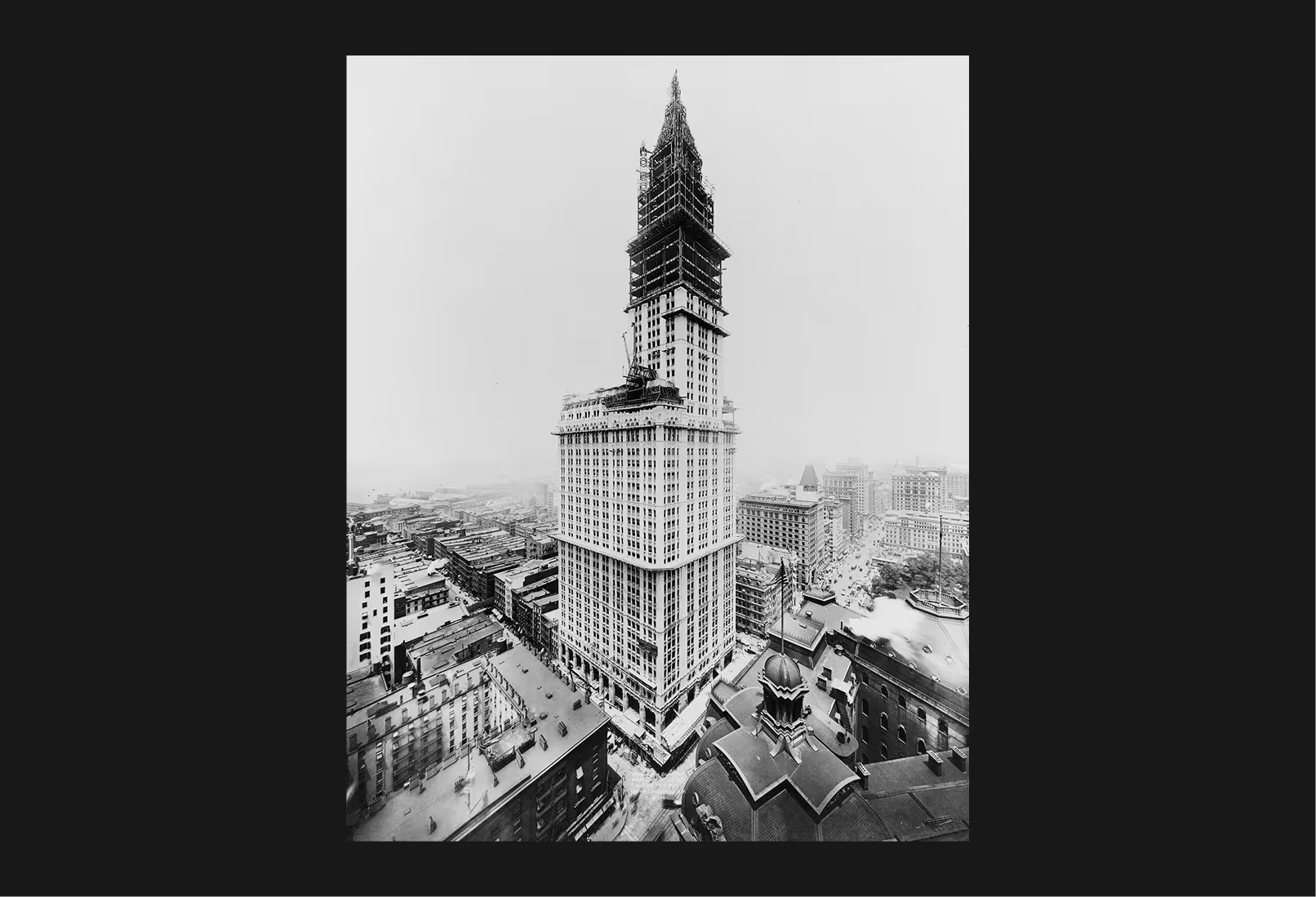
The first is steel. Before steel, buildings in the 19th century had a limit of six or seven floors. Iron was strong but brittle and heavy; add more floors, and the structure collapsed under its own weight. Steel changed everything. It’s strong yet malleable. Frames could be lighter, walls thinner, and suddenly buildings could rise dozens of stories. New kinds of buildings became possible.
第一个隐喻是钢铁。在钢铁出现之前,19 世纪的建筑通常只能盖到六七层。铁虽然坚固,但又脆又重;楼层一多,结构就会在自重下坍塌。钢铁改变了一切:它既强韧又可塑,框架可以更轻,墙体可以更薄,于是建筑突然可以拔地而起,达到几十层之高。全新的建筑形态因此成为可能。
AI is steel for organizations. It has the potential to maintain context across workflows and surface decisions when needed without the noise. Human communication no longer has to be the load-bearing wall. The weekly two-hour alignment meeting becomes a five-minute async review. The executive decision that required three levels of approval might soon happen in minutes. Companies can scale, truly scale, without the degradation we’ve accepted as inevitable.
AI 就是组织的钢铁。它有潜力在不同工作流之间维持上下文,在需要时呈现关键决策,而不引入噪音。人类沟通不再必须成为承重墙。每周两小时的对齐会议,可以变成一次五分钟的异步审阅;原本需要三层审批的高管决策,可能很快就能在几分钟内完成。公司将能够扩张——真正地扩张——而不再承受我们过去视为不可避免的效率退化。
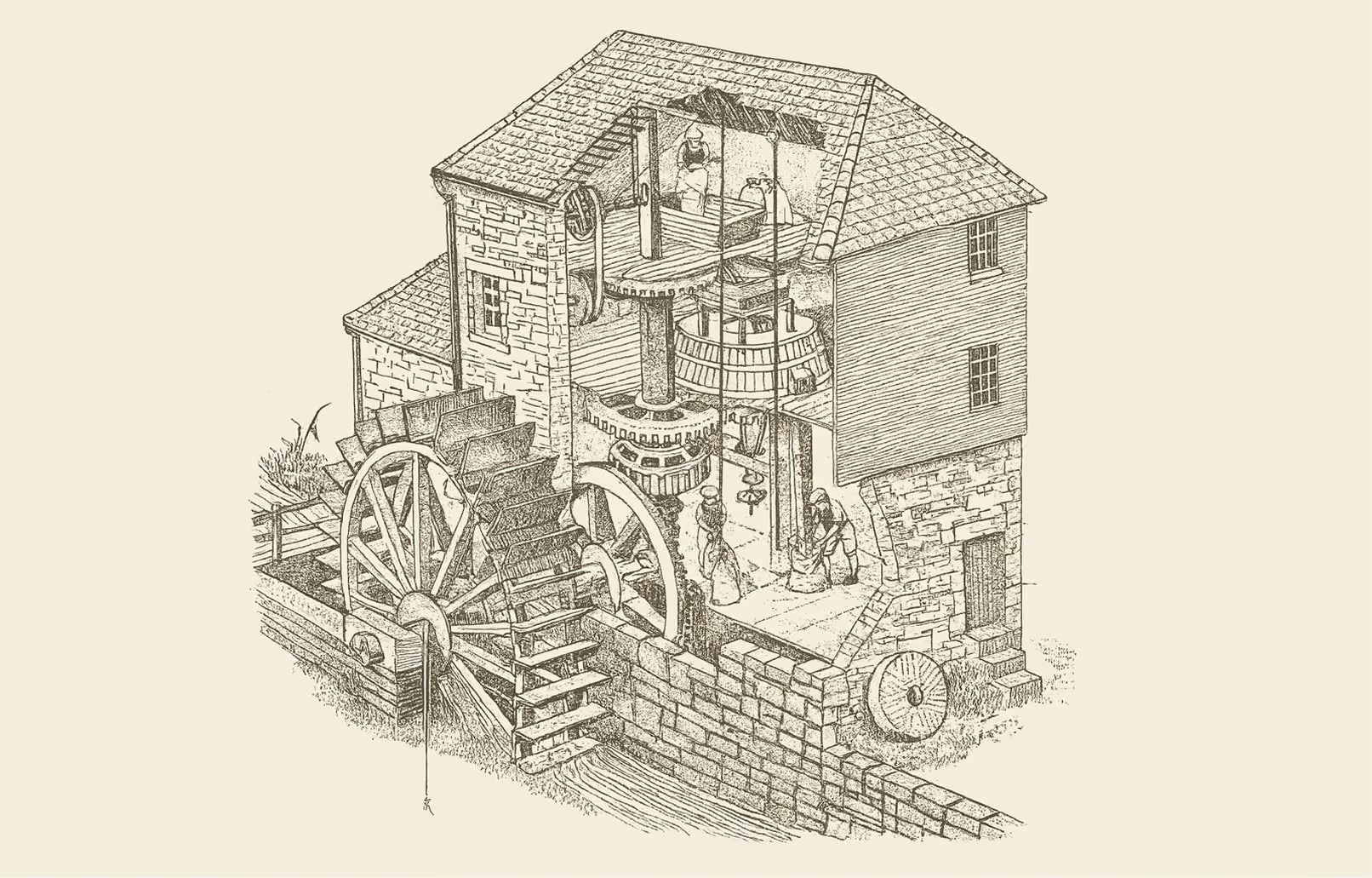
The second story is about the steam engine. At the beginning of the Industrial Revolution, early textile factories sat next to rivers and streams and were powered by waterwheels. When the steam engine arrived, factory owners initially swapped waterwheels for steam engines and kept everything else the same. Productivity gains were modest.
第二个故事来自蒸汽机。在工业革命初期,早期的纺织厂必须建在河流或溪流旁,依靠水车提供动力。蒸汽机出现后,工厂主最初只是把水车换成蒸汽机,其他一切照旧,生产率的提升却相当有限。
The real breakthrough came when factory owners realized they could decouple from water entirely. They built larger mills closer to workers, ports, and raw materials. And they redesigned their factories around steam engines (Later, when electricity came online, owners further decentralized away from a central power shaft and placed smaller engines around the factory for different machines.) Productivity exploded, and the Second Industrial Revolution really took off.
真正的突破出现在工厂主意识到,他们可以彻底摆脱对水力的依赖。他们建起更大的工厂,把选址放在更靠近工人、港口和原材料的地方,并围绕蒸汽机重新设计工厂结构。(后来,随着电力的普及,工厂又进一步从中央动力轴中解放出来,把更小的发动机分布在工厂各处,分别驱动不同的机器。)生产率由此爆发,第二次工业革命也真正拉开了帷幕。
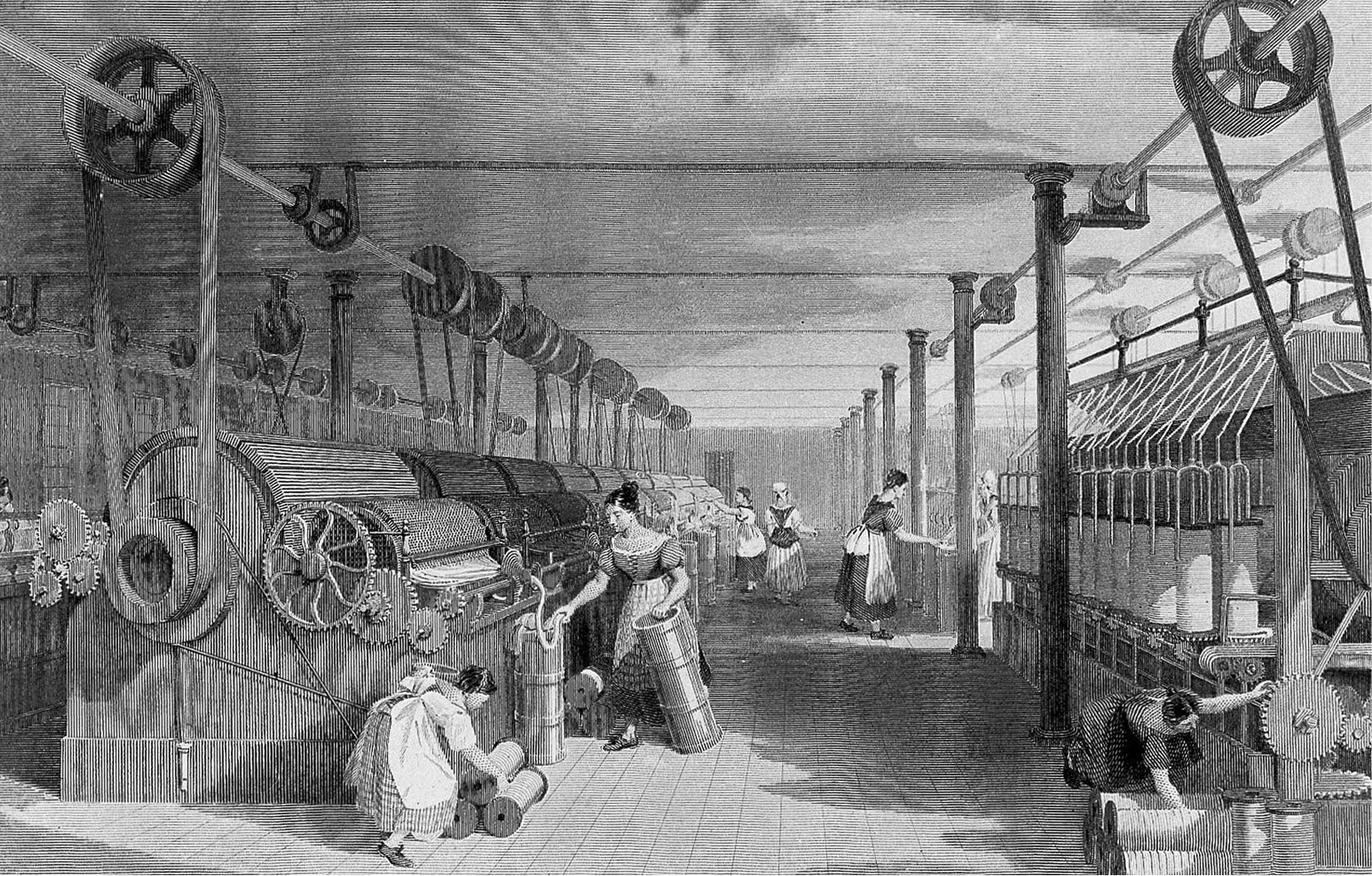
We’re still in the “swap out the waterwheel” phase. AI chatbots bolted onto existing tools. We haven’t reimagined what organizations look like when the old constraints dissolve and your company can run on infinite minds that work while you sleep.
我们仍然处在“更换水车”的阶段——只是把 AI 聊天机器人拧在现有工具之上。我们还没有真正重新想象:当旧有约束消失、当公司可以依靠在你睡觉时仍然运转的“无限心智”运行时,组织形态将会是什么样子。
At my company Notion, we have been experimenting. Alongside our 1,000 employees, more than 700 agents now handle repetitive work. They take meeting notes and answer questions to synthesize tribal knowledge. They field IT requests and log customer feedback. They help new hires onboard with employee benefits. They write weekly status reports so people don’t have to copy-paste. And this is just baby steps. The real gains are limited only by our imagination and inertia.
在 Notion,我们已经开始进行一些实验。与约 1,000 名员工并肩工作的,还有 700 多个代理在处理重复性工作:它们记录会议纪要、回答问题以整合隐性知识;处理 IT 请求、整理客户反馈;帮助新员工了解福利完成入职;撰写每周状态报告,让人们不必再复制粘贴。而这些都还只是婴儿般的第一步。真正的提升,只受限于我们的想象力,以及惰性。
Economies: from Florence to megacities
经济层面:从佛罗伦萨到超级城市
Steel and steam didn’t just change buildings and factories. They changed cities.
钢铁和蒸汽不仅改变了建筑和工厂,也改变了城市本身。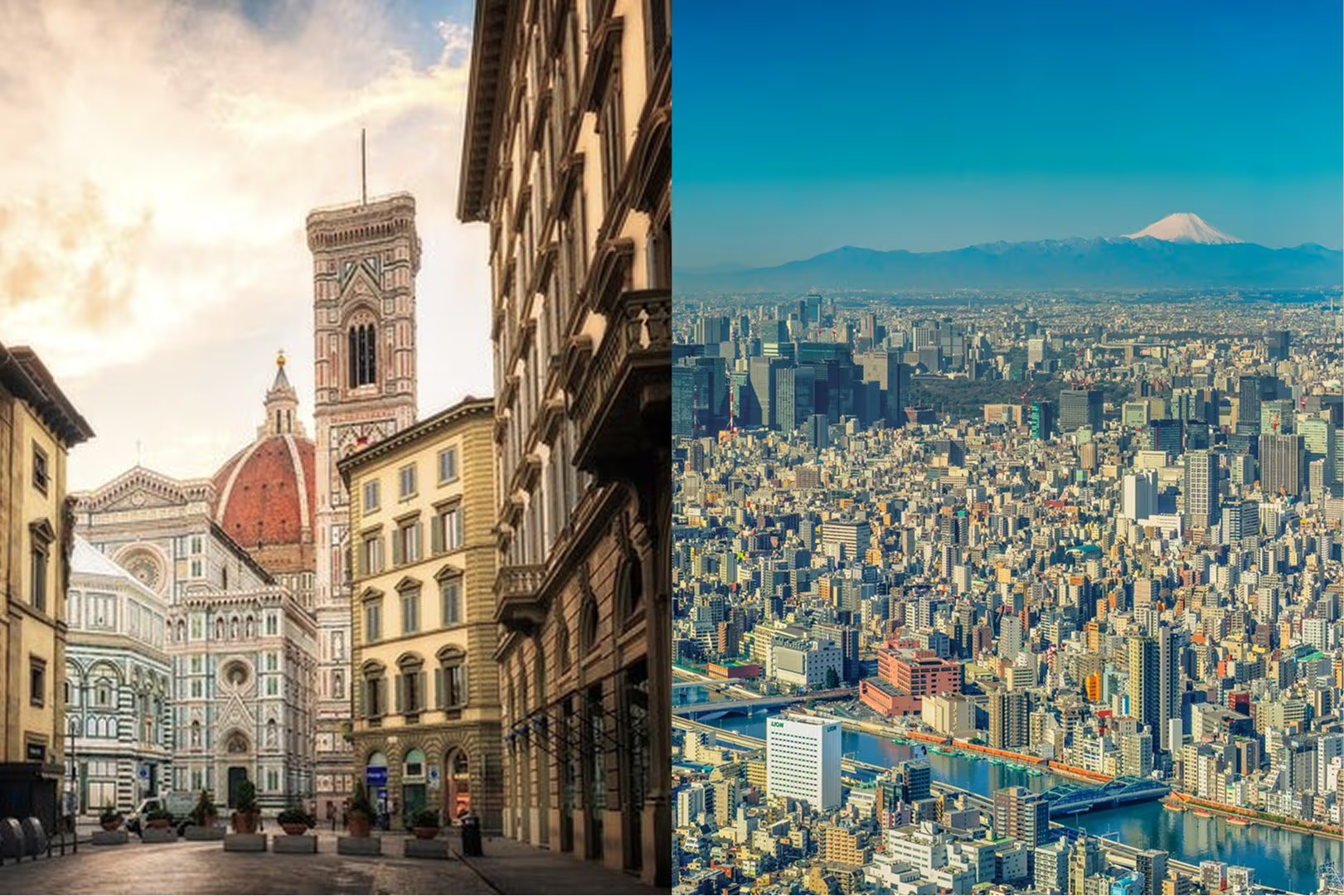
Until a few hundred years ago, cities were human-scaled. You could walk across Florence in forty minutes. The rhythm of life was set by how far a person could walk, how loud a voice could carry.
直到几百年前,城市仍然是“人类尺度”的。你可以在四十分钟内步行穿过整个佛罗伦萨。生活的节奏,取决于一个人能走多远、声音能传多响。
Then steel frames made skyscrapers possible. Steam engines powered railways that connected city centers to hinterlands. Elevators, subways, highways followed. Cities exploded in scale and density. Tokyo. Chongqing. Dallas.
随后,钢结构让摩天大楼成为可能;蒸汽机驱动的铁路把城市中心与腹地连接起来;电梯、地铁、高速公路接踵而至。城市的规模与密度由此爆炸式增长——东京、重庆、达拉斯。
These aren’t just bigger versions of Florence. They’re different ways of living. Megacities are disorienting, anonymous, harder to navigate. That illegibility is the price of scale. But they also offer more opportunity, more freedom. More people doing more things in more combinations than a human-scaled Renaissance city could support.
这些并不只是放大版的佛罗伦萨,而是截然不同的生活方式。超级城市令人迷失、匿名、难以理解——这种“不可读性”正是规模带来的代价。但它们也提供了更多机会、更多自由:比任何一个人类尺度的文艺复兴城市所能承载的,都要多得多的人,在进行更多事情,形成更多样的组合。
I think the knowledge economy is about to undergo the same transformation.
我认为,知识经济即将经历同样的转变。
Today, knowledge work represents nearly half of America’s GDP. Most of it still operates at human scale: teams of dozens, workflows paced by meetings and email, organizations that buckle past a few hundred people. We’ve built Florences with stone and wood.
如今,知识工作几乎占据了美国 GDP 的一半。但其中大多数仍然运行在人类尺度之上:几十人的团队、由会议和电子邮件节奏驱动的工作流、在规模超过几百人后就开始变形的组织。我们用石头和木头,建造了一个个佛罗伦萨。
When AI agents come online at scale, we’ll be building Tokyos. Organizations that span thousands of agents and humans. Workflows that run continuously, across time zones, without waiting for someone to wake up. Decisions synthesized with just the right amount of human in the loop.
当 AI 代理以规模化方式上线时,我们将建造的是“东京”。由成千上万的代理与人类共同组成的组织;跨越时区、持续运转、不必等待某个人醒来的工作流;在恰到好处的人类参与下,被综合、生成并推进的决策。
It will feel different. Faster, more leveraged, but also more disorienting at first. The rhythms of the weekly meeting, the quarterly planning cycle, and the annual review may stop making sense. New rhythms emerge. We lose some legibility. We gain scale and speed.
它的感受将会截然不同:更快、杠杆更高,但在一开始也更令人迷失。每周会议、季度规划、年度评估这些节奏,可能都会不再合理。新的节奏会随之出现。我们失去了一部分可读性,却换来了规模与速度。
Beyond the waterwheels
超越水车
Every miracle material required people to stop seeing the world via the rearview mirror and start imagining the new one. Carnegie looked at steel and saw city skylines. Lancashire mill owners looked at steam engines and saw factory floors free from rivers.
每一种奇迹材料,都要求人们停止通过后视镜看世界,开始去想象一个全新的世界。卡内基看到钢铁,看到的是城市天际线;兰开夏的工厂主看到蒸汽机,看到的是不再受河流束缚的厂房车间。
We are still in the waterwheel phase of AI, bolting chatbots onto workflows designed for humans. We need to stop asking AI to be merely our copilots. We need to imagine what knowledge work could look like when human organizations are reinforced with steel, when busywork is delegated to minds that never sleep.
我们仍然处在 AI 的“水车阶段”,把聊天机器人拧在为人类设计的工作流之上。我们需要停止只把 AI 当作副驾驶。我们需要去想象:当人类组织被“钢铁”加固,当琐碎事务被交给永不睡眠的心智,知识工作将会呈现出怎样的形态。
Steel. Steam. Infinite minds. The next skyline is there, waiting for us to build it.
钢铁。蒸汽。无限心智。下一片天际线已经在那里,等待我们去建造。

有“AI”的1024 = 2048,欢迎大家加入2048 AI社区
更多推荐
 18
18 0
0- 0


 已为社区贡献61条内容

所有评论(0)