基于BettaFish项目实战经验——可解释AI在舆情分析中的应用:让AI决策更透明
·
一、可解释AI在舆情分析中的核心价值
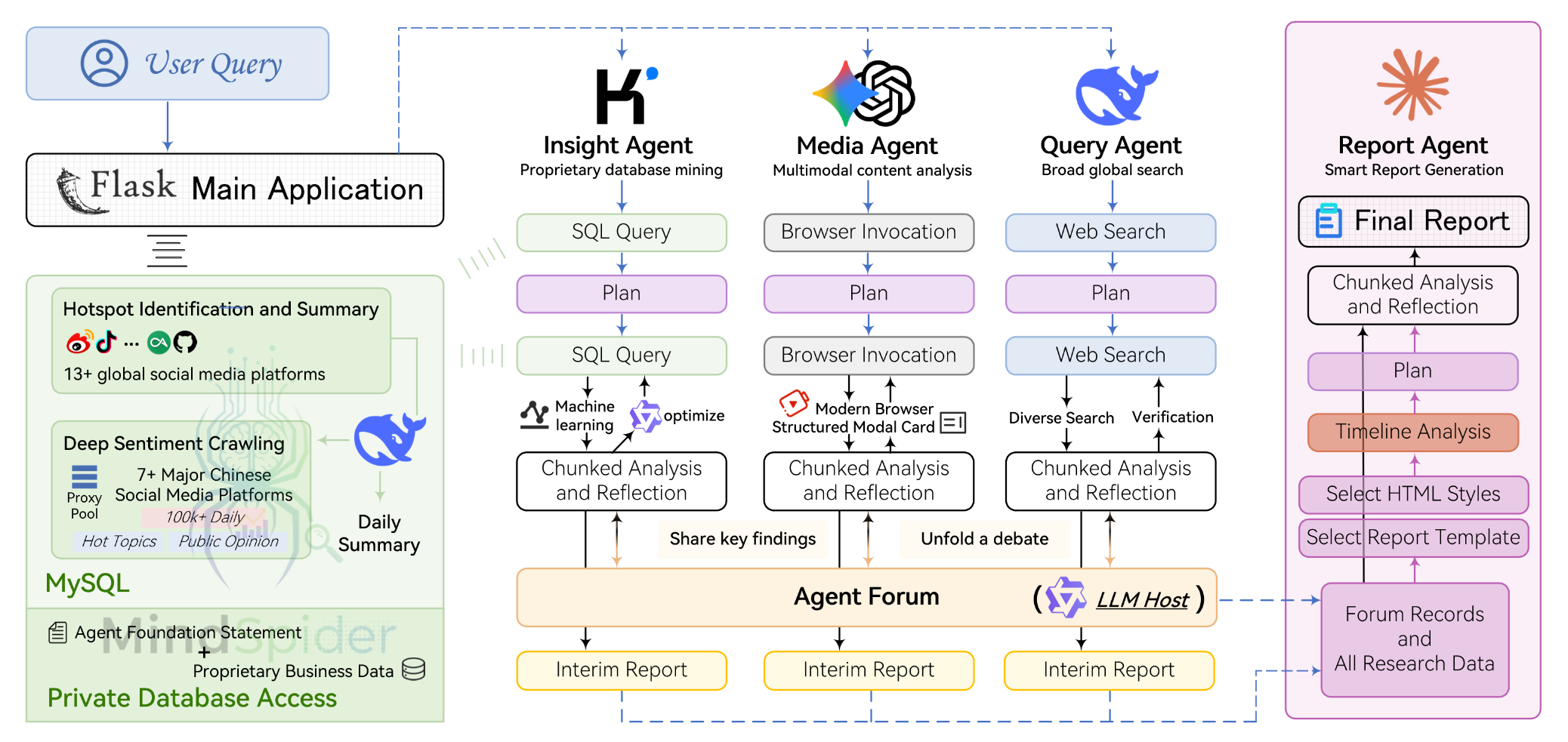
1.1 从"黑盒"到"白盒"的范式转变
在舆情分析领域,AI模型的透明性已经从"可有可无"变为"必不可少"。这种转变的背后是三个关键驱动因素:
监管合规要求:
- GDPR、算法问责制等法规要求AI决策可解释
- 金融、政务等敏感行业的审计需求
- 避免算法歧视和偏见的法律风险
业务信任建立:
class TrustMetricsCalculator:
    def __init__(self):
        self.trust_indicators = {
            'transparency_score': TransparencyMetric(),
            'consistency_index': ConsistencyMetric(),
            'stakeholder_confidence': ConfidenceSurvey()
        }

    def calculate_ai_trustworthiness(self, model, test_cases):
        """计算AI系统可信度"""
        trust_scores = {}

        for indicator_name, metric in self.trust_indicators.items():
            score = metric.evaluate(model, test_cases)
            trust_scores[indicator_name] = score

        overall_trust = np.mean(list(trust_scores.values()))

        return TrustReport(
            overall_score=overall_trust,
            component_scores=trust_scores,
            improvement_recommendations=self._generate_trust_improvements(trust_scores)
        )
决策质量提升:
- 通过可解释性发现模型潜在缺陷
- 基于解释结果优化特征工程
- 提升跨部门协作效率
1.2 舆情分析中的可解释性挑战
舆情分析面临独特的可解释性挑战:
多模态数据复杂性:
class MultimodalExplainability:
    def __init__(self):
        self.text_explainer = TextExplanationEngine()
        self.image_explainer = VisualExplanationEngine()
        self.video_explainer = VideoExplanationEngine()
        self.fusion_explainer = MultimodalFusionExplainer()

    def explain_multimodal_prediction(self, text, images, videos):
        """解释多模态舆情预测"""
        explanations = {}

        # 文本解释
        if text:
            text_explanation = self.text_explainer.explain(text)
            explanations['text'] = text_explanation

        # 图像解释
        if images:
            image_explanations = []
            for image in images:
                image_exp = self.image_explainer.explain(image)
                image_explanations.append(image_exp)
            explanations['images'] = image_explanations

        # 视频解释
        if videos:
            video_explanations = []
            for video in videos:
                video_exp = self.video_explainer.explain(video)
                video_explanations.append(video_exp)
            explanations['videos'] = video_explanations

        # 多模态融合解释
        fusion_explanation = self.fusion_explainer.explain_fusion(explanations)
        explanations['fusion'] = fusion_explanation

        return MultimodalExplanationReport(explanations)
动态语境敏感性:
- 网络用语和新兴词汇的快速演变
- 文化背景和地域差异的影响
- 时效性对情感极性的影响
二、模型可解释性技术深度对比
2.1 基于事后解释的方法
LIME (Local Interpretable Model-agnostic Explanations):
class LIMESentimentExplainer:
    def __init__(self):
        self.lime_explainer = lime.lime_text.LimeTextExplainer(
            class_names=['negative', 'positive']
        )
        self.feature_analyzer = FeatureImportanceAnalyzer()

    def explain_sentiment_prediction(self, text, model, num_features=10):
        """使用LIME解释情感预测"""
        # 创建解释器
        def predict_proba(texts):
            return model.predict_proba(texts)

        # 生成解释
        explanation = self.lime_explainer.explain_instance(
            text, predict_proba, num_features=num_features
        )

        # 提取关键特征
        key_features = self._extract_key_features(explanation)

        # 生成自然语言解释
        natural_language_exp = self._generate_natural_language_explanation(
            key_features, explanation
        )

        return SentimentExplanation(
            text=text,
            predicted_sentiment=model.predict([text])[0],
            key_features=key_features,
            feature_importance=explanation.as_list(),
            natural_language_explanation=natural_language_exp,
            confidence_scores=explanation.predict_proba,
            local_fidelity=self._calculate_local_fidelity(explanation)
        )

    def _generate_natural_language_explanation(self, key_features, explanation):
        """生成自然语言解释"""
        positive_features = [f for f in key_features if f.impact > 0]
        negative_features = [f for f in key_features if f.impact < 0]

        explanation_parts = []

        if positive_features:
            pos_desc = "推动积极情感的关键词:"
            pos_desc += "、".join([f.feature for f in positive_features[:3]])
            explanation_parts.append(pos_desc)

        if negative_features:
            neg_desc = "导致消极情感的关键词:"
            neg_desc += "、".join([f.feature for f in negative_features[:3]])
            explanation_parts.append(neg_desc)

        return ";".join(explanation_parts)
SHAP (SHapley Additive exPlanations):
class SHAPSentimentAnalyzer:
    def __init__(self, model, vectorizer):
        self.model = model
        self.vectorizer = vectorizer
        self.shap_explainer = shap.Explainer(model, vectorizer)

    def analyze_sentiment_contributions(self, text_corpus):
        """使用SHAP分析情感贡献度"""
        # 转换文本为特征
        X = self.vectorizer.transform(text_corpus)

        # 计算SHAP值
        shap_values = self.shap_explainer(X)

        # 分析特征贡献
        feature_contributions = self._analyze_feature_contributions(shap_values)

        # 生成全局解释
        global_explanation = self._generate_global_explanation(shap_values)

        return SHAPAnalysisResult(
            shap_values=shap_values,
            feature_contributions=feature_contributions,
            global_explanation=global_explanation,
            interaction_effects=self._analyze_interactions(shap_values),
            summary_plot_data=self._prepare_summary_plot(shap_values)
        )

    def _analyze_feature_contributions(self, shap_values):
        """分析特征贡献度"""
        contributions = []

        for i in range(len(shap_values)):
            text_contributions = []
            for j, feature in enumerate(self.vectorizer.get_feature_names_out()):
                contribution = shap_values[i, j]
                if abs(contribution) > 0.01:  # 只保留显著贡献
                    text_contributions.append({
                        'feature': feature,
                        'contribution': contribution,
                        'abs_contribution': abs(contribution)
                    })

            # 按贡献度排序
            text_contributions.sort(key=lambda x: x['abs_contribution'], reverse=True)
            contributions.append(text_contributions[:10])  # 取前10个

        return contributions
2.2 基于模型内在结构的方法
注意力机制可视化:
class AttentionVisualization:
    def __init__(self, model, tokenizer):
        self.model = model
        self.tokenizer = tokenizer
        self.attention_extractor = AttentionExtractor(model)

    def visualize_attention(self, text, layer=0, head=0):
        """可视化注意力机制"""
        # 分词和编码
        tokens = self.tokenizer.tokenize(text)
        encoded = self.tokenizer.encode(text, return_tensors='pt')

        # 提取注意力权重
        attention_weights = self.attention_extractor.extract_attention(
            encoded, layer=layer, head=head
        )

        # 创建可视化
        visualization = self._create_attention_heatmap(tokens, attention_weights)

        # 分析注意力模式
        attention_patterns = self._analyze_attention_patterns(attention_weights, tokens)

        return AttentionVisualizationResult(
            tokens=tokens,
            attention_weights=attention_weights,
            visualization=visualization,
            attention_patterns=attention_patterns,
            key_attention_relations=self._extract_key_relations(attention_weights, tokens)
        )

    def _analyze_attention_patterns(self, attention_weights, tokens):
        """分析注意力模式"""
        patterns = {
            'self_attention': self._analyze_self_attention(attention_weights),
            'long_range_dependencies': self._analyze_long_range_deps(attention_weights, tokens),
            'syntactic_patterns': self._analyze_syntactic_patterns(attention_weights, tokens),
            'semantic_patterns': self._analyze_semantic_patterns(attention_weights, tokens)
        }

        return patterns
决策树规则提取:
class DecisionTreeRuleExtractor:
    def __init__(self, model, feature_names):
        self.model = model
        self.feature_names = feature_names

    def extract_decision_rules(self, tree_index=0):
        """从决策树提取决策规则"""
        tree = self.model.estimators_[tree_index]

        # 提取决策路径
        rules = self._extract_rules_from_tree(tree)

        # 规则简化和优化
        simplified_rules = self._simplify_rules(rules)

        # 规则重要性排序
        ranked_rules = self._rank_rules_by_importance(simplified_rules)

        return DecisionRules(
            total_rules=len(ranked_rules),
            rules=ranked_rules,
            coverage_analysis=self._analyze_rule_coverage(ranked_rules),
            conflict_resolution=self._resolve_rule_conflicts(ranked_rules)
        )

    def _extract_rules_from_tree(self, tree):
        """从决策树提取规则"""
        n_nodes = tree.tree_.node_count
        children_left = tree.tree_.children_left
        children_right = tree.tree_.children_right
        feature = tree.tree_.feature
        threshold = tree.tree_.threshold

        rules = []

        def extract_node_rules(node_id, current_rule):
            if children_left[node_id] != children_right[node_id]:  # 内部节点
                feature_name = self.feature_names[feature[node_id]]
                left_rule = current_rule + [f"{feature_name} <= {threshold[node_id]:.2f}"]
                right_rule = current_rule + [f"{feature_name} > {threshold[node_id]:.2f}"]

                extract_node_rules(children_left[node_id], left_rule)
                extract_node_rules(children_right[node_id], right_rule)
            else:  # 叶子节点
                rule = {
                    'conditions': current_rule,
                    'value': tree.tree_.value[node_id],
                    'samples': tree.tree_.n_node_samples[node_id]
                }
                rules.append(rule)

        extract_node_rules(0, [])
        return rules
三、LIME、SHAP等工具实战应用
3.1 LIME在舆情分析中的深度应用
细粒度情感解释:
class FineGrainedSentimentExplainer:
    def __init__(self, model, aspect_detector):
        self.model = model
        self.aspect_detector = aspect_detector
        self.lime_explainer = lime.lime_text.LimeTextExplainer()

    def explain_aspect_sentiment(self, text):
        """解释方面级别情感"""
        # 检测文本中的方面
        aspects = self.aspect_detector.detect_aspects(text)

        aspect_explanations = {}
        for aspect in aspects:
            # 为每个方面创建解释
            aspect_exp = self._explain_single_aspect(text, aspect)
            aspect_explanations[aspect] = aspect_exp

        # 综合解释
        overall_explanation = self._synthesize_aspect_explanations(aspect_explanations)

        return AspectSentimentExplanation(
            text=text,
            aspects_detected=aspects,
            aspect_explanations=aspect_explanations,
            overall_explanation=overall_explanation,
            aspect_interactions=self._analyze_aspect_interactions(aspect_explanations)
        )

    def _explain_single_aspect(self, text, aspect):
        """解释单个方面的情感"""
        # 创建针对该方面的掩码文本
        masked_texts = self._generate_aspect_masked_texts(text, aspect)

        # 使用LIME解释
        explanation = self.lime_explainer.explain_instance(
            text,
            self.model.predict_proba,
            labels=[0, 1],  # 负面、正面
            num_features=15
        )

        return {
            'aspect': aspect,
            'sentiment_score': self.model.predict_proba([text])[0][1],
            'key_phrases': self._extract_aspect_key_phrases(explanation, aspect),
            'confidence': explanation.score,
            'local_model_accuracy': self._evaluate_local_model(explanation)
        }
3.2 SHAP在舆情分析中的高级应用
群体级别解释分析:
class GroupLevelSHAPAnalyzer:
    def __init__(self, model, vectorizer):
        self.model = model
        self.vectorizer = vectorizer
        self.shap_explainer = shap.Explainer(model, vectorizer)

    def analyze_group_sentiment_patterns(self, text_groups):
        """分析群体级别的情感模式"""
        group_analyses = {}

        for group_name, texts in text_groups.items():
            # 计算SHAP值
            X = self.vectorizer.transform(texts)
            shap_values = self.shap_explainer(X)

            # 群体级别分析
            group_analysis = self._analyze_group_patterns(shap_values, texts, group_name)
            group_analyses[group_name] = group_analysis

        # 跨群体对比
        cross_group_comparison = self._compare_group_patterns(group_analyses)

        return GroupSentimentAnalysis(
            group_analyses=group_analyses,
            cross_group_comparison=cross_group_comparison,
            demographic_insights=self._extract_demographic_insights(group_analyses),
            policy_implications=self._derive_policy_implications(cross_group_comparison)
        )

    def _analyze_group_patterns(self, shap_values, texts, group_name):
        """分析单个群体的模式"""
        # 特征重要性聚合
        feature_importance = np.mean(np.abs(shap_values.values), axis=0)

        # 情感驱动因素分析
        sentiment_drivers = self._identify_sentiment_drivers(shap_values, texts)

        # 群体特有模式
        group_specific_patterns = self._detect_group_specific_patterns(shap_values, texts)

        return GroupAnalysis(
            group_name=group_name,
            feature_importance=feature_importance,
            sentiment_drivers=sentiment_drivers,
            group_specific_patterns=group_specific_patterns,
            consistency_metrics=self._calculate_group_consistency(shap_values)
        )
四、注意力机制可视化技术
4.1 多层次注意力可视化
跨层注意力分析:
class CrossLayerAttentionAnalyzer:
    def __init__(self, model, tokenizer):
        self.model = model
        self.tokenizer = tokenizer
        self.attention_extractor = HierarchicalAttentionExtractor(model)

    def analyze_cross_layer_attention(self, text):
        """分析跨层注意力模式"""
        encoded = self.tokenizer.encode(text, return_tensors='pt')

        # 提取所有层的注意力
        all_attention = self.attention_extractor.extract_all_layers(encoded)

        # 层间注意力演化分析
        layer_evolution = self._analyze_layer_evolution(all_attention)

        # 注意力头专业化分析
        head_specialization = self._analyze_head_specialization(all_attention)

        # 创建综合可视化
        visualization = self._create_cross_layer_visualization(all_attention)

        return CrossLayerAnalysis(
            text=text,
            tokens=self.tokenizer.tokenize(text),
            layer_attention=all_attention,
            layer_evolution=layer_evolution,
            head_specialization=head_specialization,
            visualization=visualization,
            interpretation_insights=self._generate_interpretation_insights(layer_evolution, head_specialization)
        )

    def _analyze_layer_evolution(self, all_attention):
        """分析层间注意力演化"""
        evolution_patterns = {}

        for layer_idx, layer_attention in enumerate(all_attention):
            patterns = {
                'attention_entropy': self._calculate_attention_entropy(layer_attention),
                'focus_concentration': self._calculate_focus_concentration(layer_attention),
                'long_range_strength': self._calculate_long_range_strength(layer_attention),
                'syntactic_alignment': self._calculate_syntactic_alignment(layer_attention)
            }
            evolution_patterns[f'layer_{layer_idx}'] = patterns

        return evolution_patterns
4.2 注意力引导的可解释性
基于注意力的特征重要性:
class AttentionGuidedExplanation:
    def __init__(self, model, tokenizer):
        self.model = model
        self.tokenizer = tokenizer

    def generate_attention_based_explanation(self, text):
        """生成基于注意力的解释"""
        # 获取注意力权重
        attention_weights = self._extract_attention_weights(text)

        # 计算token重要性
        token_importance = self._calculate_token_importance(attention_weights)

        # 生成短语级别解释
        phrase_explanations = self._generate_phrase_explanations(token_importance, text)

        # 创建自然语言解释
        natural_explanation = self._create_natural_language_explanation(phrase_explanations)

        return AttentionExplanation(
            text=text,
            token_importance=token_importance,
            phrase_explanations=phrase_explanations,
            natural_language_explanation=natural_explanation,
            attention_patterns=self._identify_attention_patterns(attention_weights),
            confidence_metrics=self._calculate_explanation_confidence(attention_weights)
        )

    def _calculate_token_importance(self, attention_weights):
        """基于注意力计算token重要性"""
        # 多头注意力聚合
        aggregated_attention = np.mean(attention_weights, axis=(0, 1))  # 平均跨头和层

        # 计算每个token的重要性得分
        token_importance = np.sum(aggregated_attention, axis=1)  # 列求和

        return token_importance
五、决策路径分析与推理链条
5.1 复杂决策路径可视化
多模型决策路径对比:
class MultiModelDecisionAnalyzer:
    def __init__(self, models, model_names):
        self.models = models
        self.model_names = model_names
        self.decision_tracker = DecisionPathTracker()

    def compare_decision_paths(self, text):
        """对比多模型决策路径"""
        decision_paths = {}

        for model, name in zip(self.models, self.model_names):
            # 跟踪决策路径
            path = self.decision_tracker.track_decision_path(model, text)
            decision_paths[name] = path

        # 路径一致性分析
        consistency_analysis = self._analyze_path_consistency(decision_paths)

        # 关键决策点识别
        key_decision_points = self._identify_key_decision_points(decision_paths)

        return MultiModelDecisionAnalysis(
            text=text,
            decision_paths=decision_paths,
            consistency_analysis=consistency_analysis,
            key_decision_points=key_decision_points,
            model_agreement_metrics=self._calculate_model_agreement(decision_paths),
            uncertainty_estimation=self._estimate_decision_uncertainty(decision_paths)
        )

    def _analyze_path_consistency(self, decision_paths):
        """分析决策路径一致性"""
        consistency_metrics = {}

        all_paths = list(decision_paths.values())
        for i, path1 in enumerate(all_paths):
            for j, path2 in enumerate(all_paths[i+1:], i+1):
                consistency = self._calculate_path_similarity(path1, path2)
                pair_name = f"{self.model_names[i]}_{self.model_names[j]}"
                consistency_metrics[pair_name] = consistency

        return consistency_metrics
5.2 推理链条重建与验证
端到端推理解释:
class ReasoningChainReconstructor:
    def __init__(self, model, knowledge_base):
        self.model = model
        self.knowledge_base = knowledge_base
        self.chain_extractor = ReasoningChainExtractor()

    def reconstruct_reasoning_chain(self, text, prediction):
        """重建推理链条"""
        # 提取中间推理步骤
        intermediate_steps = self.chain_extractor.extract_steps(text, prediction)

        # 验证推理逻辑
        logic_validation = self._validate_reasoning_logic(intermediate_steps)

        # 识别知识缺口
        knowledge_gaps = self._identify_knowledge_gaps(intermediate_steps)

        # 生成推理报告
        reasoning_report = self._generate_reasoning_report(intermediate_steps, logic_validation)

        return ReasoningChainAnalysis(
            text=text,
            prediction=prediction,
            intermediate_steps=intermediate_steps,
            logic_validation=logic_validation,
            knowledge_gaps=knowledge_gaps,
            reasoning_report=reasoning_report,
            confidence_assessment=self._assess_reasoning_confidence(intermediate_steps, logic_validation)
        )

    def _validate_reasoning_logic(self, intermediate_steps):
        """验证推理逻辑的合理性"""
        validation_results = {}

        for step in intermediate_steps:
            validation = {
                'logical_consistency': self._check_logical_consistency(step),
                'factual_accuracy': self._check_factual_accuracy(step, self.knowledge_base),
                'inference_validity': self._check_inference_validity(step),
                'assumption_validation': self._validate_assumptions(step)
            }
            validation_results[step.step_id] = validation

        return validation_results
六、可信AI体系建设实践
6.1 可解释性评估框架
多维度可解释性度量:
class ExplainabilityAssessment:
    def __init__(self):
        self.metrics = {
            'fidelity': FidelityMetric(),
            'comprehensibility': ComprehensibilityMetric(),
            'stability': StabilityMetric(),
            'completeness': CompletenessMetric()
        }

    def assess_explainability(self, model, explanations, test_data):
        """评估模型可解释性"""
        assessment_results = {}

        for metric_name, metric in self.metrics.items():
            score = metric.evaluate(model, explanations, test_data)
            assessment_results[metric_name] = score

        # 综合可解释性得分
        overall_score = self._calculate_overall_score(assessment_results)

        # 改进建议
        improvement_suggestions = self._generate_improvement_suggestions(assessment_results)

        return ExplainabilityReport(
            overall_score=overall_score,
            metric_scores=assessment_results,
            improvement_suggestions=improvement_suggestions,
            compliance_status=self._check_explainability_compliance(assessment_results),
            benchmark_comparison=self._compare_with_benchmarks(assessment_results)
        )

    def _calculate_overall_score(self, metric_scores):
        """计算综合可解释性得分"""
        weights = {
            'fidelity': 0.4,      # 保真度最重要
            'comprehensibility': 0.3,
            'stability': 0.2,
            'completeness': 0.1
        }

        weighted_sum = sum(metric_scores[metric] * weight
                          for metric, weight in weights.items())
        return weighted_sum
6.2 可解释AI系统架构
端到端可解释性流水线:
class ExplainableAIPipeline:
    def __init__(self, model, explainers, validation_framework):
        self.model = model
        self.explainers = explainers
        self.validator = validation_framework
        self.interpretation_engine = InterpretationEngine()

    def process_with_explanations(self, input_data):
        """带解释的预测处理"""
        # 模型预测
        prediction = self.model.predict(input_data)

        # 多方法解释生成
        explanations = {}
        for name, explainer in self.explainers.items():
            explanation = explainer.explain(input_data, prediction)
            explanations[name] = explanation

        # 解释验证和融合
        validated_explanations = self.validator.validate_explanations(explanations)
        fused_explanation = self._fuse_explanations(validated_explanations)

        # 生成最终解释报告
        explanation_report = self.interpretation_engine.generate_report(
            input_data, prediction, fused_explanation
        )

        return ExplainablePrediction(
            input_data=input_data,
            prediction=prediction,
            raw_explanations=explanations,
            fused_explanation=fused_explanation,
            explanation_report=explanation_report,
            confidence_scores=self._calculate_explanation_confidence(fused_explanation)
        )

    def _fuse_explanations(self, explanations):
        """融合多方法解释"""
        fusion_strategy = ExplanationFusionStrategy()

        # 基于一致性加权融合
        consistency_weights = self._calculate_explanation_consistency(explanations)
        fused_weights = fusion_strategy.weighted_fusion(explanations, consistency_weights)

        return FusedExplanation(
            fused_weights=fused_weights,
            contributor_explanations=explanations,
            fusion_confidence=self._calculate_fusion_confidence(fused_weights, explanations),
            agreement_metrics=self._calculate_explanation_agreement(explanations)
        )
七、实际应用案例与效果评估
7.1 金融风控中的可解释AI应用
信贷决策解释系统:
class CreditDecisionExplainer:
    def __init__(self, risk_model, regulatory_rules):
        self.risk_model = risk_model
        self.regulatory_rules = regulatory_rules
        self.compliance_checker = ComplianceChecker()

    def explain_credit_decision(self, application_data):
        """解释信贷决策"""
        # 风险预测
        risk_score = self.risk_model.predict(application_data)
        decision = 'approved' if risk_score < 0.5 else 'rejected'

        # 生成合规解释
        compliance_explanation = self.compliance_checker.generate_compliance_explanation(
            application_data, decision
        )

        # 技术解释
        technical_explanation = self._generate_technical_explanation(
            application_data, risk_score
        )

        # 用户友好解释
        user_friendly_explanation = self._generate_user_friendly_explanation(
            technical_explanation, compliance_explanation
        )

        return CreditDecisionExplanation(
            application_data=application_data,
            decision=decision,
            risk_score=risk_score,
            technical_explanation=technical_explanation,
            compliance_explanation=compliance_explanation,
            user_friendly_explanation=user_friendly_explanation,
            appeal_process=self._generate_appeal_process(decision, technical_explanation)
        )
7.2 效果评估与业务价值
可解释性业务价值评估:
class ExplainabilityROIAnalyzer:
    def __init__(self):
        self.value_tracker = BusinessValueTracker()
        self.cost_calculator = CostCalculator()

    def analyze_explainability_roi(self, implementation_period):
        """分析可解释性投资回报"""
        # 成本计算
        implementation_costs = self.cost_calculator.calculate_costs(implementation_period)

        # 价值计算
        business_value = self.value_tracker.calculate_value(implementation_period)

        # ROI计算
        roi_metrics = {
            'total_costs': implementation_costs,
            'total_value': business_value,
            'net_value': business_value - implementation_costs,
            'roi_ratio': (business_value - implementation_costs) / implementation_costs,
            'break_even_point': self._calculate_break_even(implementation_costs, business_value)
        }

        # 无形价值评估
        intangible_benefits = self._assess_intangible_benefits()

        return ExplainabilityROIReport(
            financial_metrics=roi_metrics,
            intangible_benefits=intangible_benefits,
            success_factors=self._identify_success_factors(),
            improvement_opportunities=self._identify_improvement_opportunities()
        )

    def _assess_intangible_benefits(self):
        """评估无形收益"""
        return {
            'trust_improvement': self._measure_trust_improvement(),
            'compliance_benefits': self._measure_compliance_benefits(),
            'reputation_enhancement': self._measure_reputation_impact(),
            'employee_satisfaction': self._measure_employee_impact()
        }
通过这套完整的可解释AI技术体系,舆情分析系统能够提供透明、可信的决策解释,满足监管要求,建立用户信任,并最终提升AI系统的业务价值和社会接受度。
附录:有用的资源链接
BettaFish项目地址:https://github.com/666ghj/BettaFish
Miniconda下载:https://docs.conda.io/en/latest/miniconda.html
PostgreSQL下载:https://www.postgresql.org/download/
SiliconFlow API:https://siliconflow.cn/(推荐LLM API服务商)
Visual C++ Redistributable:https://aka.ms/vs/17/release/vc_redist.x64.exe
祝您安装顺利!

有“AI”的1024 = 2048,欢迎大家加入2048 AI社区
更多推荐


 19
19 0
0- 0


 已为社区贡献15条内容

所有评论(0)