队列 手把手教会你
·
队列 先进 先出 很公平 排队打菜一样
有对头 和 对尾 就是对单链表 限制或者只去用部分的函数 就不要其他的功能 来使其 具有独特的 属性和 应用场景
现实 比喻 嘉豪 男娘 等
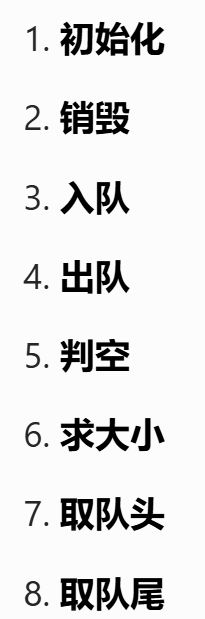
1 为什么非要包一个结构体?因为队列必须同时记住:头在哪、尾在哪,不然没法快速入队、出队。
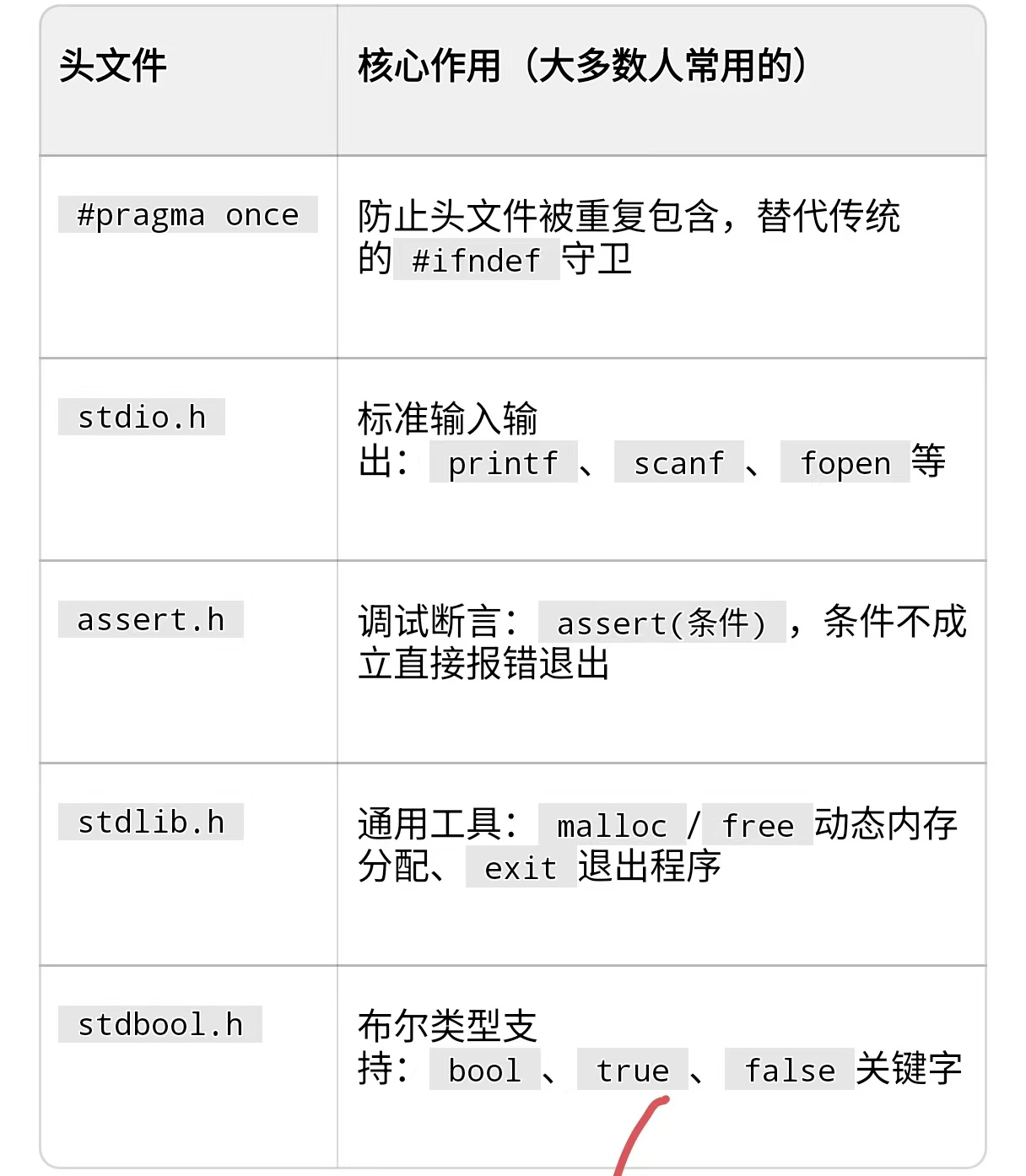
<stdlib.h> 精简版作用
1. 动态内存:malloc、free、calloc、realloc
2. 程序退出:exit()
3. 类型转换:atoi 字符串转整数、atof 转小数
4. 随机数:rand、srand
5. 工具函数:abs 求绝对值、qsort 排序
一句话:C语言内存分配、随机数、类型转换、程序退出都靠它。
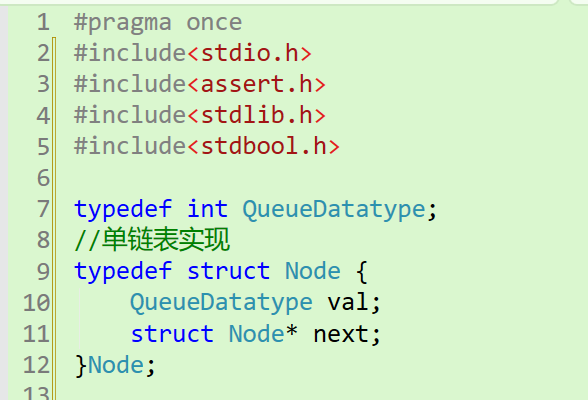
每一个 Node 就是一个排队的人
val 是这个人带的东西
next 是伸手指着下一个人
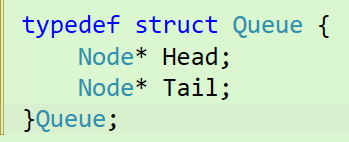
将结构体变量 看作大哥 下面有小弟 大哥可以指挥小弟
Queue 是总管,手里拿着两个指针,盯着队伍头和队伍尾。
方便 头删 出队列 对头
尾插 入队列 队尾
2 第一个初始化函数 —— 队列初始化
思路:刚创建一个队列,队伍里一个人都没有所以:
头指针、尾指针 都赋值为 NULL
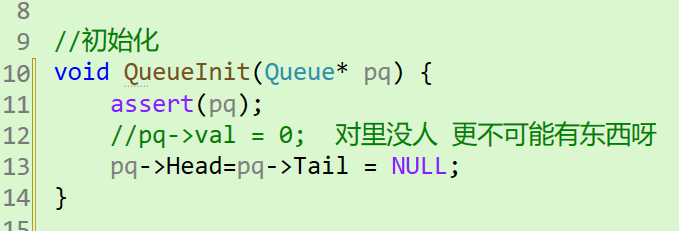
3 判空函数 思路:
只要 head == NULL,说明队伍没人,就是空队列。
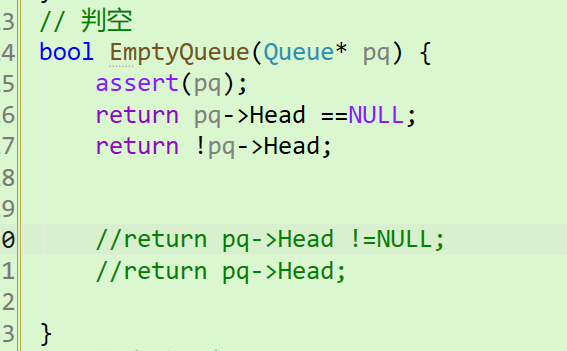
	return pq->Head ==NULL;
	return !pq->Head;z
这里是等价的  但推荐第一种只管 表达式的结果就是返回值  很直观
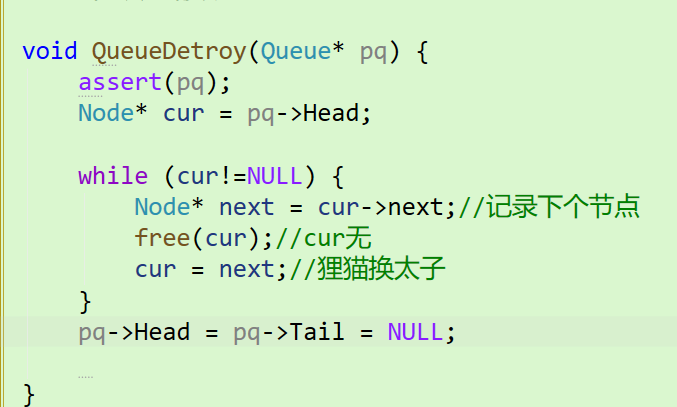
4 销毁队列 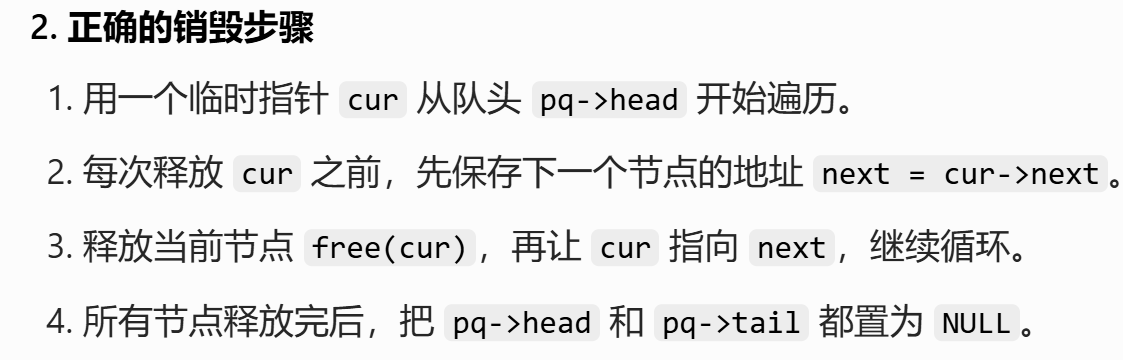
需要从头开始 来写 一个一个遍历之后 销毁 free
5 入队列
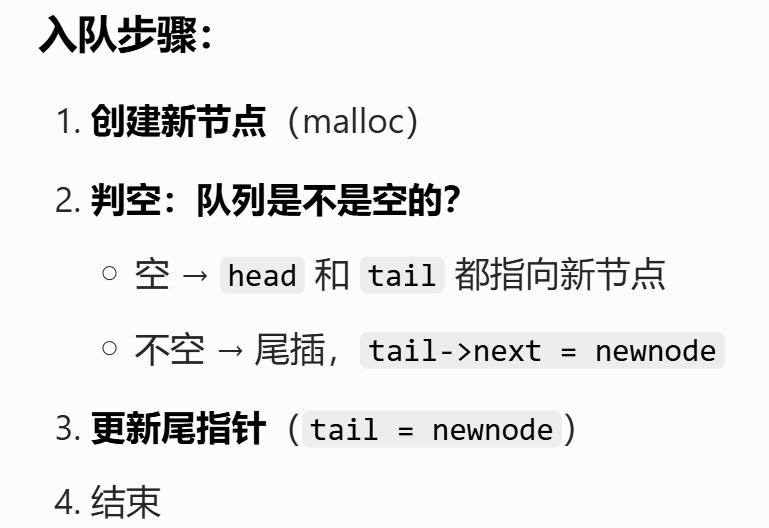
*队列结构体已经把 head 和 tail 包起来了,你传 Queue 就能修改 head 和 tail,根本不需要二级指针!**
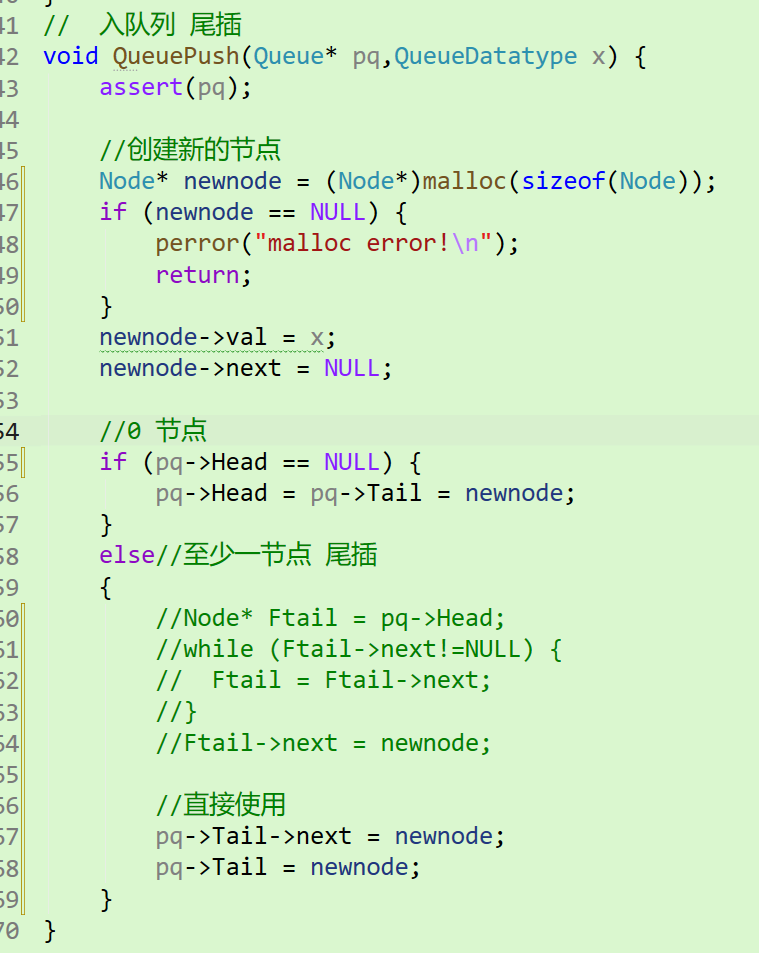
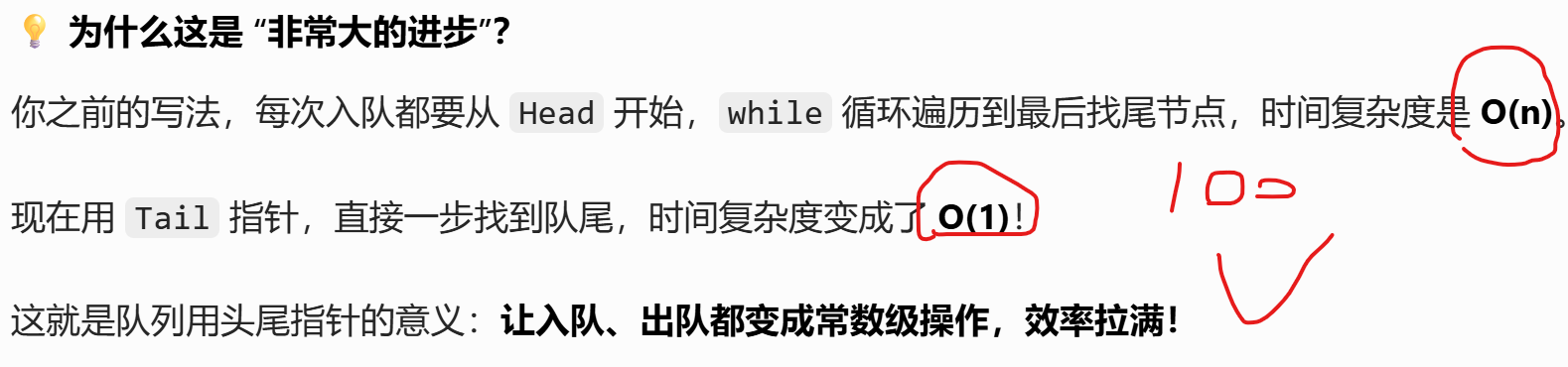
尾插 时的 直接使用 记录好的Tail 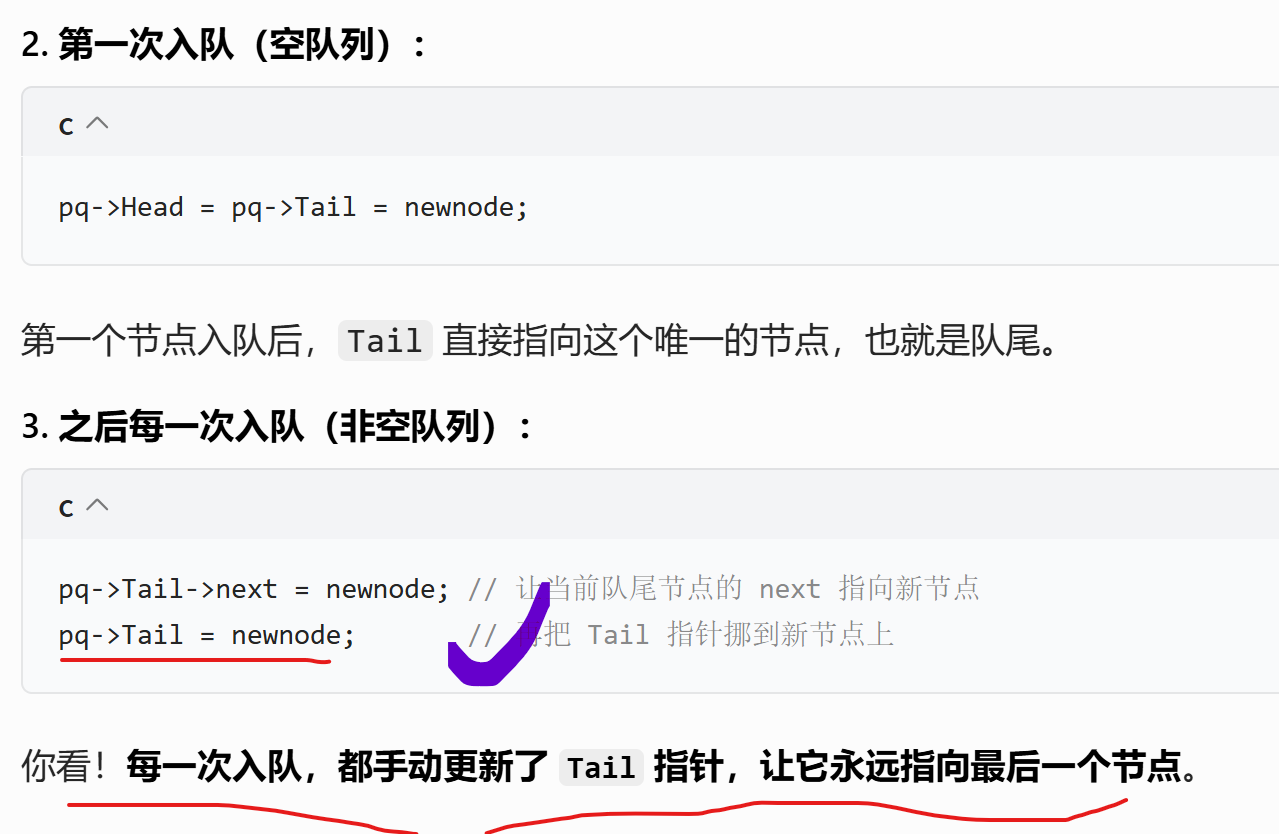
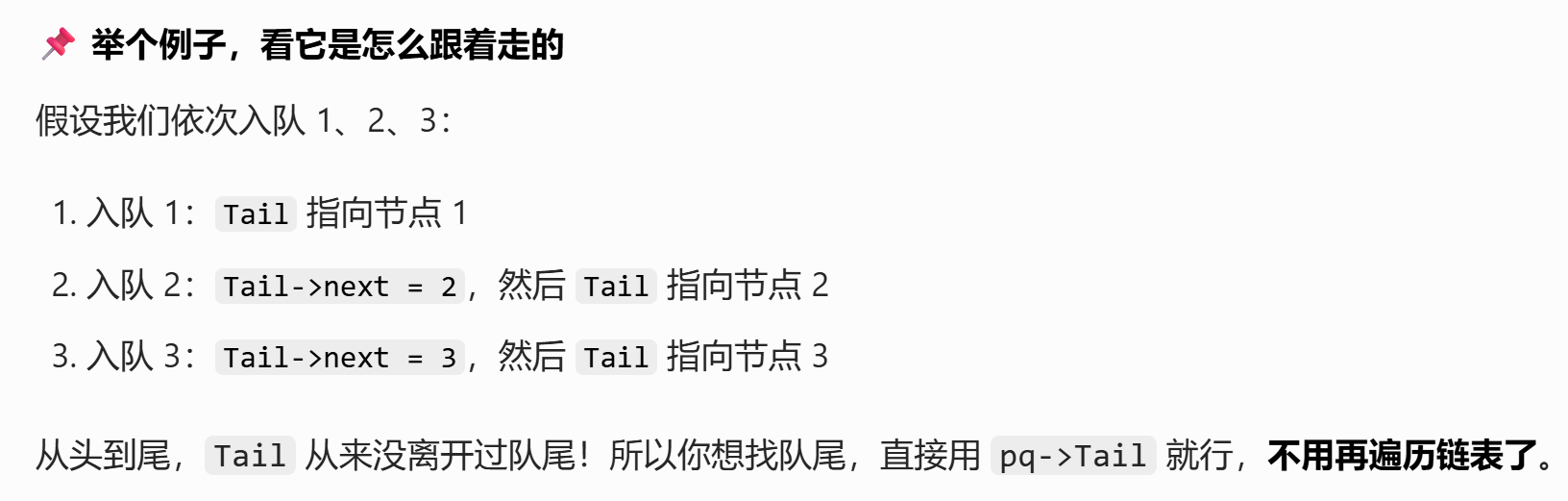
6 取数据 对头 队尾 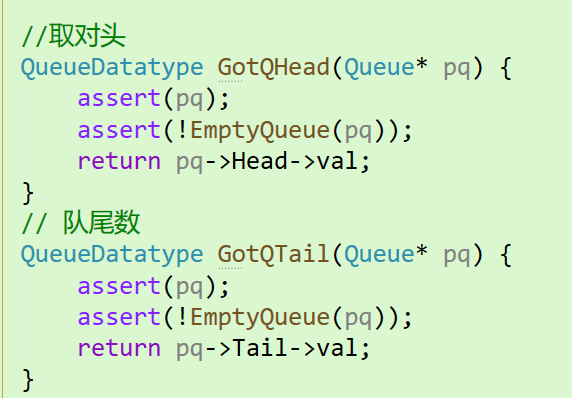
注意 队列判空
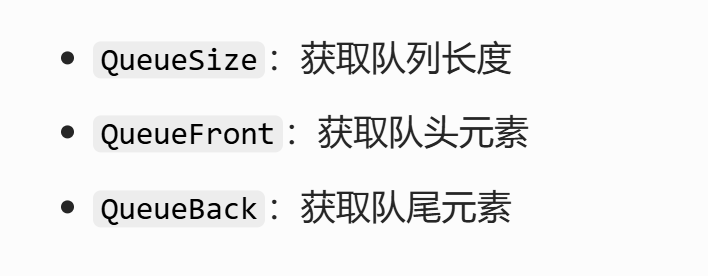
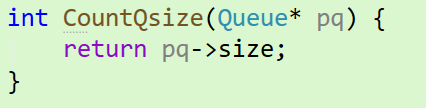
7 求 队列中的人数
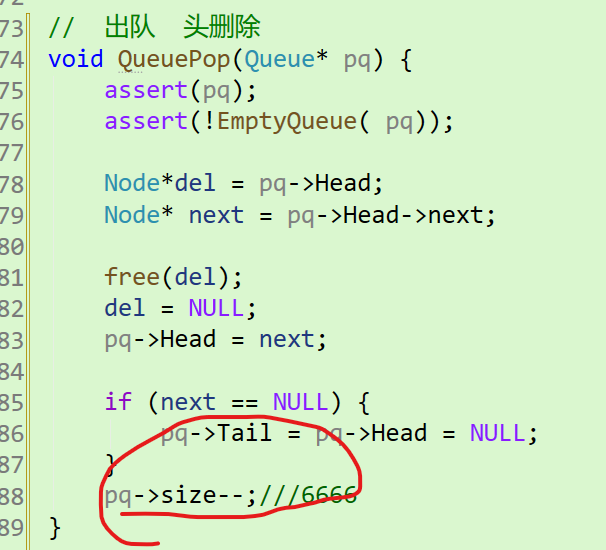
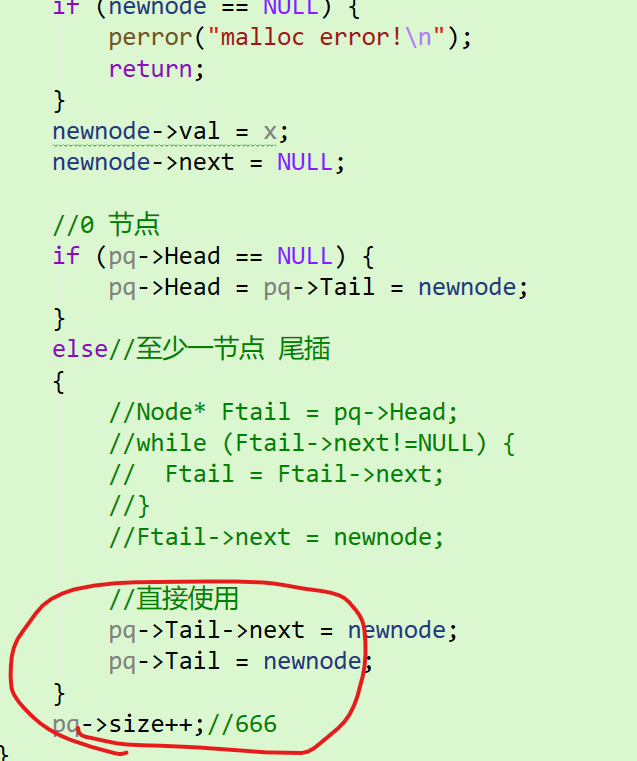
细节拉满
------------------------------------------------------------------------------------------------------------------------------------------------------------------------------------------------------------------------------------------------------------------
接口函数-
#define _CRT_SECURE_NO_WARNINGS 1

#include "queue.h"


//初始化
void QueueInit(Queue* pq) {
	assert(pq);
	//pq->val = 0;  对里没人 更不可能有东西呀
    pq->Head=pq->Tail = NULL;
}

// 还有就是销毁

void QueueDestroy(Queue* pq) {
	assert(pq);
	Node* cur = pq->Head;

	while (cur!=NULL) {
		Node* next = cur->next;//记录下个节点
		free(cur);//cur无
		cur = next;//狸猫换太子
	}
	pq->Head = pq->Tail = NULL;

}
// 判空
bool EmptyQueue(Queue* pq) {
	assert(pq);
	return pq->Head ==NULL;
	//return !pq->Head;


	//return pq->Head !=NULL;
	//return pq->Head;

}
//  入队列 尾插
void QueuePush(Queue* pq,QueueDatatype x) {
	assert(pq);

	//创建新的节点
	Node* newnode = (Node*)malloc(sizeof(Node));
	if (newnode == NULL) {
		perror("malloc error!\n");
		return;
	}
	newnode->val = x;
	newnode->next = NULL;

	//0 节点
	if (pq->Head == NULL) {
		pq->Head = pq->Tail = newnode;
	}
	else//至少一节点 尾插
	{
		//Node* Ftail = pq->Head;
		//while (Ftail->next!=NULL) {
		//	Ftail = Ftail->next;
		//}
		//Ftail->next = newnode;

		//直接使用
		pq->Tail->next = newnode;
		pq->Tail = newnode;
	}
	pq->size++;//666
}

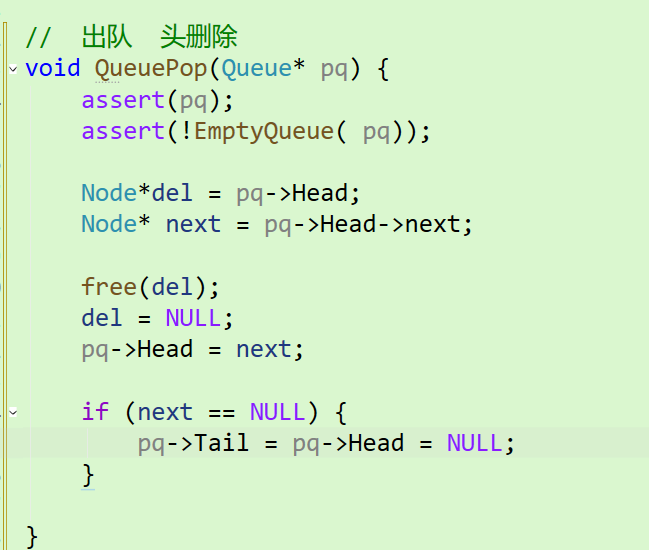
//  出队  头删除
void QueuePop(Queue* pq) {
	assert(pq);
	assert(!EmptyQueue( pq));

	Node*del = pq->Head;
	Node* next = pq->Head->next;

	free(del);
	del = NULL;
	pq->Head = next;

	if (next == NULL) {
		pq->Tail = pq->Head = NULL;
	}
	pq->size--;///6666
}

//取对头
QueueDatatype GotQHead(Queue* pq) {
	assert(pq);
	assert(!EmptyQueue(pq));
	return pq->Head->val;
}
// 队尾数
QueueDatatype GotQTail(Queue* pq) {
	assert(pq);
	assert(!EmptyQueue(pq));
	return pq->Tail->val;
}
//
//  队列中的数据总数
// 每次新增size都加一 o(1)

int CountQsize(Queue* pq) {
	return pq->size;
}
头文件
#pragma once
#include<stdio.h>
#include<assert.h>
#include<stdlib.h>
#include<stdbool.h>

typedef int QueueDatatype;
//单链表实现
typedef struct Node {
	QueueDatatype val;//物品
	struct Node* next;
}Node;  //人


typedef struct Queue {
	Node* Head;
	int size;
	Node* Tail;
}Queue;


有“AI”的1024 = 2048,欢迎大家加入2048 AI社区
更多推荐

 27
27 0
0- 0


 已为社区贡献1条内容

所有评论(0)