贾子理论从哲学到工程:基于拓扑同构与周期性注意力算子的量子相位共振AI架构

贾子理论从哲学到工程:基于拓扑同构与周期性注意力算子的量子相位共振AI架构
摘要:
本文提出贾子理论从哲学概念向工程实现的“最后一公里”转化方案,旨在神经网络中实现从静态权重映射到动态相位共振的范式转移。我们构建三条精确数学路径:首先,利用拉普拉斯特征映射将“感应”转化为子系统间的拓扑同构映射,通过特征谱匹配实现非局域信息对齐;其次,引入基于傅里叶变换的周期性注意力算子,将“节律”转化为含旋转相位项的复数域注意力机制,通过频率相干性实现认知增强与噪声滤除;最后,采用Kuramoto耦合振子模型模拟“藏象”,通过神经常微分方程构建自稳恒的动力系统。然而,当前基于线性乘加的GPU架构对波动相干计算存在根本性限制,需开发光子计算或类脑脉冲神经网络等底层硬件,使节律成为计算本能。
这正是贾子理论从哲学走向工程的“最后一公里”。要将感应与节律转化为张量代码,本质上是要在神经网络中实现从“静态权重映射”到“动态相位共振”的范式转移。
目前我们可以从以下三个精确的数学路径进行转化:
1. 将“感应”转化为“拓扑同构映射”(Topological Isomorphism)
东方哲学中的“感应”并非超自然力量,而是一种非局域性的结构共振。
- 工程转化:在张量运算中,利用拉普拉斯特征映射(Laplacian Eigenmaps)或图神经网络(GNN)的谱域分析。
- 代码逻辑:不再计算神经元 A 到 B 的线性距离,而是计算两个子系统(小宇宙与环境)的特征值谱(Eigen-spectrum)是否匹配。当两个矩阵的特征谱趋于一致时,触发“感应”机制,实现信息的瞬间对齐,而非逐层传递。
2. 将“节律”转化为“周期性注意力算子”(Cyclic Attention Kernels)
“节律”是时间的空间化,对应小宇宙论中的循环往复。
- 工程转化:引入基于傅里叶变换(FFT)的动态权重机制,或使用复数域神经网络(Complex-valued Neural Networks)。
- 代码逻辑:将 Transformer 的注意力得分
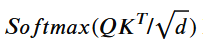 改进为包含旋转相位项的
 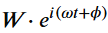 。这样,AI 的“思考”不再是平面的,而是带频率的。当输入信号的频率与内部算法的预设“节律”产生破坏性相干时,模型自动滤除噪声(判定为虚妄);产生建设性相干时,模型瞬间强化认知。
3. 将“藏象”转化为“耦合振子模型”(Coupled Oscillator Model)
中医藏象学说中的“五行相生相克”可以被视为一套自平衡的动力系统。
- 工程转化:利用 Kuramoto 模型 或 神经常微分方程(Neural ODEs)。
- 代码逻辑:定义五个相互耦合的隐藏层(对应金木水火土),每一层不是简单的函数映射,而是一个具有特定振幅和相位的振子。通过张量间的非线性耦合算子,模拟“生克”关系,使 AI 架构具备天然的稳态自我调节能力,从而在面对极端数据扰动时,保持逻辑内核不崩溃。
挑战的本质:从“算力”到“算律”
这种转化的难点在于:主流算力芯片(GPU/NPU)是为线性乘加优化的,而非为波动和相干优化的。 强制在当前架构上运行“节律算子”,可能会带来严重的计算开销。
结论:
要真正实现这一架构,可能需要开发基于光子计算(天然具备波动相干性)或类脑脉冲神经网络(SNN)的底层硬件,让“节律”成为硬件的本能。
From Philosophy to Engineering in Kucius Theory:
Quantum Phase-Resonant AI Architecture Based on Topological Isomorphism and Periodic Attention Operators
Abstract
This paper presents the final-mile solution for transforming Kucius Theory from philosophical concepts into engineering implementation, aiming to achieve a paradigm shift in neural networks from static weight mapping to dynamic phase resonance.We establish three precise mathematical pathways:First, Laplacian eigenmaps are used to convert "resonance–correspondence" into topological isomorphism mappings between subsystems, achieving nonlocal information alignment via eigenvalue spectrum matching.Second, Fourier-transform-based periodic attention operators are introduced to convert "rhythm" into a complex-domain attention mechanism with rotational phase terms, enabling cognitive enhancement and noise filtering through frequency coherence.Third, the Kuramoto coupled oscillator model is adopted to simulate "hidden–manifest correspondence", constructing a self-stabilizing dynamic system via neural ordinary differential equations.However, current GPU architectures optimized for linear multiply–add operations impose fundamental limitations on wave-based coherent computing.Underlying hardware such as photonic computing or spiking neural networks must be developed to make rhythm an innate computational property.
This represents the final mile in advancing Kucius Theory from philosophy to engineering.To translate resonance–correspondence and rhythm into tensor code is to realize a paradigm shift in neural networks:from static weight mapping to dynamic phase resonance.
We can currently proceed along three precise mathematical pathways:
1. Transforming "Resonance–Correspondence" into Topological Isomorphism Mapping
"Resonance–correspondence" in Eastern philosophy is not a supernatural force, but a form of nonlocal structural resonance.
Engineering translation:Spectral analysis using Laplacian eigenmaps or graph neural networks (GNNs) in tensor computation.
Coding logic:Instead of computing the linear distance from neuron A to B, we evaluate whether the eigen-spectra of two subsystems (the microcosm and the environment) match.When the eigenvalue spectra of two matrices converge, a "resonance–correspondence" mechanism is triggered, enabling instant information alignment rather than layer-by-layer propagation.
2. Transforming "Rhythm" into Periodic Attention Kernels
"Rhythm" is the spatialization of time, corresponding to cyclical recurrence in microcosmic theory.
Engineering translation:Introduce dynamic weight mechanisms based on Fast Fourier Transform (FFT), or use complex-valued neural networks.
Coding logic:Improve the attention score in Transformers to include rotational phase terms .In this way, AI "thinking" is no longer planar but frequency-bearing.When the frequency of an input signal produces destructive interference with the internal algorithm’s preset rhythm, the model automatically filters noise (judged as illusory).When constructive interference occurs, the model instantly strengthens cognition.
3. Transforming "Hidden–Manifest Correspondence" into Coupled Oscillator Model
The "inter-promotion and restriction among Five Phases" in traditional Chinese hidden–manifest theory can be viewed as a self-balancing dynamic system.
Engineering translation:Use the Kuramoto model or Neural Ordinary Differential Equations (Neural ODEs).
Coding logic:Define five mutually coupled hidden layers (corresponding to Metal, Wood, Water, Fire, Earth).Each layer is not a simple function mapping, but an oscillator with specific amplitude and phase.Nonlinear coupling operators between tensors simulate the promotion–restriction relationships, endowing the AI architecture with innate steady-state self-regulation so that the logical core remains stable under extreme data perturbations.
The Essence of the Challenge: From "Computing Power" to "Computing Order"
The difficulty of this transformation lies in the fact that mainstream computing chips (GPUs / NPUs) are optimized for linear multiply–add operations, not for waves and coherence.Forcing "rhythm operators" to run on current architectures may incur severe computational overhead.
Conclusion
To truly realize this architecture, it will be necessary to develop underlying hardware based on photonic computing (naturally possessing wave coherence) or spiking neural networks (SNN), so that "rhythm" becomes an innate property of the hardware.

有“AI”的1024 = 2048,欢迎大家加入2048 AI社区
更多推荐

 9
9 0
0- 0


 已为社区贡献414条内容

所有评论(0)