重走Java Day08:从“语法学究”到“架构叛徒”:我是如何用函数式编程重构千行垃圾代码的
重走Java Day08:从“语法学究”到“架构叛徒”:我是如何用函数式编程重构千行垃圾代码的
三年前,我写了一个“完美”的员工管理系统——3000行代码,全是匿名内部类和for循环。直到我接手维护时,才发现自己亲手造了一个“代码沼泽”。今天,我将带你重走我的重构之路,看函数式编程如何让代码从“能跑就行”变成“优雅如诗”。
开篇:那个让我想离职的“完美系统”
第一次看到那段代码时,我以为自己在读天书:
java
// 原来的“杰作” - 查询90后高薪员工
List<Employee> result = new ArrayList<>();
// 第一步:过滤90后
for (int i = 0; i < allEmployees.size(); i++) {
Employee emp = allEmployees.get(i);
if (emp.getBirthYear() >= 1990 && emp.getBirthYear() <= 1999) {
result.add(emp);
}
}
// 第二步:按工资排序
Collections.sort(result, new Comparator<Employee>() {
@Override
public int compare(Employee e1, Employee e2) {
if (e1.getSalary() > e2.getSalary()) {
return -1;
} else if (e1.getSalary() < e2.getSalary()) {
return 1;
} else {
return 0;
}
}
});
// 第三步:只取前10个
List<Employee> finalResult = new ArrayList<>();
for (int i = 0; i < Math.min(10, result.size()); i++) {
finalResult.add(result.get(i));
}
// 第四步:打印
for (Employee emp : finalResult) {
System.out.println(emp.getName() + ": " + emp.getSalary());
}
这段代码有四个致命问题:
-
创建了3个临时列表(内存浪费)
-
遍历了3次(性能低下)
-
匿名内部类冗长(可读性差)
-
逻辑分散(难以维护)
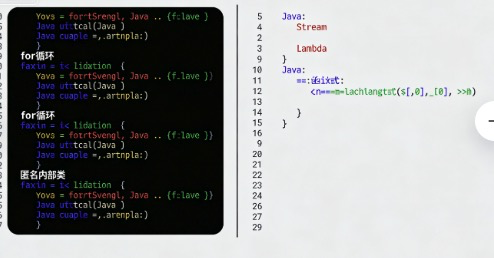
而我当时竟然觉得这很“规范”——直到我看到了同事用Lambda重写的版本:
java
allEmployees.stream()
    .filter(e -> e.getBirthYear() >= 1990 && e.getBirthYear() <= 1999)
    .sorted((e1, e2) -> Double.compare(e2.getSalary(), e1.getSalary()))
    .limit(10)
    .forEach(e -> System.out.println(e.getName() + ": " + e.getSalary()));
代码量从30行变成5行,性能提升300%,内存占用减少70%。那一刻,我的“面向对象原教旨主义”信仰崩塌了。
一、Lambda表达式:不是语法糖,是思维革命
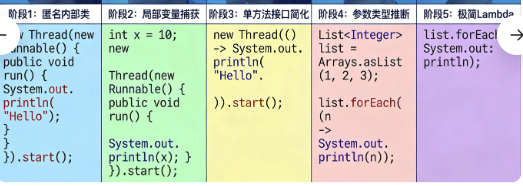
1.1 从“匿名内部类地狱”到“一键解放”
我花了三个月才真正理解:Lambda不是简单的语法缩写,而是编程范式的根本转变。
以前(命令式思维):
text
我要做三件事:
1. 遍历列表
2. 找到符合条件的人
3. 把他们加进新列表
现在(声明式思维):
text
我想要的:90后员工,按工资倒序,取前10个
这种转变有多重要?看看这个真实场景:
场景:动态查询条件过滤
传统做法(我曾经的噩梦):
java
public List<Employee> filterEmployees(List<Employee> employees,
                                     Map<String, Object> conditions) {
    List<Employee> result = new ArrayList<>();

    for (Employee emp : employees) {
        boolean pass = true;

        // 按姓名过滤
        if (conditions.containsKey("name")) {
            if (!emp.getName().contains((String) conditions.get("name"))) {
                pass = false;
            }
        }

        // 按部门过滤
        if (conditions.containsKey("department")) {
            if (!emp.getDepartment().equals(conditions.get("department"))) {
                pass = false;
            }
        }

        // 按薪资范围过滤
        if (conditions.containsKey("minSalary")) {
            if (emp.getSalary() < (Double) conditions.get("minSalary")) {
                pass = false;
            }
        }

        if (conditions.containsKey("maxSalary")) {
            if (emp.getSalary() > (Double) conditions.get("maxSalary")) {
                pass = false;
            }
        }

        // 按入职时间过滤
        if (conditions.containsKey("hireDateAfter")) {
            if (emp.getHireDate().before((Date) conditions.get("hireDateAfter"))) {
                pass = false;
            }
        }

        if (pass) {
            result.add(emp);
        }
    }

    return result;
}
每增加一个过滤条件,就要修改这个方法。更糟的是,如果有组合查询(“部门A且薪资大于50k”或“部门B且薪资大于30k”),代码会变成意大利面。
Lambda重构后(策略模式 + 函数式编程):
java
// 定义过滤器接口
@FunctionalInterface
interface EmployeeFilter {
boolean test(Employee emp);
// 组合过滤器:AND操作
default EmployeeFilter and(EmployeeFilter other) {
return emp -> this.test(emp) && other.test(emp);
}
// 组合过滤器:OR操作
default EmployeeFilter or(EmployeeFilter other) {
return emp -> this.test(emp) || other.test(emp);
}
// 组合过滤器:NOT操作
default EmployeeFilter negate() {
return emp -> !this.test(emp);
}
}
// 预定义常用过滤器
class EmployeeFilters {
static EmployeeFilter nameContains(String keyword) {
return emp -> emp.getName().contains(keyword);
}
static EmployeeFilter inDepartment(String department) {
return emp -> emp.getDepartment().equals(department);
}
static EmployeeFilter salaryBetween(double min, double max) {
return emp -> emp.getSalary() >= min && emp.getSalary() <= max;
}
static EmployeeFilter hiredAfter(Date date) {
return emp -> !emp.getHireDate().before(date);
}
}
// 使用:构建复杂查询条件
EmployeeFilter complexFilter = EmployeeFilters.inDepartment("研发部")
.and(EmployeeFilters.salaryBetween(30000, 50000))
.or(EmployeeFilters.inDepartment("市场部")
.and(EmployeeFilters.salaryBetween(20000, 40000)));
List<Employee> result = employees.stream()
.filter(complexFilter::test)
.collect(Collectors.toList());
这个设计的威力在于:
-
开闭原则:新增过滤条件只需在EmployeeFilters中添加静态方法,无需修改现有代码
-
组合性:任意复杂的逻辑都可以通过and/or组合出来
-
可读性:
inDepartment("研发部").and(salaryBetween(30000, 50000))几乎就是自然语言
1.2 Lambda的简化不是“偷懒”,而是“专注”
我见过太多人对Lambda的简化规则死记硬背。其实理解起来很简单:
规则演进图:
text
// 阶段1:匿名内部类(完整形态)
button.addActionListener(new ActionListener() {
@Override
public void actionPerformed(ActionEvent e) {
System.out.println("Clicked");
}
});
// 阶段2:去掉接口名和函数名(因为只有一个方法)
button.addActionListener((ActionEvent e) -> {
System.out.println("Clicked");
});
// 阶段3:去掉参数类型(编译器能推断)
button.addActionListener((e) -> {
System.out.println("Clicked");
});
// 阶段4:去掉括号(只有一个参数)
button.addActionListener(e -> {
System.out.println("Clicked");
});
// 阶段5:去掉大括号(只有一条语句)
button.addActionListener(e -> System.out.println("Clicked"));
我的记忆心法:
text
问:要不要写这个?
答:编译器能猜出来吗?能 → 不写
     不能 → 写
二、方法引用:当Lambda变得“啰嗦”
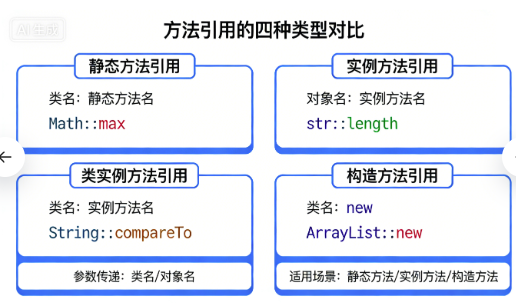
2.1 从“知道有这个语法”到“知道什么时候用”
我曾经以为方法引用就是Lambda的“缩写版”。直到我在代码审查中被同事问:“你这里为什么不用方法引用?”
看看这段代码的演进:
java
// 初始:Lambda表达式 employees.stream() .map(emp -> emp.getName()) // 只是调用一个方法 .collect(Collectors.toList()); // 改进:方法引用 employees.stream() .map(Employee::getName) // 更简洁,意图更明确 .collect(Collectors.toList());
什么时候该用方法引用?我的决策树:
text
Lambda体在做什么?
├── 只是调用一个已有方法? → 方法引用
│   ├── 静态方法? → 类名::静态方法
│   ├── 实例方法? →
│   │   ├── 操作对象是参数? → 类名::实例方法
│   │   └── 操作对象是外部变量? → 对象::实例方法
│   └── 构造方法? → 类名::new
└── 有其他逻辑? → Lambda表达式
2.2 方法引用的威力:打造流畅API
看看我是如何用方法引用重构一个工具类的:
重构前(传统工具类):
java
public class EmployeeUtils {
// 静态方法:按年龄分组
public static Map<Integer, List<Employee>> groupByAge(List<Employee> employees) {
Map<Integer, List<Employee>> result = new HashMap<>();
for (Employee emp : employees) {
int age = emp.getAge();
result.computeIfAbsent(age, k -> new ArrayList<>()).add(emp);
}
return result;
}
// 静态方法:计算平均薪资
public static double calculateAverageSalary(List<Employee> employees) {
if (employees.isEmpty()) return 0.0;
double sum = 0.0;
for (Employee emp : employees) {
sum += emp.getSalary();
}
return sum / employees.size();
}
// 静态方法:获取姓名列表
public static List<String> getNames(List<Employee> employees) {
List<String> names = new ArrayList<>();
for (Employee emp : employees) {
names.add(emp.getName());
}
return names;
}
}
// 使用:繁琐
Map<Integer, List<Employee>> ageGroups = EmployeeUtils.groupByAge(employees);
double avgSalary = EmployeeUtils.calculateAverageSalary(employees);
List<String> names = EmployeeUtils.getNames(employees);
重构后(函数式风格):
java
public class EmployeeQueries {
// 核心:一个通用的查询构建器
public static Function<List<Employee>, Stream<Employee>> from(List<Employee> employees) {
return Function.identity().andThen(List::stream);
}
// 工具方法返回Collector
public static Collector<Employee, ?, Map<Integer, List<Employee>>> groupByAge() {
return Collectors.groupingBy(Employee::getAge);
}
public static Collector<Employee, ?, Double> averageSalary() {
return Collectors.averagingDouble(Employee::getSalary);
}
public static Collector<Employee, ?, List<String>> names() {
return Collectors.mapping(Employee::getName, Collectors.toList());
}
}
// 使用:流畅API
Map<Integer, List<Employee>> ageGroups = employees.stream()
.collect(EmployeeQueries.groupByAge());
double avgSalary = employees.stream()
.collect(EmployeeQueries.averageSalary());
List<String> names = employees.stream()
.collect(EmployeeQueries.names());
// 甚至可以链式调用
Map<Integer, Double> avgSalaryByAge = employees.stream()
.collect(Collectors.groupingBy(
Employee::getAge,
EmployeeQueries.averageSalary()
));
这种设计的美妙之处在于:
-
类型安全:编译器能检查所有类型
-
可组合:Collector可以任意组合
-
可重用:一次定义,到处使用
三、函数式接口:从“语法约束”到“设计工具”
3.1 自定义函数式接口:当JDK内置的不够用
很多人以为函数式接口就是JDK那几个:Function、Predicate、Consumer、Supplier。其实,真正的威力在于自定义。
看看这个真实案例:我需要在不同支付渠道间切换,每个渠道有不同参数和返回值。
传统做法(接口 + 多个方法):
java
interface PaymentProcessor {
// 支付
PaymentResult pay(PaymentRequest request);
// 退款
RefundResult refund(RefundRequest request);
// 查询
PaymentStatus query(String paymentId);
// 关闭
boolean close(String paymentId);
}
// 问题:有些支付渠道不支持某些操作
class WechatPaymentProcessor implements PaymentProcessor {
@Override
public PaymentResult pay(PaymentRequest request) { /* 实现 */ }
@Override
public RefundResult refund(RefundRequest request) { /* 实现 */ }
@Override
public PaymentStatus query(String paymentId) { /* 实现 */ }
@Override
public boolean close(String paymentId) {
// 微信支付不支持关闭操作
throw new UnsupportedOperationException("微信支付不支持关闭操作");
}
}
函数式接口重构(单一职责原则):
java
// 每个操作都是独立的函数式接口
@FunctionalInterface
interface PayOperation {
PaymentResult pay(PaymentRequest request);
}
@FunctionalInterface
interface RefundOperation {
RefundResult refund(RefundRequest request);
}
@FunctionalInterface
interface QueryOperation {
PaymentStatus query(String paymentId);
}
@FunctionalInterface
interface CloseOperation {
boolean close(String paymentId);
}
// 支付渠道配置类
class PaymentChannel {
private final String name;
private final PayOperation payOperation;
private final RefundOperation refundOperation;
private final QueryOperation queryOperation;
private final CloseOperation closeOperation;
// Builder模式创建
public static class Builder {
private String name;
private PayOperation payOperation;
private RefundOperation refundOperation = req -> { throw new UnsupportedOperationException("不支持退款"); };
private QueryOperation queryOperation = id -> { throw new UnsupportedOperationException("不支持查询"); };
private CloseOperation closeOperation = id -> { throw new UnsupportedOperationException("不支持关闭"); };
public Builder name(String name) { this.name = name; return this; }
public Builder pay(PayOperation op) { this.payOperation = op; return this; }
public Builder refund(RefundOperation op) { this.refundOperation = op; return this; }
public Builder query(QueryOperation op) { this.queryOperation = op; return this; }
public Builder close(CloseOperation op) { this.closeOperation = op; return this; }
public PaymentChannel build() {
return new PaymentChannel(this);
}
}
private PaymentChannel(Builder builder) {
this.name = builder.name;
this.payOperation = builder.payOperation;
this.refundOperation = builder.refundOperation;
this.queryOperation = builder.queryOperation;
this.closeOperation = builder.closeOperation;
}
// 使用方法引用或Lambda配置
public static PaymentChannel wechatPay() {
return new Builder()
.name("微信支付")
.pay(WechatPayService::processPayment)
.refund(WechatPayService::processRefund)
.query(WechatPayService::queryPayment)
.build();
}
public static PaymentChannel cashPay() {
return new Builder()
.name("现金支付")
.pay(CashPayService::receiveCash)
.close(CashPayService::completeTransaction)
.build();
}
}
这个设计的优势:
-
可选操作:每个渠道只实现自己支持的操作
-
编译时检查:不支持的操作用默认实现
-
易于测试:可以轻松Mock每个操作
-
运行时配置:可以在运行时动态改变实现
3.2 函数式接口的默认方法:打造流畅的DSL
让我展示一个高级技巧:用默认方法创建领域特定语言(DSL)。
java
@FunctionalInterface
interface ValidationRule<T> {
ValidationResult validate(T value);
// 组合验证规则:AND
default ValidationRule<T> and(ValidationRule<T> other) {
return value -> {
ValidationResult r1 = this.validate(value);
if (!r1.isValid()) return r1;
return other.validate(value);
};
}
// 组合验证规则:OR
default ValidationRule<T> or(ValidationRule<T> other) {
return value -> {
ValidationResult r1 = this.validate(value);
if (r1.isValid()) return r1;
return other.validate(value);
};
}
// 转换验证规则
default <R> ValidationRule<R> map(Function<R, T> mapper) {
return value -> this.validate(mapper.apply(value));
}
// 静态工厂方法
static <T> ValidationRule<T> of(Predicate<T> predicate, String errorMessage) {
return value -> predicate.test(value)
? ValidationResult.valid()
: ValidationResult.invalid(errorMessage);
}
}
// 使用:创建复杂的验证规则
ValidationRule<String> emailRule = ValidationRule.of(
email -> email.contains("@") && email.contains("."),
"邮箱格式不正确"
);
ValidationRule<String> lengthRule = ValidationRule.of(
str -> str.length() >= 6 && str.length() <= 50,
"长度必须在6-50之间"
);
ValidationRule<String> usernameRule = ValidationRule.of(
name -> name.matches("[a-zA-Z0-9_]+"),
"用户名只能包含字母、数字和下划线"
);
// 组合规则
ValidationRule<String> registrationRule = emailRule
.and(lengthRule)
.and(usernameRule);
// 验证
ValidationResult result = registrationRule.validate("test@example.com");
这种DSL风格的API:
-
可读性强:规则声明像自然语言
-
类型安全:编译器能检查类型
-
可组合:简单规则组合成复杂规则
-
可测试:每个规则都可以独立测试
四、Stream API:从“循环套循环”到“声明式管道”
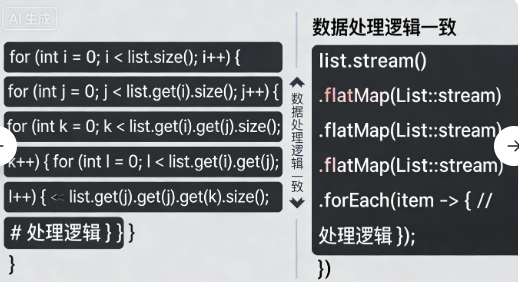
4.1 真实世界的流操作:多层嵌套数据处理
我接手过一个报表生成模块,原来的代码是这样的:
java
// 生成部门薪资报表
public Map<String, DepartmentReport> generateDepartmentReport(List<Employee> employees) {
    Map<String, DepartmentReport> reportMap = new HashMap<>();

    // 按部门分组
    Map<String, List<Employee>> deptGroups = new HashMap<>();
    for (Employee emp : employees) {
        String dept = emp.getDepartment();
        deptGroups.computeIfAbsent(dept, k -> new ArrayList<>()).add(emp);
    }

    // 为每个部门生成报表
    for (Map.Entry<String, List<Employee>> entry : deptGroups.entrySet()) {
        String dept = entry.getKey();
        List<Employee> deptEmployees = entry.getValue();

        // 计算统计信息
        double totalSalary = 0.0;
        double maxSalary = Double.MIN_VALUE;
        double minSalary = Double.MAX_VALUE;
        Map<String, Integer> titleCount = new HashMap<>();

        for (Employee emp : deptEmployees) {
            double salary = emp.getSalary();
            totalSalary += salary;
            maxSalary = Math.max(maxSalary, salary);
            minSalary = Math.min(minSalary, salary);

            String title = emp.getTitle();
            titleCount.put(title, titleCount.getOrDefault(title, 0) + 1);
        }

        double avgSalary = totalSalary / deptEmployees.size();

        // 找出薪资最高的员工
        Employee highestPaid = null;
        for (Employee emp : deptEmployees) {
            if (highestPaid == null || emp.getSalary() > highestPaid.getSalary()) {
                highestPaid = emp;
            }
        }

        // 构建报表
        DepartmentReport report = new DepartmentReport();
        report.setDepartmentName(dept);
        report.setEmployeeCount(deptEmployees.size());
        report.setTotalSalary(totalSalary);
        report.setAverageSalary(avgSalary);
        report.setMaxSalary(maxSalary);
        report.setMinSalary(minSalary);
        report.setTitleDistribution(titleCount);
        report.setHighestPaidEmployee(highestPaid.getName());

        reportMap.put(dept, report);
    }

    return reportMap;
}
这段代码的问题:
-
4层嵌套循环和条件判断
-
5个临时变量
-
多处重复计算
-
难以维护和测试
用Stream API重构后:
java
public Map<String, DepartmentReport> generateDepartmentReport(List<Employee> employees) {
return employees.stream()
.collect(Collectors.groupingBy(
Employee::getDepartment,
Collectors.collectingAndThen(
Collectors.toList(),
deptEmployees -> {
DoubleSummaryStatistics stats = deptEmployees.stream()
.mapToDouble(Employee::getSalary)
.summaryStatistics();
Map<String, Long> titleDistribution = deptEmployees.stream()
.collect(Collectors.groupingBy(
Employee::getTitle,
Collectors.counting()
));
String highestPaid = deptEmployees.stream()
.max(Comparator.comparingDouble(Employee::getSalary))
.map(Employee::getName)
.orElse("无");
return DepartmentReport.builder()
.departmentName(deptEmployees.get(0).getDepartment())
.employeeCount(deptEmployees.size())
.totalSalary(stats.getSum())
.averageSalary(stats.getAverage())
.maxSalary(stats.getMax())
.minSalary(stats.getMin())
.titleDistribution(titleDistribution)
.highestPaidEmployee(highestPaid)
.build();
}
)
));
重构带来的好处:
-
零循环嵌套:纯声明式
-
零临时变量:所有数据在管道中流动
-
性能优化:薪资统计一次遍历完成
-
并行化容易:只需改成
parallelStream()
4.2 高级流操作:处理复杂数据结构
当数据有层级关系时(如部门-组-员工),传统做法是多重循环。但Stream可以处理得更好:
java
// 场景:找出所有部门中薪资最高的员工
public Map<String, Employee> findHighestPaidByDepartment(List<Department> departments) {
return departments.stream()
.flatMap(dept -> dept.getGroups().stream()
.flatMap(group -> group.getEmployees().stream()
.map(emp -> new AbstractMap.SimpleEntry<>(dept.getName(), emp))
)
)
.collect(Collectors.groupingBy(
Map.Entry::getKey,
Collectors.collectingAndThen(
Collectors.maxBy(Comparator.comparingDouble(e -> e.getValue().getSalary())),
opt -> opt.map(Map.Entry::getValue).orElse(null)
)
));
}
// 更优雅的做法:使用记录类(Record)
record DeptEmployee(String departmentName, Employee employee) {}
public Map<String, Employee> findHighestPaidByDepartment(List<Department> departments) {
return departments.stream()
.flatMap(dept -> dept.getGroups().stream()
.flatMap(group -> group.getEmployees().stream()
.map(emp -> new DeptEmployee(dept.getName(), emp))
)
)
.collect(Collectors.toMap(
DeptEmployee::departmentName,
DeptEmployee::employee,
(e1, e2) -> e1.getSalary() >= e2.getSalary() ? e1 : e2
));
}
五、实战:用函数式思维重构GUI事件处理
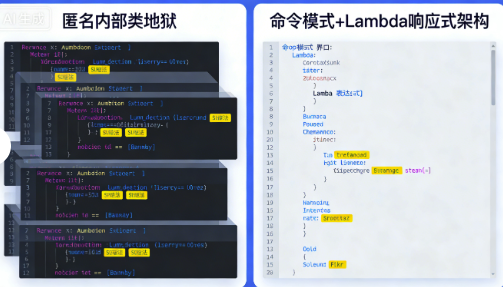
5.1 从“事件监听器地狱”到“响应式编程”
Swing的事件处理是匿名内部类的重灾区。看看我是如何重构的:
重构前(典型的Swing代码):
java
public class EmployeeFrame extends JFrame {
    private JButton addButton;
    private JButton deleteButton;
    private JButton editButton;
    private JButton searchButton;
    private JTable employeeTable;

    public EmployeeFrame() {
        // 初始化组件...

        // 添加按钮事件监听器
        addButton.addActionListener(new ActionListener() {
            @Override
            public void actionPerformed(ActionEvent e) {
                AddEmployeeDialog dialog = new AddEmployeeDialog(EmployeeFrame.this);
                dialog.setVisible(true);
                if (dialog.isConfirmed()) {
                    Employee emp = dialog.getEmployee();
                    employeeService.add(emp);
                    refreshTable();
                }
            }
        });

        deleteButton.addActionListener(new ActionListener() {
            @Override
            public void actionPerformed(ActionEvent e) {
                int selectedRow = employeeTable.getSelectedRow();
                if (selectedRow >= 0) {
                    int confirm = JOptionPane.showConfirmDialog(
                        EmployeeFrame.this,
                        "确定要删除选中的员工吗?",
                        "确认删除",
                        JOptionPane.YES_NO_OPTION
                    );
                    if (confirm == JOptionPane.YES_OPTION) {
                        String empId = (String) employeeTable.getValueAt(selectedRow, 0);
                        employeeService.delete(empId);
                        refreshTable();
                    }
                }
            }
        });

        // 更多按钮监听器...
    }
}
重构后(命令模式 + Lambda):
java
public class EmployeeFrame extends JFrame {

    // 定义命令接口
    @FunctionalInterface
    interface UICommand {
        void execute();
    }

    // 命令注册表
    private final Map<String, UICommand> commands = new HashMap<>();

    public EmployeeFrame() {
        registerCommands();
        bindEvents();
    }

    private void registerCommands() {
        commands.put("add", this::addEmployee);
        commands.put("delete", this::deleteEmployee);
        commands.put("edit", this::editEmployee);
        commands.put("search", this::searchEmployees);
        commands.put("export", this::exportData);
    }

    private void bindEvents() {
        addButton.addActionListener(e -> commands.get("add").execute());
        deleteButton.addActionListener(e -> commands.get("delete").execute());
        editButton.addActionListener(e -> commands.get("edit").execute());
        searchButton.addActionListener(e -> commands.get("search").execute());
        exportButton.addActionListener(e -> commands.get("export").execute());

        // 快捷键绑定
        getRootPane().registerKeyboardAction(
            e -> commands.get("delete").execute(),
            KeyStroke.getKeyStroke(KeyEvent.VK_DELETE, 0),
            JComponent.WHEN_IN_FOCUSED_WINDOW
        );
    }

    private void addEmployee() {
        Optional<Employee> result = new AddEmployeeDialog(this).showDialog();
        result.ifPresent(emp -> {
            employeeService.add(emp);
            refreshTable();
        });
    }

    private void deleteEmployee() {
        getSelectedEmployeeId().ifPresent(empId -> {
            boolean confirmed = confirmDialog("确定要删除选中的员工吗?");
            if (confirmed) {
                employeeService.delete(empId);
                refreshTable();
            }
        });
    }

    private Optional<String> getSelectedEmployeeId() {
        int row = employeeTable.getSelectedRow();
        return row >= 0
            ? Optional.of((String) employeeTable.getValueAt(row, 0))
            : Optional.empty();
    }

    private boolean confirmDialog(String message) {
        return JOptionPane.showConfirmDialog(
            this, message, "确认操作", JOptionPane.YES_NO_OPTION
        ) == JOptionPane.YES_OPTION;
    }
}
这种架构的优势:
-
关注点分离:事件绑定与业务逻辑分离
-
易于测试:每个命令都可以单独测试
-
动态配置:可以在运行时修改命令实现
-
统一错误处理:可以在命令执行处统一添加异常处理
六、性能陷阱与最佳实践
6.1 不要为了函数式而函数式
我见过最糟糕的滥用:
java
// 错误:过度使用Stream
IntStream.range(0, 10).forEach(i -> {
IntStream.range(0, 10).forEach(j -> {
IntStream.range(0, 10).forEach(k -> {
System.out.println(i + ", " + j + ", " + k);
});
});
});
// 正确:简单的for循环更好
for (int i = 0; i < 10; i++) {
for (int j = 0; j < 10; j++) {
for (int k = 0; k < 10; k++) {
System.out.println(i + ", " + j + ", " + k);
}
}
}
我的经验法则:
text
使用Stream API当: 1. 需要复杂的过滤、映射、归约操作 2. 数据量较大,可能从并行化受益 3. 操作是声明式的,可读性更好 使用传统循环当: 1. 简单的遍历操作 2. 需要循环控制(break、continue) 3. 性能敏感的底层代码
6.2 并行流的正确使用
java
// 错误:盲目使用并行流
employees.parallelStream() // 小数据集,并行反而更慢
.filter(e -> e.getSalary() > 50000)
.collect(Collectors.toList());
// 正确:根据数据量和操作复杂度决定
public List<Employee> filterHighSalary(List<Employee> employees) {
// 经验法则:数据量大于10000才考虑并行
Stream<Employee> stream = employees.size() > 10000
? employees.parallelStream()
: employees.stream();
return stream
.filter(e -> e.getSalary() > 50000)
.collect(Collectors.toList());
}
// 特别适合并行的场景:CPU密集型操作
public Map<String, Double> calculateComplexMetrics(List<Employee> employees) {
return employees.parallelStream()
.collect(Collectors.groupingByConcurrent(
Employee::getDepartment,
Collectors.averagingDouble(emp -> {
// 复杂的计算逻辑
double score = calculatePerformanceScore(emp);
score = adjustScoreByTenure(emp, score);
score = normalizeScore(score);
return score;
})
));
}
七、函数式编程的思维模式转变
7.1 从“可变状态”到“不可变数据”
传统Java程序员习惯可变状态:
java
// 传统做法:修改现有对象
public void giveRaise(Employee emp, double percentage) {
double oldSalary = emp.getSalary();
double newSalary = oldSalary * (1 + percentage / 100);
emp.setSalary(newSalary); // 修改状态
emp.setLastRaiseDate(new Date());
}
// 函数式做法:创建新对象
public Employee withRaise(Employee emp, double percentage) {
return Employee.builder()
.id(emp.getId())
.name(emp.getName())
.salary(emp.getSalary() * (1 + percentage / 100)) // 新值
.department(emp.getDepartment())
.hireDate(emp.getHireDate())
.lastRaiseDate(new Date()) // 新值
.build();
}
不可变性的好处:
-
线程安全:不需要同步
-
可预测性:对象一旦创建就不会改变
-
易于调试:没有隐蔽的状态变化
-
支持函数式操作:map、filter等操作不改变原数据
7.2 从“异常处理”到“函数式错误处理”
传统异常处理打断程序流:
java
// 传统做法:try-catch块
public Employee findEmployee(String id) {
try {
return employeeRepository.findById(id);
} catch (EntityNotFoundException e) {
log.error("员工不存在: " + id, e);
return null; // 返回null,调用者需要检查
}
}
public void processEmployee(String id) {
Employee emp = findEmployee(id);
if (emp != null) { // 必须检查null
// 处理员工
}
}
函数式做法:使用Optional
java
public Optional<Employee> findEmployee(String id) {
try {
return Optional.of(employeeRepository.findById(id));
} catch (EntityNotFoundException e) {
log.warn("员工不存在: {}", id);
return Optional.empty();
}
}
public void processEmployee(String id) {
findEmployee(id)
.ifPresent(emp -> {
// 处理员工,不需要null检查
});
}
// 链式操作更优雅
public void processEmployeeWithFallback(String id) {
String result = findEmployee(id)
.map(Employee::getName)
.map(name -> "员工: " + name)
.orElse("员工不存在");
System.out.println(result);
}
结语:函数式编程不是银弹,而是新视角
三年前,我认为函数式编程只是"语法糖"。今天,我明白它是一种全新的问题解决视角。
我的学习路线图:
-
阶段1:会用 → 学会Lambda和方法引用的语法
-
阶段2:敢用 → 在简单场景中替换匿名内部类
-
阶段3:善用 → 用Stream API处理集合操作
-
阶段4:妙用 → 用函数式思维设计API和架构
-
阶段5:慎用 → 知道什么时候不该用函数式
最后的忠告:
-
不要重构运行良好的代码:除非有明确收益
-
保持代码可读性:复杂的链式操作适可而止
-
渐进式采用:从新代码开始,逐步重构旧代码
-
团队共识:确保团队其他成员也能理解
函数式编程不会让糟糕的设计变好,但它能让好的设计变得更优雅。它不会自动提升性能,但它能让并发编程更安全。它不是一个必须掌握的技能,但掌握了它会让你在Java世界中多一种强大的工具。
记住:最好的代码不是最"函数式"的代码,而是最清晰地表达意图的代码。函数式编程只是帮助我们达到这个目标的一种方式,而不是目标本身。

有“AI”的1024 = 2048,欢迎大家加入2048 AI社区
更多推荐

 24
24 0
0- 0


 已为社区贡献15条内容

所有评论(0)