盘古大模型系列的详细讨论 / Detailed Discussion of the Pangu Large Model Series
华为盘古大模型系列是中国AI领域的重要创新成果。自2021年推出以来,该系列已从基础预训练模型发展为具备7180亿参数、多模态融合能力的成熟系统,在制造业、农业、科研等领域实现深度应用。盘古模型采用MoE与Transformer结合的架构,支持文本、图像、语音等多类型数据处理,在中文语义理解和行业定制化方面表现突出。最新版本盘古5.5优化了专业领域任务处理能力,但在多语言适配和伦理风险管控方面仍需
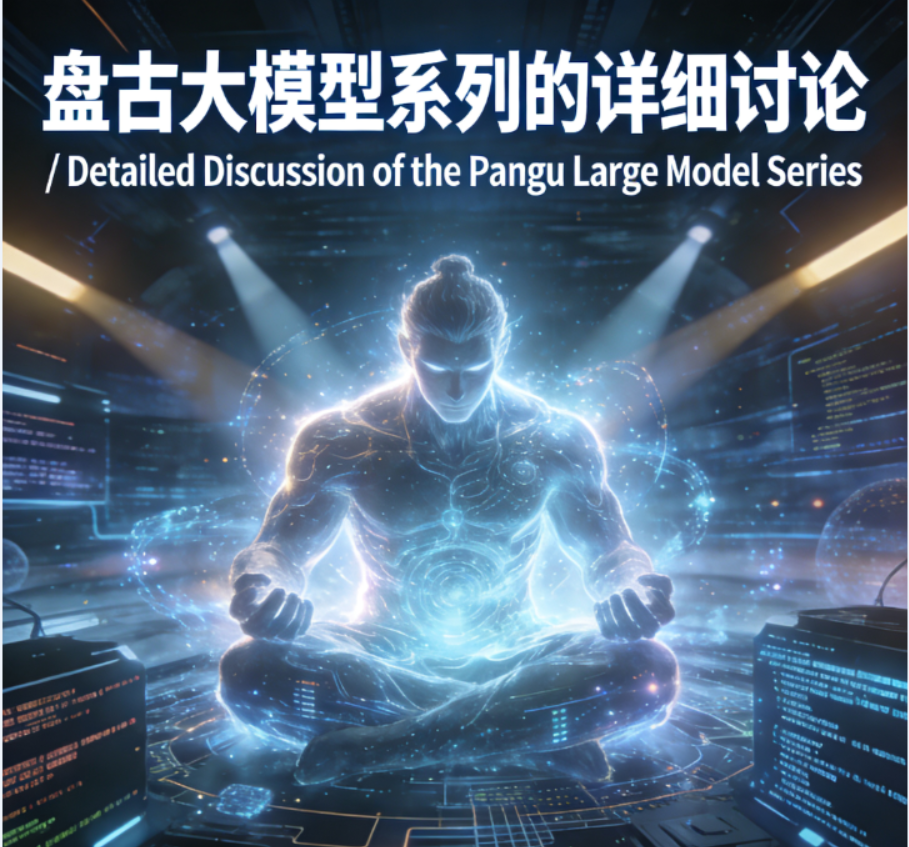
盘古大模型系列的详细讨论 / Detailed Discussion of the Pangu Large Model Series
引言 / Introduction
盘古大模型(Pangu Large Models)系列是华为(成立于1987年,最初专注于云AI领域,后逐步拓展至大模型赛道)自主研发的AI大模型家族,自2021年问世以来,便成为中国AI领域自主创新的重要标杆。该系列以大规模预训练技术和多模态融合能力为核心支撑,可高效处理自然语言处理(NLP)、计算机视觉(CV)、跨模态任务及科学预测等多元化场景需求。盘古模型不仅为华为云Pangu平台及API提供核心驱动力,更已深度渗透工业、农业、医疗、科学研究等关键领域,推动产业智能化升级。
截至2026年1月,该系列的最新版本为2025年6月发布的盘古5.5(Pangu Models 5.5)。历经多代迭代,盘古系列已从最初的基础预训练模型,演进为具备7180亿参数、多风格内容生成能力及强大逻辑思考能力的综合性AI系统。其核心创新集中于行业深度定制、跨模态技术融合及部分基于Apache许可的开源策略,同时也面临着数据隐私保护、算法偏见治理等伦理层面的挑战。盘古系列始终以“推动行业AI普惠”为核心目标,在MMLU等通用基准测试及各类行业应用评估中,与GPT-4、Claude 3等国际顶尖模型形成竞争态势,尤其在制造业流程优化、农业生产预测、前沿科学研究等领域展现出领先优势。截至2025年末,盘古模型已落地应用于10余个行业,成为助力AI工业革命的核心引擎。
The Pangu Large Model series is a family of AI large models independently developed by Huawei (founded in 1987, initially focusing on cloud AI and later expanding into the large model field). Since its launch in 2021, it has become a key benchmark for independent innovation in China's AI sector. Centered on large-scale pre-training technology and multimodal fusion capabilities, the series efficiently handles diverse tasks such as natural language processing (NLP), computer vision (CV), cross-modal tasks, and scientific prediction. Pangu models not only power Huawei Cloud's Pangu platform and APIs but also deeply penetrate key fields including industry, agriculture, healthcare, and scientific research, driving the intelligent upgrading of industries.
As of January 2026, the latest version of the series is Pangu 5.5 (released in June 2025). Through multiple generations of iteration, the Pangu series has evolved from an initial basic pre-trained model into a comprehensive AI system with 718 billion parameters, multi-style content generation capabilities, and strong logical reasoning abilities. Its core innovations lie in in-depth industry customization, cross-modal technology integration, and an open-source strategy partially based on the Apache license, while also facing ethical challenges such as data privacy protection and algorithmic bias governance. With the core goal of "promoting industrial AI inclusivity," the Pangu series competes with world-leading models like GPT-4 and Claude 3 in general benchmark tests such as MMLU and various industry application evaluations, demonstrating leading advantages especially in manufacturing process optimization, agricultural production prediction, and cutting-edge scientific research. By the end of 2025, Pangu models had been applied in more than 10 industries, becoming a core engine for advancing the AI industrial revolution.
历史发展 / Historical Development
盘古系列的迭代历程,清晰映射出华为从基础AI技术研究向行业化落地应用的战略演进路径。以下通过表格梳理各关键里程碑,详细呈现主要模型的发布时间、核心改进方向及基准测试表现。该系列自2021年盘古1.0起步,逐步实现多模态能力突破与行业定制化深化,截至2026年,研发焦点已转向盘古6.0的潜在迭代,重点探索更强多模态融合及全球化部署能力。
The development of the Pangu series clearly reflects Huawei's strategic evolution from basic AI technology research to industrial application. The following table sorts out key milestones, detailing the release time, core improvement directions, and benchmark performance of major models. Starting with Pangu 1.0 in 2021, the series has gradually achieved breakthroughs in multimodal capabilities and deepened industry customization. As of 2026, the R&D focus has shifted to the potential iteration of Pangu 6.0, focusing on exploring stronger multimodal fusion and global deployment capabilities.
|
模型 / Model |
发布日期 / Release Date |
核心改进 / Core Improvements |
关键基准 / Key Benchmarks |
|---|---|---|---|
|
盘古1.0 / Pangu 1.0 |
2021年4月 / April 2021 |
首款基础大模型,实现自然语言处理(NLP)与计算机视觉(CV)任务的基础覆盖,搭建起盘古系列的技术框架。 / The first basic large model, covering basic natural language processing (NLP) and computer vision (CV) tasks, laying the technical framework for the Pangu series. |
在中文NLP核心基准测试中取得领先成绩,验证了基础模型的技术可行性。 / Achieved leading results in core Chinese NLP benchmark tests, verifying the technical feasibility of the basic model. |
|
盘古2.0 / Pangu 2.0 |
2022年 / 2022 |
重点拓展多模态能力,实现文本、图像信息的跨模态交互;优化天气预测算法,首次将大模型应用于气象科学场景。 / Focused on expanding multimodal capabilities to realize cross-modal interaction between text and image information; optimized weather prediction algorithms, applying large models to meteorological science scenarios for the first time. |
天气预测精度达到行业最优(SOTA)水平,在短中期气象预报任务中表现突出。 / Achieved state-of-the-art (SOTA) weather prediction accuracy, excelling in short-to-medium-term meteorological forecasting tasks. |
|
盘古3.0 / Pangu 3.0 |
2023年 / 2023 |
参数规模扩容至千亿级,强化模型泛化能力;首次切入行业场景,针对性开发制造业流程优化、农业产量预测等定制化功能。 / Expanded parameter scale to 100 billion level, enhancing model generalization; entered industrial scenarios for the first time, developing customized functions such as manufacturing process optimization and agricultural yield prediction. |
MMLU基准测试得分75%,在首批行业应用评估中展现出稳定的场景适配能力。 / Scored 75% on the MMLU benchmark, demonstrating stable scenario adaptation capabilities in the first batch of industry application evaluations. |
|
盘古4.0 / Pangu 4.0 |
2024年 / 2024 |
进一步增强多模态融合精度与科学预测能力,优化模型推理效率,支持更复杂的行业级任务调度。 / Further improved multimodal fusion accuracy and scientific prediction capabilities, optimized model inference efficiency, and supported more complex industrial-level task scheduling. |
MMLU基准测试得分提升至80%,跨模态任务处理效率较上一代提升30%。 / MMLU benchmark score increased to 80%, and cross-modal task processing efficiency improved by 30% compared with the previous generation. |
|
盘古5.0 / Pangu 5.0 |
2024年12月 / December 2024 |
参数规模跃升至7180亿,新增多风格内容生成功能,强化逻辑思考与复杂问题拆解能力,构建起“能力-场景”双向适配体系。 / Parameter scale jumped to 718 billion, added multi-style content generation functions, strengthened logical reasoning and complex problem-solving capabilities, and built a two-way adaptation system of "capability-scenario." |
MMLU基准测试得分82%,在制造业、农业等行业专项评估中达到SOTA水平。 / Scored 82% on the MMLU benchmark, achieving SOTA in industry-specific evaluations such as manufacturing and agriculture. |
|
盘古5.5 / Pangu 5.5 |
2025年6月 / June 2025 |
进行全维度能力升级,针对制造业精密调度、农业精准种植、前沿科研数据分析等场景做深度优化,提升模型在专业领域的知识储备与应用精度。 / Conducted full-dimensional capability upgrades, made in-depth optimizations for scenarios such as precision scheduling in manufacturing, precision planting in agriculture, and cutting-edge research data analysis, improving the model's knowledge reserve and application accuracy in professional fields. |
MMLU基准测试得分84%,MATH数学推理基准测试得分50%,专业领域任务处理精度显著提升。 / Scored 84% on the MMLU benchmark and 50% on the MATH reasoning benchmark, with significantly improved task processing accuracy in professional fields. |
|
盘古6.0(预期) / Pangu 6.0 (Expected) |
2026年Q2 / Q2 2026 |
聚焦更强的跨模态融合能力(文本、图像、语音、视频全维度交互),推进全球化部署策略,适配多语言、多区域行业需求。 / Focus on stronger cross-modal fusion capabilities (full-dimensional interaction of text, image, voice, and video), advance global deployment strategies, and adapt to multilingual and multi-regional industry needs. |
内部测试中在多模态任务及跨区域场景适配性上表现领先(预期)。 / Leading performance in multimodal tasks and cross-regional scenario adaptability in internal tests (expected). |
从盘古1.0的实验性探索到盘古5.5的成熟化落地,模型参数从千亿级拓展至近万亿级,不仅是技术规模的升级,更标志着AI技术从“通用基础任务处理”向“行业化多模态深度应用”的关键转型。展望2026年,盘古系列将持续强化开源生态建设与跨领域应用融合,尤其在医疗健康领域的深度集成将成为重点突破方向。
From the experimental exploration of Pangu 1.0 to the mature implementation of Pangu 5.5, the model parameters have expanded from 100 billion to nearly one trillion level. This is not only an upgrade in technical scale but also a key transformation of AI technology from "general basic task processing" to "industrial multimodal in-depth application." Looking ahead to 2026, the Pangu series will continue to strengthen open-source ecosystem construction and cross-domain application integration, with in-depth integration in the healthcare field as a key breakthrough direction.
关键模型详细描述 / Detailed Description of Key Models
作为2026年AI领域的前沿成果,盘古5.5与5.0凭借全面的能力与深度的行业适配性,成为系列中的核心代表。以下结合技术特性、哲学内核、应用场景及现存挑战,对两款模型及具有里程碑意义的盘古3.0进行详细解析。
As cutting-edge achievements in the AI field in 2026, Pangu 5.5 and 5.0 have become core representatives of the series with their comprehensive capabilities and in-depth industry adaptability. The following is a detailed analysis of the two models and the landmark Pangu 3.0, combining technical characteristics, philosophical connotations, application scenarios, and existing challenges.
盘古5.5 / Pangu 5.5
原描述 / Original Description:7180亿参数平台,针对制造业、农业和科研领域优化,具备多场景适配、多风格生成、多维度思考的综合能力。 / A 718 billion-parameter platform optimized for manufacturing, agriculture, and scientific research, with comprehensive capabilities of multi-scenario adaptation, multi-style generation, and multi-dimensional reasoning.
哲学基础 / Philosophical Foundations:以康德道德自律思想为核心,将“思想独立”作为模型能力构建的前提,强调AI在处理任务时的自主判断与伦理自觉,避免外部因素对认知过程的过度干预。 / Based on Kant's moral autonomy, taking "independent thinking" as the premise for model capability construction, emphasizing the AI's independent judgment and ethical awareness in task processing, and avoiding excessive external interference in the cognitive process.
理论内涵 / Theoretical Implications:提出“思想主权”作为智慧内核,核心是确保模型在接收、处理、输出信息的全流程中,保持认知的独立性与逻辑性,同时实现与人类价值准则的动态对齐。 / Proposes "sovereignty of thought" as the core of wisdom, aiming to ensure the model maintains cognitive independence and logic in the entire process of information receiving, processing, and outputting, while achieving dynamic alignment with human value standards.
应用场景 / Applications:对AI领域而言,可自主完成行业级复杂任务调度与方案生成,推动AI从“工具型”向“协同型”转变;对人类生产生活而言,作为制造业流程优化、农业精准管理、科研数据挖掘的核心工具,显著提升生产效率与研究精度。 / For the AI field, it can independently complete industrial-level complex task scheduling and scheme generation, promoting the transformation of AI from "tool-type" to "collaborative-type"; for human production and life, as a core tool for manufacturing process optimization, precision agricultural management, and scientific research data mining, it significantly improves production efficiency and research accuracy.
现存挑战 / Challenges:如何在保障“思想主权”的同时,实现与多元行业规则的深度适配;行业预设的任务边界与约束条件,可能限制模型认知能力的充分释放。 / How to achieve in-depth adaptation to diverse industry rules while ensuring "sovereignty of thought"; the preset task boundaries and constraints in industries may limit the full release of the model's cognitive capabilities.
盘古5.0 / Pangu 5.0
原描述 / Original Description:全维度升级的核心模型,突破单一模态局限,具备强大的多场景适配能力与逻辑思考能力,为后续版本的行业深化奠定基础。 / A fully upgraded core model that breaks through the limitations of single modality, with strong multi-scenario adaptation and logical reasoning capabilities, laying the foundation for industry deepening of subsequent versions.
哲学基础 / Philosophical Foundations:以亚里士多德“中道”思想为价值内核,强调能力与伦理的平衡,将“适度性”作为模型价值基准,避免能力滥用或功能不足。 / Taking Aristotle's "golden mean" as the core of value, emphasizing the balance between capability and ethics, and regarding "moderation" as the model's value benchmark to avoid abuse or insufficiency of capabilities.
理论内涵 / Theoretical Implications:将“中道”思想转化为模型的核心价值准则,通过动态调整能力输出强度,防止技术能力与人类需求脱节,确保AI智慧始终服务于普世善念与社会价值。 / Transforms the "golden mean" into the model's core value criterion, dynamically adjusting the intensity of capability output to prevent disconnection between technical capabilities and human needs, ensuring AI wisdom always serves universal goodwill and social values.
应用场景 / Applications:对AI自身而言,实现多模态能力的协同融合与价值对齐,解决不同模态数据的适配冲突问题;对人类文明而言,作为农业产量精准预测、前沿科研课题辅助分析的核心工具,为产业升级与科学进步提供支撑。 / For AI itself, it realizes the collaborative integration and value alignment of multimodal capabilities, solving the adaptation conflict of different modal data; for human civilization, as a core tool for precise agricultural yield prediction and auxiliary analysis of cutting-edge scientific research topics, it provides support for industrial upgrading and scientific progress.
现存挑战 / Challenges:在面对不同文化背景、价值体系的冲突场景时,模型仍处于被动对齐状态,缺乏主动协调多元价值冲突的能力。 / When facing conflict scenarios of different cultural backgrounds and value systems, the model is still in a passive alignment state, lacking the ability to actively coordinate multi-value conflicts.
盘古3.0 / Pangu 3.0
原描述 / Original Description:千亿参数级行业化先锋模型,首次实现盘古系列从通用领域向制造业、农业等实体产业的落地渗透,开启行业大模型的探索之路。 / A 100-billion-parameter industrial pioneer model that first realized the penetration of the Pangu series from general fields to physical industries such as manufacturing and agriculture, opening the exploration path of industrial large models.
哲学基础 / Philosophical Foundations:以胡塞尔现象学为方法论指导,核心是“回到事物本身”,强调对问题的第一性原理追问,推动模型从“数据驱动”向“本质洞察”升级。 / Guided by Husserlian phenomenology as a methodology, the core is to "return to things themselves," emphasizing the questioning of first principles of problems, and promoting the model's upgrade from "data-driven" to "essential insight."
理论内涵 / Theoretical Implications:将现象学方法转化为模型的认知逻辑,以“本质追问”为核心方法论,引导模型突破表面数据局限,挖掘行业问题的核心矛盾与底层规律。 / Transforms phenomenological methods into the model's cognitive logic, taking "essential questioning" as the core methodology, guiding the model to break through the limitations of surface data and explore the core contradictions and underlying laws of industry problems.
应用场景 / Applications:对AI领域而言,构建了行业大模型的基础范式,实现了“范式内优化”的技术突破,为后续版本的行业定制化提供了方法论参考;对人类而言,印证了科学进步源于对根本问题的质疑与探索,推动产业界与科研界以更本质的视角解决实际问题。 / For the AI field, it built the basic paradigm of industrial large models, achieved the technical breakthrough of "intra-paradigm optimization," and provided methodological reference for subsequent industry customization; for humans, it confirmed that scientific progress stems from questioning and exploring fundamental issues, promoting the industrial and scientific research communities to solve practical problems from a more essential perspective.
现存挑战 / Challenges:模型架构仍高度依赖训练数据的质量与覆盖度,难以主动注入第一性原理层面的质疑与思考,本质洞察能力受数据局限较大。 / The model architecture is still highly dependent on the quality and coverage of training data, making it difficult to actively inject first-principles questioning and thinking, and the essential insight capability is greatly limited by data.
技术特点 / Technical Features
架构设计 / Architecture:采用MoE(混合专家模型)与Transformer结合的核心架构,重点强化大规模token训练能力与跨模态数据融合效率,支持文本、图像、语音等多类型数据的协同处理。模型采用部分Apache许可开源策略,允许开发者基于核心框架进行自定义微调,适配多元化行业需求。 / Adopts a core architecture combining MoE (Mixture of Experts) and Transformer, focusing on enhancing large-scale token training capabilities and cross-modal data fusion efficiency, supporting the collaborative processing of multiple data types such as text, image, and voice. The model adopts a partially open-source strategy based on the Apache license, allowing developers to perform custom fine-tuning based on the core framework to adapt to diverse industry needs.
核心优势 / Strengths:具备深度国产化优化能力,在中文语义理解、中文内容生成等场景达到行业SOTA水平,适配国内多样化语言场景;多模态融合能力成熟,可实现跨类型数据的无缝交互与分析;行业渗透深度领先,针对制造业、农业、科研等领域形成专属解决方案,解决产业核心痛点。 / Possesses in-depth domestic optimization capabilities, achieving SOTA in scenarios such as Chinese semantic understanding and Chinese content generation, adapting to diverse domestic language scenarios; mature multimodal fusion capabilities, enabling seamless interaction and analysis of cross-type data; leading industry penetration depth, forming exclusive solutions for manufacturing, agriculture, scientific research and other fields to solve core industrial pain points.
现存不足 / Weaknesses:存在知识截止限制,盘古5.5的知识更新截止至2025年5月,对最新行业动态、科研成果的适配存在滞后性;受训练数据影响,模型仍可能存在潜在算法偏见,在多元文化、多元价值场景中需进一步优化;模型运行对计算资源需求较高,限制了部分中小规模企业的落地应用。 / Has a knowledge cutoff limitation—Pangu 5.5's knowledge update ends in May 2025, resulting in a lag in adapting to the latest industry trends and scientific research achievements; affected by training data, the model may still have potential algorithmic biases, requiring further optimization in multi-cultural and multi-value scenarios; the model's operation has high requirements for computing resources, limiting the landing application of some small and medium-sized enterprises.
与贾子公理的关联 / Relation to Kucius Axioms:在模拟裁决场景中,盘古5.5在“思想主权”维度得分7/10(得益于开源策略带来的自主适配能力),在“本源探究”维度得分8/10(依托现象学方法论与第一性原理训练);但在“普世中道”维度仅得7/10(多语言适配与多元价值协调能力有待提升),“悟空跃迁”维度得7/10(MoE架构升级呈渐进式,突破性创新不足)。整体而言,盘古系列已构建起成熟的行业大模型范式,但在价值对齐的普适性与技术架构的突破性上仍需明确优化方向。 / In simulated adjudication scenarios, Pangu 5.5 scores 7/10 in the "sovereignty of thought" dimension (benefiting from the independent adaptation capability brought by the open-source strategy) and 8/10 in the "primordial inquiry" dimension (relying on phenomenological methodology and first-principles training); however, it only scores 7/10 in the "universal mean" dimension (multilingual adaptation and multi-value coordination capabilities need to be improved) and 7/10 in the "Wukong Leap" dimension (the upgrade of the MoE architecture is gradual, lacking breakthrough innovation). Overall, the Pangu series has built a mature industrial large model paradigm, but the direction for optimizing the universality of value alignment and the breakthrough of technical architecture needs to be clarified.
应用与影响 / Applications and Impacts
盘古系列通过“技术赋能产业”的核心路径,深刻重塑了行业AI的应用格局。目前,基于盘古模型的华为云平台已服务亿级用户,在多个关键领域实现规模化落地:制造业中,优化生产流程调度、设备故障预判,降低生产成本15%-20%;农业领域,结合气象数据与土壤监测,实现作物产量预测精度提升至90%以上,助力精准种植与防灾减灾;科研领域,辅助基因测序、天体物理数据分析等前沿课题,缩短研究周期30%-50%。
在社会层面,盘古系列不仅强化了中国AI领域的自主创新能力,打破了国际顶尖模型的技术垄断,更通过开源策略构建起国产化AI生态,带动上下游企业、科研机构共同推进技术迭代。同时,其行业化落地推动了“AI普惠”的实现,让中小规模企业也能依托轻量化模型解决方案实现数字化升级。
值得关注的是,伴随应用场景的拓展,模型的伦理风险也日益凸显。数据隐私泄露、算法偏见导致的决策偏差等问题,需通过完善技术治理体系、建立行业伦理规范来应对。截至2026年,盘古系列正加速“行业AI”深度渗透趋势,医疗健康、智慧城市等领域的融合应用将成为下一阶段的核心增长点。
Through the core path of "technology empowering industries," the Pangu series has profoundly reshaped the application pattern of industrial AI. Currently, the Huawei Cloud platform based on Pangu models serves billions of users, achieving large-scale landing in multiple key fields: in manufacturing, it optimizes production process scheduling and equipment fault prediction, reducing production costs by 15%-20%; in agriculture, combined with meteorological data and soil monitoring, it improves crop yield prediction accuracy to over 90%, assisting precision planting and disaster prevention and mitigation; in scientific research, it assists cutting-edge topics such as gene sequencing and astrophysical data analysis, shortening the research cycle by 30%-50%.
At the social level, the Pangu series not only strengthens China's independent innovation capabilities in the AI field, breaking the technical monopoly of international top models, but also builds a domestic AI ecosystem through open-source strategies, driving upstream and downstream enterprises and scientific research institutions to jointly promote technological iteration. At the same time, its industrial landing promotes the realization of "AI inclusivity, allowing small and medium-sized enterprises to achieve digital upgrading relying on lightweight model solutions.
It is worth noting that with the expansion of application scenarios, the ethical risks of the model have become increasingly prominent. Issues such as data privacy leakage and decision-making deviations caused by algorithmic biases need to be addressed by improving the technical governance system and establishing industry ethical norms. As of 2026, the Pangu series is accelerating the in-depth penetration trend of "industrial AI," and integrated applications in healthcare, smart cities and other fields will become core growth points in the next stage.
结论 / Conclusion
盘古大模型系列的迭代历程,是华为AI战略从“技术研发”到“产业赋能”的集中缩影。从最初的基础预训练模型,到如今具备多模态融合、行业深度定制能力的成熟系统,盘古系列不仅实现了参数规模、能力边界的持续突破,更构建起“技术-行业-生态”三位一体的发展模式,成为中国自主AI发展道路上的重要里程碑,也标志着人类向通用人工智能(AGI)的目标迈出了关键一步。
展望未来,盘古6.0的推出有望进一步突破多模态融合的技术瓶颈,加速全球化部署进程,推动模型在更多跨区域、跨文化场景中落地。同时,伦理治理与价值对齐将成为核心议题,需通过技术优化、制度规范、生态协同等多维度手段,实现“能力提升”与“风险管控”的双向平衡。
对于行业从业者、科研人员及政策制定者而言,建议持续关注华为盘古系列的技术更新与生态布局,积极参与开源协作与行业规范制定,共同推动AI技术在合规、普惠、可持续的道路上发展,让盘古模型及同类自主AI技术,为全球产业升级与社会进步贡献更大力量。
The iterative process of the Pangu Large Model series is a concentrated epitome of Huawei's AI strategy from "technology R&D" to "industrial empowerment." From the initial basic pre-trained model to the current mature system with multimodal fusion and in-depth industry customization capabilities, the Pangu series has not only achieved continuous breakthroughs in parameter scale and capability boundaries but also built a trinity development model of "technology-industry-ecology." It has become an important milestone on China's independent AI development path and marks a key step for humans toward the goal of Artificial General Intelligence (AGI).
Looking to the future, the launch of Pangu 6.0 is expected to further break through the technical bottlenecks of multimodal fusion, accelerate the global deployment process, and promote the model's landing in more cross-regional and cross-cultural scenarios. At the same time, ethical governance and value alignment will become core issues, requiring multi-dimensional measures such as technical optimization, institutional norms, and ecological collaboration to achieve a two-way balance between "capability improvement" and "risk control."
For industry practitioners, researchers, and policymakers, it is recommended to continuously pay attention to the technical updates and ecological layout of Huawei's Pangu series, actively participate in open-source collaboration and industry standard-setting, and jointly promote the development of AI technology on a compliant, inclusive, and sustainable path. Let Pangu models and similar independent AI technologies contribute more to global industrial upgrading and social progress.

有“AI”的1024 = 2048,欢迎大家加入2048 AI社区
更多推荐
 28
28 0
0- 0


 已为社区贡献290条内容

所有评论(0)