震惊!用大模型开发零售AI引擎竟然如此简单?手把手教你从零构建企业级RAG系统,小白也能秒变AI架构师!
在零售行业数字化转型的浪潮中,大型语言模型(LLM)的应用正从概念验证走向生产部署。然而,直接将通用大模型应用于零售业务,往往面临准确性、安全性和可扩展性的三重挑战。本文将从工程实践角度,深入解析如何构建一个融合RAG、提示词模板与安全控制层的企业级零售AI引擎。
一、零售AI的核心挑战与解决思路
1.1 行业特定挑战
零售企业部署AI系统面临以下核心挑战:
数据碎片化:商品信息、库存数据、会员资料、促销规则分散在多个系统中
实时性要求:价格变更、库存状态、促销活动需要实时同步
合规性约束:需遵守数据隐私、广告法规、消费者权益保护等规范
决策可解释性:商业决策需有明确依据,支持人工审计和追溯
1.2 技术架构演进
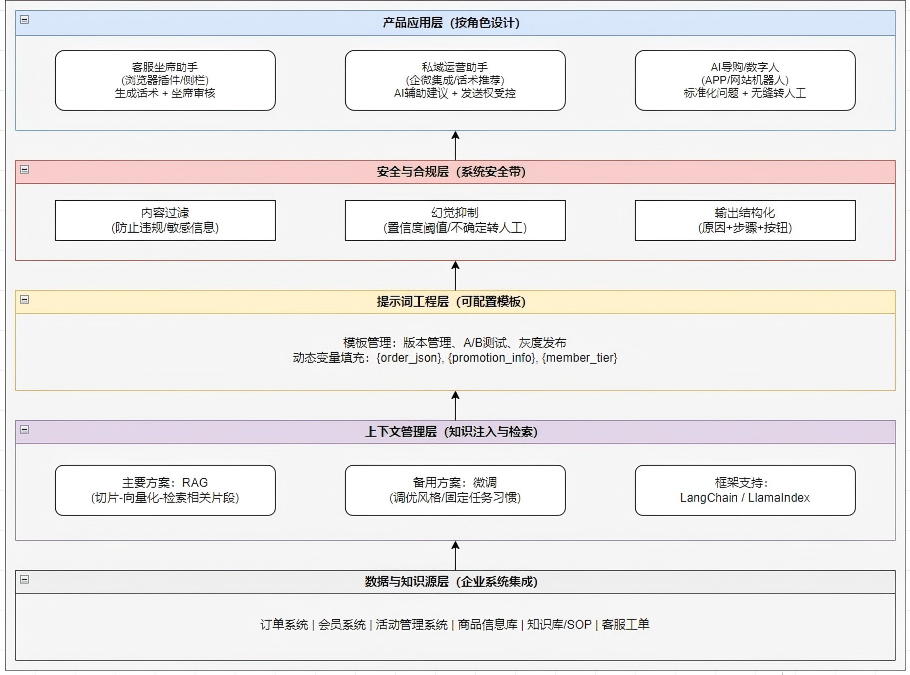
传统AI解决方案通常采用单一模型架构,而现代零售AI引擎采用分层架构:
用户交互层 → 业务逻辑层 → AI服务层 → 数据基础设施层
这种分层设计确保了系统的可维护性、可扩展性和安全性。
二、技术架构:三层协同的AI引擎设计
2.1 数据增强层:RAG驱动的知识管理
零售场景中的知识具有高度动态性和领域专业性,简单的微调难以应对频繁变更。RAG(检索增强生成)技术成为解决这一问题的关键。
核心架构:
class RetailRAGSystem:
"""零售RAG系统实现"""
def __init__(self, config: RAGConfig):
self.vector_store = VectorStore(config.vector_config)
self.retriever = MultiSourceRetriever(config.retriever_config)
self.reranker = CrossEncoderReranker(config.reranker_config)
self.generator = LLMGenerator(config.llm_config)
async def process_query(self, query: RetailQuery) -> RetailResponse:
"""处理零售查询"""
# 1. 多源数据检索
retrieved_docs = await self.retrieve_relevant_documents(query)
# 2. 相关性重排序
reranked_docs = await self.rerank_documents(query, retrieved_docs)
# 3. 上下文构建
context = self.build_context(query, reranked_docs)
# 4. 增强生成
response = await self.generate_response(query, context)
return self.validate_and_format_response(response)
async def retrieve_relevant_documents(self, query: RetailQuery) -> List[Document]:
"""从多源检索相关文档"""
documents = []
# 商品知识库检索
product_docs = await self.vector_store.search(
query=query.text,
filter={"source": "product_knowledge_base"},
top_k=5
)
documents.extend(product_docs)
# 促销规则检索
if query.requires_promotion_info:
promotion_docs = await self.vector_store.search(
query=query.text,
filter={"source": "promotion_rules", "is_active": True},
top_k=3
)
documents.extend(promotion_docs)
# 政策文档检索
if query.requires_policy_info:
policy_docs = await self.vector_store.search(
query=query.text,
filter={"source": "policy_documents"},
top_k=3
)
documents.extend(policy_docs)
return documents
知识库构建流程:
class KnowledgeBaseManager:
"""知识库管理器"""
async def build_knowledge_base(self, data_sources: List[DataSource]):
"""构建零售知识库"""
for source in data_sources:
if source.type == "product_catalog":
await self.process_product_catalog(source)
elif source.type == "promotion_rules":
await self.process_promotion_rules(source)
elif source.type == "policy_documents":
await self.process_policy_documents(source)
elif source.type == "faq":
await self.process_faq(source)
async def process_product_catalog(self, catalog: ProductCatalog):
"""处理商品目录"""
chunks = []
for product in catalog.products:
# 商品基础信息
product_text = f"""
商品名称:{product.name}
商品编码:{product.code}
分类:{product.category}
价格:{product.price}
库存状态:{product.stock_status}
规格参数:{product.specifications}
适用场景:{product.applicable_scenes}
"""
# 分块处理
product_chunks = self.chunk_text(product_text, chunk_size=500, overlap=50)
for chunk in product_chunks:
embedding = await self.embed_text(chunk)
chunks.append(DocumentChunk(
content=chunk,
embedding=embedding,
metadata={
"source": "product_catalog",
"product_id": product.id,
"category": product.category,
"update_time": datetime.now()
}
))
# 批量存储
await self.vector_store.batch_upsert(chunks)
2.2 提示词工程层:可管理的模板系统
零售场景中的提示词需要系统化管理,而非临时编写。我们采用模板化、参数化的方式构建提示词系统。
模板管理架构:
@dataclass
class PromptTemplate:
"""提示词模板定义"""
template_id: str
template_content: str
parameters: List[str]
description: str
version: str
created_at: datetime
updated_at: datetime
tags: List[str]
class PromptTemplateManager:
"""提示词模板管理器"""
def __init__(self, storage_backend: PromptStorage):
self.storage = storage_backend
self.templates: Dict[str, PromptTemplate] = {}
async def load_templates(self):
"""加载所有模板"""
templates = await self.storage.load_all_templates()
for template in templates:
self.templates[template.template_id] = template
def render_template(self, template_id: str, parameters: Dict[str, Any]) -> str:
"""渲染模板"""
if template_id not in self.templates:
raise ValueError(f"模板不存在: {template_id}")
template = self.templates[template_id]
# 检查必需参数
missing_params = [p for p in template.parameters if p not in parameters]
if missing_params:
raise ValueError(f"缺少必需参数: {missing_params}")
# 渲染模板
rendered = template.template_content
for key, value in parameters.items():
placeholder = f"{{{key}}}"
if placeholder in rendered:
rendered = rendered.replace(placeholder, str(value))
return rendered
async def create_template(self, template: PromptTemplate):
"""创建新模板"""
# 验证模板语法
self.validate_template(template)
# 存储模板
await self.storage.save_template(template)
# 更新缓存
self.templates[template.template_id] = template
零售场景模板示例:
# 账单解释模板
BILL_EXPLANATION_TEMPLATE = PromptTemplate(
template_id="bill_explanation_v1",
template_content="""
你是一名{store_brand}的客服专家,请基于以下信息为用户解释账单:
用户信息:
- 会员等级:{member_tier}
- 会员号:{member_id}
订单信息:
{order_summary}
促销活动:
{promotion_details}
账单构成:
{bill_breakdown}
请以专业、友好的语气,用中文向用户解释以下内容:
1. 本次消费的总金额和组成
2. 应用的优惠券和折扣详情
3. 会员权益带来的优惠
4. 如有异常费用,请特别说明
5. 下一步操作建议
回答要求:
- 保持口语化,但专业准确
- 突出用户获得的优惠
- 如涉及金额,务必精确到分
- 不猜测、不编造信息
如果信息不足,请明确告知用户哪些需要进一步核实。
""",
parameters=["store_brand", "member_tier", "member_id",
"order_summary", "promotion_details", "bill_breakdown"],
description="账单解释专用模板",
version="1.0"
)
# 商品推荐模板
PRODUCT_RECOMMENDATION_TEMPLATE = PromptTemplate(
template_id="product_recommendation_v1",
template_content="""
基于以下用户信息和场景,推荐合适的商品:
用户画像:
- 性别:{gender}
- 年龄段:{age_group}
- 历史购买:{purchase_history}
- 偏好品类:{preferred_categories}
当前场景:{scenario}
可用商品库:
{product_catalog}
推荐要求:
1. 推荐3-5个相关商品
2. 每个商品需说明推荐理由
3. 考虑价格敏感度:{price_sensitivity}
4. 突出商品特点和优势
5. 避免推荐缺货商品
输出格式:
[
{{
"product_id": "商品ID",
"product_name": "商品名称",
"reason": "推荐理由",
"price": "价格",
"in_stock": true/false
}}
]
""",
parameters=["gender", "age_group", "purchase_history",
"preferred_categories", "scenario", "product_catalog", "price_sensitivity"],
description="商品智能推荐模板",
version="1.0"
)
2.3 安全控制层:多层防御机制
零售AI系统需具备完善的安全控制机制,确保输出的合规性和安全性。
多层安全架构:
class SecurityLayer:
"""安全控制层"""
def __init__(self, config: SecurityConfig):
self.content_filter = ContentFilter(config.filter_rules)
self.privacy_protector = PrivacyProtector(config.privacy_rules)
self.hallucination_detector = HallucinationDetector(config.hallucination_config)
self.rate_limiter = RateLimiter(config.rate_limit_config)
async def process_and_validate(self, query: Query, response: Response) -> ValidatedResponse:
"""处理并验证响应"""
# 1. 输入验证
if not self.validate_input(query):
raise SecurityViolationError("输入验证失败")
# 2. 内容过滤
filtered_response = await self.content_filter.filter(response)
# 3. 隐私保护
anonymized_response = await self.privacy_protector.anonymize(filtered_response)
# 4. 幻觉检测
hallucination_score = await self.hallucination_detector.detect(anonymized_response)
if hallucination_score > config.hallucination_threshold:
anonymized_response = self.apply_hallucination_mitigation(anonymized_response)
# 5. 输出结构化
structured_response = self.structure_output(anonymized_response)
return ValidatedResponse(
content=structured_response,
security_checks={
"content_filter_passed": True,
"privacy_protected": True,
"hallucination_score": hallucination_score,
"structured": True
}
)
内容过滤实现:
class ContentFilter:
"""内容过滤器"""
def __init__(self, rules: List[FilterRule]):
self.rules = rules
self.sensitive_patterns = self.load_sensitive_patterns()
self.compliance_checker = ComplianceChecker()
async def filter(self, text: str) -> str:
"""过滤不安全内容"""
# 敏感词过滤
for pattern in self.sensitive_patterns:
if pattern.search(text):
text = pattern.sub("[已过滤]", text)
# 合规性检查
compliance_issues = await self.compliance_checker.check(text)
if compliance_issues:
text = self.apply_compliance_corrections(text, compliance_issues)
# 商业策略检查
if not self.check_business_policy(text):
raise BusinessPolicyViolation("违反商业策略")
return text
幻觉检测机制:
class HallucinationDetector:
"""幻觉检测器"""
def __init__(self, config: HallucinationConfig):
self.entailment_model = self.load_entailment_model()
self.fact_checker = FactChecker(config.fact_check_config)
self.confidence_threshold = config.confidence_threshold
async def detect(self, response: str, source_documents: List[Document]) -> float:
"""检测幻觉程度"""
# 1. 语义蕴含检查
entailment_scores = []
for doc in source_documents:
score = await self.entailment_model.check_entailment(doc.content, response)
entailment_scores.append(score)
# 2. 事实核查
fact_check_result = await self.fact_checker.check(response)
# 3. 置信度计算
max_entailment = max(entailment_scores) if entailment_scores else 0
hallucination_score = 1.0 - (max_entailment * 0.7 + fact_check_result.confidence * 0.3)
return hallucination_score
def apply_mitigation(self, response: str, score: float) -> str:
"""应用幻觉缓解"""
if score > 0.8:
return "抱歉,这个问题我需要进一步核实,建议您联系人工客服。"
elif score > 0.5:
return f"基于现有信息,我的理解是:{response}(此信息可能需要进一步确认)"
else:
return response
三、产品化设计:三种零售AI助手实现
3.1 客服坐席助手:人机协同工作流
架构设计:
class CustomerServiceAssistant:
"""客服坐席助手"""
def __init__(self, config: AssistantConfig):
self.rag_system = RetailRAGSystem(config.rag_config)
self.template_manager = PromptTemplateManager(config.template_config)
self.security_layer = SecurityLayer(config.security_config)
async def assist_agent(self, customer_query: str, context: AgentContext) -> AssistantResponse:
"""辅助坐席处理客户查询"""
# 1. 信息检索
query = RetailQuery(
text=customer_query,
customer_id=context.customer_id,
requires_promotion_info=True,
requires_policy_info=True
)
# 2. 生成响应草稿
response = await self.rag_system.process_query(query)
# 3. 安全验证
validated_response = await self.security_layer.process_and_validate(query, response)
# 4. 格式化建议
suggestions = self.format_suggestions(validated_response, context)
return AssistantResponse(
suggested_response=validated_response.content,
confidence_score=validated_response.confidence,
source_references=validated_response.sources,
quick_actions=self.generate_quick_actions(validated_response),
warnings=validated_response.warnings
)
人机协同界面:
class AgentCollaborationUI:
"""坐席协同界面"""
def render_assistance_panel(self, assistant_response: AssistantResponse):
"""渲染辅助面板"""
return {
"main_suggestion": assistant_response.suggested_response,
"confidence_indicator": self.render_confidence(assistant_response.confidence_score),
"source_references": self.render_sources(assistant_response.source_references),
"quick_actions": self.render_quick_actions(assistant_response.quick_actions),
"editable": True,  # 坐席可编辑
"send_button": {
"text": "发送",
"action": "send_response",
"requires_review": assistant_response.confidence_score < 0.7
}
}
3.2 私域运营助手:智能群聊管理
架构实现:
class PrivateDomainAssistant:
"""私域运营助手"""
async def analyze_conversation(self, chat_history: List[Message]) -> ConversationAnalysis:
"""分析群聊对话"""
# 1. 意图识别
intent = await self.detect_intent(chat_history[-1].content)
# 2. 上下文理解
context = await self.understand_context(chat_history)
# 3. 个性化推荐
if intent == "product_inquiry":
recommendations = await self.recommend_products(context)
elif intent == "promotion_interest":
recommendations = await self.recommend_promotions(context)
return ConversationAnalysis(
intent=intent,
recommendations=recommendations,
suggested_response=self.generate_response(context, recommendations)
)
async def recommend_products(self, context: ConversationContext) -> List[ProductRecommendation]:
"""推荐商品"""
# 构建查询
query = ProductQuery(
customer_profile=context.customer_profile,
conversation_history=context.chat_history,
current_intent=context.current_intent
)
# 从RAG系统获取信息
relevant_products = await self.rag_system.retrieve_products(query)
# 应用推荐算法
recommendations = await self.recommendation_engine.rank_products(
relevant_products, query
)
return recommendations[:3]  # 返回top3推荐
3.3 AI导购/数字人:边界清晰的自动化服务
系统设计:
class AIShoppingGuide:
"""AI导购系统"""
def __init__(self, config: GuideConfig):
self.capabilities = config.allowed_capabilities
self.escalation_threshold = config.escalation_threshold
self.escalation_handler = EscalationHandler(config.escalation_config)
async def handle_customer_request(self, request: CustomerRequest) -> GuideResponse:
"""处理客户请求"""
# 1. 边界检查
if not self.can_handle_request(request):
return await self.escalate_to_human(request)
# 2. 意图分类
intent_class = await self.classify_intent(request)
# 3. 路由处理
if intent_class in self.capabilities:
response = await self.handle_with_capability(intent_class, request)
else:
response = await self.escalate_to_human(request)
return response
async def handle_with_capability(self, capability: str, request: CustomerRequest) -> GuideResponse:
"""使用特定能力处理"""
handlers = {
"product_info": self.handle_product_inquiry,
"order_status": self.handle_order_status,
"return_policy": self.handle_policy_query,
"store_hours": self.handle_store_info
}
handler = handlers.get(capability)
if handler:
return await handler(request)
else:
return await self.fallback_handler(request)
四、实施案例:账单解释引擎的完整实现
4.1 系统架构
class BillExplanationEngine:
"""账单解释引擎"""
def __init__(self, config: EngineConfig):
self.data_fetcher = DataFetcher(config.data_sources)
self.template_renderer = TemplateRenderer(config.template_config)
self.explanation_generator = ExplanationGenerator(config.generator_config)
self.validator = BillValidator(config.validation_config)
async def explain_bill(self, bill_request: BillRequest) -> BillExplanation:
"""解释账单"""
# 1. 数据收集
raw_data = await self.data_fetcher.fetch_bill_data(bill_request)
# 2. 数据验证
validation_result = await self.validator.validate_bill_data(raw_data)
if not validation_result.is_valid:
raise InvalidBillDataError(validation_result.errors)
# 3. 模板渲染
template_params = self.prepare_template_parameters(raw_data)
rendered_template = self.template_renderer.render(
"bill_explanation_v1", template_params
)
# 4. 生成解释
explanation = await self.explanation_generator.generate(
rendered_template, raw_data
)
# 5. 格式化和增强
formatted_explanation = self.format_explanation(explanation, raw_data)
return BillExplanation(
summary=formatted_explanation.summary,
breakdown=formatted_explanation.breakdown,
promotions=formatted_explanation.promotions,
member_benefits=formatted_explanation.member_benefits,
next_steps=formatted_explanation.next_steps,
confidence_score=formatted_explanation.confidence,
source_data=raw_data
)
4.2 迭代优化机制
class ContinuousOptimization:
"""持续优化系统"""
def __init__(self, feedback_config: FeedbackConfig):
self.feedback_collector = FeedbackCollector(feedback_config)
self.performance_analyzer = PerformanceAnalyzer()
self.ab_test_manager = ABTestManager()
async def optimize_engine(self, engine: BillExplanationEngine):
"""优化引擎性能"""
# 1. 收集反馈
feedback_data = await self.feedback_collector.collect_feedback()
# 2. 分析性能
performance_metrics = self.performance_analyzer.analyze(feedback_data)
# 3. 识别优化机会
optimization_opportunities = self.identify_opportunities(performance_metrics)
# 4. 设计实验
experiments = self.design_experiments(optimization_opportunities)
# 5. 执行A/B测试
for experiment in experiments:
test_results = await self.ab_test_manager.run_experiment(experiment)
if test_results.statistically_significant:
await self.apply_optimization(experiment, test_results)
五、部署与运维
5.1 生产环境部署
# docker-compose.yml
version: '3.8'
services:
ai-engine:
image: retail-ai-engine:latest
environment:
- ENVIRONMENT=production
- REDIS_URL=redis://redis:6379
- DATABASE_URL=postgresql://user:pass@db:5432/retail_ai
ports:
- "8000:8000"
depends_on:
- redis
- db
- vector-db
redis:
image: redis:alpine
db:
image: postgres:15
environment:
POSTGRES_PASSWORD: ${DB_PASSWORD}
volumes:
- postgres_data:/var/lib/postgresql/data
vector-db:
image: qdrant/qdrant
ports:
- "6333:6333"
volumes:
- qdrant_data:/qdrant/storage
5.2 监控与告警
class MonitoringSystem:
"""监控系统"""
def setup_monitoring(self):
"""设置监控"""
# 性能指标
self.metrics_registry = MetricsRegistry()
self.metrics_registry.register_metrics([
Metric("request_latency", "histogram", "请求延迟"),
Metric("success_rate", "gauge", "成功率"),
Metric("token_usage", "counter", "token使用量"),
Metric("cache_hit_rate", "gauge", "缓存命中率")
])
# 告警规则
self.alert_manager = AlertManager()
self.alert_manager.add_rules([
AlertRule(
metric="request_latency_p95",
threshold=2000,  # 2秒
duration="1m",
severity="warning"
),
AlertRule(
metric="success_rate",
threshold=0.95,  # 95%
duration="5m",
severity="critical"
)
])
六、总结与展望
6.1 核心价值总结
零售AI引擎的成功实施为企业带来以下价值:
- 运营效率提升:自动化处理标准查询,释放人力资源
- 服务质量标准化:确保服务一致性,降低培训成本
- 数据驱动决策:基于对话数据分析优化商品和服务
- 客户体验优化:提供个性化、实时的服务响应
- 成本控制:通过智能路由降低服务成本
6.2 实施建议
- 分阶段实施:从高价值场景开始,逐步扩展
- 持续迭代:建立反馈循环,持续优化系统
- 安全先行:在早期阶段建立完善的安全控制
- 人机协同:发挥各自优势,实现最佳用户体验
- 合规性保障:确保系统符合相关法律法规
6.3 未来发展方向
- 多模态融合:结合视觉、语音等多模态理解
- 预测性服务:基于用户行为预测需求
- 跨渠道协同:实现线上线下一体化服务
- 联邦学习:在保护隐私的前提下实现模型优化
- 边缘计算:降低延迟,提高响应速度
通过本文所述的架构和实施方法,企业可以构建一个稳健、可扩展、安全的零售AI引擎,真正将AI技术转化为商业价值。
学AI大模型的正确顺序,千万不要搞错了
🤔2026年AI风口已来!各行各业的AI渗透肉眼可见,超多公司要么转型做AI相关产品,要么高薪挖AI技术人才,机遇直接摆在眼前!
有往AI方向发展,或者本身有后端编程基础的朋友,直接冲AI大模型应用开发转岗超合适!
就算暂时不打算转岗,了解大模型、RAG、Prompt、Agent这些热门概念,能上手做简单项目,也绝对是求职加分王🔋
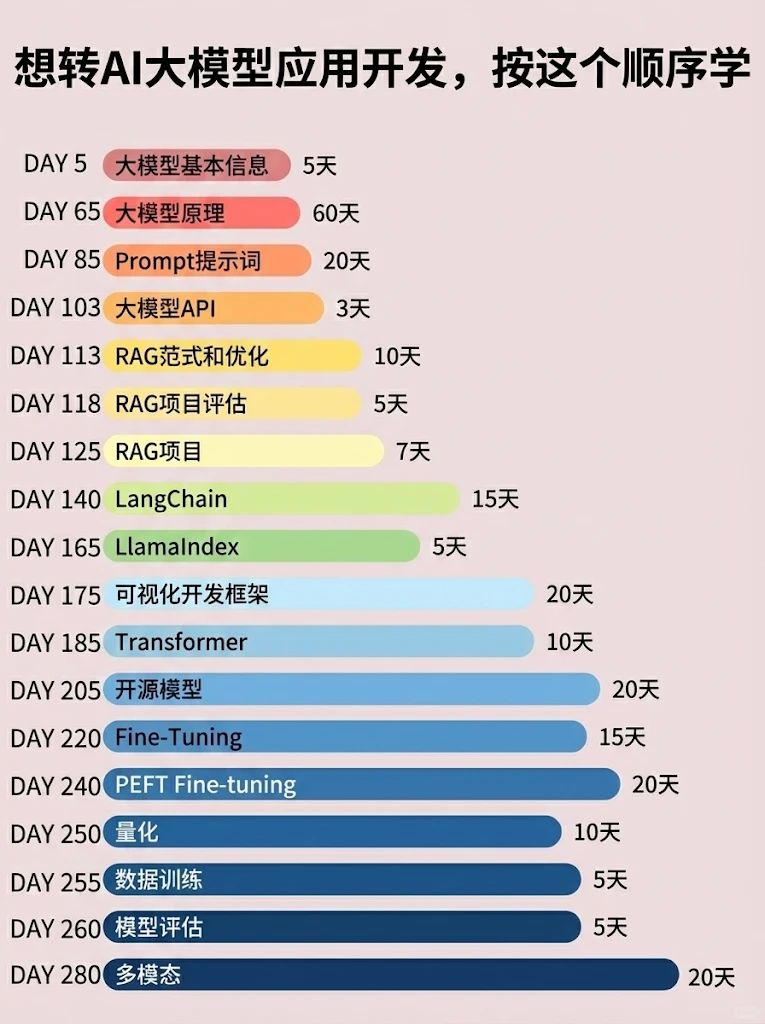
📝给大家整理了超全最新的AI大模型应用开发学习清单和资料,手把手帮你快速入门!👇👇
学习路线:
✅大模型基础认知—大模型核心原理、发展历程、主流模型(GPT、文心一言等)特点解析
✅核心技术模块—RAG检索增强生成、Prompt工程实战、Agent智能体开发逻辑
✅开发基础能力—Python进阶、API接口调用、大模型开发框架(LangChain等)实操
✅应用场景开发—智能问答系统、企业知识库、AIGC内容生成工具、行业定制化大模型应用
✅项目落地流程—需求拆解、技术选型、模型调优、测试上线、运维迭代
✅面试求职冲刺—岗位JD解析、简历AI项目包装、高频面试题汇总、模拟面经
以上6大模块,看似清晰好上手,实则每个部分都有扎实的核心内容需要吃透!
我把大模型的学习全流程已经整理📚好了!抓住AI时代风口,轻松解锁职业新可能,希望大家都能把握机遇,实现薪资/职业跃迁~
这份完整版的大模型 AI 学习资料已经上传CSDN,朋友们如果需要可以微信扫描下方CSDN官方认证二维码免费领取【保证100%免费】


有“AI”的1024 = 2048,欢迎大家加入2048 AI社区
更多推荐


 13
13 0
0- 0


 已为社区贡献683条内容

所有评论(0)