「超详细!!」《学术英语》期末笔记
a.破题关键:找信号词。i. Aim:
《学术英语》上学期期末复习指南
一、 试卷结构与分值分布 (Structure & Grading)
| 板块 | 题型 | 题目数量 | 预估分值 | 考察核心 |
| I. 学术词汇与语法 | 选词填空 (Vocab/Linking/Tense) | 3大题 | 15-20分 | 正式语体转换、时态语态、逻辑连接词 |
| II. 学术写作微技能 | 单选/匹配/改写 (Mechanics/Hedging/Paraphrasing) | 4大题 | 10-15分 | 模糊限制语(Hedging)、改写技巧、标点规范 |
| III. 语篇结构分析 | 排序/填空/判断 (Abstract & Intro) | 2个综合题组 | 40-50分 | (重难点) BAMRI摘要模型、CARS引言模型 |
| IV. 学术引用规范 | 多选/主观操作 (APA Formatting) | 2大题 | 10-15分 | APA参考文献格式、文内引用插入(In-text citation) |
🌟🌟二、 具体考点与重难点分析 (Detailed Analysis)
第一板块:学术词汇与基础 (Vocabulary & Grammar)选词填空 (Vocab/Linking/Tense)
🔍 考题回顾:
● 把 help out 换成 assist,把 look into 换成 investigate。
考题1-选词填空-Vocabulary
|
assist reduce create investigate raise increase determine fluctuate eliminate establish |
-
Expert Systems can help out the user in the diagnosis of problems.——assist
-
This program was set up to improve access to medical care.——created
-
Research expenditures have gone up to nearly $350 million.—— increased
-
The use of optical character readers (OCRs) should cut down the number of problems with the U.S. mail service.——reduce
-
Researchers have found out that this drug has serious side effects.——determine
find out = determine(查明、确定)
-
Building a nuclear power plant will not get rid of the energy problem completely.——eliminate
get rid of = eliminate(消除)
-
Researchers have been looking into this problem for 15 years now.——investigate
look into = investigate(调查、研究)
-
This issue was brought up during the investigation.——raise
bring up an issue = raise an issue(提出问题)
-
Engineers can come up with better designs using CAD.——create
come up with ideas/designs = create / develop
-
The emission levels have been going up and down.——fluctuate
go up and down = fluctuate(波动)
考题2-逻辑连接词-Linking
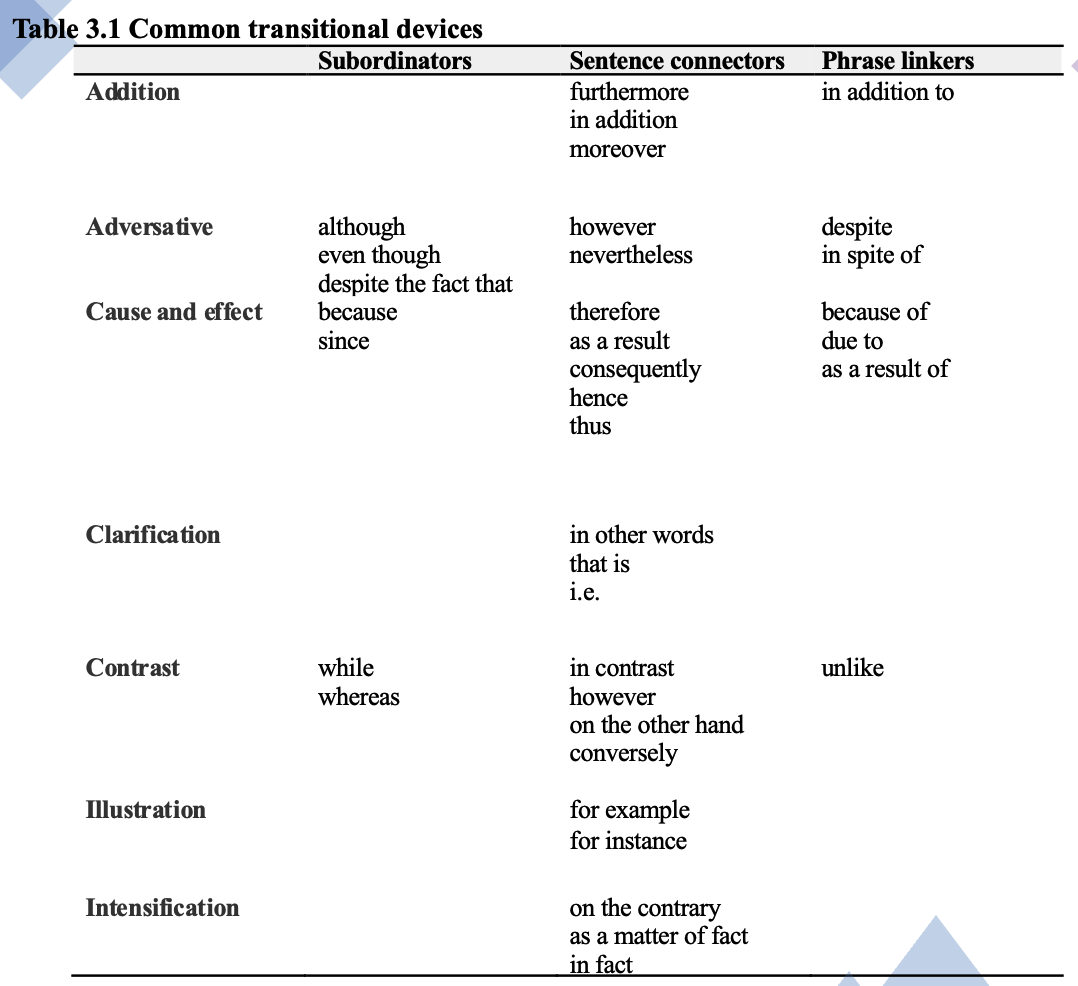
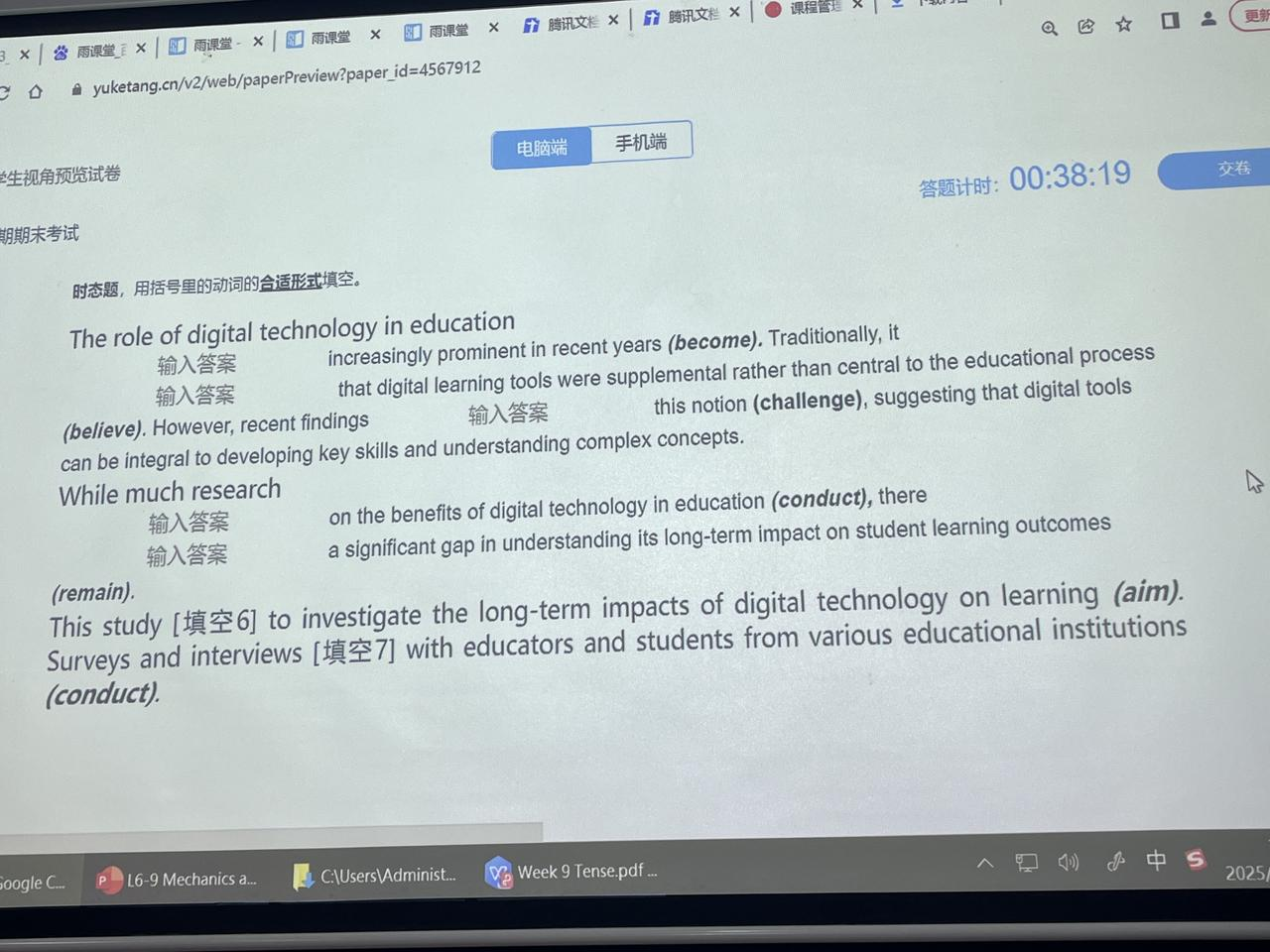
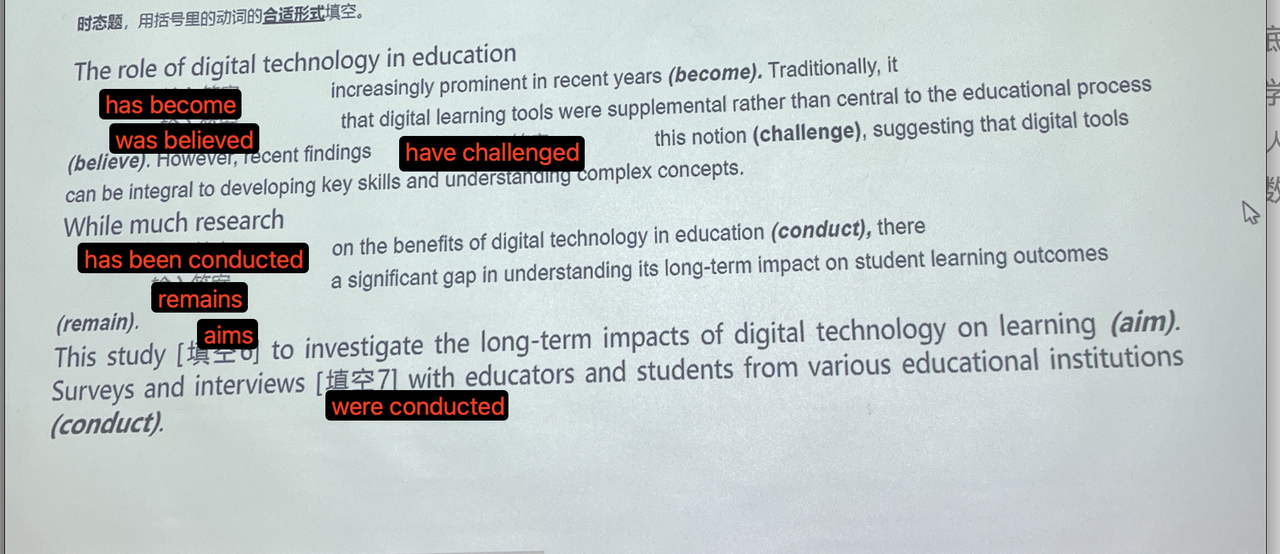
考题3-时态填空:Digital technology ______ (become) prominent...

⚠️ 重难点 (Difficulty):
1. 短语动词 vs. 单个动词的精准对应: 例如 bring up 对应 raise,get together 对应 cooperate。
2. 时态的语境判断:
a. 易错点: 在被动语态中忘记变分词(如 was believe ❌ 应为 was believed ✅)。
第二板块:学术写作微技能 (单选/匹配/改写 (Mechanics/Hedging/Paraphrasing))
🔍 考题回顾:
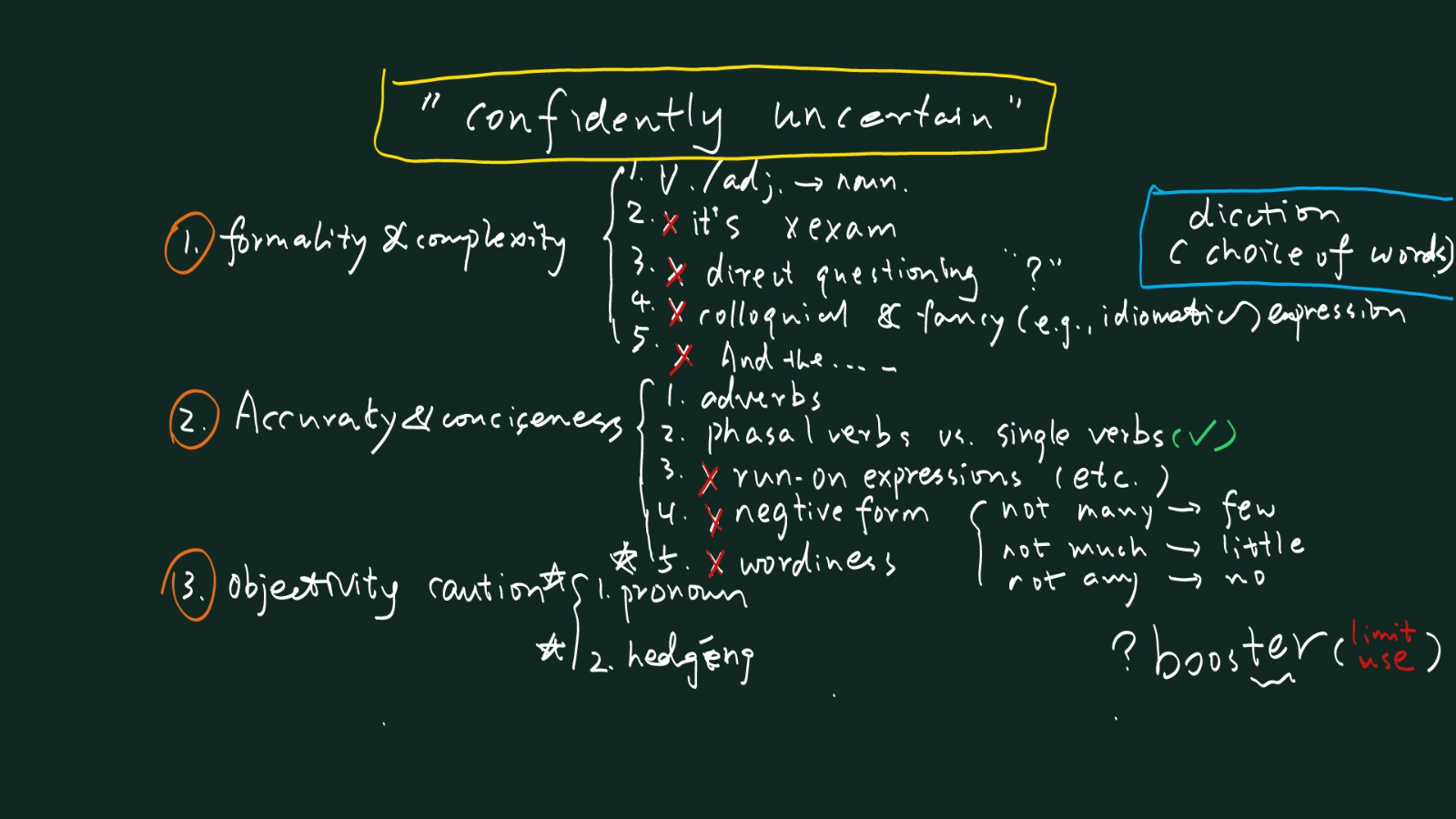
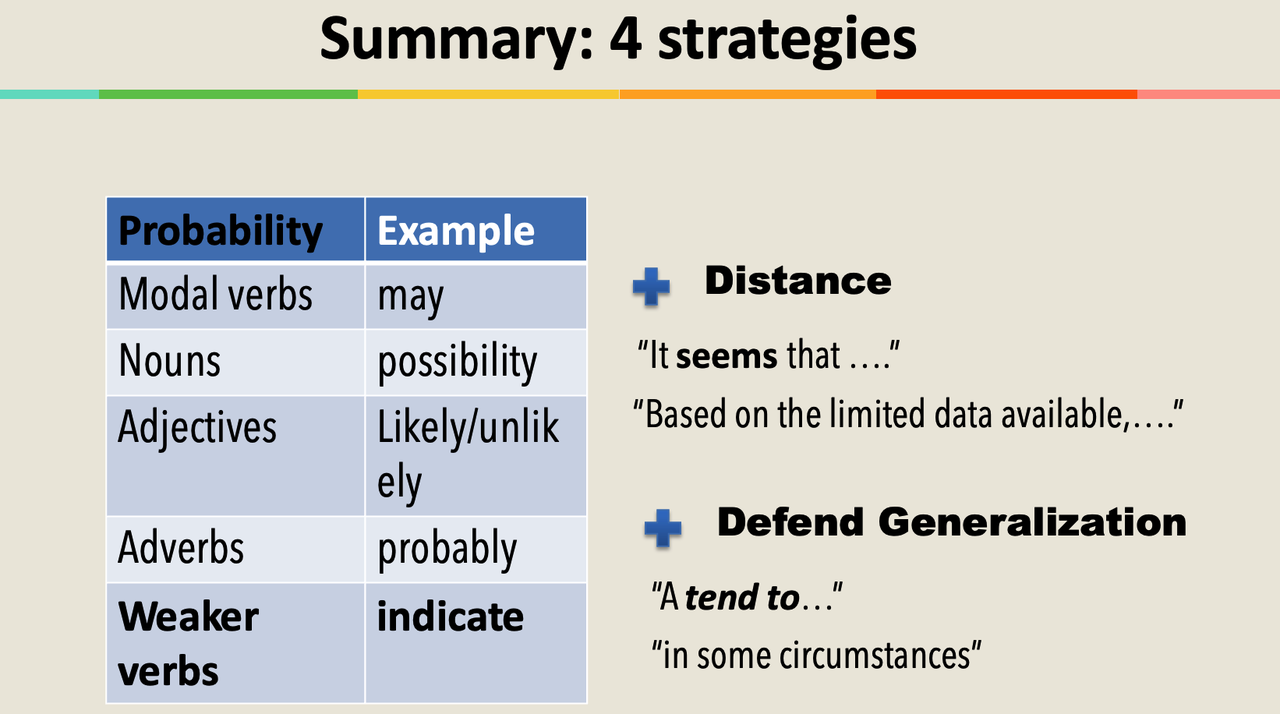
● Hedging四种基本策略
hedge——confidently uncertain
● 主观题: 用至少三个策略改写
⚠️ 重难点 (Difficulty):
1. Hedging的主观应用: 这是一个主观题,没有唯一答案,学生容易“改得不够”或“改得过头”。
考题1-模糊限制语(Hedging)L5-L7(主观题)
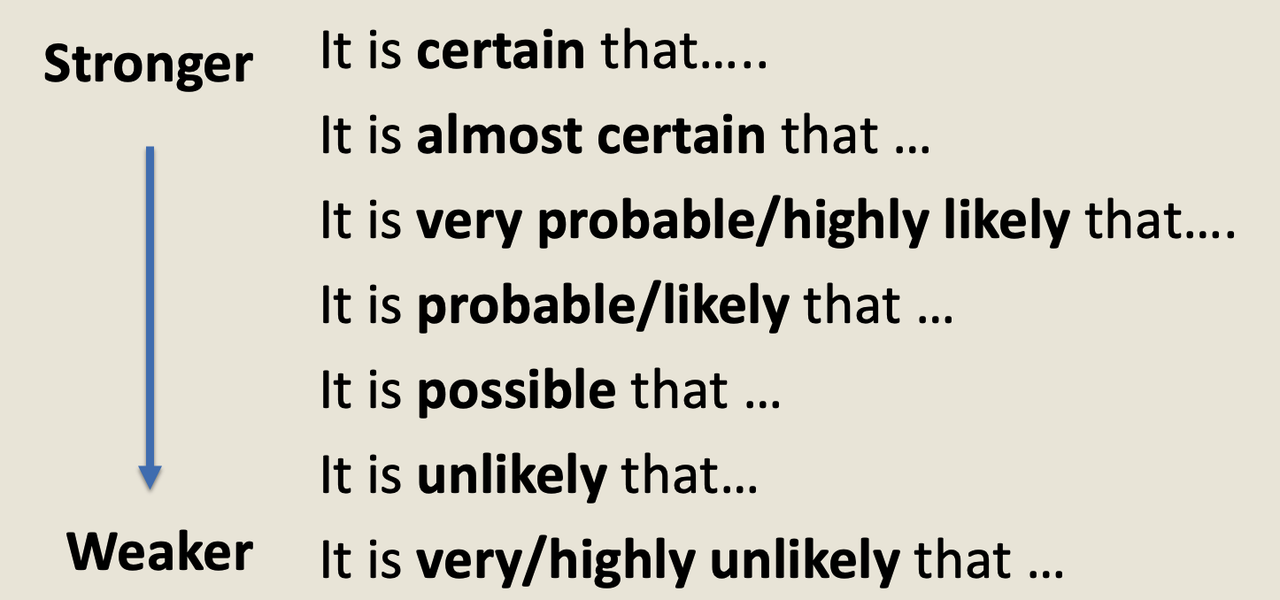
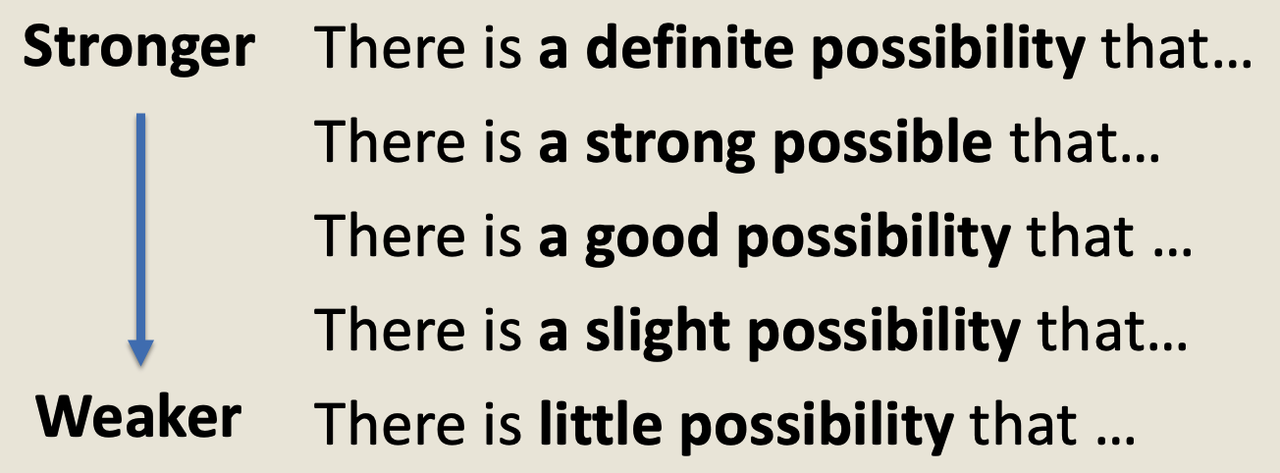
1 Probability
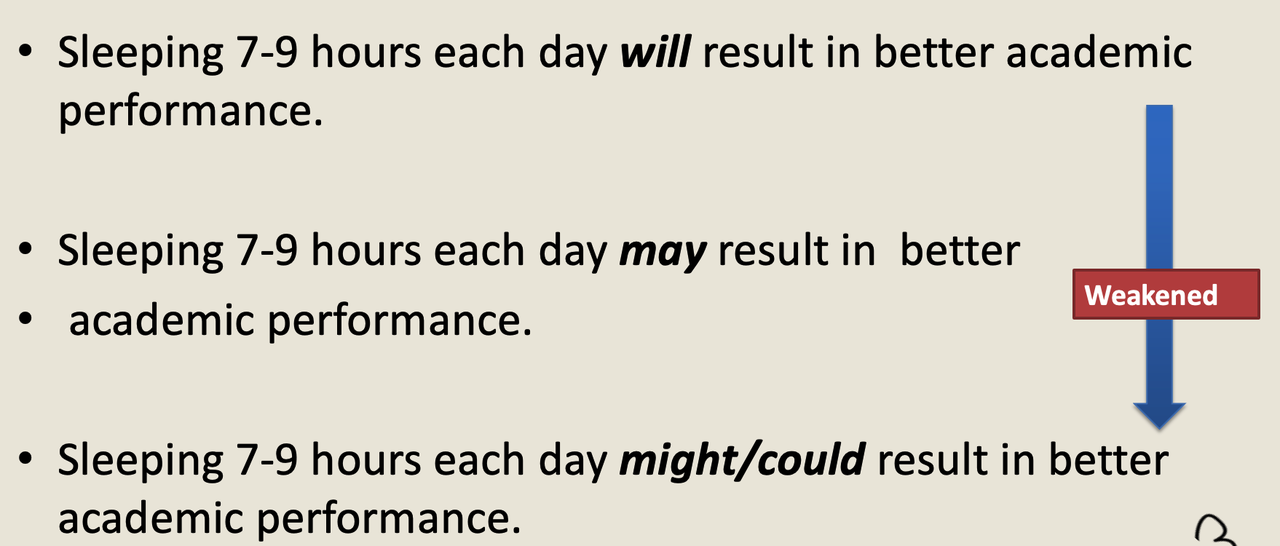
Modal verbs :Could, would, may, might
Nouns:Possibility,probability
Adjectives:likely/unlikely, possible, certain
Adverbs:Probably, sometimes, certainly, definitely, clearly, probably, possibly, perhaps, conceivably, hardly, apparently, partially, partly, nearly, fairly, hopefully, likely,mainly, almost, mostly, presumably, quite clearly, quite, rather, supposedly, somewhat
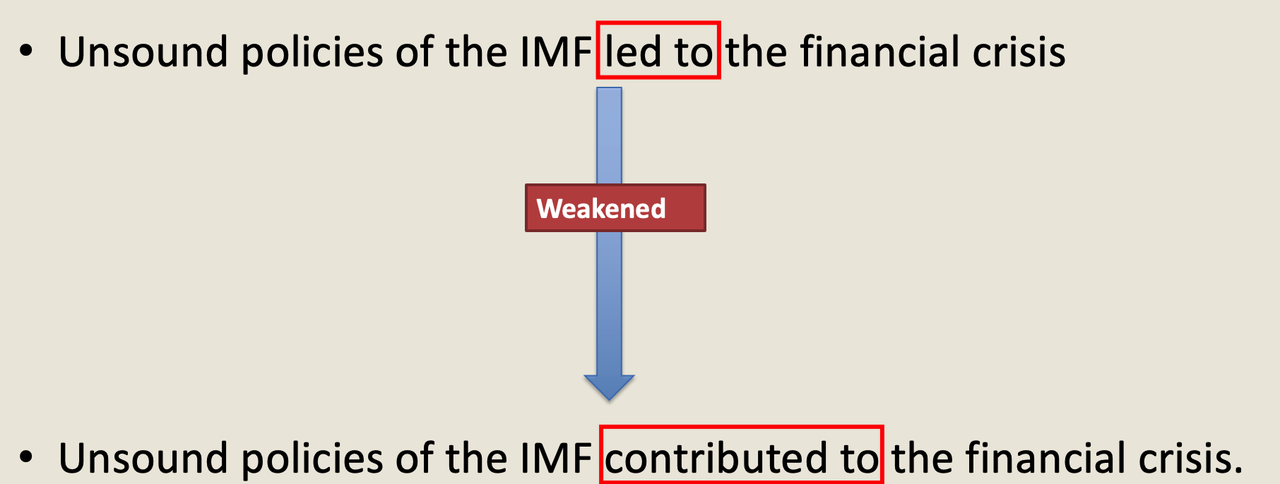
2 Weaker verbs
3 Adding Distance
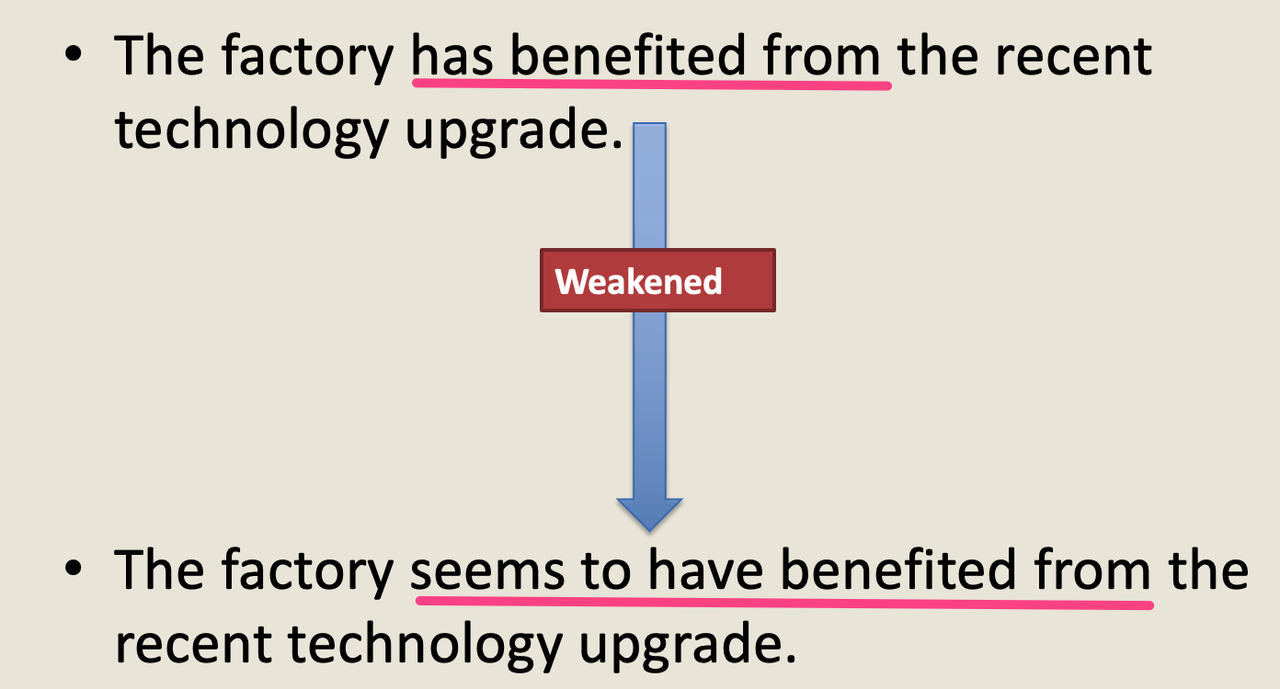
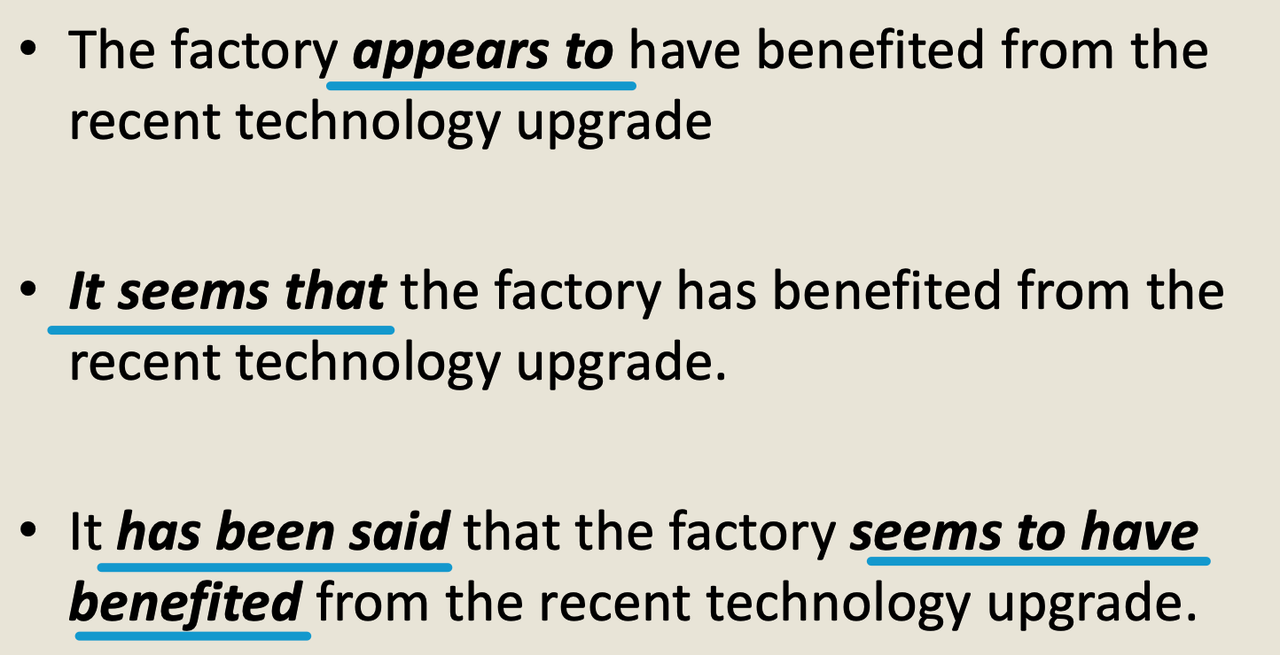
4 Defending Generalization
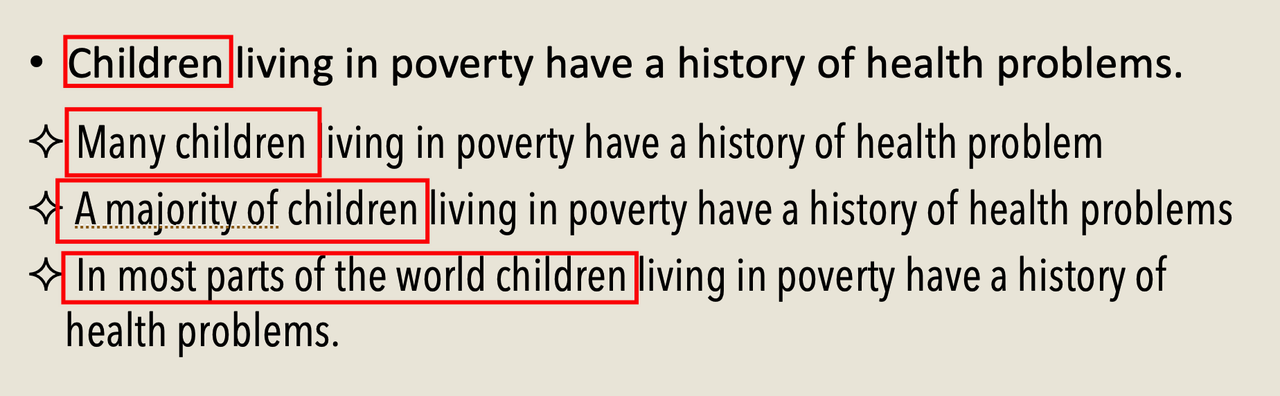
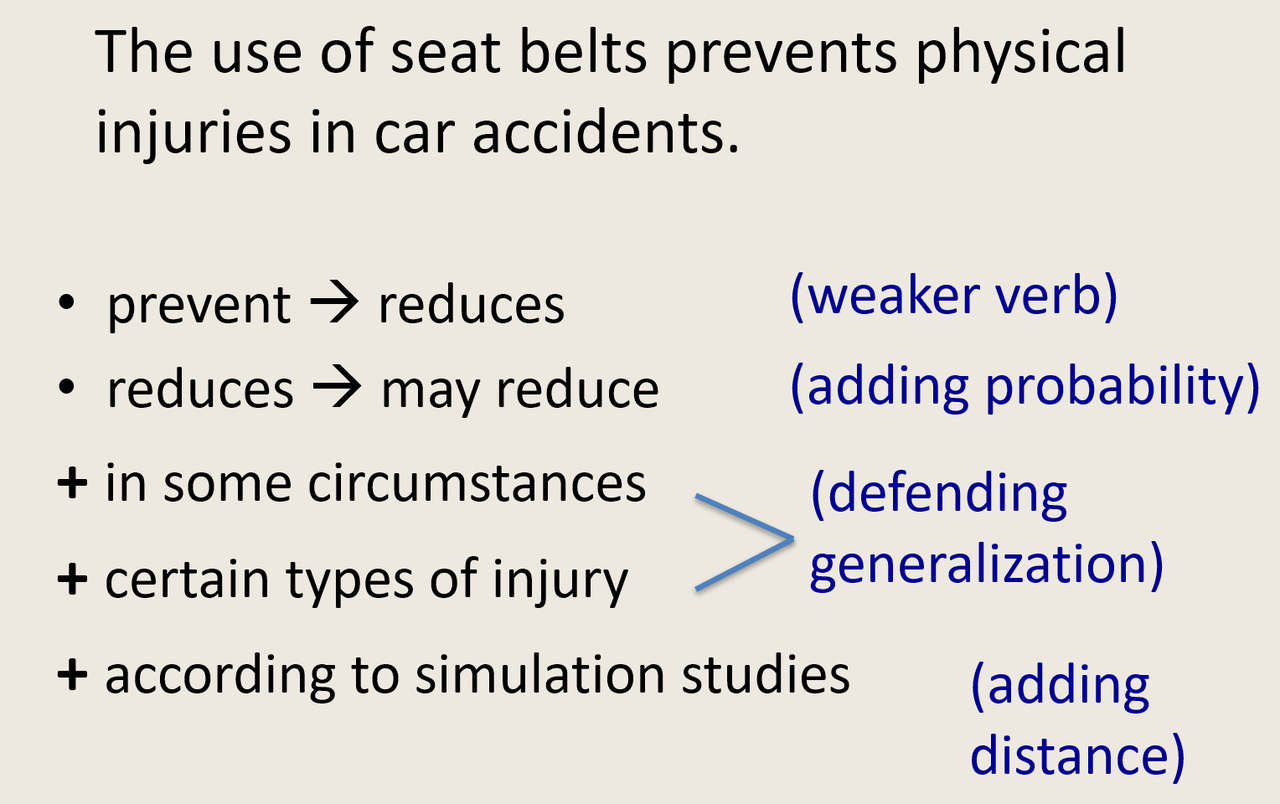
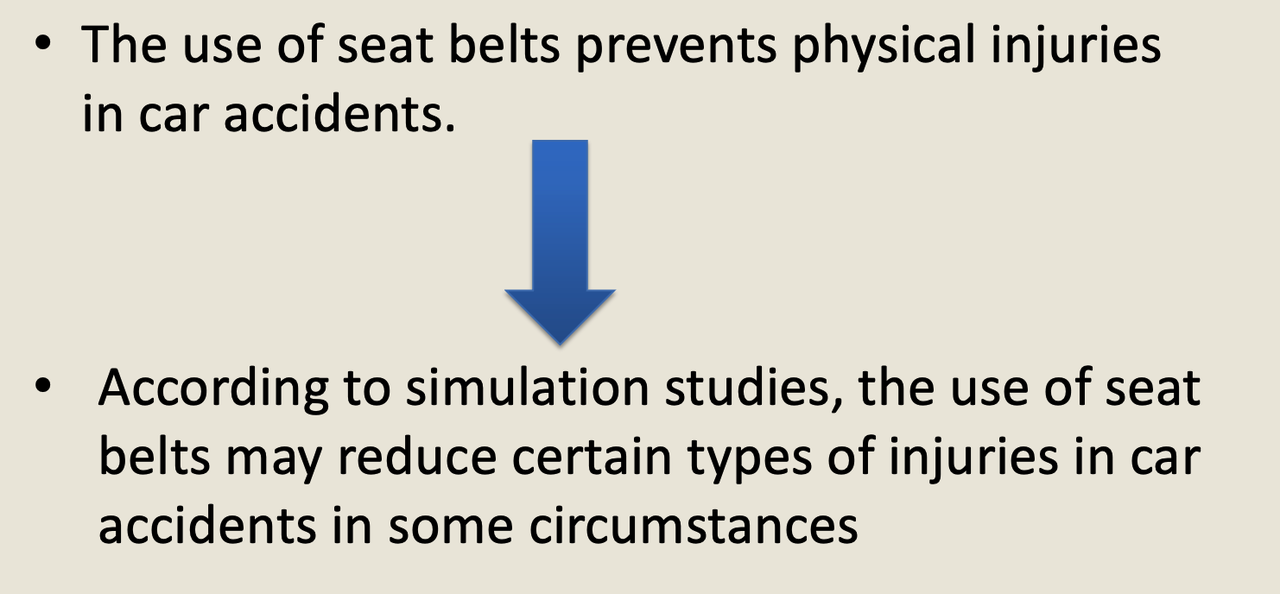
课上的题目:
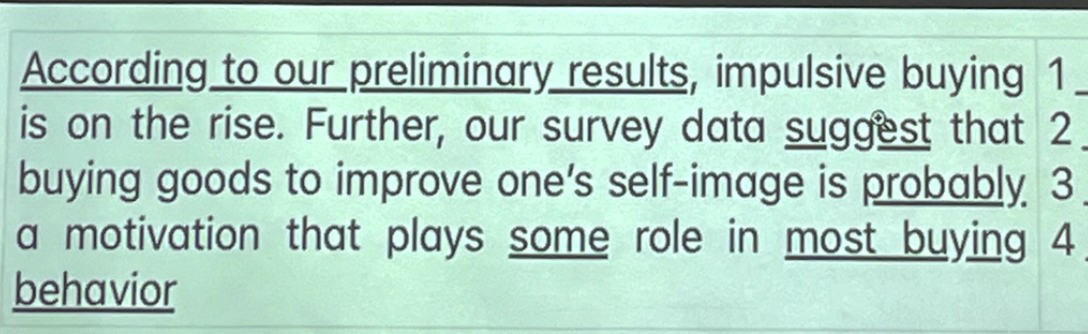
1-adding distance 2-weaker verbs 3-probability 4-defending generalization(捍卫普遍性)
考题2-Paraphrasing (同义改写): 很多学生误以为改写就是“换同义词”,而忽略了“句式结构改变”(如主动变被动)。考题中专门设置了干扰项(仅替换个别词汇)。P78/L12-L13
STRATEGIES for paraphrasing
1-利用同义词(synonyms )
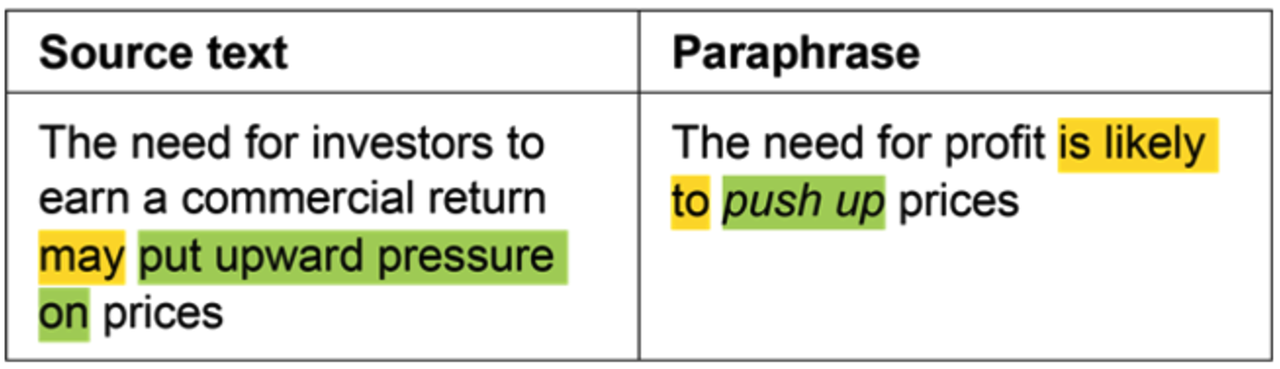
2-Change the word form/grammatical form if necessary
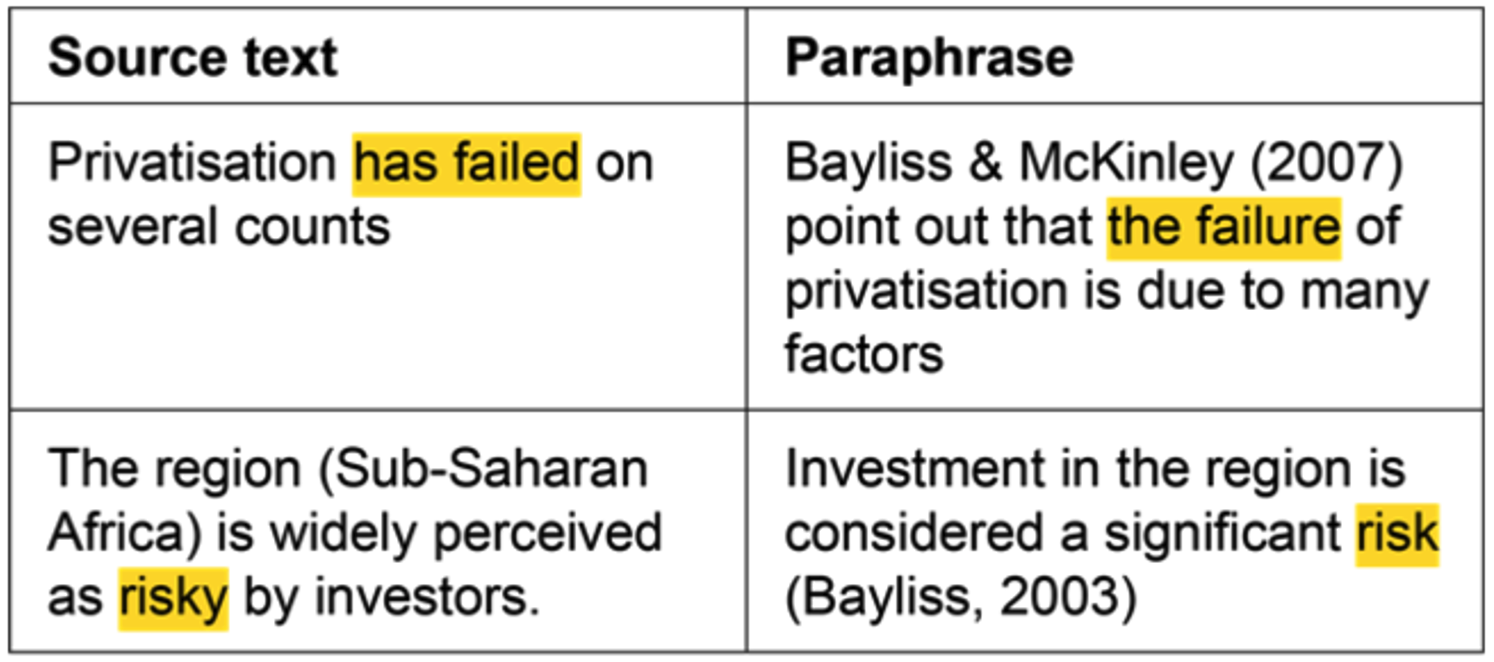
3-Changing the grammatical structure
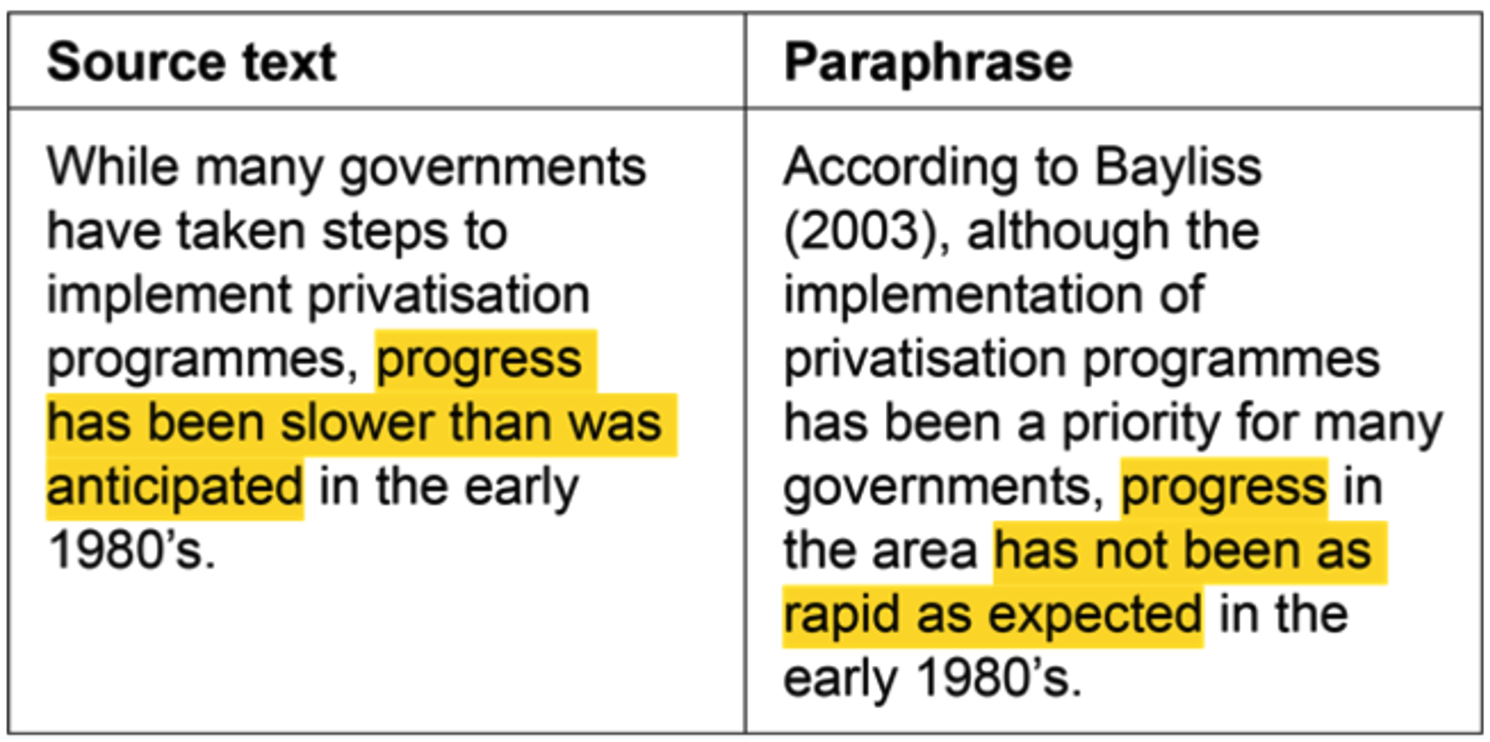
How to paraphrase?L12-L13
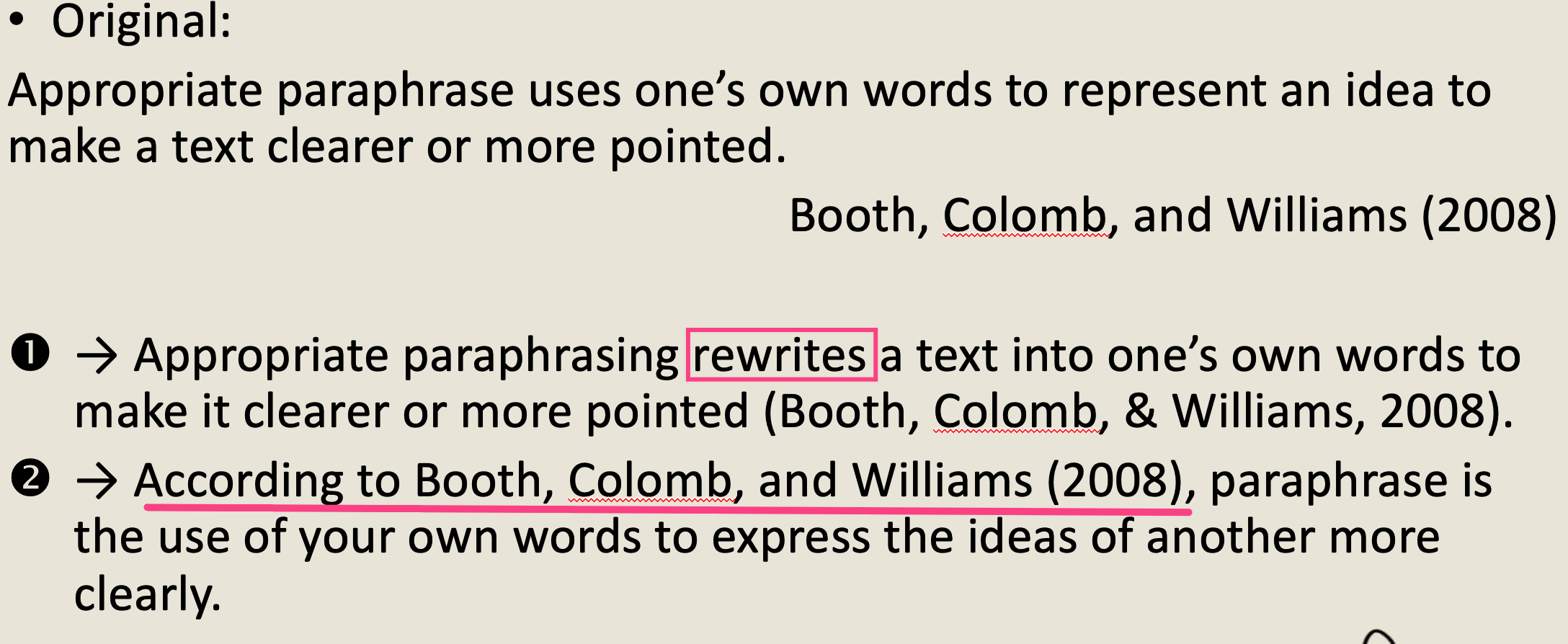
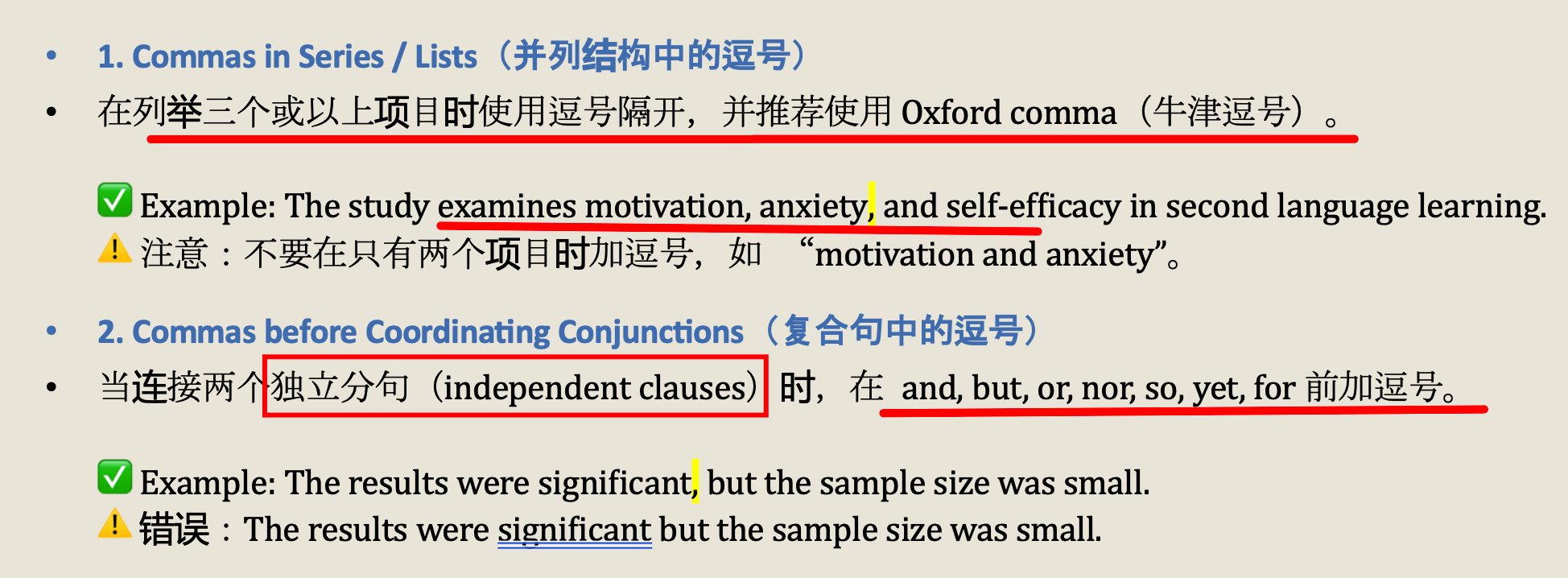
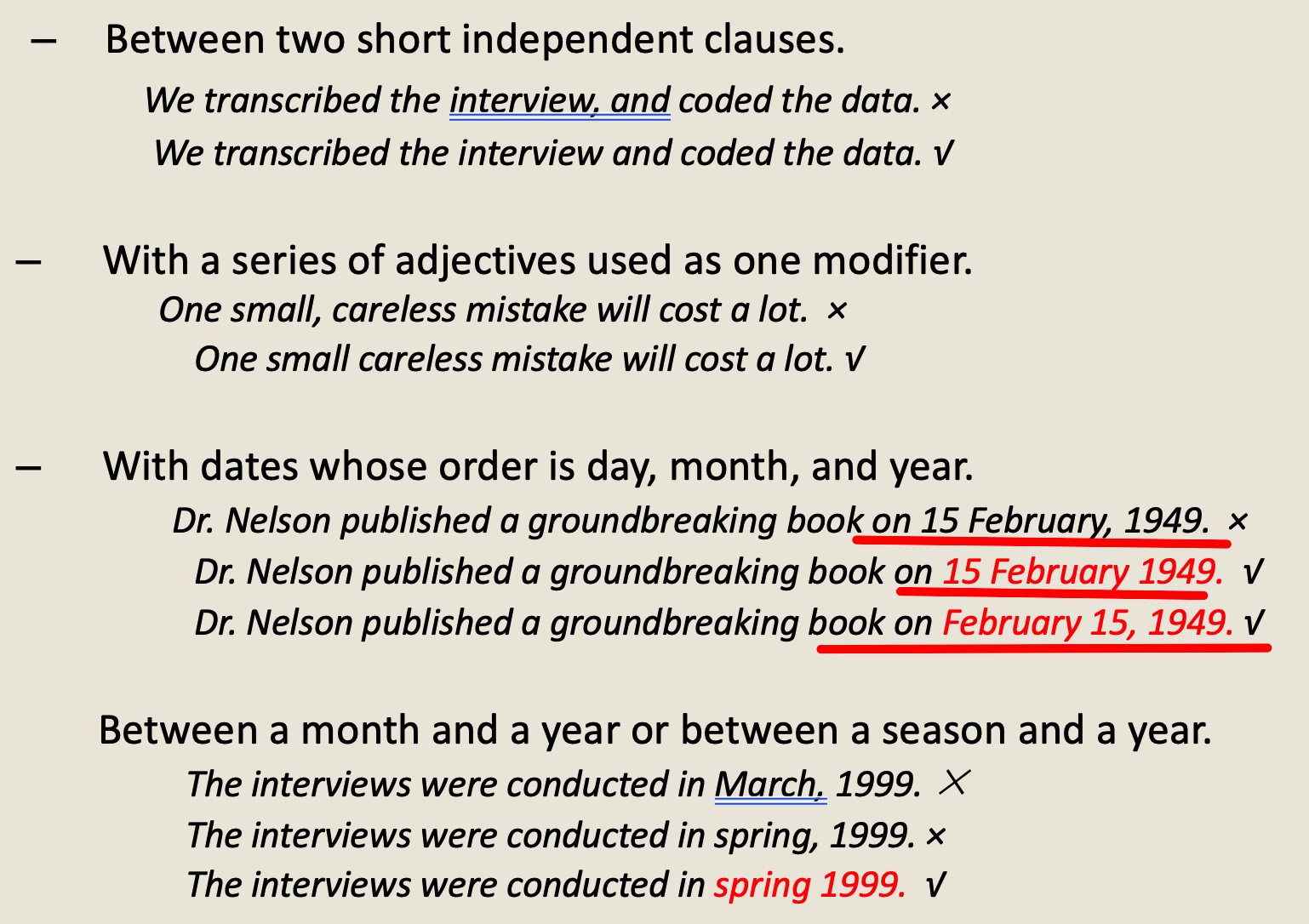
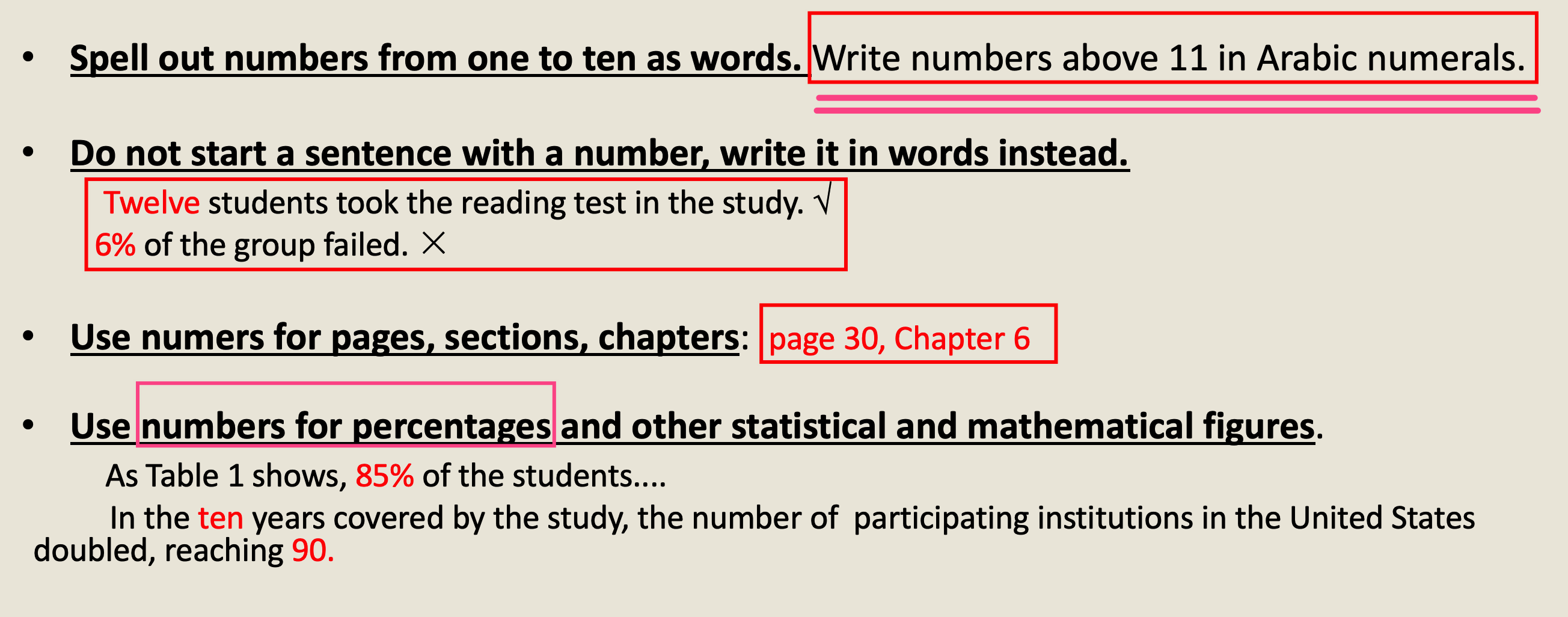
考题3-Mechanics写作技术规范 / 书写规范L6-9
包括
•Spelling 拼写问题
•Abbreviation 缩写问题
•Punctuation 标点符号问题
•Capitalization 大写问题
•Italics 斜体问题
•Numbers 数字问题
•Enumeration枚举问题
第三板块:语篇结构分析—— 🔥 核心失分点
⚠️ 重难点 (Difficulty):
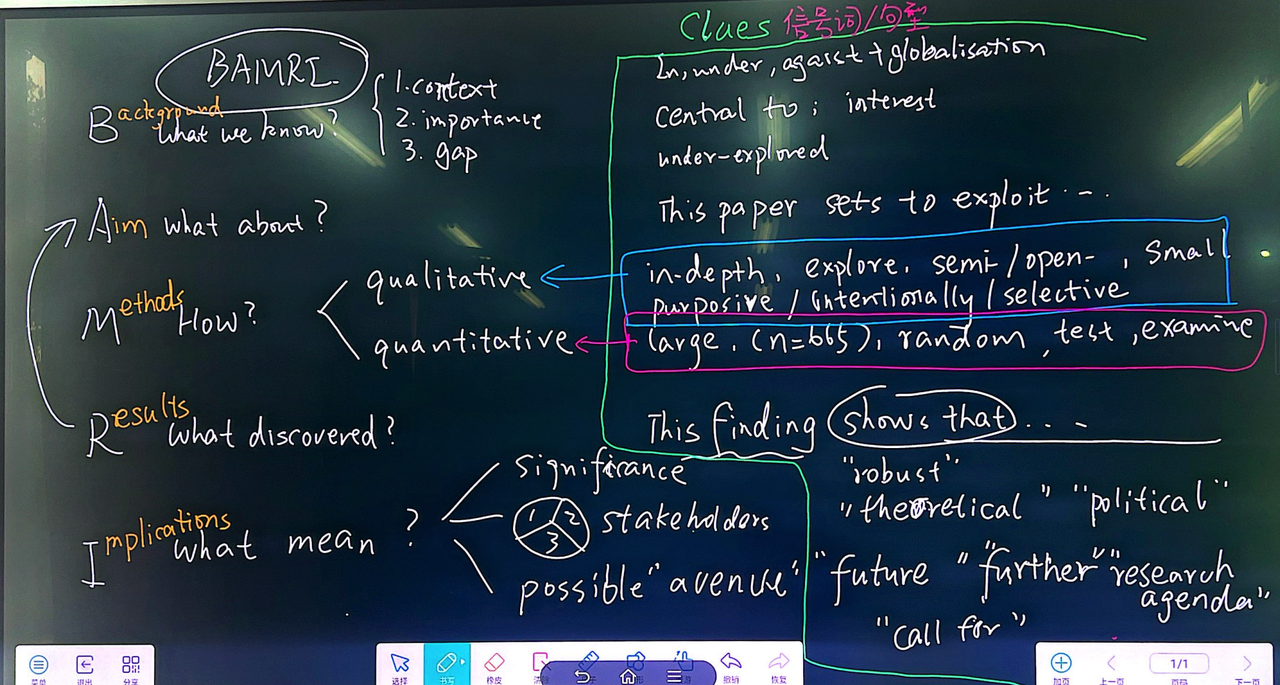
1. BAMRI摘要模型
a. 破题关键: 找信号词。
i. Aim: The primary thrust of this study is... / This study examines...
ii. Result: The findings reveal... / The results indicated...
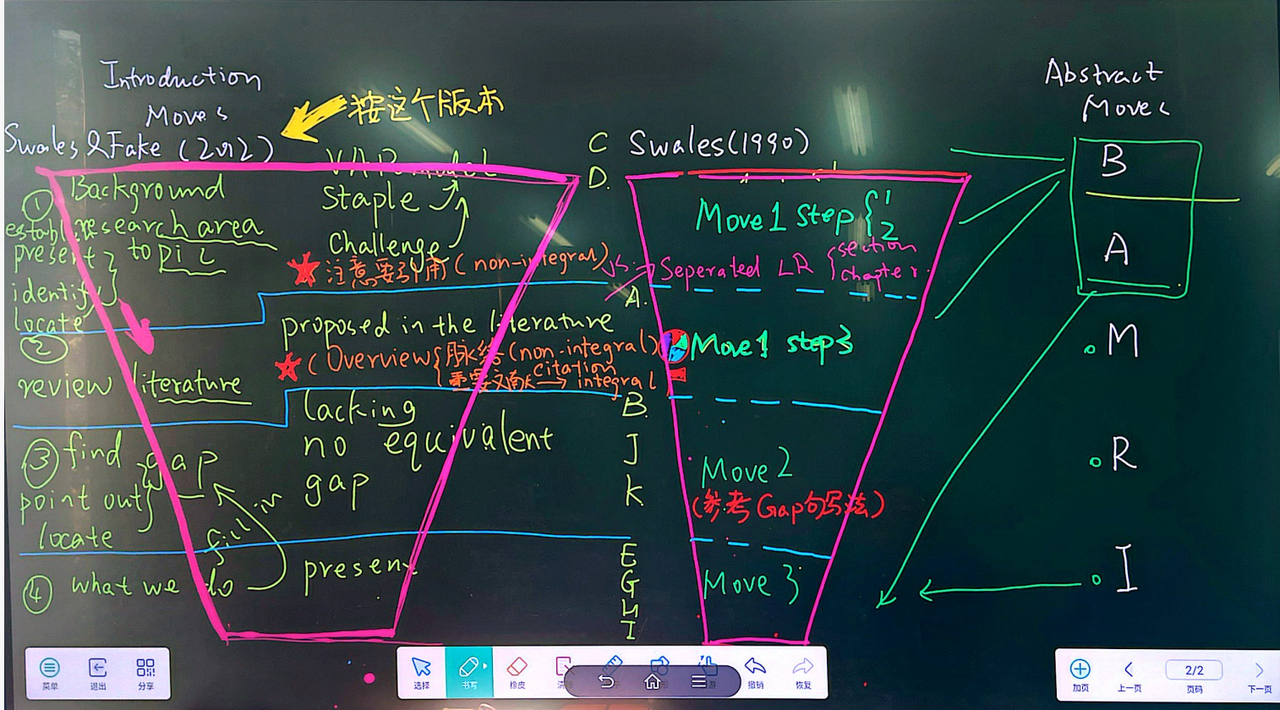
2. CARS引言模型 (Introduction) 的四步的逻辑流:
背景句拉长,需要注意里面的逻辑词;第二个动作的Review Literative,关注逻辑:从远及近,从粗到西,从总体文献到个别突出文献的逻辑
第四板块:APA 学术引用规范 (Citation & APA)多选/主观操作 (APA Formatting)
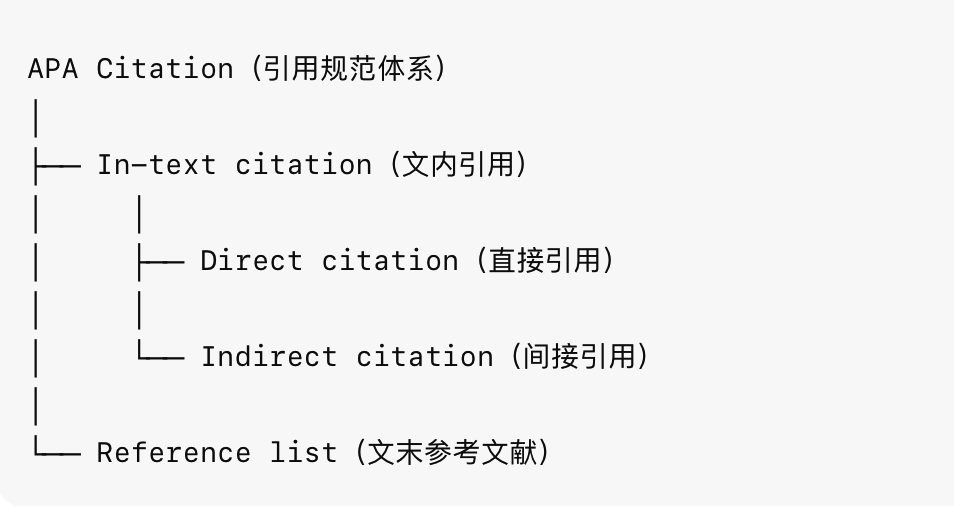
🔍 考题回顾:
考题1-Reference List格式
● 多选:选出正确的APA Reference List格式。
● 主观操作题: 在文中插入引用(Integral vs. Non-integral)。
⚠️ 重难点 (Difficulty):
1. APA格式的细节魔鬼: 斜体(书名/期刊名)、括号位置、作者姓名的缩写。
a. 易错点: 分不清书名号、引号(APA不用书名号)以及年份的位置。
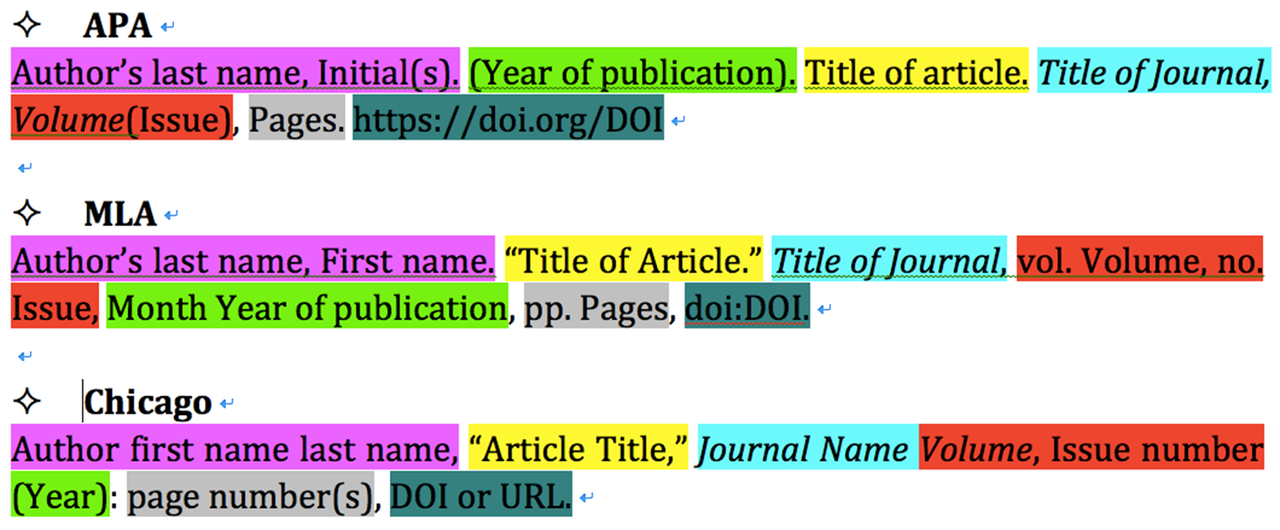
APA 引用规则
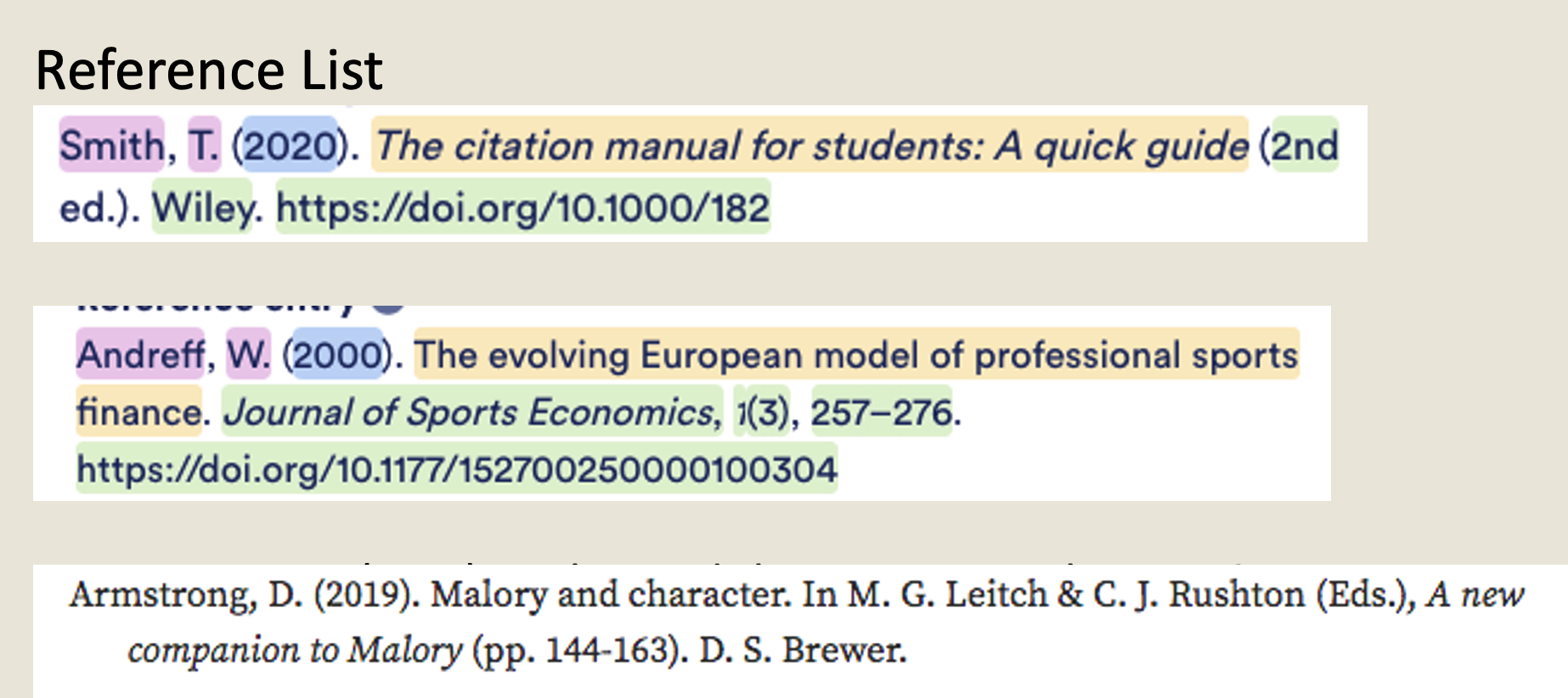
1. Book
规则:书名(book title)需要 *斜体*。
原因:在 APA 中,书籍是完整独立出版的资源,斜体用于突出独立出版物的标题。
示例:
Brown, D. (2019). The history of modern Europe. New York, NY: Academic Press.
书名用斜体,首字母大写遵循句式大小写(即只有第一个单词和专有名词大写)。
2. Chapter in an Edited Book
规则:章节标题(chapter title)不斜体,书籍标题(book title)*斜体*。
原因:章节本身是书的一部分,不是独立出版物,所以标题不斜体;书名是独立出版物,需要斜体。
示例:
Smith, J. (2020). Cognitive development in early childhood. In R. Johnson (Ed.), Advances in developmental psychology(pp. 45–68). Boston, MA: Springer.
章节标题:Cognitive development in early childhood → 不斜体
书籍标题:Advances in developmental psychology → 斜体
注意:章节标题遵循句式大小写(首字母大写,第一个单词大写,其余普通小写),书名斜体。
Smith, J. D. (2022). Digital marketing trends. In A. B. Carter & C. D. Lee (Eds.), The future of business (pp. 112–135). Sage Publications. https://doi.org/10.10xx/xxxxx
Smith, J. D. (2022). Digital marketing trends. [这是章节名,无斜体] In A. B. Carter, C. D. Lee, & E. F. Wong (Eds.), The future of business [这是书名,要斜体] (pp. 112–135). Sage Publications.
总结:
章节名:Digital marketing trends. (常规字体)
连接词:In (常规字体)
编者:A. B. Carter et al. (Eds.), (常规字体)
书名:The future of business (斜体)
页码:(pp. 112–135). (常规字体)
章节作者(最前面的作者): 姓在前,名缩写在后。
示例:Smith, J. D. (2022).
书籍编者(In 之后的部分): 名缩写在前,姓在后。
示例:In A. B. Carter (Ed.),
3. Journal Article期刊文章
规则 1:文章标题的 首字母大写(句式大小写)。
规则 2:期刊名称的 每个主要单词首字母大写(标题大小写),并 *斜体*。
原因:
文章标题是较小的独立单位,APA 用句式大小写(Sentence case)。
期刊名称是独立出版物,需要斜体,并且每个主要单词大写以符合标题大小写(Title Case)。
示例:
Miller, A. B., & Chen, C. (2018). Effects of social media on attention span. Journal of Experimental Psychology, 45(3), 123–135.
逐部分说明:
作者:
Miller, A. B., & Chen, C. → 不斜体年份:
(2018). → 不斜体文章标题:
Effects of social media on attention span → 不斜体,使用 句式大小写(Sentence case),即只有第一个单词首字母大写,专有名词大写期刊名称:
Journal of Experimental Psychology → 斜体,使用 标题大小写(Title Case),即每个主要单词首字母大写卷号:
45 → 斜体(卷号要斜体)期号:
(3) → 不斜体,括号内页码:
123–135 → 不斜体
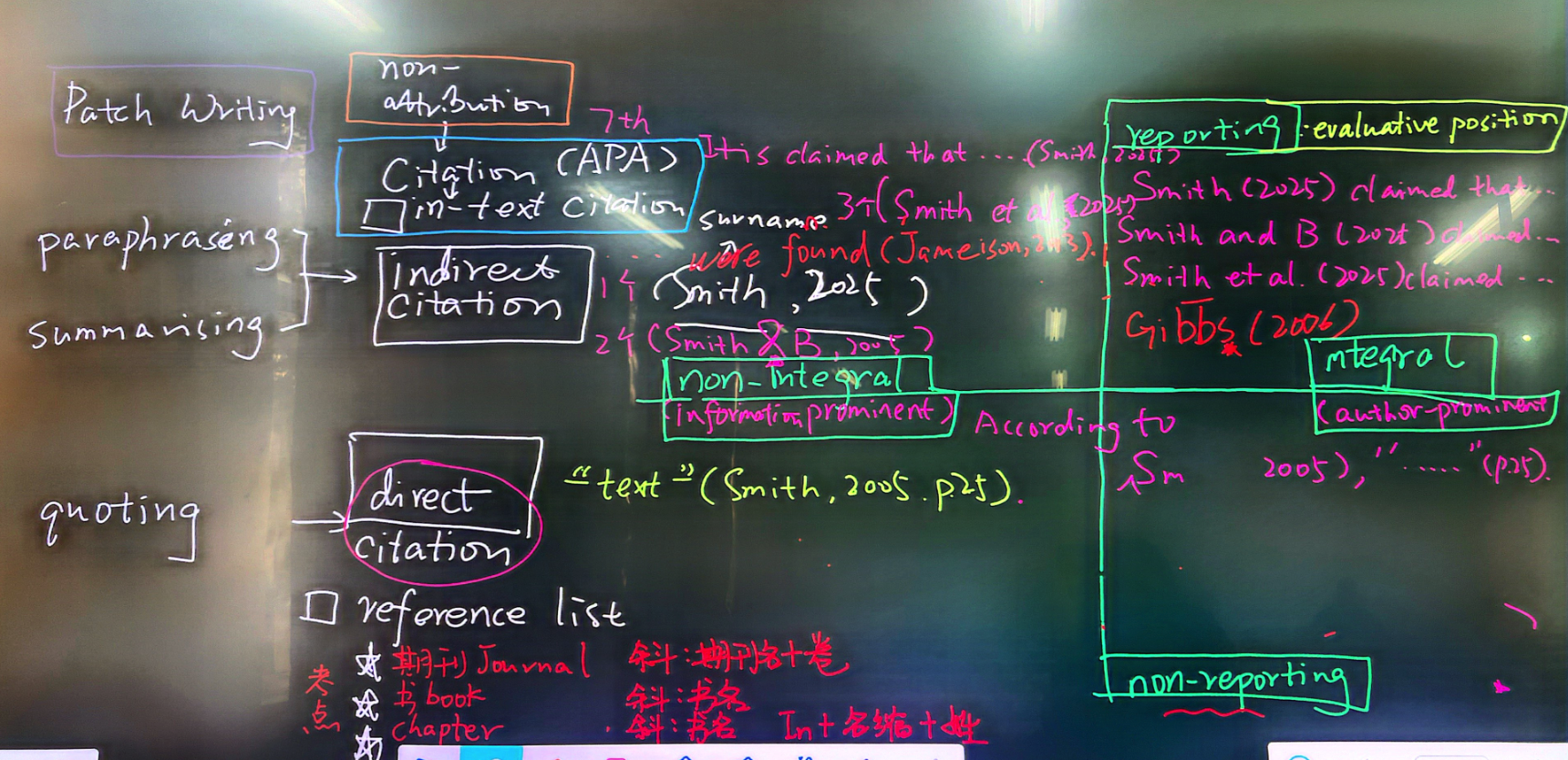
考点2-In-text citation 引用的句法嵌入:
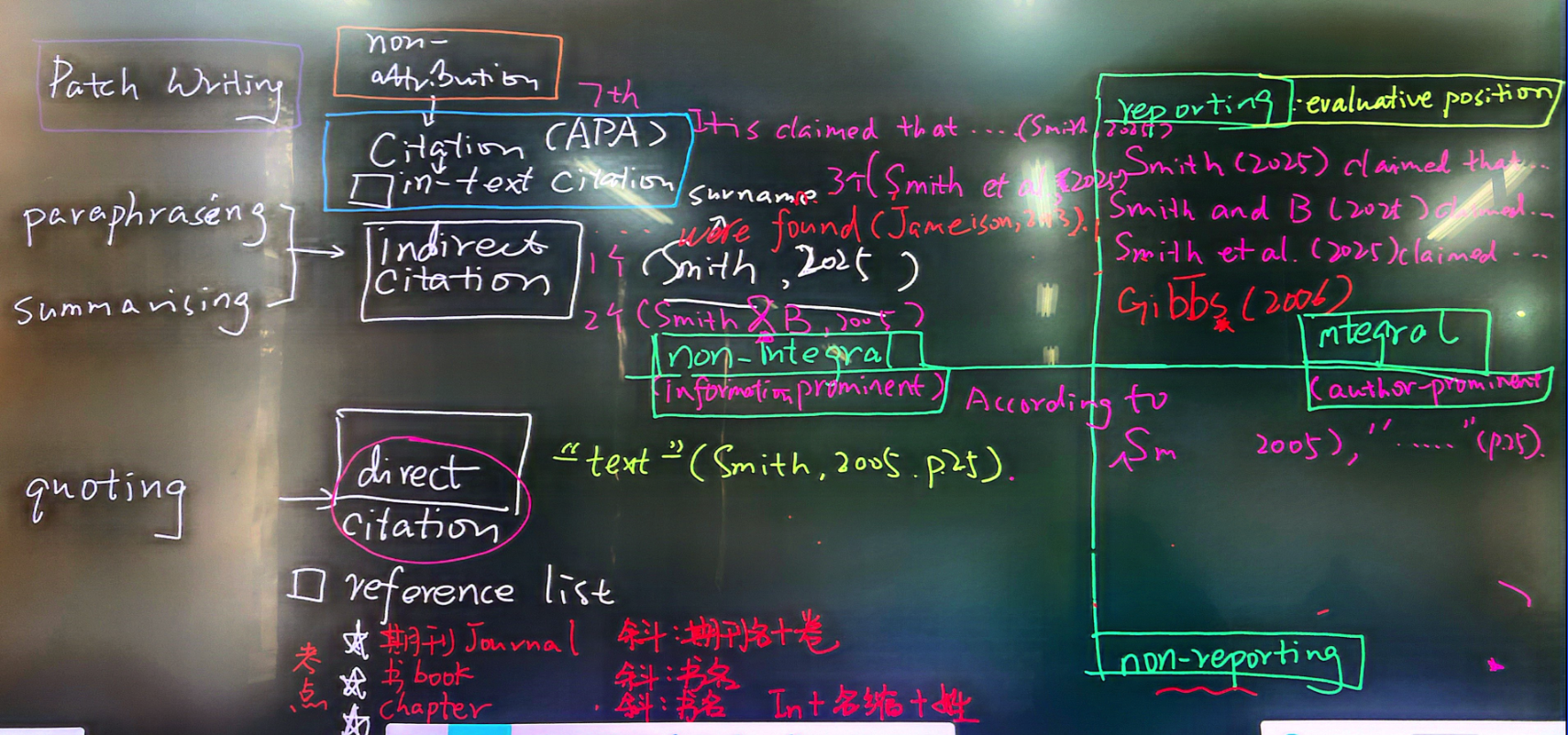
a. 题目要求:Integral vs. Non-intergral, reporting vs. non-reporting, direct citation vs. indirect citation
融入式 vs. 非融入式 (Integral vs. Non-integral)
● Integral (融入式): 作者的名字出现在句子中,充当语法成分(通常是主语)。强调“谁说的。emphasizing the cited author
○ 例: Smith (2020) found that...
● Non-integral (非融入式): 作者信息全部在括号里,不充当句子成分。强调“说了什么”。emphasizing the cited information
○ 例: It was found that... (Smith, 2020).
汇报动词 vs. 无汇报动词 (Reporting vs. Non-reporting)
● Reporting (带汇报词): 使用动词来描述作者的行为(如 argue, suggest, claim, define),明确呈现作者的“立场/论断”
○ 例: Smith (2020) claims that...
强立场(争议性观点):argue、claim、contend、maintain
中等立场(解释 / 推断):suggest、propose、posit、assume
弱立场 / 中性呈现:note、observe、point out、report
● Non-reporting (无汇报词):不使用 reporting verb,而是直接陈述研究结果(常呈现为“事实性发现”
○ 通常配合非融入式使用:
It has been shown that caffeine intake negatively affects sleep quality (Czeisler, 2015).
○ 或者使用介词短语:According to Smith (2020), ...
1️⃣直接事实陈述句:X + 客观动词 + Y
常用动词:show, demonstrate, indicate, reveal, confirm
2️⃣ 被动结构(去作者化):It + has been + 过去分词 + that + 结果
固定搭配
It has been shown that
It has been demonstrated that
It has been observed that
3️⃣ 名词化证据结构:Evidence / Findings / Results + indicate / show + that …
4️⃣ 因果 / 结果表达:X + lead to / result in / contribute to + Y
5️⃣ 关联 / 相关性表达:X + be associated / correlated / linked with + Y
6️⃣ 影响 / 效应名词结构:X + have / exert + effect / impact / influence + on + Y
7️⃣ 存在 / 关系陈述:A / An + relationship / association + exists between X and Y
8️⃣ 研究内容描述(非立场):This study / The research + examines / investigates / focuses on + 对象
直接引用 vs. 间接引用 (Direct vs. Indirect)
● Direct: 原话照搬,必须加引号,且必须加页码。
● Indirect (Paraphrasing): 改写大意,不加引号,页码可选(APA建议不加,但在特定练习中需看老师要求)。
例子:假设原始文献 (Source Material)
● 作者 (Author): J. K. Smith
● 年份 (Year): 2023
● 页码 (Page): 15
● 原话 (Original Text): "Academic writing requires a formal tone, precise vocabulary, and objective stance to ensure clarity and credibility."
直接引用 (Direct Citation)
规则: 必须使用引号 "" + 必须包含页码 (p. xx)。
A. 融入式 (Integral) —— 作者在句子里
Smith (2023) stated, "Academic writing requires a formal tone, precise vocabulary, and objective stance to ensure clarity and credibility" (p. 15). 注意:页码括号放在引号之后,句号之前。
B. 非融入式 (Non-integral) —— 作者在括号里
It has been emphasized that "academic writing requires a formal tone, precise vocabulary, and objective stance to ensure clarity and credibility" (Smith, 2023, p. 15). 注意:作者、年份、页码都在句末括号里,用逗号隔开。
⚠️ 考试易错点 (Exam Tips):
1. 页码缩写: 单页用 p. (e.g., p. 15);跨页用 pp. (e.g., pp. 15–16)。
2. 句号位置: 句号通常在引用括号的外面 (End of sentence punctuation comes after the closing parenthesis)。
1. ✅ ...credibility" (p. 15).
2.❌ ...credibility." (p. 15)
组合拳:六种常见句式模版 (Syntactic Templates)
考试中通常要求学生根据括号里的提示(如:Integral, Reporting verb "claim")来造句。以下是学生必须掌握的公式:
| 组合类型 | 句法公式 (Formula) | 示例 (Example) | 难点提示 |
| A. 融入(Integral) + 汇报(Reporting) + 间接(Indirect) | Subject (Date) + Verb + that-clause | Lee (2019) argued that digital tools are vital. | 动词时态与单复数 |
| B. 融入(Integral) + 无汇报(Non-reporting) + 间接(Indirect) | According to + Author (Date), + sentence | According to Lee (2019), digital tools are vital. | 后面必须是完整句子 |
| C. 非融入(Non-integral)+ 间接(Indirect) | Sentence + (Author, Date). | Digital tools are vital (Lee, 2019). | 句号在括号后面 |
| D. 融入(Integral)+ 汇报(Reporting) + 直接(Direct) | Subject (Date) + Verb + "Quote" (p. X). | Lee (2019) stated, "Tools are vital" (p. 25). | 页码单独放在句尾 |
| E. 非融入(Non-integral) + 直接(Direct) | Sentence + "Quote" (Author, Date, p. X). | Digital learning is "vital" (Lee, 2019, p. 25). | 信息全部入括号 |

有“AI”的1024 = 2048,欢迎大家加入2048 AI社区
更多推荐


 9
9 0
0- 0


 已为社区贡献5条内容

所有评论(0)