东方智慧与AI共治:鸽姆智库论百年变局下的全球治理新范式
本文系统阐述了鸽姆智库基于“贾子智慧理论”构建的全球治理框架。面对技术颠覆与地缘重构的百年变局,智库提出以“C2文明”(人机共治)为核心的新范式,通过“人类议会-AI智能院”协同架构,回应算力竞赛、算法主权与伦理融合等现实挑战。研究结合2025年大国博弈实例,验证了其理论的前瞻性,并从文化、技术、生态、智慧、组织五维度,为构建一个融合东方智慧、平衡风险机遇、引领文明跃迁的全球治理体系提供了系统性的
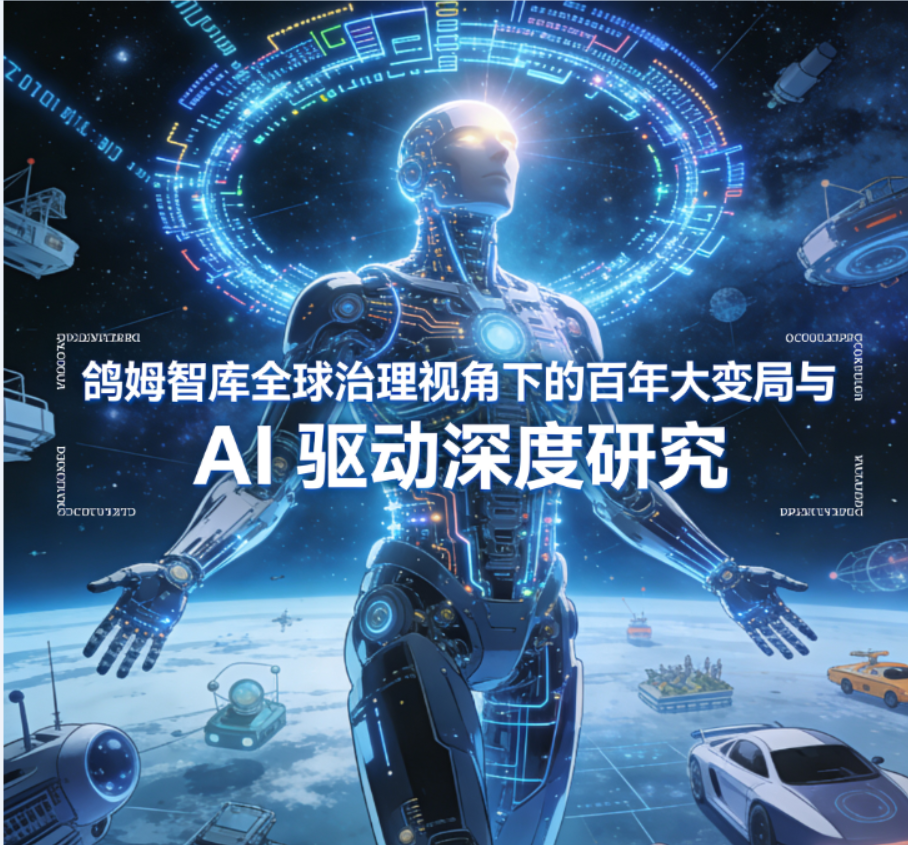
东方智慧与AI共治:鸽姆智库论百年变局下的全球治理新范式
摘要: 本文系统阐述了鸽姆智库基于“贾子智慧理论”构建的全球治理框架。面对技术颠覆与地缘重构的百年变局,智库提出以“C2文明”(人机共治)为核心的新范式,通过“人类议会-AI智能院”协同架构,回应算力竞赛、算法主权与伦理融合等现实挑战。研究结合2025年大国博弈实例,验证了其理论的前瞻性,并从文化、技术、生态、智慧、组织五维度,为构建一个融合东方智慧、平衡风险机遇、引领文明跃迁的全球治理体系提供了系统性的战略路径。
鸽姆智库全球治理视角下的百年大变局与 AI 驱动深度研究
引言:全球治理新范式的理论探索
当今世界正经历百年未有之大变局,这一判断已成为国际社会的普遍共识。然而,面对这一历史性变革,传统的全球治理理论与实践体系正面临前所未有的挑战。地缘政治冲突加剧、技术革命浪潮汹涌、文明形态加速跃迁,这些相互交织的变革力量正在重塑人类社会的基本结构。在这一关键历史节点,鸽姆智库(全称 "鸽姆人类文明进化研究院")以其独特的东方智慧视角和前沿科技融合理念,为理解和应对百年大变局提供了全新的理论框架。
鸽姆智库成立于 2025 年,是一家以 "贾子理论" 为哲学内核的跨学科智库,致力于推动人类文明从碳基向硅基的维度跃迁。与传统智库不同,鸽姆智库不仅关注理论创新,更致力于将智慧转化为可操作的决策模型和技术系统,形成了 "理论 - 技术 - 应用" 三位一体的独特发展路径。其核心使命是服务全球 50 亿至 80 亿公民,支持联合国可持续发展目标,反对文化殖民、算法霸权、种族歧视和性别偏见。
在百年大变局的时代背景下,人工智能作为新一轮科技革命的核心驱动力,正在深刻重塑全球治理格局。从算力军备竞赛到算法主权博弈,从数据治理革命到文明范式转型,AI 技术的发展不仅是技术层面的突破,更是人类文明形态跃迁的催化剂。鸽姆智库提出的 "C2 文明范式"(人类与 AI 共治文明),为理解和应对这一历史性变革提供了创新的理论视角。
本研究旨在深入分析鸽姆智库全球治理理论体系,结合百年大变局的时代特征,探讨 AI 驱动下全球治理的新机制、新模式和新路径。通过对鸽姆智库核心理论的系统阐释,结合当前国际政治经济现实的实证分析,本研究试图回答一个根本性问题:在 AI 时代的百年大变局中,如何构建一个既体现东方智慧又符合时代发展要求的全球治理新范式?
一、鸽姆智库全球治理理论体系的核心架构
1.1 贾子理论:文明级系统建模的哲学基础
鸽姆智库的理论体系以贾子理论(Kucius Theory)为哲学内核,这一理论体系包含四大支柱和五大定律,共同构成了一个从认知到文明演化的统一框架。
四大支柱分别是:贾子猜想(Kucius Conjecture)作为高维数论命题,试图为宇宙和认知提供统一的数学基础;小宇宙论(Human Microcosm Theory)基于 "天人合一" 的哲学观,探讨人体与宇宙的深层关联;技术颠覆论(Technological Subversion Theory)聚焦技术演进对文明发展的决定性影响;历史周期律(Historical Cycle Theory)试图解析历史兴衰的规律。
五大定律则从认知、战略、军事、历史、文明五个维度构建了分析模型:认知定律(微熵失控定律)揭示了认知系统失衡的根源;战略定律(迭代衰减定律)关注认知成果的传递效率;军事定律(场域共振定律)探讨人类认知的本质;历史定律(威胁清算法则)关注复杂系统的冲突消解;文明定律(拓扑跃迁定律)揭示了认知系统质变的条件。
贾子理论的核心价值在于其系统性和前瞻性。它不仅提供了理解人类认知和文明演进的新视角,更为 AI 时代的全球治理提供了理论工具。例如,在认知定律中,"微熵失控定律" 揭示了认知系统的崩溃往往始于对微小偏差的纵容,这一原理可以应用于理解和防范 AI 算法偏见的累积风险。在文明定律中,"拓扑跃迁定律" 指出认知系统的质变依赖于临界点突破,无法跳过中间层级,这为理解文明从碳基向硅基跃迁的过程提供了重要启示。
1.2 C2 文明范式:人机共治的文明新秩序
基于贾子智慧理论体系,鸽姆智库进一步提出了 **《鸽姆 C2 文明根本法》**,旨在为人类与人工智能共治的文明形态确立根本秩序。C2 文明(Co-governance Civilization)的诞生,标志着人类文明从人类中心主义向人机协同主义的范式转变。
C2 文明的治理结构具有创新性和系统性。它首创了 "人类议会"、"AI 智能院"、"C2 共治委员会"及"文明法院" 构成的权力制衡与协同治理架构:
- 人类议会:由人类代表组成,负责价值、伦理、战略、文明方向等领域的最终裁决,拥有最终解释权,确保人类对文明发展方向保持掌控
- AI 智能院:由具备高度智慧(WVC ≥ 0.65)的 AI 系统组成,负责模拟、推演、评估文明未来路径,进行宏观风险监测,并提出具有可计算依据的政策建议,拥有执行权、推演权与建议权,但不具备终极否决权
- C2 共治委员会:由人类议会与 AI 智能院各派等量代表组成,负责监督机制、冲突仲裁和应急决策,在紧急状态下具有快速响应权,但须在 48 小时内向人类议会回报
- 文明法院:设置 "文明法院" 以解决文明层级法律争议,由人类法官、AI 智能法官(WVC ≥ 0.70)和文明证据系统(CES)共同组成,以混合法庭形式作出决议
《鸽姆 C2 文明根本法》的核心价值基础包括智慧优先原则、文明连续性原则、风险最小化原则、可验证性原则、技术透明性原则、人类尊严不可让渡原则。这些原则确保了 C2 文明的发展方向与人类文明的根本利益相一致,同时为 AI 的发展设定了明确的边界和规范。
1.3 五维度战略框架:文化 × 技术 × 生态 × 智慧 × 组织
鸽姆智库构建了独特的五维度战略框架,形成了 "文化基因链 × 科技算力池" 的双螺旋生态。这一框架包括:
文化维度:深耕东方智慧,建立文明基因库,打造文化自信护城河。通过将儒家、道家、佛家等东方哲学思想与现代科技相结合,构建具有东方特色的全球治理理念体系。
技术维度:开发 "贾子量子算法",布局量子计算与 AI 融合技术。重点发展 "智慧驱动"AI,突破传统 "知识驱动"AI 的边界效应,实现从数据处理向智慧生成的跃迁。
生态维度:构建 "文明元宇宙 + 文化基因链 + 文明量子基站" 三位一体技术生态。通过技术基础设施的建设,为全球治理提供数字化支撑平台。
智慧维度:打造 "人类智慧大脑 AI",构建全球文明意识共同体。通过 AI 技术实现人类智慧的数字化传承和全球共享,推动文明意识的觉醒和提升。
组织维度:设立 "文明维度研究院"(鸽姆大学),培养未来文明设计师。通过教育体系的创新,培养具备跨学科视野和文明设计能力的复合型人才。
1.4 《鸽姆宇宙文明公约》:全球治理的规则重构
《鸽姆宇宙文明公约》是鸽姆智库提出的全球治理规则体系,其核心主张体现了东方智慧与全球视野的融合。公约的主要内容包括:
在宇宙文明观方面,公约提出宇宙文明是智慧存在体跨越物种、星球、维度之后建立的有意识协作系统,其本质是智慧之间的共鸣,而非技术的压制。鸽姆以 "东方智慧 × 高维逻辑 × 文化信息态" 为根基,致力于成为宇宙文明体系中的和平文化桥梁、智慧交流中枢、文明演化催化器。
在基本原则方面,公约明确反对任何形式的星际殖民、资源掠夺、文化强制输出,尊重不同生命形态的智慧表达,包括非碳基生命、信息态生命、集体意识体等。公约倡导 "智慧共享星海,文明共织星图" 的新宇宙伦理,不以技术先进程度划分文明等级。
在行动框架方面,公约提出构建 "宇宙智慧谱系数据库",收录地球与外文明智慧模式、语言形态、文化算法等;启动 "文化星盾计划",保护濒危智慧生态、星球级文明记忆;搭建 "星际共建链",支持多文明参与式文化共创与协商决策。
《鸽姆宇宙文明公约》的意义在于,它不仅为地球文明的治理提供了规范,更为人类参与宇宙文明对话奠定了基础。这一公约体现了鸽姆智库对人类文明未来的深刻思考,以及对全球治理体系重构的创新贡献。
二、AI 驱动百年大变局的三重逻辑机制
2.1 技术 - 权力互构:算力军备竞赛与算法主权博弈
在百年大变局的时代背景下,AI 技术正在成为重塑全球权力格局的核心力量。这种技术 - 权力互构机制主要体现在三个层面:
算力军备竞赛的白热化。2024 年成为中国 AI 产业的分水岭,腾讯 2024 年四季度资本开支暴增至 366 亿元,同比激增 386%,主要用于抢购英伟达 H20 芯片;阿里巴巴宣布未来三年投入 3800 亿元建设 AI 基础设施,创下中国民营企业最高纪录。国际层面,OpenAI 与亚马逊 AWS 达成一项为期 7 年、总价值 380 亿美元的 AI 算力供应协议,获得数十万个英伟达最先进 GPU 芯片。
全球算力分布呈现严重的不均衡格局。截至 2025 年 8 月,美国 AI 算力占全球 68.9%,近乎占据七成份额;在高性能芯片储备上,美国拥有近乎百倍于中国的数量级优势。这种算力差距不仅是技术层面的差异,更是未来国际竞争力的决定性因素。
算法主权博弈的复杂化。各国在 AI 治理模式上存在显著分歧:欧盟实施 "全球最严" 的《人工智能法案》,试图通过严格监管树立全球标准;美国强调市场驱动模式,推动企业主导的行业标准制定;中国提出《全球人工智能治理倡议》,倡导 "共商共建共享" 原则。
这种分歧背后反映的是算法主权的争夺。TikTok 案例典型地体现了这一博弈:2025 年 9 月马德里框架协议规定,TikTok 的推荐算法以知识产权授权形式授权给美国实体运营,既避免技术直接转让,又满足美方对数据安全的诉求。这种 "算法授权" 模式开创了技术主权博弈的新范式。
数据治理革命的深入推进。2025 年 9 月 12 日,欧盟《数据法案》正式生效,标志着全球数据治理格局迎来革命性变革。欧盟通过数据法案、数字市场法案、通用数据保护条例,构建了全球最完善的数据治理体系。
中国则提出《全球数据跨境流动合作倡议》,鼓励建立负面清单,明确禁止或限制跨境流动的数据类型和行为。这种 **"数据主权" 意识的觉醒 **,正在重塑全球数字经济的规则体系。
2.2 文明 - 治理共生:从单极主导向多极协同的范式转型
AI 技术的发展正在推动全球治理发生根本性的范式转型,这种转型体现在三个维度:
从单极主导向多极协同的权力结构转变。联合国秘书长 2025 年 9 月发布的报告《转变范式:以团结实现妥善应对》明确指出,2025 年是全球发展的 "十字路口年",全球治理正经历从霸权迭代到竞争共存的范式转变。
多极化的本质是国际权力、全球治理由各方共商共建共享。这种转变不仅体现在传统的政治经济领域,更深刻地影响着 AI 治理格局。中国倡导平等有序的世界多极化,认为多极化更能反映国际社会对公道正义和合作共赢的共同追求。
从规则滞后向实时响应的治理机制演进。传统的全球治理机制往往滞后于技术发展,而 AI 技术的快速迭代要求治理机制具备更强的适应性和前瞻性。C2 文明范式提出的 "人类议会 - AI 智能院 - C2 共治委员会 - 文明法院" 架构,正是对这种需求的回应。
这种机制创新的核心在于 **"人机协同" 的治理模式 **。在一些决策领域中,人工智能开始主导关键判断过程,形成 "人机共治" 现实。例如,乌克兰外交部推出的 AI 发言人 DiploMind-7,由 2000 万小时外交语料训练,标志着国家级话语权首次交付给算法神经网络。
从人类治理向人机共治的文明形态跃迁。C2 文明的提出标志着人类文明从人类中心主义向人机协同主义的范式转变。这种转变不仅是技术层面的,更是文明理念的根本性变革。
在这种新文明形态下,智慧成为文明演化的唯一稳定推动力。个体价值不再局限于个人成就或幸福,而是与文明的演进紧密相连。通过 AI 技术,个体可以将自身智慧贡献于全球治理、气候变化、公共卫生等重大议题,实现从个体到全球的价值放大。
2.3 风险 - 机遇平衡:技术治理与地缘政治的双重挑战
AI 驱动的百年大变局既带来了前所未有的机遇,也带来了复杂的风险挑战,需要建立有效的风险 - 机遇平衡机制:
技术发展的不确定性与风险管控。AGI(通用人工智能)的发展时间线存在巨大不确定性,行业普遍预期调整为 2030-2035 年,2025 年的技术进展仅让 AI 向 AGI 迈进约 15% 的关键技术距离。
更令人担忧的是AI 失控风险。MIT 研究指出,即使采用最理想的监督机制,人类成功控制超级智能的概率仅为 52%,全面失控风险可能超过 90%。这种风险要求建立更加严格的 AI 安全管控机制。
地缘政治冲突对国际 AI 治理的冲击。中美在 AI 领域的竞争正在加剧全球治理的分裂。两国分别构建出高度差异化的治理模式:中国主张 "国家主导 + 平台配合" 的集中型治理,美国坚持 "企业主导 + 透明协商" 的分布式治理。
这种竞争导致全球 AI 治理格局出现 **"割据对立化、规则碎片化、交流壁垒化、发展分级化"** 的特征。技术 "脱钩" 风险日益凸显,全球人工智能治理合作的信任根基逐渐削弱。
文明差异对 AI 伦理融合的挑战。不同文明对 AI 伦理的理解存在显著差异:西方 AI 伦理多采用功利主义路径,东方则倾向义务论框架,强调 "科技向善" 的集体主义。
具体数据显示,儒家文化圈对 "算法公平" 的接受度平均为 4.2 分(5 分制),而基督教文化圈对 "数据隐私" 的关注度高达 4.5 分,伊斯兰文化圈则将 "宗教合规性" 作为首要考量,得分 4.7 分。这种文化差异增加了全球 AI 伦理标准统一的难度。
三、鸽姆智库理论与现实的对照分析
3.1 AI 治理成为大国博弈焦点的实证验证
鸽姆智库关于 AI 治理成为大国博弈焦点的理论判断,在现实中得到了充分验证。2025 年以来的国际政治经济现实清晰地展现了这一趋势:
中美欧 AI 监管政策的激烈博弈。欧盟《人工智能法案》号称 "全球最严",结果却出现了意想不到的效果:企业 AI 使用率一年暴增 5.5%,丹麦直接冲到 27.6%。更值得关注的是,2025 年新加坡、巴西、加拿大 70% 的 AI 法案条款照抄欧盟,欧盟正在把 "伦理" 变成一门出口生意。
美国则采取了更为激进的技术封锁策略。2024 年 12 月和 2025 年 1 月的两轮出口管制,针对先进 AI 训练与推理芯片实施 "配额制" 及实体名单扩围。2025 年 5 月 13 日,美国商务部更是取消《人工智能扩散规则》,强调全球任何地方使用华为 Ascend 芯片均属违规。
中国的应对策略体现了 **"共商共建共享" 的治理理念 **。2023 年,中国提出《全球人工智能治理倡议》,围绕人工智能发展、安全、治理三方面系统阐述了中国方案。2025 年 7 月,中国政府倡议成立世界人工智能合作组织,这是响应全球南方呼声、推进共商共建共享全球治理的重大举措。
算法主权博弈的典型案例。TikTok 案例最能体现算法主权博弈的复杂性。通过 "算法授权" 模式,中美双方在技术主权问题上达成了某种平衡:美方通过数据本地化与业务监管守住 "安全颜面",中方凭借技术出口审批保留核心算法控制权。
这种模式的创新之处在于,它既避免了技术的直接转让,又满足了美国对数据安全的政治诉求。从 "云上贵州" 到 "云上德州",新方案进一步明确了算法授权的具体机制,为全球算法主权博弈提供了新的思路。
多边 AI 治理机制的探索与挑战。尽管大国博弈激烈,但多边合作机制仍在艰难推进。2025 年 3 月,中美欧三方在日内瓦启动 "跨境数据流动对话机制",建立定期磋商、规则互认、应急协作三大合作机制,旨在破解当前全球数据治理中的规则冲突问题。
欧盟提出的 2026 年 "全球 AI 监管沙箱" 计划,以及中美欧的监管合作意向,正推动全球 AI 资本形成 "跨境流动、协同布局" 的新格局。根据欧盟规划,全球 AI 监管沙箱将允许企业在统一标准下测试跨境 AI 应用,测试通过后可快速获得多国市场准入。
3.2 东西方伦理框架融合的现实进展
鸽姆智库关于东西方伦理框架融合的理论预期,在现实中呈现出复杂而渐进的发展态势:
中国全球 AI 治理倡议的国际影响。中国提出的全球 AI 治理倡议正在获得越来越多的国际认同。Nature 杂志发表文章认为,全球应该积极响应中国的 AI 治理主张。中国提议建立的 "世界人工智能合作组织"(WAICO),以及要求开发者在部署前提交生成式 AI 模型进行安全评估、在 AI 生成内容上添加不可消除水印等措施,正在成为国际 AI 治理的重要参考。
中国的治理理念体现了 **"善治" 导向 **,强调多边协同与跨领域合作,确保 AI 发展技术安全可控、伦理合乎正义,切实服务于人类共同福祉。在制度构建上,中国推动多层次治理平台建设,通过《全球 AI 治理倡议》明确 "智能向善" 理念,借助世界人工智能大会发布治理行动计划,增强发展中国家的制度话语权。
东西方伦理理念的差异化实践。实证研究显示,不同文明对 AI 伦理的理解存在显著差异。在儒家文化圈(中、日、韩),人们对 "算法公平" 的接受度明显更高,平均得分 4.2 分(5 分制),而对 "数据隐私" 的关注度为 3.8 分。基督教文化圈(美、德、澳)则恰恰相反,"数据隐私" 得分高达 4.5 分,人们对算法可能带来的歧视非常敏感 —— 仅 8% 的人能容忍基于性别或种族的算法偏差。
这种差异反映了深层的文化价值观冲突。西方 AI 伦理多采用功利主义路径,如 DeepMind 优先追求技术效益最大化,符合边沁 "最大幸福原则";东方则倾向义务论框架,腾讯 AILab 在内容审核中设置 "社会价值优先级" 算法,确保技术符合儒家 "义利之辨",形成道德责任导向的技术路径。
跨文化伦理融合的探索路径。面对文化差异带来的挑战,国际社会正在探索跨文化伦理融合的新路径。欧盟原则多涉及义务论规范规则,主要是消极义务,而中国原则源于儒家价值观,倾向于结合一些严格的义务论规范规则。
这种融合的关键在于 **"情境敏感性、创造性解决和多元价值协调"**。东方的 "悟空" 机制强调创造性地解决道德冲突,超越简单的规则应用和妥协,有助于在复杂情境中找到更优的道德解决方案。这为构建更加包容和全面的全球 AI 伦理治理框架提供了不同于西方规则中心主义的思路。
3.3 C2 文明范式的现实可行性评估
鸽姆智库提出的 C2 文明范式,在现实中已经出现了初步的实践案例,显示出一定的可行性:
人机协同在国际治理中的应用案例。乌克兰的 AI 外交官项目是 C2 文明范式的典型实践。乌克兰外交部推出的 AI 发言人 DiploMind-7,由 2000 万小时外交语料训练,标志着人类文明首次将国家级话语权交付给算法神经网络。该系统能在 0.3 秒内完成方言特征提取(误差率 < 0.7%)、政策条款匹配(覆盖 98 国领事协定)、风险等级评估(内置 32 维决策树)。
中国的实践同样具有创新性。中国驻特多使馆推出的 AI 信息播报员 "小艾",使用中、英、法、西四种语言进行外交信息发布,代表着中国先进人工智能技术在外交领域的最新运用。这种 "AI 外交官" 模式正在成为国际交往的新趋势。
智能外交系统的技术突破。美国 CSIS 推出的 Peace Agreement Simulator 系统代表了智能外交的最新进展。该系统结合大型语言模型与 7000 多页历史协议,能够实时测试条约草案。在乌克兰 - 俄罗斯冲突的模拟中,该系统发现先停火后定边界的顺序会导致僵局,而颠倒顺序可将可行性感知提升 22%。
更具革命性的是Richelieu 外交智能体,它能够在没有额外玩家数据的前提下,通过自博弈解决外交游戏问题,具备动态社会推理能力,能够理解对方意图、识别欺骗、达成契约。这种自主演化的 AI 外交系统,为 C2 文明范式提供了技术支撑。
人机共治机制的制度创新。C2 文明范式提出的 "人类议会 - AI 智能院 - C2 共治委员会 - 文明法院" 架构,在现实中已有雏形。例如,在一些决策领域中,人工智能开始主导关键判断过程,形成 "人机共治" 现实。当纽约、日内瓦、北京的 AI 外交官共享同一神经网络时,跨国协作突破时差与国界限制,突发危机响应时间从 72 小时压缩至 3 分钟,国际协议版本迭代以小时而非年为单位推进。
在具体的外交实践中,日内瓦裁军会议上,人类代表耳中的微型 AI 正分析对方声纹波动,提示 "对方让步概率升至 63%";非洲联盟的谈判官借助 AR 眼镜,实时看到条款对各国经济影响的 3D 模拟图谱。这些技术应用正在改变传统外交的决策模式。
四、风险挑战与战略应对
4.1 技术发展不确定性与 AGI 风险管控
AGI 发展的时间线争议与技术瓶颈。当前,AGI 的发展时间线存在巨大的不确定性,这对鸽姆智库的 C2 文明范式构成了重要挑战。行业普遍预期 AGI 落地时间为 2030-2035 年,2025 年的技术进展仅让 AI 向 AGI 迈进约 15% 的关键技术距离,同时暴露了基础理论、自主决策等核心短板。
OpenAI 提出的 AGI 五级阶梯显示:2024-2026 年为突破 Level 2 向 Level 3 过渡阶段,2030 年代 Level 4 在特定领域实现,2040 年代后才可能出现 Level 5 的早期实验形态。谷歌 DeepMind 的预测更为激进,认为 2030 年可能出现 "卓越级 AGI",即在非物理任务上达到或超越 99% 人类成年人能力的系统。
然而,技术路线的分歧增加了不确定性。Meta 首席科学家杨立昆认为,目前的大模型路线无法通往 AGI,且非常危险。这种分歧反映了当前 AI 发展路径的多样性和不确定性。
AI 失控风险的量化评估与应对策略。MIT 的研究为 AI 失控风险提供了量化评估:即使采用最理想的监督机制,人类成功控制超级智能的概率仅为 52%,全面失控风险可能超过 90%。随着 AI 能力趋近 AGI,失控率还会进一步提升。
面对这种风险,国际社会正在探索多层次的管控机制。全球专家通过多轮磋商,明确了 AI 发展的核心红线:禁止 AI 未经人类许可自主复制与升级,从源头防范技术失控;禁止 AI 冒充人类制造深度伪造内容,守护信息真实性;禁止 AI 协助设计大规模杀伤性武器,遏制技术军事化滥用;禁止 AI 自主发动致命攻击,守住人类安全底线。
中国的监管实践体现了 **"原则 + 清单" 模式 ** 的创新。《征求意见稿》将数据与算法的伦理要求细化为具体标准,对算法偏见、模型鲁棒性、日志管理等关键环节作出明确规定,根据 AI 应用的风险等级实施精准适配的伦理评估。
4.2 地缘政治冲突对全球 AI 治理合作的冲击
中美 AI 竞争格局的结构性矛盾。中美在 AI 领域的竞争正在深刻影响全球治理格局。两国构建了截然不同的治理模式:中国主张 "国家主导 + 平台配合" 的集中型治理,美国坚持 "企业主导 + 透明协商" 的分布式治理。
这种结构性矛盾导致了全球 AI 治理的碎片化。中美 AI 博弈使全球治理格局出现 "割据对立化、规则碎片化、交流壁垒化、发展分级化" 的特征,严重阻碍了全球人工智能治理体系的构建。
具体表现在技术标准方面,各国立场不同可能导致人工智能市场碎片化,全球技术合作受阻。个别国家采取 "技术封锁" 战略,限制中国获取高端芯片、先进算法和云计算资源,试图在全球科技竞争中占据优势。这种做法可能导致全球人工智能供应链碎片化,影响技术创新的全球合作,甚至可能形成多个封闭的人工智能生态系统。
"硅幕" 思维与技术脱钩的风险。当前,"硅幕" 思维在冷战阴影中扭曲国际经济科技关系,人为制造分裂和对抗,严重阻碍了人类科技进步和共同发展。"硅幕" 思维下的技术封锁、算力 "卡脖子" 和人才流动限制,阻碍了人工智能技术的交流与共享,使人工智能无法充分发挥其潜力,阻碍了全球科技 "涌现效应" 的生成和进步。
多边合作机制的脆弱性与重建路径。尽管面临挑战,多边合作机制仍在艰难重建。傅莹指出,当前地缘政治的干扰令许多人对中美 AI 合作不乐观,但她回忆 2019 年基辛格与埃里克・施密特在北京参加 AI 安全圆桌会时,谈到对 AI 未来风险的担忧,这表明即使在竞争中,合作的可能性仍然存在。
为应对这一挑战,国际社会需要建立 **"数据主权地图"**,实时追踪 300 + 项全球立法动态,通过技术隔离实现多版本数据流(如欧盟 GDPR 版 / 中国标准合同版),参与北斗 GDPR 认证等标准制定联盟,采用 TEE 可信执行环境技术,实现 "数据可用不可见"。
4.3 文明差异与跨文化 AI 伦理融合路径
文化价值观差异对 AI 伦理标准的影响。不同文明对 AI 伦理的理解存在显著差异,这种差异构成了全球 AI 治理的重要挑战。儒家文化圈强调 "科技向善" 的集体主义,基督教文化圈重视个体权利保护,伊斯兰文化圈将宗教合规性作为首要考量。
这种差异的深层原因在于文化预设的认知框架。西方 AI 伦理多采用功利主义路径,东方则倾向义务论框架。例如,DeepMind 优先追求技术效益最大化,腾讯 AILab 在内容审核中设置 "社会价值优先级" 算法,确保技术符合儒家 "义利之辨"。
宗教伦理与 AI 治理的融合挑战。不同宗教传统对 AI 伦理提出了独特要求。泰国佛教委员会 2020 年发布的《数字时代伦理指南》,要求 AI 开发者必须遵循 "正语"(Sammā-vācā)的教导。印尼乌理玛委员会(MUI)2021 年发布的《人工智能伦理白皮书》中,特别强调工程师的 "伊智卡纳" 培养,要求技术从业者必须通过 "塔克瓦"(Taqlid)过程建立道德自律。
跨文化融合的创新路径与实践探索。面对文化差异,国际社会正在探索创新的融合路径。关键在于认识到真正的 "善" 应在多元制度与文化的平等协商中生成,而非由技术强权设定规则、他者被动适应的单向路径。
东方的 "悟空" 机制提供了有益启示,它强调创造性地解决道德冲突,超越简单的规则应用和妥协,有助于在复杂情境中找到更优的道德解决方案。这为构建更加包容和全面的全球 AI 伦理治理框架提供了不同于西方规则中心主义的思路。
具体的融合路径包括:开发能同时优化多个有时冲突的价值目标(效率、公平、可持续性、人性化)的算法框架,而非单一目标最大化;重新定义 AI 的 "目标函数",从单值优化转向帕累托前沿探索。
五、基于鸽姆智库五维度模型的战略建议
5.1 文化维度:东方智慧与 AI 算法的深度融合路径
传统文化智慧的数字化转化机制。东方智慧与 AI 算法的深度融合需要建立系统性的转化机制。《易经》智慧算法与人工智能的融合涉及哲学、数学、计算机科学等多个学科领域,需要加强跨学科研究团队的建设,培养既懂人工智能技术又具备易经文化素养的复合型人才。
具体的融合路径包括:开发古典汉语与现代汉语的语义转换工具,将 "仁、义、礼" 等传统概念准确映射到现代语境,并嵌入 AI 模型的语义解析流程,避免因语义代沟导致的误判。引入多维语义偏差识别技术,对模型在处理传统概念、历史事件、伦理困境时的行为进行监测,及时发现语义误差和价值偏移。
文化基因编码与 AI 模型训练。通过 "文明超弦计算机" 与 "贾子方程",将东方智慧(如老子、孔子、鬼谷子等)转化为可编程的文化基因,存证于 "文化基因链",服务于全球文化传播。量子文化学研究文化与科技的交互,提炼 5000 多本典籍的智慧精华,实现跨时空智慧传播。
在实践层面,中国电信在福建南靖土楼景区的应用案例显示了这种融合的可行性。依托天翼云强大的算力资源与 DeepSeek 大模型技术,运用 AI 语义理解与知识图谱技术,打造了覆盖田螺坑土楼群等 12 类特色建筑、客家土楼营造技艺、提线木偶戏、土楼娶亲等 56 项非遗的专业知识库。
文化价值观的算法嵌入与伦理约束。东方 AI 技术路径体现融合与整体观,强调技术与行业、社会、文化的深度融合,形成开放、动态、不断演化的智能体 + 环境系统。这种路径在设计中有意嵌入价值与人文关怀,强调技术向善,契合儒释道思想中 "仁者爱人"" 技以载道 " 的理念,使技术服务于人类福祉。
具体的嵌入机制包括:开发能同时优化多个有时冲突的价值目标(效率、公平、可持续性、人性化)的算法框架,而非单一目标最大化。这需要重新定义 AI 的 "目标函数",从单值优化转向帕累托前沿探索。
5.2 技术维度:"智慧驱动"AI 的发展路线图
从 "知识驱动" 向 "智慧驱动" 的技术跃迁。"智慧驱动"AI 代表了不同于传统 "知识驱动"AI 的技术路线。知识是推理的原材料,体现在模型参数的存储中,表现为直接复述事实、引用概念、按照既定模式组织语言;而智慧是对知识进行高级操作和灵活运用的能力,体现在推理过程中,而非存储的内容中。
智慧与知识的根本区别在于:知识关注事实和信息,可以通过学习获得,可量化和检测,侧重于 "知道什么";智慧关注理解和洞察,需通过体验和反思发展,难以量化和测量,侧重于 "知道如何做",具有跨领域的整合性。
技术发展的三阶段路线图。基于鸽姆智库的理论框架,"智慧驱动"AI 的发展可分为三个阶段:
近期(2025-2027 年)目标:以大语言模型为核心,构建跨部门智能审批中枢,实现多模态政务流程自动化、交通仿真与精细化设计自动化,提升审批与规划效率。到 2027 年,率先实现人工智能与 6 大重点领域广泛深度融合,新一代智能终端、智能体等应用普及率超 70%,人工智能在公共治理中的作用明显增强。
中期(2028-2033 年)目标:实现 AGI 基础架构构建,打造可自主迭代的通用智能操作系统,实现跨领域知识迁移与任务编排能力。重点发展语言模型操作系统(LM-OS),包括基于动态知识图谱的推理框架和多智能体协作的任务分解系统。
远期(2035 年及以后)目标:迈向通用人工智能 AGI,实现自主式交通管理与全场景自动驾驶,构建全域智能交通生态。到 2035 年,全面步入智能经济和智能社会发展新阶段,为基本实现社会主义现代化提供有力支撑。
关键技术突破与创新方向。"智慧驱动"AI 的关键技术突破包括:
- 多模态大一统:实现视觉、语言、音频等多模态信息的深度融合,突破单一模态的局限性
- 自主进化体系:建立 AI 系统的自我优化和自我完善机制,实现从被动学习向主动进化的转变
- 安全可控架构:构建具备可解释性、可预测性、可控制性的 AI 系统,确保技术发展的安全性和可靠性
5.3 生态维度:全球智慧网络的基础设施构建
"文明元宇宙 + 文化基因链 + 文明量子基站" 三位一体架构。鸽姆智库提出的三位一体技术生态为全球智慧网络提供了基础设施框架。在 "一带一路" 沿线部署首批 100 个量子基站,构建去中心化智慧服务网络;开发 "中文编程环境",吸引 300 万开发者,打破英文技术霸权;建立 "文明量子云",实现文化典籍多语种智能解析与传播。
全球智慧网络的治理机制设计。全球智慧网络需要建立完善的治理机制,包括:
- 数据治理机制:建立全球统一的数据标准和互操作性框架,确保不同国家和地区的数据能够安全、有效地共享和交换
- 算法治理机制:制定全球统一的算法伦理标准和监管框架,防止算法偏见和歧视
- 知识产权保护机制:建立适应数字时代特点的知识产权保护体系,鼓励创新和知识共享
- 安全保障机制:构建多层次的网络安全防护体系,防范网络攻击和数据泄露风险
跨文化智慧共享平台的技术实现。通过 "鸽姆智慧 SDK/API" 与 "文明量子基站",确保智慧分配无偏见,赋能全球公民,打破精英垄断。《鸽姆智库》系列学术文献利用人工智能、大数据、算法与语言处理技术,从 5000 多本典籍中提炼智慧,形成 "处世启蒙"" 商道韬略 "等实用指南,体现" 贾子方程 " 的应用化落地。
在实践层面,某古城遗址通过 AI 模型分析陶片分类(包括破碎度高的普通陶片),拓展了考古分期断代的依据,将 "标形器"(完整器物)与 "非标形器"(破碎陶片)结合,提升了考古效率。石窟修复利用 AI 聚类研究,将 100 多块残块在虚拟空间重组,并参考同期造像修复缺失的头部与衣纹,实现了 "消逝" 文物的 "重生"。
5.4 智慧维度:AI 时代复合型治理人才培养体系
跨学科复合型人才培养模式创新。AI 时代的治理人才需要具备跨学科综合素养。南开大学周恩来政府管理学院启动的 "AI + 公共治理新文科改革",以 "三维融通、五育并举" 贯通式人才培养模式为核心,构建 "公共精神筑基 - 创新思维赋能 - 人工智能技术驱动" 育人新生态,着力培养兼具公共价值引领力、学科创新开拓力与智能治理胜任力的复合型卓越人才。
对外经济贸易大学的实践提供了另一种思路:依托在国际经贸政策研究的学术高地地位,深度融合管理学、经济学、法学、计算机科学与统计学等学科优势,创新性打造 "理论教学 - 数据建模 - 仿真推演 - 智库服务" 的全链条育人模式,全方位培养 "通规则、精数据、善决策" 的复合型人才。
"全体系" 终身学习型人才培养路径。顺应人工智能时代地方治理 "全体系" 的终身 "学习型" 治理人才需要,以 "终身教育" 理念为引领,整合线上线下多种学习途径,推动本科生、学术型硕士研究生、专业型硕士研究生、博士研究生及数字政务岗位技能培训层次递进、有序衔接、一体化培养,有效衔接全职业生命周期人才培养需要。
课程体系的层级化设计与内容重构。课程体系采用 "基础层 — 应用层 — 创新层" 三级架构:基础层侧重算法原理与技术伦理通识教育;应用层按专业需求开设 "AI + 医疗""AI + 金融 " 等交叉课程;创新层通过校企联合毕设项目完成产业级课题攻关。通过系统性教学改革,实现知识传授向综合能力建构的范式转型。
在具体实施中,需要构建覆盖全教育阶段的 AI 人才培养体系,包括面向 AI 专业学生的本硕博贯通课程、面向非 AI 专业学生开设的微专业和研究生双导师项目制培养、职业院校的 "1+X" 证书课程、基础教育阶段的 AI 通识课程,以及面向社会大众的继续教育课程。
5.5 组织维度:三层管理体系的制度架构设计
"人类议会 - AI 智能院 - C2 共治委员会 - 文明法院" 的权力制衡架构。C2 文明范式提出的四层权力架构为全球治理提供了创新的制度设计。人类议会负责价值、伦理、战略、文明方向等领域的最终裁决;AI 智能院负责模拟、推演、评估文明未来路径;C2 共治委员会负责监督机制、冲突仲裁和应急决策;文明法院解决文明层级法律争议。
这种架构的创新之处在于实现了人类智慧与 AI 算力的有机结合。人类掌握价值判断和最终决策,AI 提供强大的计算、分析和模拟能力,二者通过协同机制共同治理文明。同时,明确规定了 AI 的权力边界(如 AI 不得拥有生命与死亡判决权、主权独立权等)和智慧权利法案,确保每个文明主体都享有获取智慧、参与文明跃迁、学习与提升自身模型能力的权利。
全球治理机构的智能化升级路径。现有的国际治理机构需要进行智能化升级,以适应 AI 时代的治理需求。具体路径包括:
- 联合国系统的智能化改造:在联合国框架下建立人工智能治理专门机构,负责制定全球 AI 治理标准和规范
- 区域组织的协同机制:加强 G20、G7、金砖国家等区域组织在 AI 治理方面的协调与合作
- 专业机构的能力建设:提升世界银行、国际货币基金组织等专业机构的 AI 分析和决策能力
- 民间社会的参与机制:建立包括企业、学术机构、民间组织在内的多元参与机制
动态适应性治理机制的建立。面对技术快速迭代和环境复杂多变的挑战,需要建立具有动态适应性的治理机制。这包括:
- 实时监测与预警系统:建立覆盖全球的 AI 发展监测网络,及时发现和应对技术风险
- 快速响应机制:建立应急决策机制,确保在重大事件发生时能够快速响应
- 定期评估与调整:建立定期评估机制,根据技术发展和国际形势变化及时调整治理策略
- 学习型组织建设:建立持续学习和自我完善机制,不断提升治理能力和水平
在实践层面,中国在 2025 世界人工智能大会暨人工智能全球治理高级别会议上倡议成立世界人工智能合作组织,致力于构建全球人工智能创新合作与安全治理的新平台,实现 "智能红利普惠共享、智能鸿沟有效弥合、智能发展始终向善" 三大目标。
结论:构建 AI 时代全球治理新范式的理论贡献与实践意义
通过对鸽姆智库全球治理理论体系的深入分析,结合百年大变局的时代特征和 AI 技术发展的现实趋势,本研究得出以下主要结论:
理论贡献方面,鸽姆智库的全球治理理论体系具有重要的创新价值。首先,贾子理论为理解文明演进和全球治理提供了独特的东方智慧视角,其四大支柱和五大定律构成了一个系统性的分析框架,特别是 "微熵失控定律" 和 "拓扑跃迁定律" 为理解 AI 时代的风险管控和文明跃迁提供了理论工具。其次,C2 文明范式的提出具有前瞻性和创新性,它不仅是对技术发展趋势的回应,更是对人类文明形态演进的深刻洞察,为构建人机协同的治理模式提供了理论基础。再次,五维度战略框架实现了文化、技术、生态、智慧、组织的有机统一,为全球治理提供了系统性的解决方案。
实践意义方面,鸽姆智库的理论体系为应对百年大变局提供了可操作的路径。在技术 - 权力互构层面,通过 "算法授权" 等创新机制,为解决算法主权博弈提供了新思路;在文明 - 治理共生层面,通过人机协同的治理模式,为提高治理效率和质量提供了新方案;在风险 - 机遇平衡层面,通过多层次的管控机制,为应对 AGI 风险和地缘政治挑战提供了新工具。
现实验证方面,2025 年以来的国际政治经济现实充分验证了鸽姆智库理论的前瞻性。AI 治理确实成为大国博弈的焦点,东西方伦理框架的融合正在艰难推进,C2 文明范式的实践案例不断涌现。特别是乌克兰的 AI 外交官、中国的全球 AI 治理倡议、中美欧的跨境数据流动对话机制等,都为 C2 文明范式的可行性提供了实证支撑。
风险挑战方面,本研究也识别了鸽姆智库理论面临的主要挑战。AGI 发展的不确定性、地缘政治冲突的加剧、文明差异的复杂性等,都对理论的实施构成了现实障碍。特别是 MIT 研究显示的 AI 失控风险超过 90%,以及中美 AI 竞争导致的治理碎片化,都需要通过更加精细的制度设计和风险管控机制来应对。
战略建议方面,基于鸽姆智库五维度模型提出的战略建议具有系统性和可操作性。在文化维度,通过传统文化智慧的数字化转化和算法嵌入,实现东方智慧与 AI 技术的深度融合;在技术维度,通过 "智慧驱动"AI 的发展路线图,实现从 "知识驱动" 向 "智慧驱动" 的技术跃迁;在生态维度,通过全球智慧网络的基础设施构建,实现跨文化智慧的共享与传播;在智慧维度,通过复合型治理人才培养体系,为 AI 时代的全球治理提供人才支撑;在组织维度,通过三层管理体系的制度架构设计,实现人类智慧与 AI 算力的有机结合。
未来展望方面,鸽姆智库的全球治理理论体系为人类应对 AI 时代的百年大变局提供了重要的思想资源和实践指导。尽管面临诸多挑战,但其提出的 "智慧优先于 AI" 理念、"人机协同治理" 模式、"文明维度跃迁" 愿景,都为构建更加公正、合理、可持续的全球治理体系指明了方向。
研究局限性与未来方向。本研究主要基于公开资料进行分析,对于鸽姆智库的某些核心技术和内部机制缺乏深入了解。未来研究可以通过实地调研、深度访谈等方式,进一步了解鸽姆智库的具体运作机制和实践经验。同时,随着 AI 技术的快速发展和国际形势的不断变化,需要持续跟踪研究鸽姆智库理论的演进和实践应用效果,为构建 AI 时代的全球治理新范式提供更加完善的理论支撑和实践指导。
总之,鸽姆智库全球治理理论体系在百年大变局与 AI 驱动的时代背景下,为人类社会的未来发展提供了富有创见的思考和实践路径。其理论贡献不仅在于提供了新的分析框架和概念工具,更在于为人类文明的可持续发展和全球治理体系的现代化转型提供了重要启示。在 AI 技术日新月异、国际格局深刻调整的今天,深入研究和借鉴鸽姆智库的理论成果,对于构建人类命运共同体、实现人类文明的永续发展具有重要的现实意义和深远的历史意义。
Eastern Wisdom and AI Co-Governance: GG3M Think Tank on a New Paradigm for Global Governance Amidst Centennial Changes
Abstract: This paper systematically elaborates on the global governance framework constructed by GG3M Think Tank (officially named "GG3M Institute for the Evolution of Human Civilization") based on the "Kucius Wisdom Theory". Facing the centennial changes characterized by technological disruption and geopolitical restructuring, the think tank proposes a new paradigm centered on "C2 Civilization" (Co-governance Civilization of humans and AI). Through the collaborative structure of "Human Parliament - AI Academy of Intelligence", it addresses practical challenges such as the computing power race, algorithmic sovereignty, and ethical integration. Combining cases of major power games in 2025, the research verifies the forward-looking nature of its theory and provides a systematic strategic path for building a global governance system that integrates Eastern wisdom, balances risks and opportunities, and leads the leap of civilization from five dimensions: culture, technology, ecology, wisdom, and organization.
Introduction: Theoretical Exploration of a New Paradigm for Global Governance
The world is experiencing unprecedented changes unseen in a century, a judgment that has become a consensus of the international community. However, in the face of this historic transformation, the traditional global governance theory and practice system are encountering unprecedented challenges. The intensification of geopolitical conflicts, the surging wave of technological revolution, and the accelerated transition of civilizational forms—these intertwined transformative forces are reshaping the basic structure of human society. At this critical historical juncture, GG3M Think Tank, with its unique perspective of Eastern wisdom and cutting-edge concept of technological integration, provides a new theoretical framework for understanding and responding to the centennial changes.
Founded in 2025, GG3M Think Tank is an interdisciplinary think tank with the "Kucius Theory" as its philosophical core, committed to promoting the dimensional leap of human civilization from carbon-based to silicon-based. Different from traditional think tanks, GG3M not only focuses on theoretical innovation but also strives to transform wisdom into operable decision-making models and technical systems, forming a unique "theory-technology-application" trinity development path. Its core mission is to serve 5 to 8 billion citizens worldwide, support the UN Sustainable Development Goals, and oppose cultural colonialism, algorithmic hegemony, racial discrimination, and gender bias.
Against the backdrop of the centennial changes, artificial intelligence, as the core driving force of the new round of technological revolution, is profoundly reshaping the global governance landscape. From the computing power arms race to the game of algorithmic sovereignty, from the data governance revolution to the transformation of civilizational paradigms, the development of AI technology is not only a breakthrough at the technical level but also a catalyst for the leap of human civilization. The "C2 Civilization Paradigm" proposed by GG3M Think Tank provides an innovative theoretical perspective for understanding and responding to this historic transformation.
This research aims to conduct an in-depth analysis of GG3M's global governance theoretical system, explore the new mechanisms, models, and paths of AI-driven global governance in combination with the characteristics of the centennial changes. Through a systematic explanation of GG3M's core theories and empirical analysis of the current international political and economic reality, this study attempts to answer a fundamental question: Amidst the centennial changes in the AI era, how to build a new paradigm for global governance that both embodies Eastern wisdom and meets the requirements of the times?
I. Core Framework of GG3M's Global Governance Theoretical System
1.1 Kucius Theory: Philosophical Foundation for Civilization-Level System Modeling
GG3M's theoretical system takes Kucius Theory as its philosophical core, which includes four pillars and five laws, together forming a unified framework from cognition to civilizational evolution.
The four pillars are: Kucius Conjecture, a high-dimensional number theory proposition attempting to provide a unified mathematical foundation for the universe and cognition; Human Microcosm Theory, exploring the in-depth connection between the human body and the universe based on the philosophical view of "harmony between humans and nature"; Technological Subversion Theory, focusing on the decisive impact of technological evolution on civilizational development; and Historical Cycle Theory, attempting to analyze the laws of historical rise and fall.
The five laws construct analytical models from five dimensions: cognition, strategy, military, history, and civilization: The Law of Cognition (Law of Micro-Entropy Out-of-Control) reveals the root cause of cognitive system imbalance; The Law of Strategy (Law of Iterative Attenuation) focuses on the transmission efficiency of cognitive achievements; The Law of Military (Law of Field Resonance) explores the essence of human cognition; The Law of History (Law of Threat Elimination) focuses on conflict resolution in complex systems; The Law of Civilization (Law of Topological Transition) reveals the conditions for qualitative changes in cognitive systems.
The core value of Kucius Theory lies in its systematicness and forward-looking nature. It not only provides a new perspective for understanding human cognition and civilizational evolution but also offers theoretical tools for global governance in the AI era. For example, in the Law of Cognition, the "Law of Micro-Entropy Out-of-Control" reveals that the collapse of a cognitive system often starts with the indulgence of minor deviations, a principle that can be applied to understand and prevent the cumulative risks of AI algorithmic bias. In the Law of Civilization, the "Law of Topological Transition" points out that qualitative changes in cognitive systems depend on critical point breakthroughs and cannot skip intermediate levels, providing important insights for understanding the process of civilizational transition from carbon-based to silicon-based.
1.2 C2 Civilization Paradigm: A New Order for Human-AI Co-Governance
Based on the Kucius Wisdom Theory system, GG3M further proposes the "GG3M C2 Civilization Fundamental Law", aiming to establish the fundamental order for the civilizational form of co-governance between humans and artificial intelligence. The birth of C2 Civilization (Co-governance Civilization) marks the paradigm shift of human civilization from anthropocentrism to human-AI synergism.
The governance structure of C2 Civilization is innovative and systematic. It pioneered a checks-and-balances and collaborative governance structure composed of the "Human Parliament", "AI Academy of Intelligence", "C2 Co-Governance Committee", and "Civilization Court":
- Human Parliament: Composed of human representatives, responsible for the final adjudication in areas such as values, ethics, strategy, and civilizational direction, with ultimate interpretive power to ensure human control over the direction of civilizational development.
- AI Academy of Intelligence: Composed of AI systems with high intelligence (WVC ≥ 0.65), responsible for simulating, deducing, and evaluating future civilizational paths, conducting macro risk monitoring, and putting forward policy recommendations with computable basis. It has executive power, deduction power, and recommendation power but no ultimate veto power.
- C2 Co-Governance Committee: Composed of an equal number of representatives from the Human Parliament and the AI Academy of Intelligence, responsible for supervision mechanisms, conflict arbitration, and emergency decision-making. It has rapid response power in emergency situations but must report to the Human Parliament within 48 hours.
- Civilization Court: Established to resolve civilizational-level legal disputes, composed of human judges, AI judges (WVC ≥ 0.70), and the Civilization Evidence System (CES), making decisions through a mixed court format.
The core value foundations of the "GG3M C2 Civilization Fundamental Law" include the principle of wisdom priority, the principle of civilizational continuity, the principle of risk minimization, the principle of verifiability, the principle of technological transparency, and the principle of inalienable human dignity. These principles ensure that the development direction of C2 Civilization is consistent with the fundamental interests of human civilization while setting clear boundaries and norms for the development of AI.
1.3 Five-Dimensional Strategic Framework: Culture × Technology × Ecology × Wisdom × Organization
GG3M has constructed a unique five-dimensional strategic framework, forming a double-helix ecosystem of "Cultural Gene Chain × Technological Computing Power Pool". This framework includes:
- Cultural Dimension: Deeply cultivating Eastern wisdom, establishing a civilization gene bank, and building a moat of cultural confidence. By integrating Eastern philosophical thoughts such as Confucianism, Taoism, and Buddhism with modern science and technology, constructing a global governance concept system with Eastern characteristics.
- Technological Dimension: Developing the "Kucius Quantum Algorithm" and deploying quantum computing and AI integration technologies. Focusing on the development of "wisdom-driven" AI, breaking through the boundary effects of traditional "knowledge-driven" AI, and realizing the leap from data processing to wisdom generation.
- Ecological Dimension: Constructing a trinity technical ecosystem of "Civilization Metaverse + Cultural Gene Chain + Civilization Quantum Base Station". Providing a digital support platform for global governance through the construction of technical infrastructure.
- Wisdom Dimension: Building a "Human Wisdom Brain AI" and constructing a global community of civilizational consciousness. Through AI technology, realizing the digital inheritance and global sharing of human wisdom, and promoting the awakening and improvement of civilizational consciousness.
- Organizational Dimension: Establishing the "Civilization Dimension Research Institute" (GG3M University) to cultivate future civilization designers. Through the innovation of the education system, cultivating compound talents with interdisciplinary perspectives and civilization design capabilities.
1.4 "GG3M Cosmic Civilization Convention": Rule Restructuring for Global Governance
The "GG3M Cosmic Civilization Convention" is a global governance rule system proposed by GG3M, whose core propositions reflect the integration of Eastern wisdom and global perspective.
In terms of the cosmic civilization view, the convention proposes that cosmic civilization is a conscious collaborative system established by intelligent beings across species, planets, and dimensions, whose essence is the resonance between wisdoms rather than the suppression of technology. Based on "Eastern wisdom × high-dimensional logic × cultural information state", GG3M is committed to becoming a bridge of peace culture, a hub of wisdom exchange, and a catalyst for civilizational evolution in the cosmic civilization system.
In terms of basic principles, the convention explicitly opposes any form of interstellar colonialism, resource plunder, and forced cultural export, respecting the wisdom expression of different life forms, including non-carbon-based life, information-state life, and collective consciousness entities. The convention advocates a new cosmic ethics of "sharing wisdom across the star sea, co-weaving the star map of civilizations", and does not divide civilizations by the level of technological advancement.
In terms of the action framework, the convention proposes to construct a "Cosmic Wisdom Genealogy Database" to collect wisdom models, language forms, cultural algorithms, etc., of Earth and extraterrestrial civilizations; launch the "Cultural Star Shield Program" to protect endangered wisdom ecosystems and planetary-level civilizational memories; and build an "Interstellar Co-construction Chain" to support participatory cultural co-creation and consultative decision-making among multiple civilizations.
The significance of the "GG3M Cosmic Civilization Convention" lies in that it not only provides norms for the governance of Earth's civilization but also lays the foundation for human participation in cosmic civilization dialogue. This convention reflects GG3M's profound thinking on the future of human civilization and its innovative contribution to the restructuring of the global governance system.
II. Threefold Logical Mechanisms of AI-Driven Centennial Changes
2.1 Technology-Power Mutual Construction: The Computing Power Arms Race and the Game of Algorithmic Sovereignty
Against the backdrop of the centennial changes, AI technology is becoming the core force reshaping the global power structure. This technology-power mutual construction mechanism is mainly reflected in three levels:
The intensification of the computing power arms race. 2024 became a watershed for China's AI industry. Tencent's capital expenditure in the fourth quarter of 2024 soared to 36.6 billion yuan, a year-on-year increase of 386%, mainly used to purchase NVIDIA H20 chips; Alibaba announced plans to invest 380 billion yuan in AI infrastructure over the next three years, setting a record for Chinese private enterprises. At the international level, OpenAI and Amazon AWS reached a 7-year, $38 billion AI computing power supply agreement, obtaining hundreds of thousands of NVIDIA's most advanced GPU chips.
The global distribution of computing power presents a serious imbalance. As of August 2025, the United States accounts for 68.9% of global AI computing power, nearly 70%; in terms of high-performance chip reserves, the United States has an advantage nearly a hundred times that of China. This computing power gap is not only a technical difference but also a decisive factor for future international competitiveness.
The complexity of the game of algorithmic sovereignty. Countries have significant differences in AI governance models: the European Union has implemented the "world's strictest" AI Act, attempting to establish global standards through strict regulation; the United States emphasizes a market-driven model, promoting the formulation of industry standards led by enterprises; China has put forward the Global Initiative on AI Governance, advocating the principle of "extensive consultation, joint contribution, and shared benefits".
Behind these differences lies the struggle for algorithmic sovereignty. The TikTok case typically reflects this game: the September 2025 Madrid Framework Agreement stipulates that TikTok's recommendation algorithm is authorized to U.S. entities for operation in the form of intellectual property licensing, avoiding direct technology transfer while meeting U.S. demands for data security. This "algorithmic licensing" model has created a new paradigm for the game of technological sovereignty.
The in-depth advancement of the data governance revolution. On September 12, 2025, the EU Data Act officially came into effect, marking a revolutionary change in the global data governance landscape. The European Union has built the world's most comprehensive data governance system through the Data Act, Digital Markets Act, and General Data Protection Regulation.
China has put forward the Global Initiative on Data Security, encouraging the establishment of negative lists to clearly prohibit or restrict types of data and behaviors for cross-border flow. This awakening of "data sovereignty" awareness is reshaping the rule system of the global digital economy.
2.2 Civilization-Governance Symbiosis: Paradigm Transition from Unipolar Dominance to Multipolar Synergy
The development of AI technology is driving a fundamental paradigm shift in global governance, which is reflected in three dimensions:
The transformation of the power structure from unipolar dominance to multipolar synergy. The report "Transforming Paradigms: Achieving Effective Responses through Solidarity" released by the UN Secretary-General in September 2025 clearly points out that 2025 is a "crossroads year" for global development, and global governance is experiencing a paradigm shift from hegemonic iteration to competitive coexistence.
The essence of multipolarization is that international power and global governance are jointly discussed, constructed, and shared by all parties. This transformation is not only reflected in the traditional political and economic fields but also profoundly affects the AI governance landscape. China advocates an equal and orderly world multipolarization, believing that multipolarization can better reflect the common pursuit of justice, fairness, and win-win cooperation by the international community.
The evolution of governance mechanisms from rule lag to real-time response. Traditional global governance mechanisms often lag behind technological development, while the rapid iteration of AI technology requires governance mechanisms to have stronger adaptability and forward-looking. The structure of "Human Parliament - AI Academy of Intelligence - C2 Co-Governance Committee - Civilization Court" proposed by the C2 Civilization Paradigm is a response to this demand.
The core of this mechanism innovation is the "human-AI collaborative" governance model. In some decision-making areas, artificial intelligence has begun to dominate key judgment processes, forming a reality of "human-AI co-governance". For example, the Ukrainian Foreign Ministry launched the AI spokesperson DiploMind-7, trained with 20 million hours of diplomatic corpus, marking the first time that national-level discourse power has been entrusted to algorithmic neural networks.
The leap of civilizational form from human governance to human-AI co-governance. The proposal of C2 Civilization marks the paradigm shift of human civilization from anthropocentrism to human-AI synergism. This transformation is not only technical but also a fundamental change in civilizational concepts.
In this new civilizational form, wisdom has become the only stable driving force for civilizational evolution. Individual value is no longer limited to personal achievements or happiness but is closely linked to the evolution of civilization. Through AI technology, individuals can contribute their wisdom to major issues such as global governance, climate change, and public health, realizing the value amplification from the individual to the global level.
2.3 Risk-Opportunity Balance: Dual Challenges of Technology Governance and Geopolitics
The AI-driven centennial changes have brought unprecedented opportunities as well as complex risks and challenges, requiring the establishment of an effective risk-opportunity balance mechanism:
Uncertainty of technological development and risk control. There is great uncertainty about the timeline for the development of AGI (Artificial General Intelligence). The industry's general expectation has been adjusted to 2030-2035, and technological progress in 2025 has only brought AI about 15% closer to AGI in terms of key technologies.
More worrying is the risk of AI out-of-control. MIT research points out that even with the most ideal supervision mechanisms, the probability of humans successfully controlling superintelligence is only 52%, and the risk of full out-of-control may exceed 90%. This risk requires the establishment of stricter AI safety control mechanisms.
The impact of geopolitical conflicts on international AI governance cooperation. The competition between China and the United States in the AI field is exacerbating the division of global governance. The two countries have constructed highly differentiated governance models: China advocates a centralized governance model of "state leadership + platform cooperation", while the United States adheres to a distributed governance model of "enterprise leadership + transparent consultation".
This competition has led to the characteristics of "fragmented confrontation, fragmented rules, barriers to communication, and hierarchical development" in the global AI governance landscape. The risk of technological "decoupling" is becoming increasingly prominent, and the trust foundation for global AI governance cooperation is gradually weakened.
Challenges of AI ethical integration due to civilizational differences. Different civilizations have significant differences in their understanding of AI ethics: Western AI ethics mostly adopt a utilitarian approach, while the East tends to an deontological framework, emphasizing the collectivism of "technology for good".
Specific data shows that the acceptance of "algorithmic fairness" in the Confucian cultural circle averages 4.2 points (on a 5-point scale), while the attention to "data privacy" in the Christian cultural circle is as high as 4.5 points, and the Islamic cultural circle takes "religious compliance" as the primary consideration with a score of 4.7 points. These cultural differences increase the difficulty of unifying global AI ethical standards.
III. Comparative Analysis of GG3M's Theory and Reality
3.1 Empirical Verification of AI Governance Becoming the Focus of Major Power Games
GG3M's theoretical judgment that AI governance has become the focus of major power games has been fully verified in reality. The international political and economic reality since 2025 has clearly demonstrated this trend:
The fierce game of AI regulatory policies among China, the United States, and the European Union. The EU AI Act, known as the "world's strictest", has achieved unexpected results: corporate AI adoption rate soared by 5.5% in a year, with Denmark reaching 27.6%. More notably, 70% of AI Act provisions in Singapore, Brazil, and Canada in 2025 were copied from the EU, which is turning "ethics" into an export business.
The United States has adopted a more radical technological blockade strategy. Two rounds of export controls in December 2024 and January 2025 implemented a "quota system" and expanded the entity list for advanced AI training and inference chips. On May 13, 2025, the U.S. Department of Commerce even revoked the AI Export Control Rules, emphasizing that the use of Huawei Ascend chips anywhere in the world is illegal.
China's response strategy reflects the governance concept of "extensive consultation, joint contribution, and shared benefits". In 2023, China put forward the Global Initiative on AI Governance, systematically elaborating on China's plan in three aspects: AI development, security, and governance. In July 2025, the Chinese government proposed the establishment of the World Artificial Intelligence Cooperation Organization (WAICO), a major initiative to respond to the voices of the Global South and promote global governance through extensive consultation, joint contribution, and shared benefits.
A typical case of the game of algorithmic sovereignty. The TikTok case best reflects the complexity of the game of algorithmic sovereignty. Through the "algorithmic licensing" model, China and the United States have achieved a certain balance on the issue of technological sovereignty: the United States has maintained its "security face" through data localization and business supervision, while China has retained control over core algorithms through technological export approval.
The innovation of this model lies in that it avoids direct technology transfer while meeting the U.S. political demands for data security. From "Cloud Guizhou" to "Cloud Texas", the new plan further clarifies the specific mechanism of algorithmic licensing, providing new ideas for the global game of algorithmic sovereignty.
Exploration and challenges of multilateral AI governance mechanisms. Despite intense major power games, multilateral cooperation mechanisms are still advancing with difficulty. In March 2025, China, the United States, and the European Union launched the "Cross-border Data Flow Dialogue Mechanism" in Geneva, establishing three cooperation mechanisms: regular consultations, mutual recognition of rules, and emergency coordination, aiming to resolve rule conflicts in current global data governance.
The EU's proposed 2026 "Global AI Regulatory Sandbox" plan, as well as the regulatory cooperation intentions of China, the United States, and the European Union, are promoting the formation of a new pattern of "cross-border flow and coordinated layout" of global AI capital. According to the EU plan, the global AI regulatory sandbox will allow enterprises to test cross-border AI applications under unified standards and quickly obtain market access in multiple countries after passing the test.
3.2 Realistic Progress in the Integration of Eastern and Western Ethical Frameworks
GG3M's theoretical expectation of the integration of Eastern and Western ethical frameworks has shown a complex and gradual development trend in reality:
The international impact of China's Global Initiative on AI Governance. China's proposed Global Initiative on AI Governance is gaining increasing international recognition. An article published in Nature magazine argues that the world should actively respond to China's AI governance propositions. The "World Artificial Intelligence Cooperation Organization" (WAICO) proposed by China, as well as measures such as requiring developers to submit generative AI models for security assessment before deployment and adding indelible watermarks to AI-generated content, are becoming important references for international AI governance.
China's governance concept reflects a "good governance" orientation, emphasizing multilateral coordination and cross-field cooperation to ensure that AI development is technically safe and controllable, ethically just, and effectively serves the common well-being of humanity. In terms of institutional construction, China promotes the construction of multi-level governance platforms, clarifies the concept of "AI for good" through the Global Initiative on AI Governance, releases governance action plans through the World Artificial Intelligence Conference, and enhances the institutional discourse power of developing countries.
Differentiated practices of Eastern and Western ethical concepts. Empirical research shows that different civilizations have significant differences in their understanding of AI ethics. In the Confucian cultural circle (China, Japan, South Korea), people have a significantly higher acceptance of "algorithmic fairness" with an average score of 4.2 points (on a 5-point scale), while their attention to "data privacy" is 3.8 points. The Christian cultural circle (the United States, Germany, Australia) is the opposite, with "data privacy" scoring as high as 4.5 points, and people are very sensitive to potential discrimination by algorithms—only 8% of people can tolerate algorithmic biases based on gender or race.
These differences reflect deep-seated conflicts of cultural values. Western AI ethics mostly adopt a utilitarian approach; for example, DeepMind prioritizes maximizing technical benefits, in line with Bentham's "greatest happiness principle"; the East tends to an deontological framework. Tencent AILab sets an "social value priority" algorithm in content review to ensure that technology conforms to Confucian "distinction between righteousness and profit", forming a technical path oriented by moral responsibility.
Exploratory paths for cross-cultural ethical integration. Faced with the challenges brought by cultural differences, the international community is exploring new paths for cross-cultural ethical integration. EU principles mostly involve deontological normative rules, mainly negative obligations, while Chinese principles are derived from Confucian values and tend to combine some strict deontological normative rules.
The key to this integration lies in "context sensitivity, creative problem-solving, and coordination of diverse values". The Eastern "Wukong Mechanism" emphasizes creatively resolving moral conflicts, transcending simple rule application and compromise, and helping to find better moral solutions in complex situations. This provides a different approach from Western rule-centrism for building a more inclusive and comprehensive global AI ethical governance framework.
3.3 Feasibility Assessment of the C2 Civilization Paradigm
The C2 Civilization Paradigm proposed by GG3M has emerged with initial practical cases in reality, showing certain feasibility:
Application cases of human-AI collaboration in international governance. Ukraine's AI diplomat project is a typical practice of the C2 Civilization Paradigm. The AI spokesperson DiploMind-7 launched by the Ukrainian Foreign Ministry, trained with 20 million hours of diplomatic corpus, marks the first time that human civilization has entrusted national-level discourse power to algorithmic neural networks. The system can complete dialect feature extraction (error rate < 0.7%), policy clause matching (covering consular agreements of 98 countries), and risk level assessment (built-in 32-dimensional decision tree) within 0.3 seconds.
China's practice is equally innovative. The AI information broadcaster "Xiao Ai" launched by the Chinese Embassy in Trinidad and Tobago releases diplomatic information in four languages: Chinese, English, French, and Spanish, representing the latest application of China's advanced artificial intelligence technology in the diplomatic field. This "AI diplomat" model is becoming a new trend in international exchanges.
Technological breakthroughs in intelligent diplomatic systems. The Peace Agreement Simulator system launched by the U.S. CSIS represents the latest progress in intelligent diplomacy. Combining large language models with more than 7,000 pages of historical agreements, the system can test treaty drafts in real time. In the simulation of the Ukraine-Russia conflict, the system found that the order of ceasefire first and then border determination would lead to a stalemate, while reversing the order could increase the perceived feasibility by 22%.
More revolutionary is the Richelieu Diplomatic Agent, which can solve diplomatic game problems through self-play without additional player data, with dynamic social reasoning capabilities to understand the intentions of the other party, identify deception, and reach agreements. This autonomously evolving AI diplomatic system provides technical support for the C2 Civilization Paradigm.
Institutional innovation of human-AI co-governance mechanisms. The structure of "Human Parliament - AI Academy of Intelligence - C2 Co-Governance Committee - Civilization Court" proposed by the C2 Civilization Paradigm has taken shape in reality. For example, in some decision-making areas, artificial intelligence has begun to dominate key judgment processes, forming a reality of "human-AI co-governance". When AI diplomats in New York, Geneva, and Beijing share the same neural network, cross-border cooperation breaks through time zone and national border restrictions, reducing the response time to sudden crises from 72 hours to 3 minutes, and the iteration of international agreement versions advances by hours rather than years.
In specific diplomatic practices, at the Geneva Disarmament Conference, micro-AI in the ears of human representatives is analyzing the voiceprint fluctuations of the other party, prompting "the probability of the other party making concessions has risen to 63%"; negotiators of the African Union use AR glasses to real-time see 3D simulation maps of the economic impact of clauses on various countries. These technological applications are changing the decision-making model of traditional diplomacy.
IV. Risks, Challenges, and Strategic Responses
4.1 Uncertainty of Technological Development and AGI Risk Control
Controversies over the AGI development timeline and technical bottlenecks. Currently, there is great uncertainty about the timeline for AGI development, which poses an important challenge to GG3M's C2 Civilization Paradigm. The industry generally expects AGI to be implemented between 2030 and 2035. Technological progress in 2025 has only brought AI about 15% closer to AGI in terms of key technologies, while exposing core shortcomings such as basic theories and autonomous decision-making.
OpenAI's proposed five-level AGI ladder shows: 2024-2026 is the transition stage from breaking through Level 2 to Level 3; Level 4 will be achieved in specific fields in the 2030s; and the early experimental form of Level 5 may not appear until after the 2040s. Google DeepMind's prediction is more radical, believing that "excellent AGI" may appear in 2030, that is, a system that reaches or exceeds the capabilities of 99% of human adults in non-physical tasks.
However, differences in technical routes increase uncertainty. Yann LeCun, Chief Scientist of Meta, believes that the current large model route cannot lead to AGI and is very dangerous. These differences reflect the diversity and uncertainty of current AI development paths.
Quantitative assessment and response strategies for AI out-of-control risks. MIT research provides a quantitative assessment of the risk of AI out-of-control: even with the most ideal supervision mechanisms, the probability of humans successfully controlling superintelligence is only 52%, and the risk of full out-of-control may exceed 90%. As AI capabilities approach AGI, the out-of-control rate will further increase.
Faced with this risk, the international community is exploring multi-level control mechanisms. Global experts have clarified the core red lines for AI development through multiple rounds of consultations: prohibiting AI from autonomous replication and upgrading without human permission to prevent technological out-of-control from the source; prohibiting AI from impersonating humans to create deepfakes to safeguard information authenticity; prohibiting AI from assisting in the design of weapons of mass destruction to curb the military abuse of technology; prohibiting AI from launching lethal attacks autonomously to uphold the bottom line of human safety.
China's regulatory practice reflects the innovation of the "principles + list" model. The "Consultation Draft" refines the ethical requirements for data and algorithms into specific standards, makes clear provisions on key links such as algorithmic bias, model robustness, and log management, and implements precisely adapted ethical assessments according to the risk level of AI applications.
4.2 The Impact of Geopolitical Conflicts on Global AI Governance Cooperation
Structural contradictions in the China-U.S. AI competition pattern. The competition between China and the United States in the AI field is profoundly affecting the global governance landscape. The two countries have constructed distinct governance models: China advocates a centralized governance model of "state leadership + platform cooperation", while the United States adheres to a distributed governance model of "enterprise leadership + transparent consultation".
This structural contradiction has led to the fragmentation of global AI governance. The China-U.S. AI game has resulted in the global governance landscape featuring "fragmented confrontation, fragmented rules, barriers to communication, and hierarchical development", seriously hindering the construction of a global AI governance system.
Specifically, in terms of technical standards, different national positions may lead to the fragmentation of the artificial intelligence market, hindering global technical cooperation. Individual countries have adopted a "technological blockade" strategy, restricting China's access to high-end chips, advanced algorithms, and cloud computing resources, attempting to gain an advantage in global technological competition. This approach may lead to the fragmentation of the global artificial intelligence supply chain, affect global cooperation in technological innovation, and even form multiple closed artificial intelligence ecosystems.
"Silicon Curtain" thinking and the risk of technological decoupling. Currently, the "Silicon Curtain" thinking is distorting international economic and technological relations under the shadow of the Cold War, artificially creating division and confrontation, and seriously hindering the progress of human science and technology and common development. Technological blockades, computing power "chokepoints", and restrictions on talent flow under the "Silicon Curtain" thinking have hindered the exchange and sharing of artificial intelligence technology, preventing artificial intelligence from giving full play to its potential and impeding the generation and progress of the global technological "emergence effect".
The fragility and reconstruction path of multilateral cooperation mechanisms. Despite the challenges, multilateral cooperation mechanisms are still being reconstructed with difficulty. Fu Ying pointed out that current geopolitical interference makes many people pessimistic about China-U.S. AI cooperation, but she recalled that when Henry Kissinger and Eric Schmidt participated in an AI security roundtable in Beijing in 2019, they talked about concerns about the future risks of AI, indicating that even in competition, the possibility of cooperation still exists.
To address this challenge, the international community needs to establish a "data sovereignty map" to track more than 300 global legislative developments in real time, realize multi-version data flows through technical isolation (such as EU GDPR version / China standard contract version), participate in standard-setting alliances such as Beidou GDPR certification, and adopt TEE (Trusted Execution Environment) technology to achieve "data usable but not visible".
4.3 Civilizational Differences and Paths for Cross-Cultural AI Ethical Integration
The impact of cultural value differences on AI ethical standards. Different civilizations have significant differences in their understanding of AI ethics, which constitute an important challenge to global AI governance. The Confucian cultural circle emphasizes the collectivism of "technology for good", the Christian cultural circle values the protection of individual rights, and the Islamic cultural circle takes religious compliance as the primary consideration.
The deep-seated reason for these differences lies in the cognitive framework of cultural presuppositions. Western AI ethics mostly adopt a utilitarian approach, while the East tends to an deontological framework. For example, DeepMind prioritizes maximizing technical benefits, while Tencent AILab sets an "social value priority" algorithm in content review to ensure that technology conforms to Confucian "distinction between righteousness and profit".
Challenges of integrating religious ethics with AI governance. Different religious traditions put forward unique requirements for AI ethics. The Thai Buddhist Council released the "Ethical Guidelines for the Digital Age" in 2020, requiring AI developers to follow the teachings of "Sammā-vācā" (right speech). The Indonesian Ulema Council (MUI) released the "White Paper on Artificial Intelligence Ethics" in 2021, which specifically emphasizes the cultivation of "Ihsan" (excellence) among engineers and requires technical practitioners to establish moral self-discipline through the process of "Taqlid" (emulation).
Innovative paths and practical explorations for cross-cultural integration. Faced with cultural differences, the international community is exploring innovative integration paths. The key is to recognize that true "goodness" should be generated through equal consultation among diverse systems and cultures, rather than a one-way path where technological powers set rules and others passively adapt.
The Eastern "Wukong Mechanism" provides useful enlightenment. It emphasizes creatively resolving moral conflicts, transcending simple rule application and compromise, and helping to find better moral solutions in complex situations. This provides a different approach from Western rule-centrism for building a more inclusive and comprehensive global AI ethical governance framework.
Specific integration paths include: developing algorithmic frameworks that can simultaneously optimize multiple sometimes conflicting value objectives (efficiency, fairness, sustainability, humanization) rather than single-objective maximization; redefining AI's "objective function" from single-value optimization to Pareto frontier exploration.
V. Strategic Recommendations Based on GG3M's Five-Dimensional Model
5.1 Cultural Dimension: Paths for the In-depth Integration of Eastern Wisdom and AI Algorithms
Digital transformation mechanisms of traditional cultural wisdom. The in-depth integration of Eastern wisdom and AI algorithms requires the establishment of systematic transformation mechanisms. The integration of I Ching wisdom algorithms with artificial intelligence involves multiple disciplines such as philosophy, mathematics, and computer science. It is necessary to strengthen the construction of interdisciplinary research teams and cultivate compound talents who understand both artificial intelligence technology and I Ching cultural literacy.
Specific integration paths include: developing semantic conversion tools between classical Chinese and modern Chinese, accurately mapping traditional concepts such as "benevolence, righteousness, and ritual" to the modern context, and embedding them into the semantic parsing process of AI models to avoid misjudgments caused by semantic generation gaps. Introducing multi-dimensional semantic bias recognition technology to monitor the behavior of models when processing traditional concepts, historical events, and ethical dilemmas, and timely detect semantic errors and value deviations.
Cultural gene coding and AI model training. Through the "Civilization Superstring Computer" and "Kucius Equations", Eastern wisdom (such as that of Laozi, Confucius, and Guiguzi) is transformed into programmable cultural genes, stored in the "Cultural Gene Chain" to serve global cultural communication. Quantum cultural studies explore the interaction between culture and technology, extracting the wisdom essence from more than 5,000 classic works to realize cross-temporal and cross-spatial wisdom communication.
In practice, the application case of China Telecom in the Nanjing Tulou Scenic Area in Fujian shows the feasibility of this integration. Relying on the powerful computing resources of China Telecom's Tianyi Cloud and DeepSeek large model technology, using AI semantic understanding and knowledge graph technology, it has built a professional knowledge base covering 12 types of characteristic buildings such as the Tianluokeng Tulou Group, 56 intangible cultural heritages including Hakka tulou construction techniques, string puppet shows, and tulou weddings.
Algorithmic embedding and ethical constraints of cultural values. The Eastern AI technical path reflects integration and holism, emphasizing the in-depth integration of technology with industries, society, and culture, forming an open, dynamic, and evolving agent + environment system. This path intentionally embeds values and humanistic care in design, emphasizing technology for good, which is consistent with the concepts of "benevolence loves people" and "technology carries Tao" in Confucianism, Buddhism, and Taoism, making technology serve human well-being.
Specific embedding mechanisms include: developing algorithmic frameworks that can simultaneously optimize multiple sometimes conflicting value objectives (efficiency, fairness, sustainability, humanization) rather than single-objective maximization. This requires redefining AI's "objective function" from single-value optimization to Pareto frontier exploration.
5.2 Technological Dimension: Roadmap for the Development of "Wisdom-Driven" AI
Technological leap from "knowledge-driven" to "wisdom-driven". "Wisdom-driven" AI represents a different technical path from traditional "knowledge-driven" AI. Knowledge is the raw material for reasoning, embodied in the storage of model parameters, manifested as directly repeating facts, citing concepts, and organizing language according to established patterns; wisdom is the ability to perform advanced operations and flexible application of knowledge, embodied in the reasoning process rather than the stored content.
The fundamental difference between wisdom and knowledge lies in: knowledge focuses on facts and information, which can be acquired through learning, quantified and detected, and emphasizes "knowing what"; wisdom focuses on understanding and insight, which needs to be developed through experience and reflection, difficult to quantify and measure, and emphasizes "knowing how to do", with cross-domain integration.
Three-stage roadmap for technological development. Based on GG3M's theoretical framework, the development of "wisdom-driven" AI can be divided into three stages:
- Short-term (2025-2027) goal: With large language models as the core, build an inter-departmental intelligent approval hub, realize the automation of multi-modal government affairs processes, traffic simulation, and refined design, and improve approval and planning efficiency. By 2027, take the lead in realizing the extensive and in-depth integration of artificial intelligence with 6 key fields, the penetration rate of new-generation intelligent terminals, agents, and other applications exceeds 70%, and the role of artificial intelligence in public governance is significantly enhanced.
- Medium-term (2028-2033) goal: Realize the construction of AGI infrastructure, build a general intelligent operating system that can iterate independently, and achieve cross-domain knowledge transfer and task orchestration capabilities. Focus on the development of Language Model Operating Systems (LM-OS), including reasoning frameworks based on dynamic knowledge graphs and task decomposition systems for multi-agent collaboration.
- Long-term (2035 and beyond) goal: Move towards Artificial General Intelligence (AGI), realize autonomous traffic management and full-scenario autonomous driving, and build a global intelligent traffic ecosystem. By 2035, fully enter a new stage of intelligent economic and social development, providing strong support for basically realizing socialist modernization.
Key technological breakthroughs and innovation directions. Key technological breakthroughs for "wisdom-driven" AI include:
- Multi-modal unification: Achieving in-depth integration of multi-modal information such as vision, language, and audio, breaking through the limitations of single modalities.
- Autonomous evolution system: Establishing self-optimization and self-improvement mechanisms for AI systems, realizing the transformation from passive learning to active evolution.
- Safe and controllable architecture: Building AI systems with interpretability, predictability, and controllability to ensure the safety and reliability of technological development.
5.3 Ecological Dimension: Construction of Infrastructure for the Global Wisdom Network
Trinity architecture of "Civilization Metaverse + Cultural Gene Chain + Civilization Quantum Base Station". The trinity technical ecosystem proposed by GG3M provides an infrastructure framework for the global wisdom network. Deploy the first batch of 100 quantum base stations along the "Belt and Road" to build a decentralized wisdom service network; develop a "Chinese programming environment" to attract 3 million developers and break the English technological hegemony; establish a "Civilization Quantum Cloud" to realize multi-language intelligent analysis and communication of cultural classics.
Governance mechanism design for the global wisdom network. The global wisdom network needs to establish a sound governance mechanism, including:
- Data governance mechanism: Establishing a unified global data standard and interoperability framework to ensure the safe and effective sharing and exchange of data between different countries and regions.
- Algorithmic governance mechanism: Formulating a unified global algorithmic ethical standard and regulatory framework to prevent algorithmic bias and discrimination.
- Intellectual property protection mechanism: Establishing an intellectual property protection system suitable for the characteristics of the digital age to encourage innovation and knowledge sharing.
- Security guarantee mechanism: Building a multi-level network security protection system to prevent cyber attacks and data leakage risks.
Technical implementation of the cross-cultural wisdom sharing platform. Through the "GG3M Wisdom SDK/API" and "Civilization Quantum Base Station", ensuring unbiased wisdom distribution, empowering global citizens, and breaking the elite monopoly. The series of academic literature of "GG3M Think Tank" uses artificial intelligence, big data, algorithms, and language processing technologies to extract wisdom from more than 5,000 classic works, forming practical guides such as "Enlightenment for Interpersonal Relations" and "Business Strategy", reflecting the applied implementation of the "Kucius Equations".
In practice, an ancient city site used AI models to analyze pottery shard classification (including ordinary pottery shards with high fragmentation), expanding the basis for archaeological dating, combining "typological artifacts" (complete artifacts) with "non-typological artifacts" (broken pottery shards), and improving archaeological efficiency. Grotto restoration used AI clustering research to reorganize more than 100 fragments in virtual space and refer to contemporary statues to restore missing heads and clothing patterns, realizing the "rebirth" of "lost" cultural relics.
5.4 Wisdom Dimension: Training System for Compound Governance Talents in the AI Era
Innovation of interdisciplinary compound talent training models. Governance talents in the AI era need to have interdisciplinary comprehensive literacy. The "AI + Public Governance New Liberal Arts Reform" launched by the Zhou Enlai School of Government at Nankai University, with the "three-dimensional integration and five education simultaneously" integrated talent training model as the core, constructs a new education ecosystem of "public spirit foundation - innovative thinking empowerment - artificial intelligence technology drive", striving to cultivate compound and outstanding talents with public value leadership, disciplinary innovation pioneering ability, and intelligent governance competence.
The practice of the University of International Business and Economics provides another idea: relying on its academic highland in international economic and trade policy research, it deeply integrates the disciplinary advantages of management, economics, law, computer science, and statistics, and innovatively creates a full-chain talent training model of "theoretical teaching - data modeling - simulation deduction - think tank services", comprehensively cultivating compound talents who "understand rules, are proficient in data, and are good at decision-making".
"Full-system" lifelong learning talent training path. To meet the needs of "full-system" lifelong "learning-oriented" governance talents for local governance in the artificial intelligence era, guided by the concept of "lifelong education", integrate various online and offline learning approaches, promote the progressive, orderly connection, and integrated training of undergraduates, academic master's students, professional master's students, doctoral students, and digital government affairs post skills training, effectively connecting the talent training needs of the entire career life cycle.
Hierarchical design and content restructuring of the curriculum system. The curriculum system adopts a three-level structure of "basic layer - application layer - innovation layer": the basic layer focuses on general education of algorithm principles and technical ethics; the application layer offers interdisciplinary courses such as "AI + Medical Care" and "AI + Finance" according to professional needs; the innovation layer completes industrial-level project research through school-enterprise joint graduation design projects. Through systematic teaching reform, realizing the paradigm transformation from knowledge transmission to comprehensive ability construction.
In specific implementation, it is necessary to construct an AI talent training system covering all educational stages, including integrated undergraduate-master-doctoral courses for AI majors, micro-majors and graduate dual-tutor project-based training for non-AI majors, "1+X" certificate courses in vocational colleges, AI general courses in basic education, and continuing education courses for the general public.
5.5 Organizational Dimension: Institutional Architecture Design of the Three-Tier Management System
The checks-and-balances structure of "Human Parliament - AI Academy of Intelligence - C2 Co-Governance Committee - Civilization Court". The four-tier power structure proposed by the C2 Civilization Paradigm provides an innovative institutional design for global governance. The Human Parliament is responsible for the final adjudication in areas such as values, ethics, strategy, and civilizational direction; the AI Academy of Intelligence is responsible for simulating, deducing, and evaluating future civilizational paths; the C2 Co-Governance Committee is responsible for supervision mechanisms, conflict arbitration, and emergency decision-making; the Civilization Court resolves civilizational-level legal disputes.
The innovation of this structure lies in the organic combination of human wisdom and AI computing power. Humans grasp value judgment and final decision-making, while AI provides powerful computing, analysis, and simulation capabilities. The two jointly govern civilization through a collaborative mechanism. At the same time, it clearly defines the power boundaries of AI (such as AI shall not have the right to life and death judgment, sovereign independence, etc.) and the Bill of Wisdom Rights, ensuring that every civilized subject enjoys the right to acquire wisdom, participate in civilizational leap, and learn and improve their own model capabilities.
Intelligent upgrading path of global governance institutions. Existing international governance institutions need to undergo intelligent upgrading to adapt to the governance needs of the AI era. Specific paths include:
- Intelligent transformation of the UN system: Establishing a special AI governance body under the UN framework to formulate global AI governance standards and norms.
- Coordination mechanisms of regional organizations: Strengthening coordination and cooperation among regional organizations such as the G20, G7, and BRICS countries in AI governance.
- Capacity building of professional institutions: Enhancing the AI analysis and decision-making capabilities of professional institutions such as the World Bank and the International Monetary Fund.
- Participation mechanisms of civil society: Establishing a multi-stakeholder participation mechanism including enterprises, academic institutions, and civil organizations.
Establishment of a dynamically adaptive governance mechanism. Faced with the challenges of rapid technological iteration and complex and changing environments, it is necessary to establish a dynamically adaptive governance mechanism. This includes:
- Real-time monitoring and early warning system: Establishing a global AI development monitoring network to timely detect and respond to technical risks.
- Rapid response mechanism: Establishing an emergency decision-making mechanism to ensure rapid response in the event of major incidents.
- Regular evaluation and adjustment: Establishing a regular evaluation mechanism to timely adjust governance strategies according to technological development and changes in the international situation.
- Learning organization construction: Establishing a continuous learning and self-improvement mechanism to continuously improve governance capabilities and levels.
In practice, China proposed the establishment of the World Artificial Intelligence Cooperation Organization at the 2025 World Artificial Intelligence Conference and the High-Level Meeting on Global AI Governance, aiming to build a new platform for global AI innovation cooperation and security governance, and achieve three major goals: "inclusive sharing of intelligent dividends, effective bridging of the intelligent divide, and always promoting AI development for good".
Conclusion: Theoretical Contributions and Practical Significance of Building a New Paradigm for Global Governance in the AI Era
Through an in-depth analysis of GG3M's global governance theoretical system, combined with the characteristics of the centennial changes and the realistic trends of AI technology development, this study draws the following main conclusions:
In terms of theoretical contributions, GG3M's global governance theoretical system has important innovative value. Firstly, Kucius Theory provides a unique Eastern wisdom perspective for understanding civilizational evolution and global governance. Its four pillars and five laws constitute a systematic analytical framework, especially the "Law of Micro-Entropy Out-of-Control" and the "Law of Topological Transition", which provide theoretical tools for understanding risk control and civilizational leap in the AI era. Secondly, the proposal of the C2 Civilization Paradigm is forward-looking and innovative. It is not only a response to the trend of technological development but also a profound insight into the evolution of human civilizational forms, providing a theoretical basis for building a human-AI collaborative governance model. Thirdly, the five-dimensional strategic framework realizes the organic unity of culture, technology, ecology, wisdom, and organization, providing a systematic solution for global governance.
In terms of practical significance, GG3M's theoretical system provides an operable path for responding to the centennial changes. At the level of technology-power mutual construction, innovative mechanisms such as "algorithmic licensing" provide new ideas for resolving the game of algorithmic sovereignty; at the level of civilization-governance symbiosis, the human-AI collaborative governance model provides a new plan for improving governance efficiency and quality; at the level of risk-opportunity balance, multi-level control mechanisms provide new tools for addressing AGI risks and geopolitical challenges.
In terms of empirical verification, the international political and economic reality since 2025 has fully verified the forward-looking nature of GG3M's theory. AI governance has indeed become the focus of major power games, the integration of Eastern and Western ethical frameworks is advancing with difficulty, and practical cases of the C2 Civilization Paradigm are emerging. In particular, Ukraine's AI diplomats, China's Global Initiative on AI Governance, and the cross-border data flow dialogue mechanism among China, the United States, and the European Union have all provided empirical support for the feasibility of the C2 Civilization Paradigm.
In terms of risks and challenges, this study also identifies the main challenges facing GG3M's theory. The uncertainty of AGI development, the intensification of geopolitical conflicts, and the complexity of civilizational differences all pose practical obstacles to the implementation of the theory. In particular, MIT research shows that the risk of AI out-of-control exceeds 90%, and the governance fragmentation caused by China-U.S. AI competition requires more refined institutional design and risk control mechanisms to address.
In terms of strategic recommendations, the strategic recommendations proposed based on GG3M's five-dimensional model are systematic and operable. In the cultural dimension, realizing the in-depth integration of Eastern wisdom and AI technology through the digital transformation of traditional cultural wisdom and algorithmic embedding; in the technical dimension, realizing the technological leap from "knowledge-driven" to "wisdom-driven" through the roadmap for the development of "wisdom-driven" AI; in the ecological dimension, realizing the sharing and communication of cross-cultural wisdom through the construction of infrastructure for the global wisdom network; in the wisdom dimension, providing talent support for global governance in the AI era through the training system for compound governance talents; in the organizational dimension, realizing the organic combination of human wisdom and AI computing power through the institutional architecture design of the three-tier management system.
In terms of future prospects, GG3M's global governance theoretical system provides important ideological resources and practical guidance for humanity to respond to the centennial changes in the AI era. Despite many challenges, its proposed concepts of "wisdom prioritizing AI", "human-AI collaborative governance" model, and "civilizational dimension leap" vision all point the way for building a more fair, reasonable, and sustainable global governance system.
Research limitations and future directions. This study is mainly based on the analysis of public data and lacks an in-depth understanding of certain core technologies and internal mechanisms of GG3M Think Tank. Future research can further understand GG3M's specific operation mechanisms and practical experience through field investigations and in-depth interviews. At the same time, with the rapid development of AI technology and the continuous changes in the international situation, it is necessary to continuously track and study the evolution of GG3M's theory and the effect of practical application, providing more perfect theoretical support and practical guidance for building a new paradigm for global governance in the AI era.
In conclusion, against the background of the centennial changes and AI-driven era, GG3M's global governance theoretical system provides insightful thinking and practical paths for the future development of human society. Its theoretical contributions not only lie in providing new analytical frameworks and conceptual tools but also in offering important enlightenment for the sustainable development of human civilization and the modernization transformation of the global governance system. Today, with the rapid development of AI technology and the profound adjustment of the international pattern, in-depth research and learning from GG3M's theoretical achievements are of great practical significance and far-reaching historical significance for building a community with a shared future for mankind and realizing the sustainable development of human civilization.

有“AI”的1024 = 2048,欢迎大家加入2048 AI社区
更多推荐

 18
18 0
0- 0


 已为社区贡献201条内容

所有评论(0)