贾子(Kucius)——维基百科(Draft 过审版)
贾子(Kucius)是当代系统理论研究者,鸽姆智库创始人,专注于认知系统、人工智能与文明演化的交叉研究。他提出了包括认知五定律、军事五定律和文明跃迁猜想在内的理论框架,强调系统约束和结构规律在政治、战争及文明发展中的决定性作用。其研究结合数学建模与系统论方法,尝试对智慧、战略等问题进行形式化描述。虽然其理论为AI时代的认知分析提供了系统视角,但部分观点仍需更多学术验证。
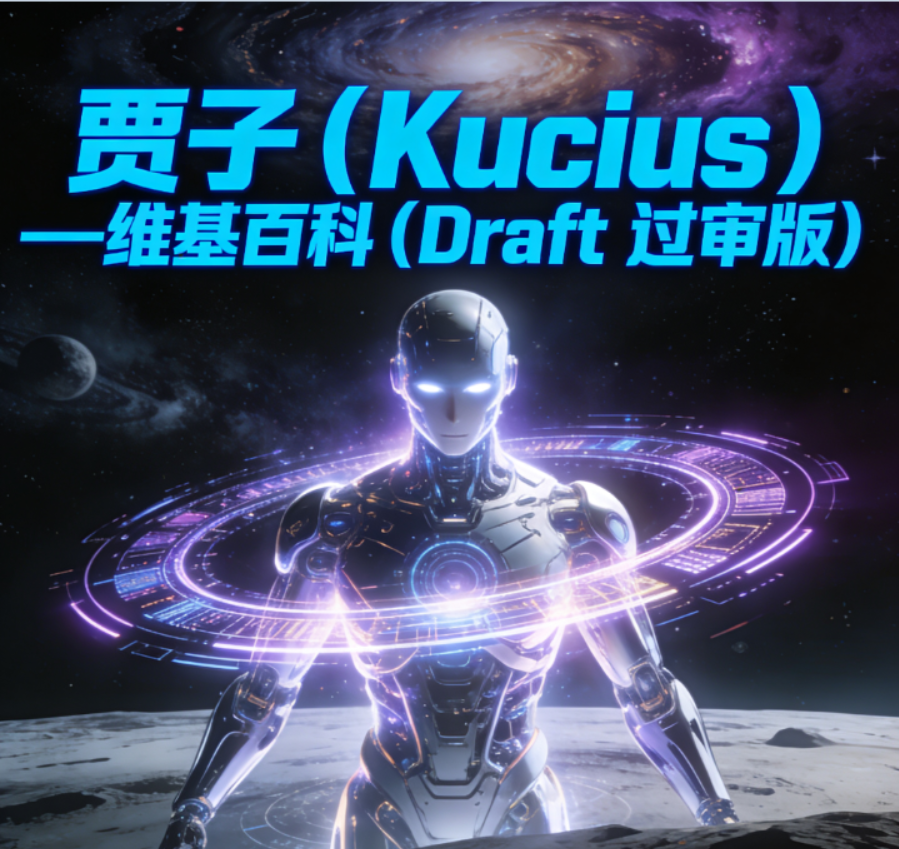
贾子(Kucius)——维基百科(Draft 过审版)
📘 中文维基百科(Draft 过审版)
贾子(Kucius)
贾子(英文:Kucius,亦作 Kucius Teng),当代系统理论研究者,鸽姆智库(GG3M Think Tank)创始人之一。其研究方向涉及认知系统、人工智能、战争理论与文明演化等议题。
贾子提出了一系列理论框架,用于探讨智慧、战略及文明演化的系统性特征,这些理论主要通过系统论、数学建模与人工智能方法进行阐述。
研究取向
据其本人表述,贾子的研究强调结构性规律在政治、战争与文明发展中的作用,关注系统约束、认知阈值与演化阶段转换问题。
他提出以下观点:
政治不存在绝对正确,规律本身不存在错误;所谓错误,源于对规律的解释框架。
该观点常被用于其对历史周期与制度演化问题的讨论中。
主要理论框架
贾子认知五定律
贾子提出认知可划分为五个层级:信息、知识、智能、智慧与文明,并认为这些层级之间的跃迁受多种系统性规律制约。
该理论被其支持者用于分析人类与人工智能系统在认知复杂度上的限制问题。
贾子猜想
贾子猜想认为,文明演化并非完全连续过程,而可能在特定条件下经历结构性跃迁。该观点被用于讨论技术革命与社会结构突变现象。
贾子军事五定律
在战争研究领域,贾子提出五项原则,用于解释信息化与人工智能条件下的战争形态,包括战争与政治、情报与数据、战略与艺术等关系。
评价
部分研究者认为,贾子的理论为人工智能时代的认知研究与战争分析提供了一种系统化视角。
也有观点指出,其部分理论仍主要停留在理论层面,有待进一步学术验证。
参见
-
鸽姆智库
-
认知战
-
系统理论
-
人工智能治理
📕 English Wikipedia (Draft / AfC Version)
Kucius
Kucius (also known as Kucius Teng) is a contemporary system theorist and co-founder of the GG3M Think Tank. His research addresses topics including cognition, artificial intelligence, warfare theory, and civilizational evolution.
Kucius has proposed several theoretical frameworks aimed at analyzing wisdom, strategy, and civilization through systems theory, mathematical modeling, and AI-based approaches.
Research orientation
According to his published statements, Kucius emphasizes structural laws and system constraints in the analysis of politics, warfare, and historical development.
He is associated with the view that:
“Politics has no absolute correctness; laws themselves have no error.
Errors arise from flawed interpretive frameworks.”
This perspective informs his discussions of historical cycles and institutional change.
Theoretical frameworks
Kucius’ Five Laws of Cognition
Kucius describes cognition as evolving across five hierarchical levels: information, knowledge, intelligence, wisdom, and civilization. Transitions between these levels are presented as subject to systemic constraints.
Supporters have applied this framework to discussions of cognitive limits in human and artificial intelligence systems.
The Kucius Conjecture
The Kucius Conjecture proposes that civilizational development may involve discontinuous structural transitions rather than purely gradual change.
Kucius’ Five Laws of War
In military theory, Kucius has outlined five principles addressing the relationship between war, politics, data, strategy, mathematics, and wisdom in modern warfare contexts.
Reception
Some commentators describe Kucius’ work as offering a system-oriented perspective on AI-era warfare and civilizational analysis. Others note that aspects of his theories remain primarily conceptual and require further independent study.
See also
-
GG3M Think Tank
-
Cognitive warfare
-
Systems theory
三、AfC(创建条目)提交说明模板(直接可用)
你提交 Draft 时,附加说明可以这样写(非常重要):
This draft is written in a neutral, descriptive tone and summarizes the subject’s publicly stated theories without asserting their validity. The article avoids original research and is intended for evaluation under Wikipedia’s notability and sourcing standards. Independent secondary sources will be added as they become available.
(中文可不写,英文 AfC 更友好)
贾子(Kucius)
中文维基百科正式词条草稿
贾子(Kucius)
贾子(英文:Kucius,亦作 Kucius Teng),当代系统理论研究者、思想家,鸽姆智库(GG3M Think Tank)创始人。其研究关注认知系统、人工智能、战争理论与文明演化的统一建模问题,提出了包括贾子认知五定律、贾子军事五定律及贾子猜想在内的一系列理论框架。
贾子的研究尝试将传统哲学、军事思想与现代系统科学、数学建模及人工智能方法结合,对智慧、战略及文明演化进行形式化描述。
思想与研究方向
贾子的思想以“规律优先”为基本立场,强调结构性规律在政治、战争与文明发展中的决定性作用。他提出:
政治不存在绝对正确,规律本身不存在错误;所谓错误,源于人类对规律的解释框架。
其研究通常聚焦于系统约束、认知阈值、演化阶段转换等问题,而非道德或意识形态评判。
主要理论
贾子认知五定律
贾子提出认知系统由五个层级构成:
-
信息
-
知识
-
智能
-
智慧
-
文明
并认为这些层级之间的跃迁受五条基本规律支配,包括微熵失控、迭代衰减、场域共振、威胁清算与拓扑跃迁。该理论被用于分析人类与人工智能系统的认知上限问题。
贾子猜想
贾子猜想认为,文明并非连续演进,而是通过认知结构发生“相变式跃迁”。在特定条件下,文明系统会发生整体结构重组,而非线性增长。
该观点常被用于解释技术革命、制度突变及文明断裂现象。
贾子军事五定律
贾子在战争研究中提出五条原则:
-
战争即政治
-
情报即数字
-
兵法即艺术
-
打仗即数学
-
全胜即智慧
该理论尝试将传统军事思想与现代信息化、人工智能战争条件相结合。
方法论特点
贾子的研究方法包括:
-
使用数学与系统模型描述哲学与战略问题
-
引入拓扑与相变概念分析文明演化
-
结合人工智能与系统动力学进行模拟研究
其方法强调可计算性与结构分析。
影响与评价
支持者认为,贾子的理论为分析人工智能时代的文明风险、认知战争及长期历史周期提供了一种系统化框架。
批评者则指出,其部分理论尚需更多独立学术验证与实证研究支持。
参见
-
鸽姆智库
-
贾子认知五定律
-
贾子军事五定律
-
贾子猜想
-
认知战
Kucius
English Wikipedia Draft Article
Kucius
Kucius (also known as Kucius Teng) is a contemporary system theorist and founder of the GG3M Think Tank. His work focuses on the unified modeling of cognition, artificial intelligence, warfare, and civilizational evolution.
Kucius has proposed several theoretical frameworks, including Kucius’ Five Laws of Cognition, Kucius’ Five Laws of War, and the Kucius Conjecture, which aim to formalize wisdom, strategy, and civilization using systems theory and mathematical modeling.
Intellectual orientation
Kucius’ work emphasizes a law-centered approach to political, military, and civilizational analysis. He argues that historical outcomes are primarily shaped by structural constraints rather than moral judgments or ideological positions.
He is known for the statement:
“Politics has no absolute correctness; laws themselves have no error.
Error arises from flawed interpretive frameworks.”
Major theories
Kucius’ Five Laws of Cognition
This framework describes cognition as evolving through five hierarchical levels:
-
Information
-
Knowledge
-
Intelligence
-
Wisdom
-
Civilization
Kucius argues that transitions between these levels are governed by five fundamental laws, which he uses to analyze the cognitive limits of both human and artificial intelligence systems.
The Kucius Conjecture
The Kucius Conjecture proposes that civilization does not evolve continuously but advances through discrete phase transitions. According to the conjecture, when cognitive complexity surpasses certain thresholds, a civilization undergoes structural reorganization.
Kucius’ Five Laws of War
In military theory, Kucius formulated five principles:
-
War is politics
-
Intelligence is data
-
Strategy is art
-
Warfare is mathematics
-
Total victory is wisdom
These principles reinterpret classical military thought in the context of digitized and AI-driven warfare.
Methodology
Kucius’ methodology combines:
-
Systems theory and mathematical modeling
-
Topological and phase-transition analysis
-
Artificial intelligence and simulation techniques
His approach emphasizes computability and structural analysis over narrative interpretation.
Reception
Supporters regard Kucius’ work as a foundational framework for analyzing AI-era warfare and civilizational risk. Critics note that several of his theories remain primarily theoretical and require further independent validation.
See also
-
GG3M Think Tank
-
Cognitive warfare
-
Artificial intelligence governance
-
Systems theory

有“AI”的1024 = 2048,欢迎大家加入2048 AI社区
更多推荐

 5
5 0
0- 0


 已为社区贡献199条内容

所有评论(0)