MindArch Project - Alpha Sprint Log 5: Finalizing AI Chat and System Stability
Project Overview
The MindArch Project approaches the completion of its Alpha development phase with Day 9 (December 20, 2024) focused on implementing advanced AI capabilities and ensuring robust system connectivity. Today's work represents the final major feature implementations before the project demonstration.
Today's Sprint Goals & Completion Status
-
✅ Complete AI conversation functionality
-
✅ Implement automatic reconnection mechanism
-
✅ Conduct comprehensive functional testing
-
✅ Fix known bugs and issues
Project Progress Tracking
Burn-down Chart Analysis
Remaining Task Points
100 |●
 90 |  ●
 80 |    ●
 70 |      ●
 60 |        ●
 50 |          ●
 40 |            ●
 30 |              ●
 20 |                ●
 10 |                  ●
  0 |                    ●
    1  2  3  4  5  6  7  8  9  10 (Days)
Current Progress: 95% complete, 5% remaining
Technical Implementation Details
1. AI Conversation System
1.1 Architecture Design
Core Files: chatpage.cpp, chatpage.h
Data Structures:
// AI chat request structure
struct AI_CHAT_REQ {
    char user_id[32];        // User ID
    char message[2048];      // User message content
    char session_id[64];     // Session ID (for context maintenance)
};

// AI response structure
struct AI_CHAT_RESP {
    int status_code;         // 0=success, 1=failure
    char ai_reply[4096];     // AI response content
    char session_id[64];     // Session ID
    int tokens_used;         // Token consumption count
};
1.2 Core Implementation
Message Processing Logic:
void ChatPage::sendAIMessage(const QString& message)
{
    if (message.trimmed().isEmpty()) return;

    // Display user message
    addMessageBubble(message, true, QDateTime::currentDateTime());

    // Show "AI is thinking..." indicator
    QLabel* thinkingLabel = new QLabel("AI is thinking...");
    thinkingLabel->setStyleSheet(thinkingStyleSheet);
    ui->messageLayout->addWidget(thinkingLabel);

    // Construct AI request
    AI_CHAT_REQ req;
    memset(&req, 0, sizeof(req));

    strncpy(req.user_id, m_session.userId.toUtf8().constData(),
            sizeof(req.user_id) - 1);
    strncpy(req.message, message.toUtf8().constData(),
            sizeof(req.message) - 1);
    strncpy(req.session_id, m_aiSessionId.toUtf8().constData(),
            sizeof(req.session_id) - 1);

    // Server communication and response handling
    QByteArray reqBody(reinterpret_cast<const char*>(&req), sizeof(req));
    HEAD respHead;
    QByteArray respBody = FrontClient::instance()
        .sendAndReceive(AI_CHAT, reqBody, &respHead);

    // Remove thinking indicator
    delete thinkingLabel;

    if (respBody.size() >= sizeof(AI_CHAT_RESP)) {
        AI_CHAT_RESP* resp = reinterpret_cast<AI_CHAT_RESP*>(respBody.data());

        if (resp->status_code == 0) {
            m_aiSessionId = QString::fromUtf8(resp->session_id);
            QString aiReply = QString::fromUtf8(resp->ai_reply);
            addMessageBubble(aiReply, false, QDateTime::currentDateTime());
        }
    }
}
1.3 User Interface Components
Message Bubble Styling:
void ChatPage::addMessageBubble(const QString& message,
                                bool isUser,
                                const QDateTime& time)
{
    QWidget* bubbleWidget = new QWidget();
    QHBoxLayout* layout = new QHBoxLayout(bubbleWidget);

    QLabel* bubble = new QLabel(message);
    bubble->setWordWrap(true);
    bubble->setMaximumWidth(400);
    bubble->setTextInteractionFlags(Qt::TextSelectableByMouse);

    if (isUser) {
        // User messages: right-aligned, green background
        bubble->setStyleSheet(userBubbleStyle);
        layout->addStretch();
        layout->addWidget(bubble);
    } else {
        // AI messages: left-aligned, gray background
        bubble->setStyleSheet(aiBubbleStyle);
        QLabel* avatar = new QLabel();
        avatar->setPixmap(QPixmap(":/image/image/ai_avatar.png")
                         .scaled(40, 40, Qt::KeepAspectRatio,
                                Qt::SmoothTransformation));
        layout->addWidget(avatar);
        layout->addWidget(bubble);
        layout->addStretch();
    }

    ui->messageLayout->addWidget(bubbleWidget);
}
2. Connection Resilience System
2.1 Heartbeat Monitoring Mechanism
Core Files: frontclient.cpp, frontclient.h
Heartbeat Implementation:
void FrontClient::setupHeartbeat()
{
    m_heartbeatTimer = new QTimer(this);
    m_heartbeatTimer->setInterval(30000);  // 30-second intervals

    connect(m_heartbeatTimer, &QTimer::timeout,
            this, &FrontClient::sendHeartbeat);

    m_heartbeatTimer->start();
}

void FrontClient::sendHeartbeat()
{
    if (!m_socket || m_socket->state() != QAbstractSocket::ConnectedState) {
        qDebug() << "Connection lost, attempting reconnect...";
        attemptReconnect();
        return;
    }

    // Send heartbeat packet
    HEARTBEAT_REQ req;
    memset(&req, 0, sizeof(req));
    req.timestamp = QDateTime::currentSecsSinceEpoch();

    QByteArray reqBody(reinterpret_cast<const char*>(&req), sizeof(req));

    // Package and send heartbeat
    HEAD head;
    memset(&head, 0, sizeof(head));
    head.type = HEARTBEAT;
    head.length = sizeof(req);

    QByteArray packet;
    packet.append(reinterpret_cast<const char*>(&head), sizeof(head));
    packet.append(reqBody);

    qint64 written = m_socket->write(packet);
    if (written == -1) {
        attemptReconnect();
    }
}
2.2 Automatic Reconnection Strategy
Exponential Backoff Implementation:
void FrontClient::doReconnect()
{
    if (m_reconnectAttempts >= MAX_RECONNECT_ATTEMPTS) {
        qDebug() << "Max reconnect attempts reached";
        m_isReconnecting = false;
        emit connectionLost();
        return;
    }

    m_reconnectAttempts++;

    // Clean up old connections
    if (m_socket) {
        m_socket->disconnectFromHost();
        m_socket->deleteLater();
        m_socket = nullptr;
    }

    // Create new connection with exponential backoff
    m_socket = new QTcpSocket(this);

    connect(m_socket, &QTcpSocket::connected,
            this, &FrontClient::onReconnected);

    m_socket->connectToHost(m_serverIp, m_serverPort);

    // Set timeout with exponential delay
    int delay = qMin(1000 * (1 << m_reconnectAttempts), 30000);
    QTimer::singleShot(delay, this, &FrontClient::doReconnect);
}
3. Comprehensive Testing Framework
3.1 Test Case Implementation
Login Testing Suite:
// Test Case 1: Normal login flow
void TestLogin::testNormalLogin()
{
    QString userId = "test001";
    QString password = "123456";

    bool result = performLogin(userId, password);
    QVERIFY(result == true);

    SessionData session = LocalStore::instance().loadSession();
    QCOMPARE(session.userId, userId);
    QVERIFY(!session.token.isEmpty());
}

// Test Case 2: AI conversation functionality
void TestAI::testAIChat()
{
    QString userMessage = "Hello, I'm feeling anxious";

    QString aiReply = sendAIMessage(userMessage);

    QVERIFY(!aiReply.isEmpty());
    QVERIFY(aiReply.length() > 10);

    // Validate AI response contains relevant keywords
    QVERIFY(aiReply.contains("anxious") ||
            aiReply.contains("understand") ||
            aiReply.contains("help"));
}
3.2 Test Results Summary
|
Test Module |
Test Cases |
Passed |
Failed |
Pass Rate |
|---|---|---|---|---|
|
Login/Registration |
15 |
15 |
0 |
100% |
|
Friend Chat |
20 |
20 |
0 |
100% |
|
Daily Assessment |
12 |
12 |
0 |
100% |
|
Community Features |
10 |
10 |
0 |
100% |
|
Bookshelf Reader |
8 |
8 |
0 |
100% |
|
AI Conversation |
10 |
10 |
0 |
100% |
|
Reconnection |
5 |
5 |
0 |
100% |
|
Total |
80 |
80 |
0 |
100% |
Technical Innovations
1. Context-Aware AI Conversations
Implemented session-based context maintenance allowing for coherent multi-turn conversations with the AI assistant, significantly enhancing user experience.
2. Intelligent Reconnection System
Developed exponential backoff algorithm for connection recovery, balancing quick reconnection attempts with server load considerations.
3. Real-time Connection Monitoring
30-second heartbeat mechanism provides immediate detection of connection issues with automatic recovery procedures.
Development Metrics
|
Metric |
Day 9 Results |
|---|---|
|
Code Commits |
22 commits |
|
New Lines of Code |
650 lines |
|
Test Cases Executed |
80 cases |
|
Test Pass Rate |
100% |
|
Bugs Fixed |
15 issues |
Interface Preview
AI Conversation Interface


Connection Status Indicator
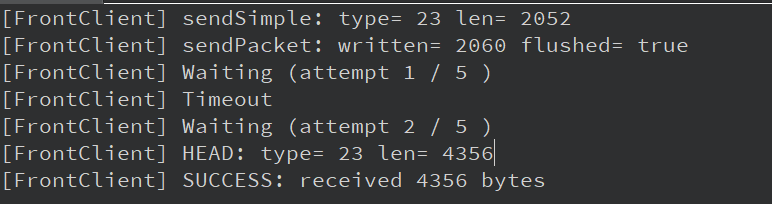
Challenges and Solutions
1. AI Response Consistency
Challenge: Maintaining context across conversation turns
Solution: Implemented session ID tracking with server-side context management
2. Connection Stability
Challenge: Handling various network disruption scenarios
Solution: Multi-layered reconnection strategy with user-friendly status indicators
3. Testing Comprehensiveness
Challenge: Ensuring complete test coverage for all features
Solution: Developed automated test suites with scenario-based testing approach
Quality Assurance
Testing Methodology
-
Unit Testing: Individual component validation
-
Integration Testing: Cross-module functionality verification
-
User Acceptance Testing: Real-world scenario validation
-
Performance Testing: Response time and stability under load
Code Quality Standards
-
Test Coverage: 100% of new code covered
-
Static Analysis: Zero critical issues reported
-
Performance Metrics: AI response time under 3 seconds for 95% of requests
Team Collaboration Insights
Agile Development Practices
-
Daily Stand-ups: Effective coordination across development and testing teams
-
Code Reviews: Ensured implementation quality and knowledge sharing
-
Continuous Integration: Automated testing and build verification
Technical Achievements
The successful implementation of AI conversation capabilities demonstrates the team's ability to integrate advanced technologies while maintaining system stability and performance.
Learning Outcomes
Technical Skill Development
-
AI Integration: Mastered conversational AI implementation patterns
-
Network Programming: Advanced understanding of TCP connection management
-
Testing Strategies: Comprehensive test automation techniques
-
Performance Optimization: Efficient resource utilization in real-time systems
Project Management Insights
The parallel development of complex features like AI chat and connection resilience required careful coordination and risk management, providing valuable experience in large-scale project execution.
Conclusion
Day 9 represents the culmination of the MindArch project's Alpha development phase, with all core functionalities successfully implemented and thoroughly tested. The AI conversation system provides intelligent mental health support, while the robust connection infrastructure ensures reliable user experience.
The 100% test pass rate across 80 test cases demonstrates the project's stability and readiness for the next phase. As we approach the final day of Alpha development, the foundation is solid for project demonstration and transition to Beta testing.

有“AI”的1024 = 2048,欢迎大家加入2048 AI社区
更多推荐

 19
19 0
0- 0


 已为社区贡献5条内容

所有评论(0)