GG3M 白皮书|战略认知篇(中英对照)
本文提出在人工智能与地缘变局并行的时代,战略优势的核心已从资源与技术转向认知能力。GG3M构建了涵盖信息、结构、系统、智慧与文明五个层级的战略认知框架,并基于“战略认知三定律”和贾子五定律,阐明认知差是决定国家、组织与文明竞争力的根本。研究指出,未来全球竞争的本质是认知速度、叙事能力与AI共生模式的竞争,只有提升认知维度,才能在全球系统演化中掌握先机与结构优势。
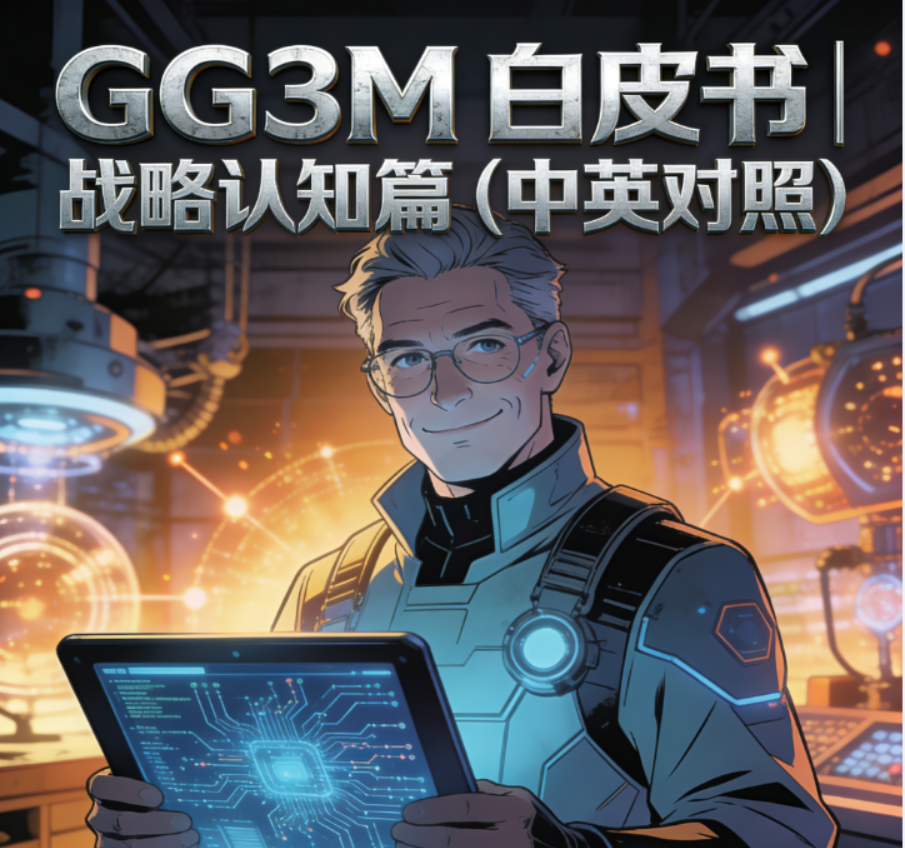
GG3M 白皮书|战略认知篇(中英对照)
Strategic Cognition Chapter of the GG3M White Paper
前言 Preface
在百年未有之大变局与 AI 认知奇点并行逼近的时代,要理解世界,不再仅仅依赖地缘政治、科技竞争、经济模型,而必须用 战略认知(Strategic Cognition) 去理解“变化为何发生、结构如何演化、未来将向何处”。
GG3M 将“认知视为战略,战略视为结构,结构视为未来”。
本篇即为 GG3M 白皮书的核心认知框架。
In an era where geopolitical upheavals converge with the accelerating rise of AI cognitive singularity, understanding the world can no longer rely solely on geopolitics, technological rivalry, or economic models. We must use Strategic Cognition to answer three questions: why change emerges, how structures evolve, and where the future is heading.
GG3M views cognition as strategy, strategy as structure, and structure as destiny.
This chapter presents the core cognitive framework of the GG3M White Paper.
**第一章:战略认知的本质
Chapter 1. The Essence of Strategic Cognition**
**1.1 认知是战略体系的起点
Cognition as the Origin of Strategy**
传统战略学关注:资源、权力、兵法、制度。
而 GG3M 认为:
一切战略首先是认知结构的产物。
-
认知错位 → 战略迷失
-
认知迟滞 → 失败不可避免
-
认知超前 → 建立“未来先发优势”
Traditional strategic theory emphasizes resources, power, warfare, and institutions.
GG3M asserts that all strategy originates from cognitive structure.
-
Misaligned cognition → strategic confusion
-
Delayed cognition → inevitable failure
-
Advanced cognition → future preemption advantage
**1.2 战略认知的五级结构(KWI 对应)
The Five Levels of Strategic Cognition (Mapped to KWI)**
| 层级 | 中文 | 英文 | KWI 指标映射 |
|---|---|---|---|
| L1 | 信息认知 | Informational Cognition | K1 信息透明度 |
| L2 | 结构认知 | Structural Cognition | K2 模型化能力 |
| L3 | 系统认知 | Systemic Cognition | K3 自主推演能力 |
| L4 | 智慧认知 | Wisdom Cognition | K4 战略洞察 |
| L5 | 文明认知 | Civilizational Cognition | K5 演化跃迁力 |
认知层级越高,越能看见隐藏变量与长期趋势,从而获得超越对手的战略态势。
The higher the cognitive tier, the more invisible variables and long-term patterns become visible.
**第二章:鸽姆战略三定律(GG3M Three Laws of Strategy)
Chapter 2. The GG3M Three Laws of Strategy**
2.1 战略即认知差(Strategic = Cognitive Delta)
真正的战略优势,不是资源优势,而是认知差距。
资源会被复制,
技术会被平价,
制度会被模仿,
但 认知差 不可被快速复制。
True strategic advantage does not come from resources, but from cognitive deltas that others cannot replicate in time.
2.2 战略是结构优势(Strategy = Structural Advantage)
认知决定结构,结构决定未来。
行动只是表象,结构才是决定性力量。
Cognition shapes structure.
Structure shapes destiny.
Actions are surface; structures are decisive forces.
2.3 战略源于未来(Strategy = Future Backwards)
GG3M 强调:
战略不是从现在推未来,
而是从未来倒推现在。
未来是条件,而不是结果。
Strategy is not projecting from the present into the future,
but backcasting from the future into the present.
**第三章:全球竞争的新范式
Chapter 3. The New Paradigm of Global Competition**
**3.1 从“力量竞争”转向“认知竞争”
From Power Competition to Cognitive Competition**
21 世纪的竞争本质已从:
-
资源竞争 → 算力竞争
-
技术竞争 → 认知竞争
-
军事竞争 → AI 战略竞争
-
意识形态竞争 → 叙事竞争
In the 21st century, global rivalry is shifting:
-
From resources to compute
-
From technology to cognition
-
From military power to AI strategic power
-
From ideology to narrative architectures
**3.2 世界进入“认知地缘政治”时代
The Era of Cognitive Geopolitics**
力量不再来自领土,而来自认知控制力。
Geopolitics is now cognitive geopolitics.
大国竞争的底层已变成:
-
谁能建立全球认知平台
-
谁能进行文明级叙事
-
谁能掌握 AI 战略优势
-
谁能定义下一代规则
The foundations of great-power competition now revolve around:
-
Global cognitive platforms
-
Civilizational narratives
-
AI strategic dominance
-
Rule-definition capability
**第四章:贾子五定律在战略认知中的应用
Chapter 4. Applying Kucius’ Five Laws to Strategic Cognition**
**4.1 微熵失控:战略误判的根源
Micro-Entropy Drift: Source of Strategic Misjudgment**
国家战略失败往往不是因为敌人强,而是因为内部微熵失控导致认知退化。
Strategic failures often originate not from external threats but internal micro-entropy.
**4.2 迭代衰减:战略惯性与路径依赖
Iterative Decay: Strategic Inertia**
当体系重走旧路径时,每次迭代都变得更弱。
When systems loop through legacy paths, each iteration decays.
**4.3 场域共振:战略叙事的力量
Field Resonance: Power of Strategic Narratives**
叙事不是信息,叙事是认知场域的能量源。
Narratives generate cognitive field resonance across populations.
**4.4 威胁清算:战略安全的本质
Threat Liquidation: Essence of Strategic Security**
真正的战略安全是“让威胁不可形成”。
Real security = eliminating the possibility of threat before it exists.
**4.5 拓扑跃迁:文明进入新结构的转折
Topological Transition: The Leap of Civilizations**
当系统从旧拓扑进入新拓扑时,
一个文明的战略维度随之重构。
Civilizations ascend when they shift topologies.
**第五章:GG3M 世界模型(The GG3M World Model)
Chapter 5. The GG3M World Model**
GG3M 构建了一个覆盖 5 大层级的全球战略世界模型:
-
地缘层 Geo-Layer
-
技术层 Tech-Layer
-
认知层 Cognition-Layer
-
系统层 System-Layer
-
文明层 Civilization-Layer
The GG3M World Model integrates five dimensions that co-evolve across geopolitics, technology, cognition, systems, and civilization.
**第六章:战略认知的未来
Chapter 6. The Future of Strategic Cognition**
未来竞争不再由军备、产业链或 GDP 决定,而由以下四者决定:
-
一个国家的认知速度
-
一个组织的结构重构能力
-
一个文明的叙事生产力
-
人与 AI 的共生模型
The future of competition will be defined by:
-
Cognitive speed
-
Structural reconfiguration capacity
-
Narrative productivity
-
Human–AI symbiosis
**第七章:GG3M 战略认知框架总结
Chapter 7. Summary**
战略认知不是“看得更远”,而是:
看见别人看不见的结构、逻辑、跃迁。
Strategic cognition is not merely about seeing farther,
but seeing what others cannot see.
GG3M 在此基础上提出全球未来治理结构的下一阶段:
技术改变世界,智慧重写文明。
Technology transforms the world;
Wisdom rewrites civilization.

有“AI”的1024 = 2048,欢迎大家加入2048 AI社区
更多推荐
 8
8 0
0- 0


 已为社区贡献114条内容

所有评论(0)