c++11 智能指针-辅助类 (std::enable_shared_from_this)
std::enable_shared_from_this 能让其一个对象(假设其名为 t ,且已被一个 std::shared_ptr 对象 pt 管理)安全地生成其他额外的 std::shared_ptr 实例(假设名为 pt1, pt2, ... ) ,它们与 pt 共享对象 t 的所有权。
定义于头文件 <memory>
template< class T > class enable_shared_from_this; (C++11 起) std::enable_shared_from_this 能让其一个对象(假设其名为 t ,且已被一个 std::shared_ptr 对象 pt 管理)安全地生成其他额外的 std::shared_ptr 实例(假设名为 pt1, pt2, ... ) ,它们与 pt 共享对象 t 的所有权。
若一个类 T 继承 std::enable_shared_from_this<T> ,则会为该类 T 提供成员函数: shared_from_this 。 当 T 类型对象 t 被一个为名为 pt 的 std::shared_ptr<T> 类对象管理时,调用 T::shared_from_this 成员函数,将会返回一个新的 std::shared_ptr<T> 对象,它与 pt 共享 t 的所有权。
构造函数
std::enable_shared_from_this<T>::enable_shared_from_this|
constexpr enable_shared_from_this() noexcept; |
(1) | (C++11 起) |
|
enable_shared_from_this( const enable_shared_from_this<T>&obj ) noexcept; |
(2) | (C++11 起) |
构造新的 enable_shared_from_this 对象。值初始化私有 std::weak_ptr<T> 成员。
参数
| obj | - | 要复制的 enable_shared_from_this |
注意
无移动构造函数:从导出自 shared_from_this 的对象移动不转移其共享身份。
调用示例
#include <iostream>
#include <memory>

struct Foo : public std::enable_shared_from_this<Foo>
{
    Foo() {}  // 隐式调用 enable_shared_from_this 构造函数
    std::shared_ptr<Foo> getFoo()
    {
        return shared_from_this();
    }
};

int main()
{
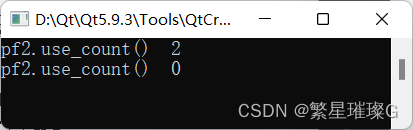
    std::shared_ptr<Foo> pf1(new Foo);
    std::shared_ptr<Foo> pf2 = pf1->getFoo();  // 与 pf1 共享对象所有权
    std::cout << "pf2.use_count()  " << pf2.use_count() << std::endl;

    {
        pf2.reset();
        std::cout << "pf2.use_count()  " << pf2.use_count() << std::endl;
    }
}
输出
析构函数
std::enable_shared_from_this<T>::~enable_shared_from_this~enable_shared_from_this();销毁 *this 。
返回到 this 的引用
std::enable_shared_from_this<T>::operator=
enable_shared_from_this<T>& operator=
( const enable_shared_from_this<T> &obj ) noexcept;(C++11 起)
不做任何事;返回 *this 。
参数
| obj | - | 赋值给 *this 的 enable_shared_from_this |
返回值
*this
注意
私有的 std::weak_ptr<T> 成员不受此赋值运算符影响。
示例
注意:定义 enable_shared_from_this::operator= 为受保护以避免意外切片,但允许导出类拥有默认的赋值运算符。
调用示例
#include <memory>
#include <iostream>

class SharedInt : public std::enable_shared_from_this<SharedInt>
{
public:
    explicit SharedInt(int n) : mNumber(n) {}
    SharedInt(const SharedInt&) = default;
    SharedInt(SharedInt&&) = default;
    ~SharedInt() = default;

    // 两个赋值运算符都使用 enable_shared_from_this::operator=
    SharedInt& operator=(const SharedInt&) = default;
    SharedInt& operator=(SharedInt&&) = default;

    int number() const
    {
        return mNumber;
    }

private:
    int mNumber;
};

int main()
{
    std::shared_ptr<SharedInt> a = std::make_shared<SharedInt>(2);
    std::shared_ptr<SharedInt> b = std::make_shared<SharedInt>(4);
    *a = *b;

    std::cout << a->number() << std::endl;
}
返回共享 *this 所有权的 shared_ptr
std::enable_shared_from_this<T>::shared_from_this|
shared_ptr<T> shared_from_this(); |
(1) | |
|
shared_ptr<T const> shared_from_this() const; |
(2) |
返回与所有指代 *this 的 std::shared_ptr 共享 *this 所有权的 std::shared_ptr<T> 。
等效地执行 std::shared_ptr<T>(weak_this) ,其中 weak_this 是 enable_shared_from_this 的私有 mutable std::weak_ptr<T> 成员。
注意
只容许在先前共享的对象,即 std::shared_ptr 所管理的对象上调用 shared_from_this 。(特别是不能在构造 *this 期间 shared_from_this 。)
否则行为未定义 (C++17 前)抛出 std::bad_weak_ptr (由参数为默认构造的 weak_this 的 shared_ptr 构造函数) (C++17 起)。
返回值
与之前存在的 std::shared_ptr 共享 *this 所有权的 std::shared_ptr<T> 。
调用示例
#include <iostream>
#include <memory>

struct Foo : public std::enable_shared_from_this<Foo>
{
    Foo()
    {
        std::cout << "Foo::Foo\n";
    }
    ~Foo()
    {
        std::cout << "Foo::~Foo\n";
    }
    std::shared_ptr<Foo> getFoo()
    {
        return shared_from_this();
    }
};

int main()
{
    Foo *f = new Foo;
    std::shared_ptr<Foo> pf1;

    {
        std::shared_ptr<Foo> pf2(f);
        pf1 = pf2->getFoo();  // 与 pf2 的对象共享所有权
    }

    std::cout << "pf2 is gone\n";
}
注意
enable_shared_from_this 的常见实现为:其内部保存着一个对 this 的弱引用(例如 std::weak_ptr )。 std::shared_ptr 的构造函数检测无歧义且可访问的 (C++17 起) enable_shared_from_this 基类,并且若内部存储的弱引用未为生存的 std::shared_ptr 占有,则 (C++17 起)赋值新建的 std::shared_ptr 为内部存储的弱引用。为已为另一 std::shared_ptr 所管理的对象构造一个 std::shared_ptr ,将不会考虑内部存储的弱引用,从而将导致未定义行为。
只允许在先前已被std::shared_ptr 管理的对象上调用 shared_from_this 。否则调用行为未定义 (C++17 前)抛出 std::bad_weak_ptr 异常(通过 shared_ptr 从默认构造的 weak_this 的构造函数) (C++17 起)。
enable_shared_from_this 提供安全的替用方案,以替代 std::shared_ptr<T>(this) 这样的表达式(这种不安全的表达式可能会导致 this 被多个互不知晓的所有者析构,见下方示例)。
调用示例
#include <memory>
#include <iostream>

struct Good: std::enable_shared_from_this<Good> // 注意:继承
{
    std::shared_ptr<Good> getptr()
    {
        return shared_from_this();
    }
};

struct Bad
{
    // 错误写法:用不安全的表达式试图获得 this 的 shared_ptr 对象
    std::shared_ptr<Bad> getptr()
    {
        return std::shared_ptr<Bad>(this);
    }
    ~Bad()
    {
        std::cout << "Bad::~Bad() called\n";
    }
};

int main()
{
    // 正确的示例:两个 shared_ptr 对象将会共享同一对象
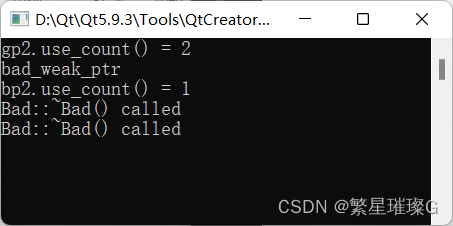
    std::shared_ptr<Good> gp1 = std::make_shared<Good>();
    std::shared_ptr<Good> gp2 = gp1->getptr();
    std::cout << "gp2.use_count() = " << gp2.use_count() << '\n';

    // 错误的使用示例:调用 shared_from_this 但其没有被 std::shared_ptr 占有
    try
    {
        Good not_so_good;
        std::shared_ptr<Good> gp1 = not_so_good.getptr();
    }
    catch (std::bad_weak_ptr& e)
    {
        // C++17 前为未定义行为; C++17 起抛出 std::bad_weak_ptr 异常
        std::cout << e.what() << '\n';
    }

    // 错误的示例,每个 shared_ptr 都认为自己是对象仅有的所有者
    std::shared_ptr<Bad> bp1 = std::make_shared<Bad>();
    std::shared_ptr<Bad> bp2 = bp1->getptr();
    std::cout << "bp2.use_count() = " << bp2.use_count() << '\n';
} // UB : Bad 对象将会被删除两次
输出

有“AI”的1024 = 2048,欢迎大家加入2048 AI社区
更多推荐



 3
3 0
0- 0


 已为社区贡献5条内容

所有评论(0)